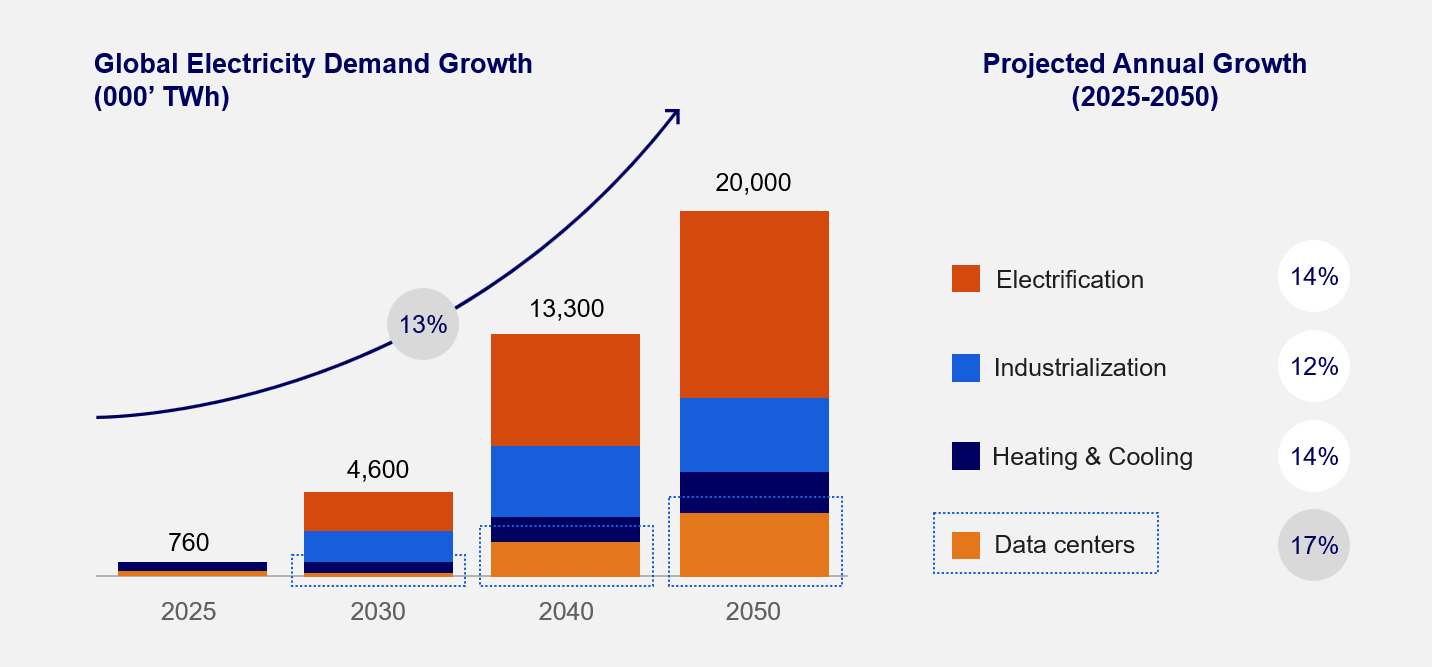
Structural growth: Demographic trends, including aging populations and ongoing housing affordability challenges are supporting sustained demand for housing and healthcare-related properties at a time when new construction has slowed materially. Construction starts across many property types are down sharply, and anticipated deliveries in 2026 have been reduced, limiting future supply and strengthening the outlook for rent growth. At the same time, advances in technology and the rapid adoption of AI are accelerating demand for data centers and modern logistics facilities, as businesses require greater digital infrastructure, faster data processing, and more efficient supply chains. These sectors benefit from both structural demand and high barriers to entry, as much of the existing assets now trade below replacement cost.
Recovery with dispersion: Private real estate is entering a recovery phase, but progress remains uneven across sectors and markets. Apartments, industrial, data centers, and necessity-based retail are stabilizing quickly, supported by resilient tenant demand, falling construction activity, and reduced competitive supply. In contrast, recovery has been more uneven in office, select hospitality, and older retail assets, where elevated vacancies, capital expenditure needs, and refinancing pressures continue to weigh on performance. With construction starts down significantly and future supply constrained, high-quality assets are better positioned to capture improving cash flows, while weaker assets face longer recovery paths. As a result, return dispersion is widening, and asset quality and active management are increasingly important to navigating this stage of the cycle.
Public–private convergence: Public real estate adjusted more quickly to higher interest rates, while private markets lagged due to lower transaction activity and slower price discovery. As transaction volumes recover and capital markets reopen, private market valuations are becoming clearer and more closely aligned with public market pricing, signaling renewed convergence. Public real estate offers liquidity, transparency, and earlier insight into shifts in fundamentals such as supply, demand, and capital costs. Private real estate, by contrast, provides access to long-term income streams and the ability to enhance value through leasing, redevelopment, and operational improvements, particularly in assets trading below replacement cost. Together, public and private real estate reflect the same underlying fundamentals and offer complementary ways to capture returns across the real estate cycle.
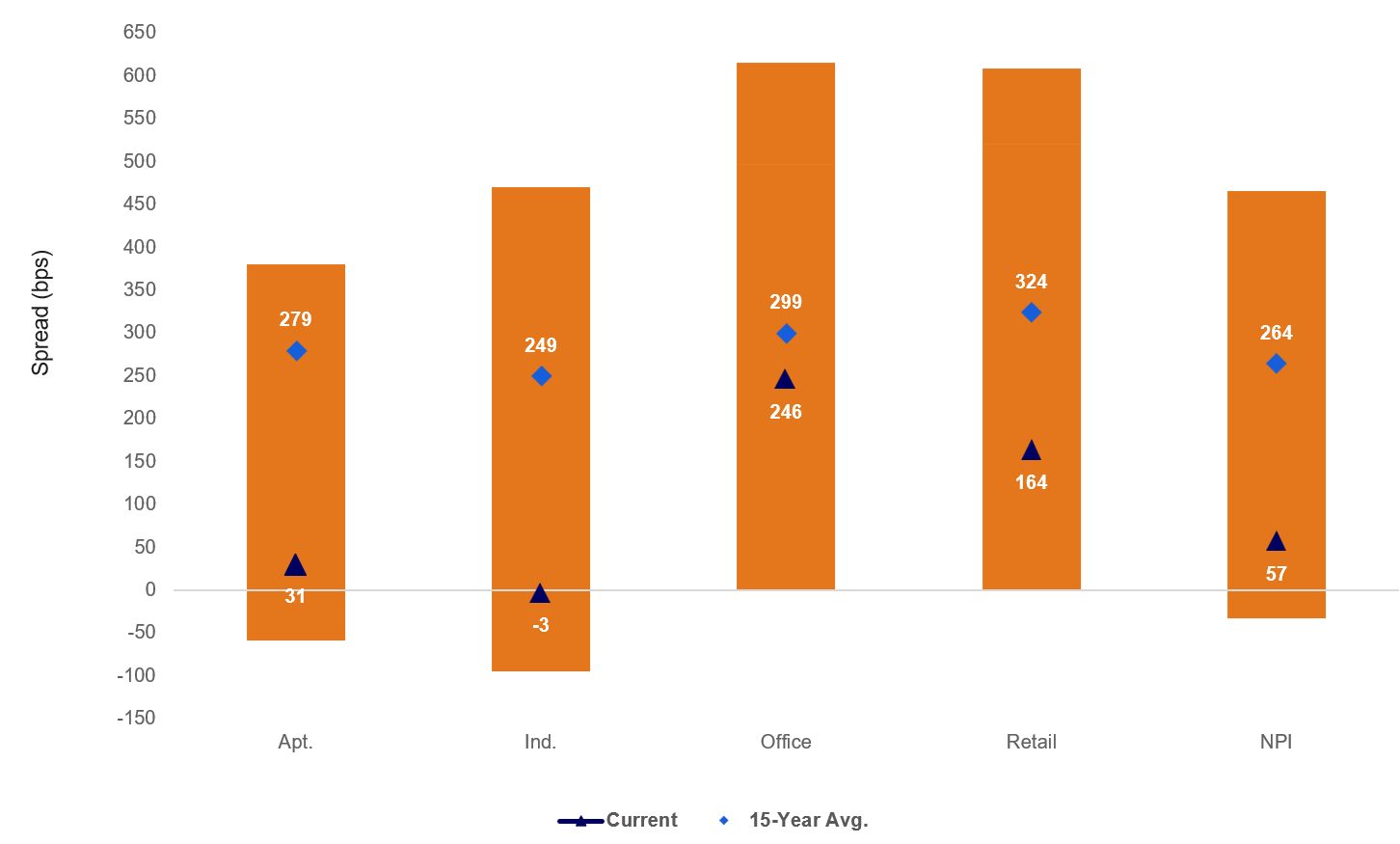
Low cap rate spreads: Despite recent repricing, current cap rate spreads across major real estate sectors remain well below their 15-year averages. This suggests that valuations have adjusted but not fully normalized. Going forward, returns are more likely to come from rental income and owning high-quality properties than from prices rising across the board, making selectivity and active management important.