

Key Takeaways
- U.S. electricity prices are surging because of a demand and supply side imbalance
- Owners of existing energy infrastructure assets are set to benefit
- GUI has recently seen positive performance yet remains diversified against potential policy changes
U.S. electricity prices are surging. So far in 2025, they've been rising at a rate of at least 4% year-over-year, outpacing broader inflation.
Behind this trend are structural imbalances in both the demand and supply of U.S. energy infrastructure, which we believe investors in the Russell Investments iCapital Global Unlisted Infrastructure Fund L.P. (GUI) fund, are positioned to benefit from.
Electricity Outpaces Inflation
Average U.S. electricity price vs U.S. Consumer Price Index
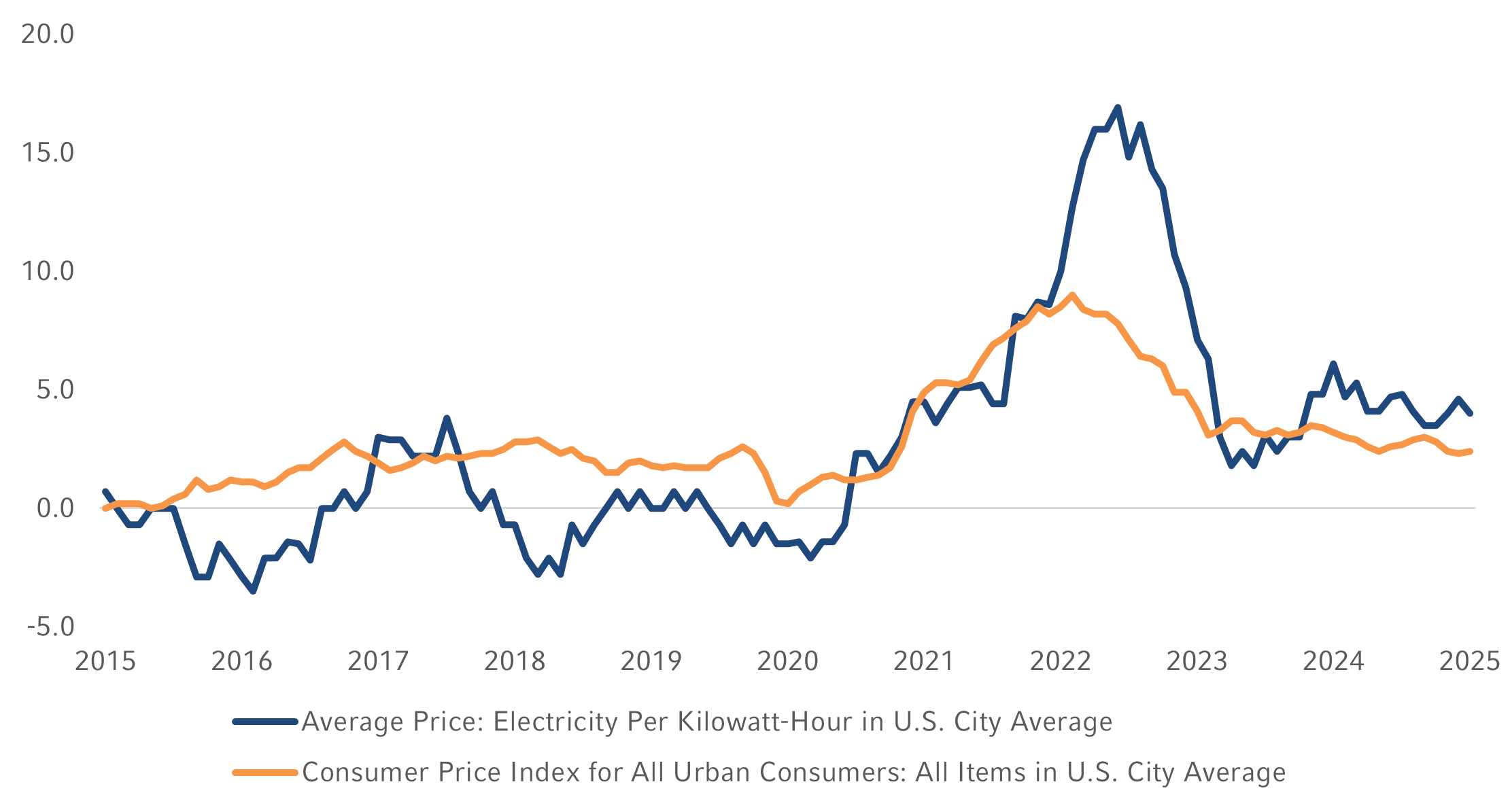
Source: Federal Reserve Bank of St. Louis, June 2025
Infrastructure Imbalance
Demand surge: U.S. demand for electricity is surging primarily due to the rapid growth of data centers, which consume vast amounts of electricity. This is reinforced by a broader electrification push, as more cities mandate electric heating and cooking over traditional gas. As a result, electricity demand is structurally rising, not just cyclically ticking up.
Supply constraint: Meanwhile, supply side constraints have exacerbated the issue. While renewables are technically fast to deploy, political headwinds are slowing their momentum. Subsidies for renewables are being rolled back, and new taxes threaten projects using China-sourced equipment, notably solar panels. With prime sites already developed, new U.S. projects face higher costs and greater uncertainty in their roll-out.
Conventional power also offers little relief. Gas plants face multi-year backlogs as manufacturers struggle to meet demand. Coal is costly and carbon-intensive, and nuclear projects remain decades from completion.
GUI Gains
The result? Market imbalance. Supply growth is lagging and prices must rise significantly to incentivize new builds. In the near term, owners of existing generating assets are the clear winners, and this is where we believe our infrastructure fund, GUI, stands to benefit.
As of first-quarter, approximately 31% of GUI is allocated to the energy theme, with a meaningful portion exposed to U.S.-based electricity generation; that includes operating renewables, gas-fired power, and gas transmission infrastructure. When we include our utilities exposure, nearly 45% of the fund is tied to the energy theme. The investments, as well as investments in other growth areas such as the digital sector, have fueled positive performance in Fund recently above its inflation plus 4% benchmark.
Sector Allocations
GUI asset allocation by sector
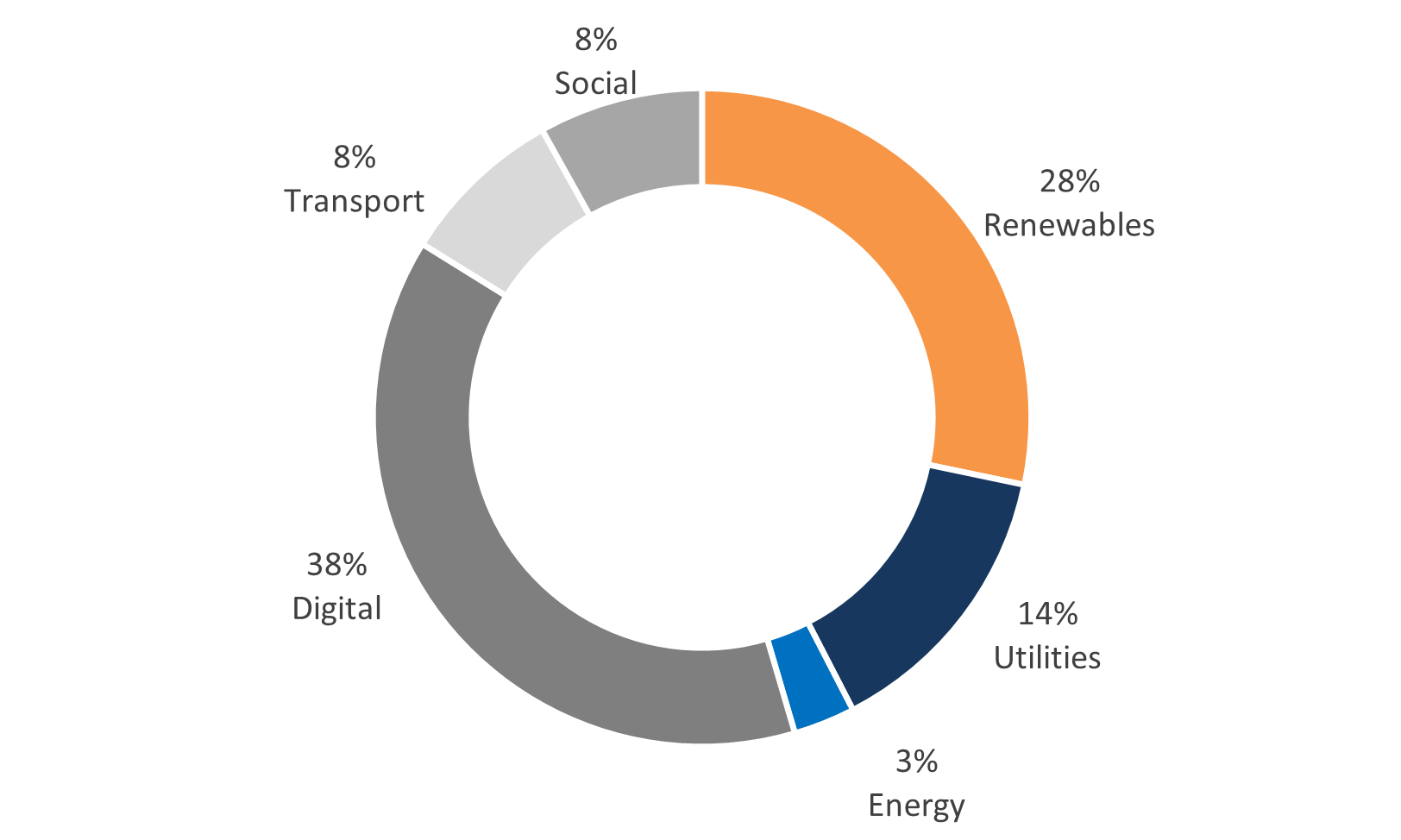
Source: Russell Investments Q1 allocations, March 2025
GUI includes existing assets with real output, benefiting directly from rising prices. This positioning isn’t accidental. We’ve long believed in the structural tailwinds behind electrification and have built a portfolio to reflect that view.
At the same time, GUI remains diversified. While we are benefiting from electricity pricing dynamics today, we recognize that policy shifts or market changes could reshape the landscape. That’s why our exposure is intentional but balanced, rooted in long-term infrastructure themes and market resilience.
If you wish to learn more about unlisted infrastructure, visit our webpage.
Any opinion expressed is that of Russell Investments, is not a statement of fact, is subject to change and does not constitute investment advice.
The value of investments and the income from them can fall as well as rise and is not guaranteed. You may not get back the amount originally invested.
Past performance does not predict future returns.
The net assets of the fund are likely to have high volatility.
Applications for shares in the fund are subject to the terms and conditions set out in the fund’s prospectus, Key Investor Information Document (KIID), memorandum and articles of association. Investors and potential investors are advised to read these documents (and in particular the risk warnings), as well as the further information contained in the annual and half-yearly reports before making an investment.
This is a marketing communication. Please refer to the prospectus of the UCITS and to the KIID/KID before making any final investment decisions.