Without Boundaries

Welcome to the Russell Investments podcast with Jon Eggins, where we take you behind portfolios to talk to the investors and thinkers who shape how markets move in the real world.

Subscribe

Listen to the latest: Episode 12

All episodes

Episode 12

Kirsten Bartok Touw: Investing in the future of defense and space

Today we're talking with Kirsten Bartok Tau, who's the co-founder and managing partner at New Vista Capital. Kirsten is widely recognized in in these areas that are often often somewhat disparate. So, Silicon Valley to DC, Wall Street versus Main Street, and also defense innovation connecting to private markets investing. It's really interesting is it operates at the intersection of some of the most important impactful themes that are driving markets, driving geopolitics today. So, first of all, thank you Kirsten for for joining us. John, excited to be here with you. Looking forward to our conversation. How do you think about identifying companies, and maybe you could talk a little bit about the different thematic areas that you're focused on, and sort of distinguish trend recognition from seeing around the corner to what the next opportunity might be? Mhm. And I think you can use we always develop there's there's space, there's aerospace, and then there's defense, which is a much kind of overarching one. Space is a really interesting because it's more commercial rather than defense, and you're really understanding the tech stack, and what it needs to be built next to get to the next level. And I always like to explain where we are in space today. And in space it's about a a data communications lever. It's and it's it's it's if you're moving the terrestrial so what we have on the ground to celestial, and it has less um vulnerabilities. So, for example, you don't need to you won't be able to cut undersea cables. Um it also has uh less latency. With that, however, we're still building that tech stack. As we built that all that fiber in the early 2000s, to some extent that's what we're doing in space. So, when we gather data in space, we take it, we send it down to Earth uh through a ground station, and then over back to be processed. It's almost like akin to the dial-up era of where we are. Eventually, as we built the sensors, the technology, the satellites, the antennas, the processing capabilities in space, we're going to be taking that data that we get in space and whether it's voice communications, whether it's Earth observation connected, we're going to be processing that data immediately in space and then sending it to the user to be acted upon. We are 10 to 15 years away from having a full-scale capability to do that. So, in that sense, you're really building out that tech stack that you can see, but it takes time to build, deploy, miniaturize, and then have the capacity to get up to space at an economical matter. So, space I find vastly different. In the defense side, it's you have to stay very close to the leadership and that's both the military leadership, the the officers, as well as the political leadership because they both have significant impacts on the priorities that are set and where what is going to get funding. In the end, Congress funds everything line by line, but the people who are leading the defense mechanisms and the operators, and especially the the people who run acquisitions have the ability to prioritize, and those priorities and those things that are prioritized do change over time and with administration. So, it's an important part to stay close to both the officers, the operators, the generals we speak of who are making those decisions, but also the politicals who change with administration who come in and out and they also have a huge impact on what is prioritized and what is going to be funded for the technologies. Let's stay on the defense side for a little bit and I think there's there's obviously been quite a lot of a lot of change. You mentioned it wasn't obvious in 2019, but now we've got increased energy increased defense spending in in in Europe taking place. We've got changing priorities here in the US. I also think when people think of the defense sector, they think of the big listed companies, the defense primes. And so, what and why do you think it's really powerful to be sort of an earlier stage investor in this space. What What do you miss if you're just investing via the majors instead of in in the current climate? I think of the majors you can look at it. You can see they act like monoliths. They're slow to react and change and build. And to think as if you're an engineer in one of those is very difficult to get resources applied to something that is that you hear from your end customer in the Department of Defense that is needed. These startups have been incredible. We think of them as neo primes. So next generation primes. And we do expect them to be multi-capability and multi-product type of enterprises that are built up. But they are able to move quickly because they are much closer to the customer and they're able to apply let's say R&D money quickly to getting something out. And you just don't I whether you're IBM or whether you're Lockheed or Northrop, no one moves that fast to get resources applied and then have the ability to go build a prototype for the Department of period of 3 months. And that is a big reason why we're going to see the advent and the growth of these neo primes because they're able to do things build things on their are their own R&D dollars. And if they build something that is capable in what the government needs, then the government will buy it in scale and volume and fund that. And they can just move faster and quicker. So this environment is going to be rapidly changing. I you know, we hear all the time from whether it be Height & Worth investors or in towns and foundations that it's really this access this exposure to what they see as kind of the next generation of technologies that they want access to. And it's hard right now because we really don't have any public companies that offer you this, you know, the the products that are going to be rapidly evolving in the future, let's say, of intelligence, of information, but also you kind of see the warfighter and the warrior. Thanks, Karsten. As you're talking about the defense industrial base, um, you've talked about the primes and the the neo primes. Can you maybe clarify for the audience what we mean by that? Sure. There's historically been, um, a supply chain in which we've had a prime that is a prime contractor. So, the person who maybe signs the contract with the government or even in the aerospace sector, we describe it as, let's say, a Boeing, the person who assembles the plane at the end. And then the subcontractors, which is, let's say, for an example, a Honeywell or the the suppliers that tier up to it used to be a spirit. They're called the, um, the tier two to tier four supply chain. Today, we talk about So, the there's just six primes like Boeing, Northrop, uh, General Dynamics, um, L3 Harris, and and that is really consolidated from used to be a hundreds of primes in the earlier days, but it was really the peace dividend in which the Defense Department said, because it's got a last supper that we discussed where you had to consolidate to exist as the defense budget got smaller. But it is those people that are the really the the people who sign the contracts between the Defense Department. As we look at the the the neo primes, those are really next generation primes. So, they're emerging tech companies that are come and they're building up to be large enough so that they are the prime contractor between the Department of War and the company on the other end. So, as I mentioned Castellian earlier, they are a prime. They may have suppliers that work underneath them that provide them, let's say, um, propulsion or avionics or structures, uh, but they are the person doing the contracting putting everything together. And I think as the government thinks going forward, they really want more competitiveness at that prime layer and because that allows more innovation, better pricing, people are doing more R&D on their own budget. And his for the last let's say 5 10 or 15 years we've worked in a way in which the government has said, I would like you to build X and I'll give you this amount of money, and they've given it to one provider to do so. And then if that person if that that prime that company would over budget or delayed or couldn't build it, the government was just stuck with taking that. They now want more competitiveness in the situation. They want to have multiple people competing, multiple people saying I can build this. And so we're looking to build an environment in which we have many more primes competing for that business, but the neo prime is really described the next generation new technologies. You've got SpaceX, you've got Palantir, which we call a space prime, you've got Anduril, Saronic maybe in shipbuilding, and it's we hope that in the next let's say 5 to 10 years you're going to have another 10 to 15 of the neo primes out there really supporting the sectors and providing more competition and capability. While we're on that, I wonder if would you mind to the extent that you're you're able to share a couple of case studies or examples of the types of companies, the types of technologies that that you've invested in over the last couple of years that you're especially excited about? Sure. Um let me give you one which is uh Castellion, and they're working on a hypersonic missile which will allow us to um intercept something a missile that comes to us let's say from an adversary. Um historically the primes have been able to make these, but if they cost 30 to 40 million dollars per missile, and they've only been able to make let's say 12 a year. Well, if you have 12 and it makes 30, there's a budget we can't burst through it. So, this is a group Castellion was founded by three SpaceX employees, and if you look who has been most successful being able to build things at scale and volume, and also when we see do things in advanced kind of manufacturing sort of way, I encourage everyone there's a beautiful picture and if you're kind of a geek like I am that if you look at see the Raptor engine version one to Raptor two version three and it is just a glorious picture in engineering to see the advancement of how the old world used to do it with wires out there and how the new world can do it with advanced manufacturing internalized and that is what this team set up to do. So they really took a hypersonic launcher and missile and they re-engineered it down to the basics. They thought how how can we do this? What should we vertically integrate? And how do we do this so we can make it at scale and volume? And today they're about to they've broken ground on their manufacturing. They have they are far enough along with what we call the technology readiness scale that the Navy and the army have already decide have already started to integrate their capabilities into their launch platforms. So this is an example of where the US really needs to go to even keep up with our friends and allies but also our adversaries and being able to make things that cost less, that have the same capabilities but at scale and volume and really think about manufacturing in a different sort of way. So that's one. We've got another company called Chariot Defense which is really as we think about going from a world where everything operates on base to where you're going to go out in small operations and you need the access to let's say batteries, energy to recharge things, communications. This is an energy platform high density high power that allows both mining companies so again or whether it's the Department of Defense and someone to operate away from base with all their comms, with directed energy, with recharging their capabilities in a low profile low signature way. So again, inventing new ways to think about things and how do you get to market within the next three or four years in the time in which both as technology is evolving we're able to get out out and use it in the near term rather than the prior cycles, which were, let's say, 7 to 15. Oh, yeah, I might come back to that time horizon question in in a little bit. Uh is there an example in in space that that you that you can think of as well? Like that that that you mentioned before is one where it's definitely dual use, but maybe leaning a little bit more commercial versus defense tech. Um would love to hear any examples in that world. We just did We've done a couple things in space. Uh one was called Hubble Networks, which is actually using Bluetooth technology to allow things to connect two-way uh to space in a um high bandwidth, so you can actually have a lot of devices that go through. And that means that we'll be able to identify, you know, the AirTags you use? So, instead of having to connect to a cell tower, they'll be able to connect to a satellite in space. You'll be able to find either your device or your phone, and it doesn't require hardware modification. So, that's one that's actually completely, you know, consumer to some extent, but you can see the Department of Defense was like, ""Oh, great, we can use this cuz we lose people and we lose things all the time."" So, a great example of kind of a more of a commercial technology. Another one is lasers. You know, one of the things that we're working to do well in space is how do you transfer energy? And how do you do that in a um so that you your efficacy on the other end of the laser, you still have as much power, you don't lose it, and you don't overheat. So, we've invested in two companies recently, which both are working about the thermal problem, as well as working on next-generation uh P-cells to transfer that power. That has huge importance in terms of moving your data through space in a laser kind of optical way, instead of using radio frequency technologies, which are um uh much more kind of they're more radio frequencies versus optical, which is uh much more capable, faster, and higher bandwidth. Also, transfers energy as well, so you have the ability to recharge something. I love I I the idea of that next-generation AirTag. That's how we keep track of the kids when they're skiing. Um and it just doesn't It doesn't work very well at the moment. So, that would be Now, you talked a little bit about the the time horizon. So, a lot of these types of technology still do feel like they they might have quite a long payoff um path. And so, can you maybe talk about how you think about what the optimal time horizon is? How do you avoid being too early um in some of these opportunities when you're when you're evaluating whether to write the check or not? And then I always show my age when I I go back again. There's so many analogies you can make to the internet time. And And if you're If you were investing in the '99, 2000's like I was, you could think of Webvan or Kozmo.com. You know, grocery delivery. But at that point, we didn't have the middleware capable in the phone or the power, but you knew 20 years later as we hit COVID, everyone was doing grocery delivery at home. Now, we do DoorDash. Everything comes, right? What we do today is is very is very similar. You have to understand the tech stack and where it is in the development to know um how far off that technology is to be widely implemented. Um space is always the easiest thing, but we talk about autonomy. You know, we're still building autonomy on drones. We are still working about how you synchronize them and how you share data and then do that um without a human in the loop so it can be done autonomously. That is kind of a near term. There are other things that And space is a much easier one to look at like we don't do things like lunar mining or asteroid mining or lunar habitats. One, you have to think about the TAM as an investor. And two, you have to think about the time horizon to to to realize. And in a fund, you have a 10-year life as we know. You've got the 5 years to invest and the 5 years in the back end. So, we are really disciplined at looking for things that are going to commercialize within, let's say, 2 to 4 years so that you have a product. And then by it within years 4 to eight is really when you're scaling that technology. So we have the capability of of monetizing that investment because that is an obligation we have at the end of life. I often joke, I'll do some of the longer time horizon more crazy stuff on my own balance sheet, you know, you could do that as a family office, you could do that, but but they aren't necessarily appropriate when someone gives you 10-year money in a fund, right? So you really have to think about what is the time horizon in which they can um they can go to market and do a a minimally viable product and then how long is it going to take to commercialize it? Um as we were talking earlier, I actually meant to to come back and ask you about how you think about leadership teams and management teams when you're evaluating an opportunity. And this might be a good way of sort of re-referencing one of the companies you mentioned earlier, but how do you go about thinking think about evaluating and deciding whether you got the right management team in place? That's a great question and and I think as we go into this, we've learned over time maybe what we evaluated when we first came together would be slightly different as we've watched teams. So you had a question, is it is it pattern recognition or is it understanding kind of what the customer needs? And it really is a combination of both. I think what we realized as a firm, we are experts in defense, we're experts in government, we understand the aerospace ecosystem, we can connect people. We found that it's much easier to teach entrepreneurs about defense or about aerospace than it is to teach someone who understands defense and aerospace about how a startup works or how to scale rapidly or what you need to pitch capital. And that's was an interesting learning that I think we wouldn't have said we knew five or six years ago. Um but which is it makes sense. It's why second-time founders get higher valuations because there's so much less risk being dealt with they're doing. They've they've they've they've played the game before and they understand how to how to scale. So, I I as we look back, we often times will um back founders who may have run a company or scaled something in a different industry, but now they want to take it and apply their capabilities to defense. Or we'll find um a founder who's you know, you or you look for a management team which has the combination of capabilities. You'll be very someone who scaled, a really technical person cuz a lot of what we're doing is both hardware and software base, and then maybe has the third founder who understands how do you integrate and sell to the Department of Defense, and you bring all that together. It's rare you see that in one person, we occasionally do. Um but these teams have to have a unique understanding and a little bit longer of a time horizon, and they all have to say, ""Okay, how do I scale? How do I pitch a vision? How do I make something that is big?"" Because especially as venture capital has kind of become a world of much larger dollars being put to work, your most venture capital is now and to to monetize and liquiditize, you're looking for big ideas. So, do you have a founder with a large vision? And sometimes that can be building on one platform originally and then doing something like Anduril is doing, like adding on ancillary businesses or SpaceX, like buying vertical parts of the industry so that you're doing more of the value chain. But you've got to have someone who has a big vision for how to how to take over a product that is differentiated, and then someone within the organization who really understands, especially if it has the defense component, of how you how you sell to that partner and how you break in and build trust over time. Cuz it really is an organization in which you have to build that trust and credibility over time. Okay, well, tha- thanks Carissa. Um to close us out, we we like to do uh a little a little game that we call the risk on risk off game. So, it gives us a sense for your uh your investing and and and your personal risk appetite. And so, I have a couple of quick rapid-fire questions that I want to run by you and get your your take where you can just share you're either risk on or you're risk off on on this particular topic. The the first one is, uh, space tourism. I'm risk on. I can't wait to see the curvature of the earth and experience that and float in space. I mean, um, as an investor, I'm not sure it's going to be a huge TAM or way to make money, but as a tourist, I can't wait to get the opportunity to do it. I'm with you. I I would love to do that. Um, the second one, uh, to use the term you used earlier, terrestrially, so traveling just on the earth, um, without any detailed plans. I I've grown into it. You know, when we were younger you had to have everything organized, know where you're going. Now, you can book something last night, you can it it's great. You can make decisions and change things left and right. Like, I've embraced it. It's it's like part of the new world. So, I have made less plans. I don't always know when I'm returning and I often don't know where I'm staying and that's half the fun. You know you're always going to be fine. Risk on. All right. Uh, the new Acela next-gen train to DC from New York. It's good. I only wish we could go as fast as our our friends and allies in Europe and Asia. It's sad that that our tracks don't go faster, but it's a great experience and it's always nice to have the new work. So, I appreciate the Acela. I think it's risk risk on eventually, um, but Yes, we hope so, right? with with a bit of luck. We'd like to get there. Exactly. We didn't talk about this one earlier, but risk on or risk off, uh, data centers in space. I think it's it's been interesting how that has evolved over even the past months as we've been talking. I think everyone thinks that uh, the amount of power needed to generate a data center and the cost of space per kilogram is now going to balance out so that it is going to make sense to have data centers in space. Now, are are they going to do the same things? You and I discussed earlier, John, about having the capability of processing data in space. So, what I think you'll have is our data centers in space will look like a line of satellites connected with large solar arrays and they will be doing processing. Um and there's two limitations right now. It's it's not even the cost of when Starship is in place, which I think we all kind of see a path towards. The real questions now are how do you cool? Because how do you radiate the heat that comes from um generating uh the those chips? And then how do you also make them uh radiation hardened so that uh but that part is radiation hardening the chips is a more solvable problem than how do you get rid of the heat that they're emitting? But, you know, Elon was on a podcast recently where as he kind of put it, everything is solvable and achievable. So, we'll just kind of take that in a step. So, I think you're going to see a lot of people funding those opportunities going forward just because you'll want the processing capabilities in space. It It is a logical next step. Well, thank you, Kiersten. I really uh I really appreciate the idea of what a what makes a good investor, figuring out which problems exist and which problems are solvable. I'm going to take that one away um for for me and my team here as well. So, I thank you for your time. Really appreciate your insights. It's been an honor to join you at Raskob Investments. Thank you for what you're doing and and I look forward to our next conversation. Thanks for having me. Thank you. Well, mate, that's our show for today. Remember, in your personal life and your investing life, keep breaking barriers. This podcast is intended for informational purposes only. The content provided within the podcast should not be construed as investment advice, research, or a recommendation, solicitation, or offer for any specific Russell investment or other product, strategy, security, or service. The information does not take into account the investment objectives or circumstances of any particular investor and may not be appropriate for all investors. All investments carry a level of risk and do not typically grow at an even rate of return and could experience negative growth. Any past performance results should not be seen as a guide to future returns. All opinions presented are as of the date of the recording and subject to change without notice. Information contained within the podcast is obtained from sources believed to be reliable but not guaranteed. Reliance upon the information provided in the podcast is at the sole discretion of the listener. The general information contained in this publication should not be acted upon without obtaining investment advice from a licensed professional. This podcast may involve discussions with non-Russell Investments personnel. The views and opinions expressed by non-affiliated personnel in this podcast are those of the speakers and do not reflect the policy or positions of Russell Investments or its affiliates. This content should not be construed as recommendations of any third-party manager featured on the podcast. Some of the portfolio managers or firms featured in this podcast may manage funds or accounts that are offered by Russell Investments and they may have business relationships with Russell Investments or its affiliates. Neither Russell Investments nor any of its staff accepts any responsibility for or liability with respect to the information or opinions contained in this publication.

In this episode of Without Boundaries, Jon Eggins sits down with Kirsten Bartok Touw, Co-Founder and Managing Partner at New Vista Capital, to explore investing at the intersection of aerospace, defense and emerging technology.

Drawing on decades of experience spanning Silicon Valley, Washington D.C. and private markets, Kirsten shares how investors can identify transformative technologies before they become mainstream. She explains why understanding both technological development and government priorities is critical in sectors such as defense and space.

Topics include:
• How investors identify emerging opportunities in aerospace, defense and space
• The rise of "neo-primes" and the changing defense innovation ecosystem
• Why space is becoming critical infrastructure for communications and data
• How to evaluate technology readiness and avoid investing too early
• Lessons learned from backing founders building transformational businesses

Episode 11

David Foley: Investing in the next energy cycle

Today we're talking with Kirsten Bartok Tau, who's the co-founder and managing partner at New Vista Capital. Kirsten is widely recognized in in these areas that are often often somewhat disparate. So, Silicon Valley to DC, Wall Street versus Main Street, and also defense innovation connecting to private markets investing. It's really interesting is it operates at the intersection of some of the most important impactful themes that are driving markets, driving geopolitics today. So, first of all, thank you Kirsten for for joining us. John, excited to be here with you. Looking forward to our conversation. How do you think about identifying companies, and maybe you could talk a little bit about the different thematic areas that you're focused on, and sort of distinguish trend recognition from seeing around the corner to what the next opportunity might be? Mhm. And I think you can use we always develop there's there's space, there's aerospace, and then there's defense, which is a much kind of overarching one. Space is a really interesting because it's more commercial rather than defense, and you're really understanding the tech stack, and what it needs to be built next to get to the next level. And I always like to explain where we are in space today. And in space it's about a a data communications lever. It's and it's it's it's if you're moving the terrestrial so what we have on the ground to celestial, and it has less um vulnerabilities. So, for example, you don't need to you won't be able to cut undersea cables. Um it also has uh less latency. With that, however, we're still building that tech stack. As we built that all that fiber in the early 2000s, to some extent that's what we're doing in space. So, when we gather data in space, we take it, we send it down to Earth uh through a ground station, and then over back to be processed. It's almost like akin to the dial-up era of where we are. Eventually, as we built the sensors, the technology, the satellites, the antennas, the processing capabilities in space, we're going to be taking that data that we get in space and whether it's voice communications, whether it's Earth observation connected, we're going to be processing that data immediately in space and then sending it to the user to be acted upon. We are 10 to 15 years away from having a full-scale capability to do that. So, in that sense, you're really building out that tech stack that you can see, but it takes time to build, deploy, miniaturize, and then have the capacity to get up to space at an economical matter. So, space I find vastly different. In the defense side, it's you have to stay very close to the leadership and that's both the military leadership, the the officers, as well as the political leadership because they both have significant impacts on the priorities that are set and where what is going to get funding. In the end, Congress funds everything line by line, but the people who are leading the defense mechanisms and the operators, and especially the the people who run acquisitions have the ability to prioritize, and those priorities and those things that are prioritized do change over time and with administration. So, it's an important part to stay close to both the officers, the operators, the generals we speak of who are making those decisions, but also the politicals who change with administration who come in and out and they also have a huge impact on what is prioritized and what is going to be funded for the technologies. Let's stay on the defense side for a little bit and I think there's there's obviously been quite a lot of a lot of change. You mentioned it wasn't obvious in 2019, but now we've got increased energy increased defense spending in in in Europe taking place. We've got changing priorities here in the US. I also think when people think of the defense sector, they think of the big listed companies, the defense primes. And so, what and why do you think it's really powerful to be sort of an earlier stage investor in this space. What What do you miss if you're just investing via the majors instead of in in the current climate? I think of the majors you can look at it. You can see they act like monoliths. They're slow to react and change and build. And to think as if you're an engineer in one of those is very difficult to get resources applied to something that is that you hear from your end customer in the Department of Defense that is needed. These startups have been incredible. We think of them as neo primes. So next generation primes. And we do expect them to be multi-capability and multi-product type of enterprises that are built up. But they are able to move quickly because they are much closer to the customer and they're able to apply let's say R&D money quickly to getting something out. And you just don't I whether you're IBM or whether you're Lockheed or Northrop, no one moves that fast to get resources applied and then have the ability to go build a prototype for the Department of period of 3 months. And that is a big reason why we're going to see the advent and the growth of these neo primes because they're able to do things build things on their are their own R&D dollars. And if they build something that is capable in what the government needs, then the government will buy it in scale and volume and fund that. And they can just move faster and quicker. So this environment is going to be rapidly changing. I you know, we hear all the time from whether it be Height & Worth investors or in towns and foundations that it's really this access this exposure to what they see as kind of the next generation of technologies that they want access to. And it's hard right now because we really don't have any public companies that offer you this, you know, the the products that are going to be rapidly evolving in the future, let's say, of intelligence, of information, but also you kind of see the warfighter and the warrior. Thanks, Karsten. As you're talking about the defense industrial base, um, you've talked about the primes and the the neo primes. Can you maybe clarify for the audience what we mean by that? Sure. There's historically been, um, a supply chain in which we've had a prime that is a prime contractor. So, the person who maybe signs the contract with the government or even in the aerospace sector, we describe it as, let's say, a Boeing, the person who assembles the plane at the end. And then the subcontractors, which is, let's say, for an example, a Honeywell or the the suppliers that tier up to it used to be a spirit. They're called the, um, the tier two to tier four supply chain. Today, we talk about So, the there's just six primes like Boeing, Northrop, uh, General Dynamics, um, L3 Harris, and and that is really consolidated from used to be a hundreds of primes in the earlier days, but it was really the peace dividend in which the Defense Department said, because it's got a last supper that we discussed where you had to consolidate to exist as the defense budget got smaller. But it is those people that are the really the the people who sign the contracts between the Defense Department. As we look at the the the neo primes, those are really next generation primes. So, they're emerging tech companies that are come and they're building up to be large enough so that they are the prime contractor between the Department of War and the company on the other end. So, as I mentioned Castellian earlier, they are a prime. They may have suppliers that work underneath them that provide them, let's say, um, propulsion or avionics or structures, uh, but they are the person doing the contracting putting everything together. And I think as the government thinks going forward, they really want more competitiveness at that prime layer and because that allows more innovation, better pricing, people are doing more R&D on their own budget. And his for the last let's say 5 10 or 15 years we've worked in a way in which the government has said, I would like you to build X and I'll give you this amount of money, and they've given it to one provider to do so. And then if that person if that that prime that company would over budget or delayed or couldn't build it, the government was just stuck with taking that. They now want more competitiveness in the situation. They want to have multiple people competing, multiple people saying I can build this. And so we're looking to build an environment in which we have many more primes competing for that business, but the neo prime is really described the next generation new technologies. You've got SpaceX, you've got Palantir, which we call a space prime, you've got Anduril, Saronic maybe in shipbuilding, and it's we hope that in the next let's say 5 to 10 years you're going to have another 10 to 15 of the neo primes out there really supporting the sectors and providing more competition and capability. While we're on that, I wonder if would you mind to the extent that you're you're able to share a couple of case studies or examples of the types of companies, the types of technologies that that you've invested in over the last couple of years that you're especially excited about? Sure. Um let me give you one which is uh Castellion, and they're working on a hypersonic missile which will allow us to um intercept something a missile that comes to us let's say from an adversary. Um historically the primes have been able to make these, but if they cost 30 to 40 million dollars per missile, and they've only been able to make let's say 12 a year. Well, if you have 12 and it makes 30, there's a budget we can't burst through it. So, this is a group Castellion was founded by three SpaceX employees, and if you look who has been most successful being able to build things at scale and volume, and also when we see do things in advanced kind of manufacturing sort of way, I encourage everyone there's a beautiful picture and if you're kind of a geek like I am that if you look at see the Raptor engine version one to Raptor two version three and it is just a glorious picture in engineering to see the advancement of how the old world used to do it with wires out there and how the new world can do it with advanced manufacturing internalized and that is what this team set up to do. So they really took a hypersonic launcher and missile and they re-engineered it down to the basics. They thought how how can we do this? What should we vertically integrate? And how do we do this so we can make it at scale and volume? And today they're about to they've broken ground on their manufacturing. They have they are far enough along with what we call the technology readiness scale that the Navy and the army have already decide have already started to integrate their capabilities into their launch platforms. So this is an example of where the US really needs to go to even keep up with our friends and allies but also our adversaries and being able to make things that cost less, that have the same capabilities but at scale and volume and really think about manufacturing in a different sort of way. So that's one. We've got another company called Chariot Defense which is really as we think about going from a world where everything operates on base to where you're going to go out in small operations and you need the access to let's say batteries, energy to recharge things, communications. This is an energy platform high density high power that allows both mining companies so again or whether it's the Department of Defense and someone to operate away from base with all their comms, with directed energy, with recharging their capabilities in a low profile low signature way. So again, inventing new ways to think about things and how do you get to market within the next three or four years in the time in which both as technology is evolving we're able to get out out and use it in the near term rather than the prior cycles, which were, let's say, 7 to 15. Oh, yeah, I might come back to that time horizon question in in a little bit. Uh is there an example in in space that that you that you can think of as well? Like that that that you mentioned before is one where it's definitely dual use, but maybe leaning a little bit more commercial versus defense tech. Um would love to hear any examples in that world. We just did We've done a couple things in space. Uh one was called Hubble Networks, which is actually using Bluetooth technology to allow things to connect two-way uh to space in a um high bandwidth, so you can actually have a lot of devices that go through. And that means that we'll be able to identify, you know, the AirTags you use? So, instead of having to connect to a cell tower, they'll be able to connect to a satellite in space. You'll be able to find either your device or your phone, and it doesn't require hardware modification. So, that's one that's actually completely, you know, consumer to some extent, but you can see the Department of Defense was like, ""Oh, great, we can use this cuz we lose people and we lose things all the time."" So, a great example of kind of a more of a commercial technology. Another one is lasers. You know, one of the things that we're working to do well in space is how do you transfer energy? And how do you do that in a um so that you your efficacy on the other end of the laser, you still have as much power, you don't lose it, and you don't overheat. So, we've invested in two companies recently, which both are working about the thermal problem, as well as working on next-generation uh P-cells to transfer that power. That has huge importance in terms of moving your data through space in a laser kind of optical way, instead of using radio frequency technologies, which are um uh much more kind of they're more radio frequencies versus optical, which is uh much more capable, faster, and higher bandwidth. Also, transfers energy as well, so you have the ability to recharge something. I love I I the idea of that next-generation AirTag. That's how we keep track of the kids when they're skiing. Um and it just doesn't It doesn't work very well at the moment. So, that would be Now, you talked a little bit about the the time horizon. So, a lot of these types of technology still do feel like they they might have quite a long payoff um path. And so, can you maybe talk about how you think about what the optimal time horizon is? How do you avoid being too early um in some of these opportunities when you're when you're evaluating whether to write the check or not? And then I always show my age when I I go back again. There's so many analogies you can make to the internet time. And And if you're If you were investing in the '99, 2000's like I was, you could think of Webvan or Kozmo.com. You know, grocery delivery. But at that point, we didn't have the middleware capable in the phone or the power, but you knew 20 years later as we hit COVID, everyone was doing grocery delivery at home. Now, we do DoorDash. Everything comes, right? What we do today is is very is very similar. You have to understand the tech stack and where it is in the development to know um how far off that technology is to be widely implemented. Um space is always the easiest thing, but we talk about autonomy. You know, we're still building autonomy on drones. We are still working about how you synchronize them and how you share data and then do that um without a human in the loop so it can be done autonomously. That is kind of a near term. There are other things that And space is a much easier one to look at like we don't do things like lunar mining or asteroid mining or lunar habitats. One, you have to think about the TAM as an investor. And two, you have to think about the time horizon to to to realize. And in a fund, you have a 10-year life as we know. You've got the 5 years to invest and the 5 years in the back end. So, we are really disciplined at looking for things that are going to commercialize within, let's say, 2 to 4 years so that you have a product. And then by it within years 4 to eight is really when you're scaling that technology. So we have the capability of of monetizing that investment because that is an obligation we have at the end of life. I often joke, I'll do some of the longer time horizon more crazy stuff on my own balance sheet, you know, you could do that as a family office, you could do that, but but they aren't necessarily appropriate when someone gives you 10-year money in a fund, right? So you really have to think about what is the time horizon in which they can um they can go to market and do a a minimally viable product and then how long is it going to take to commercialize it? Um as we were talking earlier, I actually meant to to come back and ask you about how you think about leadership teams and management teams when you're evaluating an opportunity. And this might be a good way of sort of re-referencing one of the companies you mentioned earlier, but how do you go about thinking think about evaluating and deciding whether you got the right management team in place? That's a great question and and I think as we go into this, we've learned over time maybe what we evaluated when we first came together would be slightly different as we've watched teams. So you had a question, is it is it pattern recognition or is it understanding kind of what the customer needs? And it really is a combination of both. I think what we realized as a firm, we are experts in defense, we're experts in government, we understand the aerospace ecosystem, we can connect people. We found that it's much easier to teach entrepreneurs about defense or about aerospace than it is to teach someone who understands defense and aerospace about how a startup works or how to scale rapidly or what you need to pitch capital. And that's was an interesting learning that I think we wouldn't have said we knew five or six years ago. Um but which is it makes sense. It's why second-time founders get higher valuations because there's so much less risk being dealt with they're doing. They've they've they've they've played the game before and they understand how to how to scale. So, I I as we look back, we often times will um back founders who may have run a company or scaled something in a different industry, but now they want to take it and apply their capabilities to defense. Or we'll find um a founder who's you know, you or you look for a management team which has the combination of capabilities. You'll be very someone who scaled, a really technical person cuz a lot of what we're doing is both hardware and software base, and then maybe has the third founder who understands how do you integrate and sell to the Department of Defense, and you bring all that together. It's rare you see that in one person, we occasionally do. Um but these teams have to have a unique understanding and a little bit longer of a time horizon, and they all have to say, ""Okay, how do I scale? How do I pitch a vision? How do I make something that is big?"" Because especially as venture capital has kind of become a world of much larger dollars being put to work, your most venture capital is now and to to monetize and liquiditize, you're looking for big ideas. So, do you have a founder with a large vision? And sometimes that can be building on one platform originally and then doing something like Anduril is doing, like adding on ancillary businesses or SpaceX, like buying vertical parts of the industry so that you're doing more of the value chain. But you've got to have someone who has a big vision for how to how to take over a product that is differentiated, and then someone within the organization who really understands, especially if it has the defense component, of how you how you sell to that partner and how you break in and build trust over time. Cuz it really is an organization in which you have to build that trust and credibility over time. Okay, well, tha- thanks Carissa. Um to close us out, we we like to do uh a little a little game that we call the risk on risk off game. So, it gives us a sense for your uh your investing and and and your personal risk appetite. And so, I have a couple of quick rapid-fire questions that I want to run by you and get your your take where you can just share you're either risk on or you're risk off on on this particular topic. The the first one is, uh, space tourism. I'm risk on. I can't wait to see the curvature of the earth and experience that and float in space. I mean, um, as an investor, I'm not sure it's going to be a huge TAM or way to make money, but as a tourist, I can't wait to get the opportunity to do it. I'm with you. I I would love to do that. Um, the second one, uh, to use the term you used earlier, terrestrially, so traveling just on the earth, um, without any detailed plans. I I've grown into it. You know, when we were younger you had to have everything organized, know where you're going. Now, you can book something last night, you can it it's great. You can make decisions and change things left and right. Like, I've embraced it. It's it's like part of the new world. So, I have made less plans. I don't always know when I'm returning and I often don't know where I'm staying and that's half the fun. You know you're always going to be fine. Risk on. All right. Uh, the new Acela next-gen train to DC from New York. It's good. I only wish we could go as fast as our our friends and allies in Europe and Asia. It's sad that that our tracks don't go faster, but it's a great experience and it's always nice to have the new work. So, I appreciate the Acela. I think it's risk risk on eventually, um, but Yes, we hope so, right? with with a bit of luck. We'd like to get there. Exactly. We didn't talk about this one earlier, but risk on or risk off, uh, data centers in space. I think it's it's been interesting how that has evolved over even the past months as we've been talking. I think everyone thinks that uh, the amount of power needed to generate a data center and the cost of space per kilogram is now going to balance out so that it is going to make sense to have data centers in space. Now, are are they going to do the same things? You and I discussed earlier, John, about having the capability of processing data in space. So, what I think you'll have is our data centers in space will look like a line of satellites connected with large solar arrays and they will be doing processing. Um and there's two limitations right now. It's it's not even the cost of when Starship is in place, which I think we all kind of see a path towards. The real questions now are how do you cool? Because how do you radiate the heat that comes from um generating uh the those chips? And then how do you also make them uh radiation hardened so that uh but that part is radiation hardening the chips is a more solvable problem than how do you get rid of the heat that they're emitting? But, you know, Elon was on a podcast recently where as he kind of put it, everything is solvable and achievable. So, we'll just kind of take that in a step. So, I think you're going to see a lot of people funding those opportunities going forward just because you'll want the processing capabilities in space. It It is a logical next step. Well, thank you, Kiersten. I really uh I really appreciate the idea of what a what makes a good investor, figuring out which problems exist and which problems are solvable. I'm going to take that one away um for for me and my team here as well. So, I thank you for your time. Really appreciate your insights. It's been an honor to join you at Raskob Investments. Thank you for what you're doing and and I look forward to our next conversation. Thanks for having me. Thank you. Well, mate, that's our show for today. Remember, in your personal life and your investing life, keep breaking barriers. This podcast is intended for informational purposes only. The content provided within the podcast should not be construed as investment advice, research, or a recommendation, solicitation, or offer for any specific Russell investment or other product, strategy, security, or service. The information does not take into account the investment objectives or circumstances of any particular investor and may not be appropriate for all investors. All investments carry a level of risk and do not typically grow at an even rate of return and could experience negative growth. Any past performance results should not be seen as a guide to future returns. All opinions presented are as of the date of the recording and subject to change without notice. Information contained within the podcast is obtained from sources believed to be reliable but not guaranteed. Reliance upon the information provided in the podcast is at the sole discretion of the listener. The general information contained in this publication should not be acted upon without obtaining investment advice from a licensed professional. This podcast may involve discussions with non-Russell Investments personnel. The views and opinions expressed by non-affiliated personnel in this podcast are those of the speakers and do not reflect the policy or positions of Russell Investments or its affiliates. This content should not be construed as recommendations of any third-party manager featured on the podcast. Some of the portfolio managers or firms featured in this podcast may manage funds or accounts that are offered by Russell Investments and they may have business relationships with Russell Investments or its affiliates. Neither Russell Investments nor any of its staff accepts any responsibility for or liability with respect to the information or opinions contained in this publication.

In this episode of Without Boundaries, Jon Eggins sits down with David Foley, Senior Managing Director & Global Head of Blackstone Energy Transition Partners, to explore how private capital is helping meet one of the defining challenges of our time: rising energy demand.

With three decades at Blackstone, David shares how private equity has evolved from generalist investing to deep sector specialization, and why maintaining a competitive edge is more important than ever in a crowded market.

The conversation also looks at the growing gap between electricity supply and demand, driven by data centers, reshoring of manufacturing and years of underinvestment in infrastructure. David explains how these dynamics are creating opportunities across the energy ecosystem, and how public-private partnerships are playing a critical role in delivering large-scale energy infrastructure.

Topics include:

  • How private equity has evolved and why specialization is now essential
  • What is driving the renewed growth in electricity demand
  • Why underinvestment in the grid is creating structural opportunities
  • The role of private capital and public-private partnerships in building energy infrastructure
  • Real world examples of investing across the energy transition

Episode 10

Matt DeCicco: Small-cap biotech with big ideas 

Today we're talking with Kirsten Bartok Tau, who's the co-founder and managing partner at New Vista Capital. Kirsten is widely recognized in in these areas that are often often somewhat disparate. So, Silicon Valley to DC, Wall Street versus Main Street, and also defense innovation connecting to private markets investing. It's really interesting is it operates at the intersection of some of the most important impactful themes that are driving markets, driving geopolitics today. So, first of all, thank you Kirsten for for joining us. John, excited to be here with you. Looking forward to our conversation. How do you think about identifying companies, and maybe you could talk a little bit about the different thematic areas that you're focused on, and sort of distinguish trend recognition from seeing around the corner to what the next opportunity might be? Mhm. And I think you can use we always develop there's there's space, there's aerospace, and then there's defense, which is a much kind of overarching one. Space is a really interesting because it's more commercial rather than defense, and you're really understanding the tech stack, and what it needs to be built next to get to the next level. And I always like to explain where we are in space today. And in space it's about a a data communications lever. It's and it's it's it's if you're moving the terrestrial so what we have on the ground to celestial, and it has less um vulnerabilities. So, for example, you don't need to you won't be able to cut undersea cables. Um it also has uh less latency. With that, however, we're still building that tech stack. As we built that all that fiber in the early 2000s, to some extent that's what we're doing in space. So, when we gather data in space, we take it, we send it down to Earth uh through a ground station, and then over back to be processed. It's almost like akin to the dial-up era of where we are. Eventually, as we built the sensors, the technology, the satellites, the antennas, the processing capabilities in space, we're going to be taking that data that we get in space and whether it's voice communications, whether it's Earth observation connected, we're going to be processing that data immediately in space and then sending it to the user to be acted upon. We are 10 to 15 years away from having a full-scale capability to do that. So, in that sense, you're really building out that tech stack that you can see, but it takes time to build, deploy, miniaturize, and then have the capacity to get up to space at an economical matter. So, space I find vastly different. In the defense side, it's you have to stay very close to the leadership and that's both the military leadership, the the officers, as well as the political leadership because they both have significant impacts on the priorities that are set and where what is going to get funding. In the end, Congress funds everything line by line, but the people who are leading the defense mechanisms and the operators, and especially the the people who run acquisitions have the ability to prioritize, and those priorities and those things that are prioritized do change over time and with administration. So, it's an important part to stay close to both the officers, the operators, the generals we speak of who are making those decisions, but also the politicals who change with administration who come in and out and they also have a huge impact on what is prioritized and what is going to be funded for the technologies. Let's stay on the defense side for a little bit and I think there's there's obviously been quite a lot of a lot of change. You mentioned it wasn't obvious in 2019, but now we've got increased energy increased defense spending in in in Europe taking place. We've got changing priorities here in the US. I also think when people think of the defense sector, they think of the big listed companies, the defense primes. And so, what and why do you think it's really powerful to be sort of an earlier stage investor in this space. What What do you miss if you're just investing via the majors instead of in in the current climate? I think of the majors you can look at it. You can see they act like monoliths. They're slow to react and change and build. And to think as if you're an engineer in one of those is very difficult to get resources applied to something that is that you hear from your end customer in the Department of Defense that is needed. These startups have been incredible. We think of them as neo primes. So next generation primes. And we do expect them to be multi-capability and multi-product type of enterprises that are built up. But they are able to move quickly because they are much closer to the customer and they're able to apply let's say R&D money quickly to getting something out. And you just don't I whether you're IBM or whether you're Lockheed or Northrop, no one moves that fast to get resources applied and then have the ability to go build a prototype for the Department of period of 3 months. And that is a big reason why we're going to see the advent and the growth of these neo primes because they're able to do things build things on their are their own R&D dollars. And if they build something that is capable in what the government needs, then the government will buy it in scale and volume and fund that. And they can just move faster and quicker. So this environment is going to be rapidly changing. I you know, we hear all the time from whether it be Height & Worth investors or in towns and foundations that it's really this access this exposure to what they see as kind of the next generation of technologies that they want access to. And it's hard right now because we really don't have any public companies that offer you this, you know, the the products that are going to be rapidly evolving in the future, let's say, of intelligence, of information, but also you kind of see the warfighter and the warrior. Thanks, Karsten. As you're talking about the defense industrial base, um, you've talked about the primes and the the neo primes. Can you maybe clarify for the audience what we mean by that? Sure. There's historically been, um, a supply chain in which we've had a prime that is a prime contractor. So, the person who maybe signs the contract with the government or even in the aerospace sector, we describe it as, let's say, a Boeing, the person who assembles the plane at the end. And then the subcontractors, which is, let's say, for an example, a Honeywell or the the suppliers that tier up to it used to be a spirit. They're called the, um, the tier two to tier four supply chain. Today, we talk about So, the there's just six primes like Boeing, Northrop, uh, General Dynamics, um, L3 Harris, and and that is really consolidated from used to be a hundreds of primes in the earlier days, but it was really the peace dividend in which the Defense Department said, because it's got a last supper that we discussed where you had to consolidate to exist as the defense budget got smaller. But it is those people that are the really the the people who sign the contracts between the Defense Department. As we look at the the the neo primes, those are really next generation primes. So, they're emerging tech companies that are come and they're building up to be large enough so that they are the prime contractor between the Department of War and the company on the other end. So, as I mentioned Castellian earlier, they are a prime. They may have suppliers that work underneath them that provide them, let's say, um, propulsion or avionics or structures, uh, but they are the person doing the contracting putting everything together. And I think as the government thinks going forward, they really want more competitiveness at that prime layer and because that allows more innovation, better pricing, people are doing more R&D on their own budget. And his for the last let's say 5 10 or 15 years we've worked in a way in which the government has said, I would like you to build X and I'll give you this amount of money, and they've given it to one provider to do so. And then if that person if that that prime that company would over budget or delayed or couldn't build it, the government was just stuck with taking that. They now want more competitiveness in the situation. They want to have multiple people competing, multiple people saying I can build this. And so we're looking to build an environment in which we have many more primes competing for that business, but the neo prime is really described the next generation new technologies. You've got SpaceX, you've got Palantir, which we call a space prime, you've got Anduril, Saronic maybe in shipbuilding, and it's we hope that in the next let's say 5 to 10 years you're going to have another 10 to 15 of the neo primes out there really supporting the sectors and providing more competition and capability. While we're on that, I wonder if would you mind to the extent that you're you're able to share a couple of case studies or examples of the types of companies, the types of technologies that that you've invested in over the last couple of years that you're especially excited about? Sure. Um let me give you one which is uh Castellion, and they're working on a hypersonic missile which will allow us to um intercept something a missile that comes to us let's say from an adversary. Um historically the primes have been able to make these, but if they cost 30 to 40 million dollars per missile, and they've only been able to make let's say 12 a year. Well, if you have 12 and it makes 30, there's a budget we can't burst through it. So, this is a group Castellion was founded by three SpaceX employees, and if you look who has been most successful being able to build things at scale and volume, and also when we see do things in advanced kind of manufacturing sort of way, I encourage everyone there's a beautiful picture and if you're kind of a geek like I am that if you look at see the Raptor engine version one to Raptor two version three and it is just a glorious picture in engineering to see the advancement of how the old world used to do it with wires out there and how the new world can do it with advanced manufacturing internalized and that is what this team set up to do. So they really took a hypersonic launcher and missile and they re-engineered it down to the basics. They thought how how can we do this? What should we vertically integrate? And how do we do this so we can make it at scale and volume? And today they're about to they've broken ground on their manufacturing. They have they are far enough along with what we call the technology readiness scale that the Navy and the army have already decide have already started to integrate their capabilities into their launch platforms. So this is an example of where the US really needs to go to even keep up with our friends and allies but also our adversaries and being able to make things that cost less, that have the same capabilities but at scale and volume and really think about manufacturing in a different sort of way. So that's one. We've got another company called Chariot Defense which is really as we think about going from a world where everything operates on base to where you're going to go out in small operations and you need the access to let's say batteries, energy to recharge things, communications. This is an energy platform high density high power that allows both mining companies so again or whether it's the Department of Defense and someone to operate away from base with all their comms, with directed energy, with recharging their capabilities in a low profile low signature way. So again, inventing new ways to think about things and how do you get to market within the next three or four years in the time in which both as technology is evolving we're able to get out out and use it in the near term rather than the prior cycles, which were, let's say, 7 to 15. Oh, yeah, I might come back to that time horizon question in in a little bit. Uh is there an example in in space that that you that you can think of as well? Like that that that you mentioned before is one where it's definitely dual use, but maybe leaning a little bit more commercial versus defense tech. Um would love to hear any examples in that world. We just did We've done a couple things in space. Uh one was called Hubble Networks, which is actually using Bluetooth technology to allow things to connect two-way uh to space in a um high bandwidth, so you can actually have a lot of devices that go through. And that means that we'll be able to identify, you know, the AirTags you use? So, instead of having to connect to a cell tower, they'll be able to connect to a satellite in space. You'll be able to find either your device or your phone, and it doesn't require hardware modification. So, that's one that's actually completely, you know, consumer to some extent, but you can see the Department of Defense was like, ""Oh, great, we can use this cuz we lose people and we lose things all the time."" So, a great example of kind of a more of a commercial technology. Another one is lasers. You know, one of the things that we're working to do well in space is how do you transfer energy? And how do you do that in a um so that you your efficacy on the other end of the laser, you still have as much power, you don't lose it, and you don't overheat. So, we've invested in two companies recently, which both are working about the thermal problem, as well as working on next-generation uh P-cells to transfer that power. That has huge importance in terms of moving your data through space in a laser kind of optical way, instead of using radio frequency technologies, which are um uh much more kind of they're more radio frequencies versus optical, which is uh much more capable, faster, and higher bandwidth. Also, transfers energy as well, so you have the ability to recharge something. I love I I the idea of that next-generation AirTag. That's how we keep track of the kids when they're skiing. Um and it just doesn't It doesn't work very well at the moment. So, that would be Now, you talked a little bit about the the time horizon. So, a lot of these types of technology still do feel like they they might have quite a long payoff um path. And so, can you maybe talk about how you think about what the optimal time horizon is? How do you avoid being too early um in some of these opportunities when you're when you're evaluating whether to write the check or not? And then I always show my age when I I go back again. There's so many analogies you can make to the internet time. And And if you're If you were investing in the '99, 2000's like I was, you could think of Webvan or Kozmo.com. You know, grocery delivery. But at that point, we didn't have the middleware capable in the phone or the power, but you knew 20 years later as we hit COVID, everyone was doing grocery delivery at home. Now, we do DoorDash. Everything comes, right? What we do today is is very is very similar. You have to understand the tech stack and where it is in the development to know um how far off that technology is to be widely implemented. Um space is always the easiest thing, but we talk about autonomy. You know, we're still building autonomy on drones. We are still working about how you synchronize them and how you share data and then do that um without a human in the loop so it can be done autonomously. That is kind of a near term. There are other things that And space is a much easier one to look at like we don't do things like lunar mining or asteroid mining or lunar habitats. One, you have to think about the TAM as an investor. And two, you have to think about the time horizon to to to realize. And in a fund, you have a 10-year life as we know. You've got the 5 years to invest and the 5 years in the back end. So, we are really disciplined at looking for things that are going to commercialize within, let's say, 2 to 4 years so that you have a product. And then by it within years 4 to eight is really when you're scaling that technology. So we have the capability of of monetizing that investment because that is an obligation we have at the end of life. I often joke, I'll do some of the longer time horizon more crazy stuff on my own balance sheet, you know, you could do that as a family office, you could do that, but but they aren't necessarily appropriate when someone gives you 10-year money in a fund, right? So you really have to think about what is the time horizon in which they can um they can go to market and do a a minimally viable product and then how long is it going to take to commercialize it? Um as we were talking earlier, I actually meant to to come back and ask you about how you think about leadership teams and management teams when you're evaluating an opportunity. And this might be a good way of sort of re-referencing one of the companies you mentioned earlier, but how do you go about thinking think about evaluating and deciding whether you got the right management team in place? That's a great question and and I think as we go into this, we've learned over time maybe what we evaluated when we first came together would be slightly different as we've watched teams. So you had a question, is it is it pattern recognition or is it understanding kind of what the customer needs? And it really is a combination of both. I think what we realized as a firm, we are experts in defense, we're experts in government, we understand the aerospace ecosystem, we can connect people. We found that it's much easier to teach entrepreneurs about defense or about aerospace than it is to teach someone who understands defense and aerospace about how a startup works or how to scale rapidly or what you need to pitch capital. And that's was an interesting learning that I think we wouldn't have said we knew five or six years ago. Um but which is it makes sense. It's why second-time founders get higher valuations because there's so much less risk being dealt with they're doing. They've they've they've they've played the game before and they understand how to how to scale. So, I I as we look back, we often times will um back founders who may have run a company or scaled something in a different industry, but now they want to take it and apply their capabilities to defense. Or we'll find um a founder who's you know, you or you look for a management team which has the combination of capabilities. You'll be very someone who scaled, a really technical person cuz a lot of what we're doing is both hardware and software base, and then maybe has the third founder who understands how do you integrate and sell to the Department of Defense, and you bring all that together. It's rare you see that in one person, we occasionally do. Um but these teams have to have a unique understanding and a little bit longer of a time horizon, and they all have to say, ""Okay, how do I scale? How do I pitch a vision? How do I make something that is big?"" Because especially as venture capital has kind of become a world of much larger dollars being put to work, your most venture capital is now and to to monetize and liquiditize, you're looking for big ideas. So, do you have a founder with a large vision? And sometimes that can be building on one platform originally and then doing something like Anduril is doing, like adding on ancillary businesses or SpaceX, like buying vertical parts of the industry so that you're doing more of the value chain. But you've got to have someone who has a big vision for how to how to take over a product that is differentiated, and then someone within the organization who really understands, especially if it has the defense component, of how you how you sell to that partner and how you break in and build trust over time. Cuz it really is an organization in which you have to build that trust and credibility over time. Okay, well, tha- thanks Carissa. Um to close us out, we we like to do uh a little a little game that we call the risk on risk off game. So, it gives us a sense for your uh your investing and and and your personal risk appetite. And so, I have a couple of quick rapid-fire questions that I want to run by you and get your your take where you can just share you're either risk on or you're risk off on on this particular topic. The the first one is, uh, space tourism. I'm risk on. I can't wait to see the curvature of the earth and experience that and float in space. I mean, um, as an investor, I'm not sure it's going to be a huge TAM or way to make money, but as a tourist, I can't wait to get the opportunity to do it. I'm with you. I I would love to do that. Um, the second one, uh, to use the term you used earlier, terrestrially, so traveling just on the earth, um, without any detailed plans. I I've grown into it. You know, when we were younger you had to have everything organized, know where you're going. Now, you can book something last night, you can it it's great. You can make decisions and change things left and right. Like, I've embraced it. It's it's like part of the new world. So, I have made less plans. I don't always know when I'm returning and I often don't know where I'm staying and that's half the fun. You know you're always going to be fine. Risk on. All right. Uh, the new Acela next-gen train to DC from New York. It's good. I only wish we could go as fast as our our friends and allies in Europe and Asia. It's sad that that our tracks don't go faster, but it's a great experience and it's always nice to have the new work. So, I appreciate the Acela. I think it's risk risk on eventually, um, but Yes, we hope so, right? with with a bit of luck. We'd like to get there. Exactly. We didn't talk about this one earlier, but risk on or risk off, uh, data centers in space. I think it's it's been interesting how that has evolved over even the past months as we've been talking. I think everyone thinks that uh, the amount of power needed to generate a data center and the cost of space per kilogram is now going to balance out so that it is going to make sense to have data centers in space. Now, are are they going to do the same things? You and I discussed earlier, John, about having the capability of processing data in space. So, what I think you'll have is our data centers in space will look like a line of satellites connected with large solar arrays and they will be doing processing. Um and there's two limitations right now. It's it's not even the cost of when Starship is in place, which I think we all kind of see a path towards. The real questions now are how do you cool? Because how do you radiate the heat that comes from um generating uh the those chips? And then how do you also make them uh radiation hardened so that uh but that part is radiation hardening the chips is a more solvable problem than how do you get rid of the heat that they're emitting? But, you know, Elon was on a podcast recently where as he kind of put it, everything is solvable and achievable. So, we'll just kind of take that in a step. So, I think you're going to see a lot of people funding those opportunities going forward just because you'll want the processing capabilities in space. It It is a logical next step. Well, thank you, Kiersten. I really uh I really appreciate the idea of what a what makes a good investor, figuring out which problems exist and which problems are solvable. I'm going to take that one away um for for me and my team here as well. So, I thank you for your time. Really appreciate your insights. It's been an honor to join you at Raskob Investments. Thank you for what you're doing and and I look forward to our next conversation. Thanks for having me. Thank you. Well, mate, that's our show for today. Remember, in your personal life and your investing life, keep breaking barriers. This podcast is intended for informational purposes only. The content provided within the podcast should not be construed as investment advice, research, or a recommendation, solicitation, or offer for any specific Russell investment or other product, strategy, security, or service. The information does not take into account the investment objectives or circumstances of any particular investor and may not be appropriate for all investors. All investments carry a level of risk and do not typically grow at an even rate of return and could experience negative growth. Any past performance results should not be seen as a guide to future returns. All opinions presented are as of the date of the recording and subject to change without notice. Information contained within the podcast is obtained from sources believed to be reliable but not guaranteed. Reliance upon the information provided in the podcast is at the sole discretion of the listener. The general information contained in this publication should not be acted upon without obtaining investment advice from a licensed professional. This podcast may involve discussions with non-Russell Investments personnel. The views and opinions expressed by non-affiliated personnel in this podcast are those of the speakers and do not reflect the policy or positions of Russell Investments or its affiliates. This content should not be construed as recommendations of any third-party manager featured on the podcast. Some of the portfolio managers or firms featured in this podcast may manage funds or accounts that are offered by Russell Investments and they may have business relationships with Russell Investments or its affiliates. Neither Russell Investments nor any of its staff accepts any responsibility for or liability with respect to the information or opinions contained in this publication.

Host Jon Eggins sits down with Matt DeCicco, a leader on Lord Abbett’s equity investment team and portfolio manager on the firm’s innovation growth equity team, with a focus on biotech and healthcare innovation. With an MS in biotechnology, Matt combines deep scientific expertise with decades of equity investing experience.

Topics include:

  • Why biotech investing is a repeatable process even when revenues are years away 
  • The small-cap opportunities in oncology and rare diseases  
  • How conviction, clinical evidence and price trends impact portfolio allocations 
  • The role of AI in speeding drug discovery and creating differentiation across companies
  • Developing Russell Investments’ customized biotech strategy for high-growth healthcare

Episode 9

Evgenia Gvozdeva: Where AI Meets Judgment in Modern Investing

Today we're talking with Kirsten Bartok Tau, who's the co-founder and managing partner at New Vista Capital. Kirsten is widely recognized in in these areas that are often often somewhat disparate. So, Silicon Valley to DC, Wall Street versus Main Street, and also defense innovation connecting to private markets investing. It's really interesting is it operates at the intersection of some of the most important impactful themes that are driving markets, driving geopolitics today. So, first of all, thank you Kirsten for for joining us. John, excited to be here with you. Looking forward to our conversation. How do you think about identifying companies, and maybe you could talk a little bit about the different thematic areas that you're focused on, and sort of distinguish trend recognition from seeing around the corner to what the next opportunity might be? Mhm. And I think you can use we always develop there's there's space, there's aerospace, and then there's defense, which is a much kind of overarching one. Space is a really interesting because it's more commercial rather than defense, and you're really understanding the tech stack, and what it needs to be built next to get to the next level. And I always like to explain where we are in space today. And in space it's about a a data communications lever. It's and it's it's it's if you're moving the terrestrial so what we have on the ground to celestial, and it has less um vulnerabilities. So, for example, you don't need to you won't be able to cut undersea cables. Um it also has uh less latency. With that, however, we're still building that tech stack. As we built that all that fiber in the early 2000s, to some extent that's what we're doing in space. So, when we gather data in space, we take it, we send it down to Earth uh through a ground station, and then over back to be processed. It's almost like akin to the dial-up era of where we are. Eventually, as we built the sensors, the technology, the satellites, the antennas, the processing capabilities in space, we're going to be taking that data that we get in space and whether it's voice communications, whether it's Earth observation connected, we're going to be processing that data immediately in space and then sending it to the user to be acted upon. We are 10 to 15 years away from having a full-scale capability to do that. So, in that sense, you're really building out that tech stack that you can see, but it takes time to build, deploy, miniaturize, and then have the capacity to get up to space at an economical matter. So, space I find vastly different. In the defense side, it's you have to stay very close to the leadership and that's both the military leadership, the the officers, as well as the political leadership because they both have significant impacts on the priorities that are set and where what is going to get funding. In the end, Congress funds everything line by line, but the people who are leading the defense mechanisms and the operators, and especially the the people who run acquisitions have the ability to prioritize, and those priorities and those things that are prioritized do change over time and with administration. So, it's an important part to stay close to both the officers, the operators, the generals we speak of who are making those decisions, but also the politicals who change with administration who come in and out and they also have a huge impact on what is prioritized and what is going to be funded for the technologies. Let's stay on the defense side for a little bit and I think there's there's obviously been quite a lot of a lot of change. You mentioned it wasn't obvious in 2019, but now we've got increased energy increased defense spending in in in Europe taking place. We've got changing priorities here in the US. I also think when people think of the defense sector, they think of the big listed companies, the defense primes. And so, what and why do you think it's really powerful to be sort of an earlier stage investor in this space. What What do you miss if you're just investing via the majors instead of in in the current climate? I think of the majors you can look at it. You can see they act like monoliths. They're slow to react and change and build. And to think as if you're an engineer in one of those is very difficult to get resources applied to something that is that you hear from your end customer in the Department of Defense that is needed. These startups have been incredible. We think of them as neo primes. So next generation primes. And we do expect them to be multi-capability and multi-product type of enterprises that are built up. But they are able to move quickly because they are much closer to the customer and they're able to apply let's say R&D money quickly to getting something out. And you just don't I whether you're IBM or whether you're Lockheed or Northrop, no one moves that fast to get resources applied and then have the ability to go build a prototype for the Department of period of 3 months. And that is a big reason why we're going to see the advent and the growth of these neo primes because they're able to do things build things on their are their own R&D dollars. And if they build something that is capable in what the government needs, then the government will buy it in scale and volume and fund that. And they can just move faster and quicker. So this environment is going to be rapidly changing. I you know, we hear all the time from whether it be Height & Worth investors or in towns and foundations that it's really this access this exposure to what they see as kind of the next generation of technologies that they want access to. And it's hard right now because we really don't have any public companies that offer you this, you know, the the products that are going to be rapidly evolving in the future, let's say, of intelligence, of information, but also you kind of see the warfighter and the warrior. Thanks, Karsten. As you're talking about the defense industrial base, um, you've talked about the primes and the the neo primes. Can you maybe clarify for the audience what we mean by that? Sure. There's historically been, um, a supply chain in which we've had a prime that is a prime contractor. So, the person who maybe signs the contract with the government or even in the aerospace sector, we describe it as, let's say, a Boeing, the person who assembles the plane at the end. And then the subcontractors, which is, let's say, for an example, a Honeywell or the the suppliers that tier up to it used to be a spirit. They're called the, um, the tier two to tier four supply chain. Today, we talk about So, the there's just six primes like Boeing, Northrop, uh, General Dynamics, um, L3 Harris, and and that is really consolidated from used to be a hundreds of primes in the earlier days, but it was really the peace dividend in which the Defense Department said, because it's got a last supper that we discussed where you had to consolidate to exist as the defense budget got smaller. But it is those people that are the really the the people who sign the contracts between the Defense Department. As we look at the the the neo primes, those are really next generation primes. So, they're emerging tech companies that are come and they're building up to be large enough so that they are the prime contractor between the Department of War and the company on the other end. So, as I mentioned Castellian earlier, they are a prime. They may have suppliers that work underneath them that provide them, let's say, um, propulsion or avionics or structures, uh, but they are the person doing the contracting putting everything together. And I think as the government thinks going forward, they really want more competitiveness at that prime layer and because that allows more innovation, better pricing, people are doing more R&D on their own budget. And his for the last let's say 5 10 or 15 years we've worked in a way in which the government has said, I would like you to build X and I'll give you this amount of money, and they've given it to one provider to do so. And then if that person if that that prime that company would over budget or delayed or couldn't build it, the government was just stuck with taking that. They now want more competitiveness in the situation. They want to have multiple people competing, multiple people saying I can build this. And so we're looking to build an environment in which we have many more primes competing for that business, but the neo prime is really described the next generation new technologies. You've got SpaceX, you've got Palantir, which we call a space prime, you've got Anduril, Saronic maybe in shipbuilding, and it's we hope that in the next let's say 5 to 10 years you're going to have another 10 to 15 of the neo primes out there really supporting the sectors and providing more competition and capability. While we're on that, I wonder if would you mind to the extent that you're you're able to share a couple of case studies or examples of the types of companies, the types of technologies that that you've invested in over the last couple of years that you're especially excited about? Sure. Um let me give you one which is uh Castellion, and they're working on a hypersonic missile which will allow us to um intercept something a missile that comes to us let's say from an adversary. Um historically the primes have been able to make these, but if they cost 30 to 40 million dollars per missile, and they've only been able to make let's say 12 a year. Well, if you have 12 and it makes 30, there's a budget we can't burst through it. So, this is a group Castellion was founded by three SpaceX employees, and if you look who has been most successful being able to build things at scale and volume, and also when we see do things in advanced kind of manufacturing sort of way, I encourage everyone there's a beautiful picture and if you're kind of a geek like I am that if you look at see the Raptor engine version one to Raptor two version three and it is just a glorious picture in engineering to see the advancement of how the old world used to do it with wires out there and how the new world can do it with advanced manufacturing internalized and that is what this team set up to do. So they really took a hypersonic launcher and missile and they re-engineered it down to the basics. They thought how how can we do this? What should we vertically integrate? And how do we do this so we can make it at scale and volume? And today they're about to they've broken ground on their manufacturing. They have they are far enough along with what we call the technology readiness scale that the Navy and the army have already decide have already started to integrate their capabilities into their launch platforms. So this is an example of where the US really needs to go to even keep up with our friends and allies but also our adversaries and being able to make things that cost less, that have the same capabilities but at scale and volume and really think about manufacturing in a different sort of way. So that's one. We've got another company called Chariot Defense which is really as we think about going from a world where everything operates on base to where you're going to go out in small operations and you need the access to let's say batteries, energy to recharge things, communications. This is an energy platform high density high power that allows both mining companies so again or whether it's the Department of Defense and someone to operate away from base with all their comms, with directed energy, with recharging their capabilities in a low profile low signature way. So again, inventing new ways to think about things and how do you get to market within the next three or four years in the time in which both as technology is evolving we're able to get out out and use it in the near term rather than the prior cycles, which were, let's say, 7 to 15. Oh, yeah, I might come back to that time horizon question in in a little bit. Uh is there an example in in space that that you that you can think of as well? Like that that that you mentioned before is one where it's definitely dual use, but maybe leaning a little bit more commercial versus defense tech. Um would love to hear any examples in that world. We just did We've done a couple things in space. Uh one was called Hubble Networks, which is actually using Bluetooth technology to allow things to connect two-way uh to space in a um high bandwidth, so you can actually have a lot of devices that go through. And that means that we'll be able to identify, you know, the AirTags you use? So, instead of having to connect to a cell tower, they'll be able to connect to a satellite in space. You'll be able to find either your device or your phone, and it doesn't require hardware modification. So, that's one that's actually completely, you know, consumer to some extent, but you can see the Department of Defense was like, ""Oh, great, we can use this cuz we lose people and we lose things all the time."" So, a great example of kind of a more of a commercial technology. Another one is lasers. You know, one of the things that we're working to do well in space is how do you transfer energy? And how do you do that in a um so that you your efficacy on the other end of the laser, you still have as much power, you don't lose it, and you don't overheat. So, we've invested in two companies recently, which both are working about the thermal problem, as well as working on next-generation uh P-cells to transfer that power. That has huge importance in terms of moving your data through space in a laser kind of optical way, instead of using radio frequency technologies, which are um uh much more kind of they're more radio frequencies versus optical, which is uh much more capable, faster, and higher bandwidth. Also, transfers energy as well, so you have the ability to recharge something. I love I I the idea of that next-generation AirTag. That's how we keep track of the kids when they're skiing. Um and it just doesn't It doesn't work very well at the moment. So, that would be Now, you talked a little bit about the the time horizon. So, a lot of these types of technology still do feel like they they might have quite a long payoff um path. And so, can you maybe talk about how you think about what the optimal time horizon is? How do you avoid being too early um in some of these opportunities when you're when you're evaluating whether to write the check or not? And then I always show my age when I I go back again. There's so many analogies you can make to the internet time. And And if you're If you were investing in the '99, 2000's like I was, you could think of Webvan or Kozmo.com. You know, grocery delivery. But at that point, we didn't have the middleware capable in the phone or the power, but you knew 20 years later as we hit COVID, everyone was doing grocery delivery at home. Now, we do DoorDash. Everything comes, right? What we do today is is very is very similar. You have to understand the tech stack and where it is in the development to know um how far off that technology is to be widely implemented. Um space is always the easiest thing, but we talk about autonomy. You know, we're still building autonomy on drones. We are still working about how you synchronize them and how you share data and then do that um without a human in the loop so it can be done autonomously. That is kind of a near term. There are other things that And space is a much easier one to look at like we don't do things like lunar mining or asteroid mining or lunar habitats. One, you have to think about the TAM as an investor. And two, you have to think about the time horizon to to to realize. And in a fund, you have a 10-year life as we know. You've got the 5 years to invest and the 5 years in the back end. So, we are really disciplined at looking for things that are going to commercialize within, let's say, 2 to 4 years so that you have a product. And then by it within years 4 to eight is really when you're scaling that technology. So we have the capability of of monetizing that investment because that is an obligation we have at the end of life. I often joke, I'll do some of the longer time horizon more crazy stuff on my own balance sheet, you know, you could do that as a family office, you could do that, but but they aren't necessarily appropriate when someone gives you 10-year money in a fund, right? So you really have to think about what is the time horizon in which they can um they can go to market and do a a minimally viable product and then how long is it going to take to commercialize it? Um as we were talking earlier, I actually meant to to come back and ask you about how you think about leadership teams and management teams when you're evaluating an opportunity. And this might be a good way of sort of re-referencing one of the companies you mentioned earlier, but how do you go about thinking think about evaluating and deciding whether you got the right management team in place? That's a great question and and I think as we go into this, we've learned over time maybe what we evaluated when we first came together would be slightly different as we've watched teams. So you had a question, is it is it pattern recognition or is it understanding kind of what the customer needs? And it really is a combination of both. I think what we realized as a firm, we are experts in defense, we're experts in government, we understand the aerospace ecosystem, we can connect people. We found that it's much easier to teach entrepreneurs about defense or about aerospace than it is to teach someone who understands defense and aerospace about how a startup works or how to scale rapidly or what you need to pitch capital. And that's was an interesting learning that I think we wouldn't have said we knew five or six years ago. Um but which is it makes sense. It's why second-time founders get higher valuations because there's so much less risk being dealt with they're doing. They've they've they've they've played the game before and they understand how to how to scale. So, I I as we look back, we often times will um back founders who may have run a company or scaled something in a different industry, but now they want to take it and apply their capabilities to defense. Or we'll find um a founder who's you know, you or you look for a management team which has the combination of capabilities. You'll be very someone who scaled, a really technical person cuz a lot of what we're doing is both hardware and software base, and then maybe has the third founder who understands how do you integrate and sell to the Department of Defense, and you bring all that together. It's rare you see that in one person, we occasionally do. Um but these teams have to have a unique understanding and a little bit longer of a time horizon, and they all have to say, ""Okay, how do I scale? How do I pitch a vision? How do I make something that is big?"" Because especially as venture capital has kind of become a world of much larger dollars being put to work, your most venture capital is now and to to monetize and liquiditize, you're looking for big ideas. So, do you have a founder with a large vision? And sometimes that can be building on one platform originally and then doing something like Anduril is doing, like adding on ancillary businesses or SpaceX, like buying vertical parts of the industry so that you're doing more of the value chain. But you've got to have someone who has a big vision for how to how to take over a product that is differentiated, and then someone within the organization who really understands, especially if it has the defense component, of how you how you sell to that partner and how you break in and build trust over time. Cuz it really is an organization in which you have to build that trust and credibility over time. Okay, well, tha- thanks Carissa. Um to close us out, we we like to do uh a little a little game that we call the risk on risk off game. So, it gives us a sense for your uh your investing and and and your personal risk appetite. And so, I have a couple of quick rapid-fire questions that I want to run by you and get your your take where you can just share you're either risk on or you're risk off on on this particular topic. The the first one is, uh, space tourism. I'm risk on. I can't wait to see the curvature of the earth and experience that and float in space. I mean, um, as an investor, I'm not sure it's going to be a huge TAM or way to make money, but as a tourist, I can't wait to get the opportunity to do it. I'm with you. I I would love to do that. Um, the second one, uh, to use the term you used earlier, terrestrially, so traveling just on the earth, um, without any detailed plans. I I've grown into it. You know, when we were younger you had to have everything organized, know where you're going. Now, you can book something last night, you can it it's great. You can make decisions and change things left and right. Like, I've embraced it. It's it's like part of the new world. So, I have made less plans. I don't always know when I'm returning and I often don't know where I'm staying and that's half the fun. You know you're always going to be fine. Risk on. All right. Uh, the new Acela next-gen train to DC from New York. It's good. I only wish we could go as fast as our our friends and allies in Europe and Asia. It's sad that that our tracks don't go faster, but it's a great experience and it's always nice to have the new work. So, I appreciate the Acela. I think it's risk risk on eventually, um, but Yes, we hope so, right? with with a bit of luck. We'd like to get there. Exactly. We didn't talk about this one earlier, but risk on or risk off, uh, data centers in space. I think it's it's been interesting how that has evolved over even the past months as we've been talking. I think everyone thinks that uh, the amount of power needed to generate a data center and the cost of space per kilogram is now going to balance out so that it is going to make sense to have data centers in space. Now, are are they going to do the same things? You and I discussed earlier, John, about having the capability of processing data in space. So, what I think you'll have is our data centers in space will look like a line of satellites connected with large solar arrays and they will be doing processing. Um and there's two limitations right now. It's it's not even the cost of when Starship is in place, which I think we all kind of see a path towards. The real questions now are how do you cool? Because how do you radiate the heat that comes from um generating uh the those chips? And then how do you also make them uh radiation hardened so that uh but that part is radiation hardening the chips is a more solvable problem than how do you get rid of the heat that they're emitting? But, you know, Elon was on a podcast recently where as he kind of put it, everything is solvable and achievable. So, we'll just kind of take that in a step. So, I think you're going to see a lot of people funding those opportunities going forward just because you'll want the processing capabilities in space. It It is a logical next step. Well, thank you, Kiersten. I really uh I really appreciate the idea of what a what makes a good investor, figuring out which problems exist and which problems are solvable. I'm going to take that one away um for for me and my team here as well. So, I thank you for your time. Really appreciate your insights. It's been an honor to join you at Raskob Investments. Thank you for what you're doing and and I look forward to our next conversation. Thanks for having me. Thank you. Well, mate, that's our show for today. Remember, in your personal life and your investing life, keep breaking barriers. This podcast is intended for informational purposes only. The content provided within the podcast should not be construed as investment advice, research, or a recommendation, solicitation, or offer for any specific Russell investment or other product, strategy, security, or service. The information does not take into account the investment objectives or circumstances of any particular investor and may not be appropriate for all investors. All investments carry a level of risk and do not typically grow at an even rate of return and could experience negative growth. Any past performance results should not be seen as a guide to future returns. All opinions presented are as of the date of the recording and subject to change without notice. Information contained within the podcast is obtained from sources believed to be reliable but not guaranteed. Reliance upon the information provided in the podcast is at the sole discretion of the listener. The general information contained in this publication should not be acted upon without obtaining investment advice from a licensed professional. This podcast may involve discussions with non-Russell Investments personnel. The views and opinions expressed by non-affiliated personnel in this podcast are those of the speakers and do not reflect the policy or positions of Russell Investments or its affiliates. This content should not be construed as recommendations of any third-party manager featured on the podcast. Some of the portfolio managers or firms featured in this podcast may manage funds or accounts that are offered by Russell Investments and they may have business relationships with Russell Investments or its affiliates. Neither Russell Investments nor any of its staff accepts any responsibility for or liability with respect to the information or opinions contained in this publication.

Host Jon Eggins sits down with Evgenia Gvozdeva, Global Head of Research and Development at Russell Investments. Evgenia reflects on growing up in post-perestroika Russia to building a career grounded in mathematics, quantitative research, and technology—and how that foundation shapes the way AI is applied in investment decision-making today.

She also shares how Russell Investments is advancing research and development by combining data, human judgment, and culture to support better investment outcomes without losing sight of the principles that have long defined its approach.

Topics include:

  • How Russell Investments is evolving manager research for the next generation
  • The balance between quantitative insight and qualitative judgment
  • Applying AI and technology responsibly in investment decision-making

Episode 8 

Milton Berlinski and Todd Crockett: Looking around the corner with private markets legends 

Today we're talking with Kirsten Bartok Tau, who's the co-founder and managing partner at New Vista Capital. Kirsten is widely recognized in in these areas that are often often somewhat disparate. So, Silicon Valley to DC, Wall Street versus Main Street, and also defense innovation connecting to private markets investing. It's really interesting is it operates at the intersection of some of the most important impactful themes that are driving markets, driving geopolitics today. So, first of all, thank you Kirsten for for joining us. John, excited to be here with you. Looking forward to our conversation. How do you think about identifying companies, and maybe you could talk a little bit about the different thematic areas that you're focused on, and sort of distinguish trend recognition from seeing around the corner to what the next opportunity might be? Mhm. And I think you can use we always develop there's there's space, there's aerospace, and then there's defense, which is a much kind of overarching one. Space is a really interesting because it's more commercial rather than defense, and you're really understanding the tech stack, and what it needs to be built next to get to the next level. And I always like to explain where we are in space today. And in space it's about a a data communications lever. It's and it's it's it's if you're moving the terrestrial so what we have on the ground to celestial, and it has less um vulnerabilities. So, for example, you don't need to you won't be able to cut undersea cables. Um it also has uh less latency. With that, however, we're still building that tech stack. As we built that all that fiber in the early 2000s, to some extent that's what we're doing in space. So, when we gather data in space, we take it, we send it down to Earth uh through a ground station, and then over back to be processed. It's almost like akin to the dial-up era of where we are. Eventually, as we built the sensors, the technology, the satellites, the antennas, the processing capabilities in space, we're going to be taking that data that we get in space and whether it's voice communications, whether it's Earth observation connected, we're going to be processing that data immediately in space and then sending it to the user to be acted upon. We are 10 to 15 years away from having a full-scale capability to do that. So, in that sense, you're really building out that tech stack that you can see, but it takes time to build, deploy, miniaturize, and then have the capacity to get up to space at an economical matter. So, space I find vastly different. In the defense side, it's you have to stay very close to the leadership and that's both the military leadership, the the officers, as well as the political leadership because they both have significant impacts on the priorities that are set and where what is going to get funding. In the end, Congress funds everything line by line, but the people who are leading the defense mechanisms and the operators, and especially the the people who run acquisitions have the ability to prioritize, and those priorities and those things that are prioritized do change over time and with administration. So, it's an important part to stay close to both the officers, the operators, the generals we speak of who are making those decisions, but also the politicals who change with administration who come in and out and they also have a huge impact on what is prioritized and what is going to be funded for the technologies. Let's stay on the defense side for a little bit and I think there's there's obviously been quite a lot of a lot of change. You mentioned it wasn't obvious in 2019, but now we've got increased energy increased defense spending in in in Europe taking place. We've got changing priorities here in the US. I also think when people think of the defense sector, they think of the big listed companies, the defense primes. And so, what and why do you think it's really powerful to be sort of an earlier stage investor in this space. What What do you miss if you're just investing via the majors instead of in in the current climate? I think of the majors you can look at it. You can see they act like monoliths. They're slow to react and change and build. And to think as if you're an engineer in one of those is very difficult to get resources applied to something that is that you hear from your end customer in the Department of Defense that is needed. These startups have been incredible. We think of them as neo primes. So next generation primes. And we do expect them to be multi-capability and multi-product type of enterprises that are built up. But they are able to move quickly because they are much closer to the customer and they're able to apply let's say R&D money quickly to getting something out. And you just don't I whether you're IBM or whether you're Lockheed or Northrop, no one moves that fast to get resources applied and then have the ability to go build a prototype for the Department of period of 3 months. And that is a big reason why we're going to see the advent and the growth of these neo primes because they're able to do things build things on their are their own R&D dollars. And if they build something that is capable in what the government needs, then the government will buy it in scale and volume and fund that. And they can just move faster and quicker. So this environment is going to be rapidly changing. I you know, we hear all the time from whether it be Height & Worth investors or in towns and foundations that it's really this access this exposure to what they see as kind of the next generation of technologies that they want access to. And it's hard right now because we really don't have any public companies that offer you this, you know, the the products that are going to be rapidly evolving in the future, let's say, of intelligence, of information, but also you kind of see the warfighter and the warrior. Thanks, Karsten. As you're talking about the defense industrial base, um, you've talked about the primes and the the neo primes. Can you maybe clarify for the audience what we mean by that? Sure. There's historically been, um, a supply chain in which we've had a prime that is a prime contractor. So, the person who maybe signs the contract with the government or even in the aerospace sector, we describe it as, let's say, a Boeing, the person who assembles the plane at the end. And then the subcontractors, which is, let's say, for an example, a Honeywell or the the suppliers that tier up to it used to be a spirit. They're called the, um, the tier two to tier four supply chain. Today, we talk about So, the there's just six primes like Boeing, Northrop, uh, General Dynamics, um, L3 Harris, and and that is really consolidated from used to be a hundreds of primes in the earlier days, but it was really the peace dividend in which the Defense Department said, because it's got a last supper that we discussed where you had to consolidate to exist as the defense budget got smaller. But it is those people that are the really the the people who sign the contracts between the Defense Department. As we look at the the the neo primes, those are really next generation primes. So, they're emerging tech companies that are come and they're building up to be large enough so that they are the prime contractor between the Department of War and the company on the other end. So, as I mentioned Castellian earlier, they are a prime. They may have suppliers that work underneath them that provide them, let's say, um, propulsion or avionics or structures, uh, but they are the person doing the contracting putting everything together. And I think as the government thinks going forward, they really want more competitiveness at that prime layer and because that allows more innovation, better pricing, people are doing more R&D on their own budget. And his for the last let's say 5 10 or 15 years we've worked in a way in which the government has said, I would like you to build X and I'll give you this amount of money, and they've given it to one provider to do so. And then if that person if that that prime that company would over budget or delayed or couldn't build it, the government was just stuck with taking that. They now want more competitiveness in the situation. They want to have multiple people competing, multiple people saying I can build this. And so we're looking to build an environment in which we have many more primes competing for that business, but the neo prime is really described the next generation new technologies. You've got SpaceX, you've got Palantir, which we call a space prime, you've got Anduril, Saronic maybe in shipbuilding, and it's we hope that in the next let's say 5 to 10 years you're going to have another 10 to 15 of the neo primes out there really supporting the sectors and providing more competition and capability. While we're on that, I wonder if would you mind to the extent that you're you're able to share a couple of case studies or examples of the types of companies, the types of technologies that that you've invested in over the last couple of years that you're especially excited about? Sure. Um let me give you one which is uh Castellion, and they're working on a hypersonic missile which will allow us to um intercept something a missile that comes to us let's say from an adversary. Um historically the primes have been able to make these, but if they cost 30 to 40 million dollars per missile, and they've only been able to make let's say 12 a year. Well, if you have 12 and it makes 30, there's a budget we can't burst through it. So, this is a group Castellion was founded by three SpaceX employees, and if you look who has been most successful being able to build things at scale and volume, and also when we see do things in advanced kind of manufacturing sort of way, I encourage everyone there's a beautiful picture and if you're kind of a geek like I am that if you look at see the Raptor engine version one to Raptor two version three and it is just a glorious picture in engineering to see the advancement of how the old world used to do it with wires out there and how the new world can do it with advanced manufacturing internalized and that is what this team set up to do. So they really took a hypersonic launcher and missile and they re-engineered it down to the basics. They thought how how can we do this? What should we vertically integrate? And how do we do this so we can make it at scale and volume? And today they're about to they've broken ground on their manufacturing. They have they are far enough along with what we call the technology readiness scale that the Navy and the army have already decide have already started to integrate their capabilities into their launch platforms. So this is an example of where the US really needs to go to even keep up with our friends and allies but also our adversaries and being able to make things that cost less, that have the same capabilities but at scale and volume and really think about manufacturing in a different sort of way. So that's one. We've got another company called Chariot Defense which is really as we think about going from a world where everything operates on base to where you're going to go out in small operations and you need the access to let's say batteries, energy to recharge things, communications. This is an energy platform high density high power that allows both mining companies so again or whether it's the Department of Defense and someone to operate away from base with all their comms, with directed energy, with recharging their capabilities in a low profile low signature way. So again, inventing new ways to think about things and how do you get to market within the next three or four years in the time in which both as technology is evolving we're able to get out out and use it in the near term rather than the prior cycles, which were, let's say, 7 to 15. Oh, yeah, I might come back to that time horizon question in in a little bit. Uh is there an example in in space that that you that you can think of as well? Like that that that you mentioned before is one where it's definitely dual use, but maybe leaning a little bit more commercial versus defense tech. Um would love to hear any examples in that world. We just did We've done a couple things in space. Uh one was called Hubble Networks, which is actually using Bluetooth technology to allow things to connect two-way uh to space in a um high bandwidth, so you can actually have a lot of devices that go through. And that means that we'll be able to identify, you know, the AirTags you use? So, instead of having to connect to a cell tower, they'll be able to connect to a satellite in space. You'll be able to find either your device or your phone, and it doesn't require hardware modification. So, that's one that's actually completely, you know, consumer to some extent, but you can see the Department of Defense was like, ""Oh, great, we can use this cuz we lose people and we lose things all the time."" So, a great example of kind of a more of a commercial technology. Another one is lasers. You know, one of the things that we're working to do well in space is how do you transfer energy? And how do you do that in a um so that you your efficacy on the other end of the laser, you still have as much power, you don't lose it, and you don't overheat. So, we've invested in two companies recently, which both are working about the thermal problem, as well as working on next-generation uh P-cells to transfer that power. That has huge importance in terms of moving your data through space in a laser kind of optical way, instead of using radio frequency technologies, which are um uh much more kind of they're more radio frequencies versus optical, which is uh much more capable, faster, and higher bandwidth. Also, transfers energy as well, so you have the ability to recharge something. I love I I the idea of that next-generation AirTag. That's how we keep track of the kids when they're skiing. Um and it just doesn't It doesn't work very well at the moment. So, that would be Now, you talked a little bit about the the time horizon. So, a lot of these types of technology still do feel like they they might have quite a long payoff um path. And so, can you maybe talk about how you think about what the optimal time horizon is? How do you avoid being too early um in some of these opportunities when you're when you're evaluating whether to write the check or not? And then I always show my age when I I go back again. There's so many analogies you can make to the internet time. And And if you're If you were investing in the '99, 2000's like I was, you could think of Webvan or Kozmo.com. You know, grocery delivery. But at that point, we didn't have the middleware capable in the phone or the power, but you knew 20 years later as we hit COVID, everyone was doing grocery delivery at home. Now, we do DoorDash. Everything comes, right? What we do today is is very is very similar. You have to understand the tech stack and where it is in the development to know um how far off that technology is to be widely implemented. Um space is always the easiest thing, but we talk about autonomy. You know, we're still building autonomy on drones. We are still working about how you synchronize them and how you share data and then do that um without a human in the loop so it can be done autonomously. That is kind of a near term. There are other things that And space is a much easier one to look at like we don't do things like lunar mining or asteroid mining or lunar habitats. One, you have to think about the TAM as an investor. And two, you have to think about the time horizon to to to realize. And in a fund, you have a 10-year life as we know. You've got the 5 years to invest and the 5 years in the back end. So, we are really disciplined at looking for things that are going to commercialize within, let's say, 2 to 4 years so that you have a product. And then by it within years 4 to eight is really when you're scaling that technology. So we have the capability of of monetizing that investment because that is an obligation we have at the end of life. I often joke, I'll do some of the longer time horizon more crazy stuff on my own balance sheet, you know, you could do that as a family office, you could do that, but but they aren't necessarily appropriate when someone gives you 10-year money in a fund, right? So you really have to think about what is the time horizon in which they can um they can go to market and do a a minimally viable product and then how long is it going to take to commercialize it? Um as we were talking earlier, I actually meant to to come back and ask you about how you think about leadership teams and management teams when you're evaluating an opportunity. And this might be a good way of sort of re-referencing one of the companies you mentioned earlier, but how do you go about thinking think about evaluating and deciding whether you got the right management team in place? That's a great question and and I think as we go into this, we've learned over time maybe what we evaluated when we first came together would be slightly different as we've watched teams. So you had a question, is it is it pattern recognition or is it understanding kind of what the customer needs? And it really is a combination of both. I think what we realized as a firm, we are experts in defense, we're experts in government, we understand the aerospace ecosystem, we can connect people. We found that it's much easier to teach entrepreneurs about defense or about aerospace than it is to teach someone who understands defense and aerospace about how a startup works or how to scale rapidly or what you need to pitch capital. And that's was an interesting learning that I think we wouldn't have said we knew five or six years ago. Um but which is it makes sense. It's why second-time founders get higher valuations because there's so much less risk being dealt with they're doing. They've they've they've they've played the game before and they understand how to how to scale. So, I I as we look back, we often times will um back founders who may have run a company or scaled something in a different industry, but now they want to take it and apply their capabilities to defense. Or we'll find um a founder who's you know, you or you look for a management team which has the combination of capabilities. You'll be very someone who scaled, a really technical person cuz a lot of what we're doing is both hardware and software base, and then maybe has the third founder who understands how do you integrate and sell to the Department of Defense, and you bring all that together. It's rare you see that in one person, we occasionally do. Um but these teams have to have a unique understanding and a little bit longer of a time horizon, and they all have to say, ""Okay, how do I scale? How do I pitch a vision? How do I make something that is big?"" Because especially as venture capital has kind of become a world of much larger dollars being put to work, your most venture capital is now and to to monetize and liquiditize, you're looking for big ideas. So, do you have a founder with a large vision? And sometimes that can be building on one platform originally and then doing something like Anduril is doing, like adding on ancillary businesses or SpaceX, like buying vertical parts of the industry so that you're doing more of the value chain. But you've got to have someone who has a big vision for how to how to take over a product that is differentiated, and then someone within the organization who really understands, especially if it has the defense component, of how you how you sell to that partner and how you break in and build trust over time. Cuz it really is an organization in which you have to build that trust and credibility over time. Okay, well, tha- thanks Carissa. Um to close us out, we we like to do uh a little a little game that we call the risk on risk off game. So, it gives us a sense for your uh your investing and and and your personal risk appetite. And so, I have a couple of quick rapid-fire questions that I want to run by you and get your your take where you can just share you're either risk on or you're risk off on on this particular topic. The the first one is, uh, space tourism. I'm risk on. I can't wait to see the curvature of the earth and experience that and float in space. I mean, um, as an investor, I'm not sure it's going to be a huge TAM or way to make money, but as a tourist, I can't wait to get the opportunity to do it. I'm with you. I I would love to do that. Um, the second one, uh, to use the term you used earlier, terrestrially, so traveling just on the earth, um, without any detailed plans. I I've grown into it. You know, when we were younger you had to have everything organized, know where you're going. Now, you can book something last night, you can it it's great. You can make decisions and change things left and right. Like, I've embraced it. It's it's like part of the new world. So, I have made less plans. I don't always know when I'm returning and I often don't know where I'm staying and that's half the fun. You know you're always going to be fine. Risk on. All right. Uh, the new Acela next-gen train to DC from New York. It's good. I only wish we could go as fast as our our friends and allies in Europe and Asia. It's sad that that our tracks don't go faster, but it's a great experience and it's always nice to have the new work. So, I appreciate the Acela. I think it's risk risk on eventually, um, but Yes, we hope so, right? with with a bit of luck. We'd like to get there. Exactly. We didn't talk about this one earlier, but risk on or risk off, uh, data centers in space. I think it's it's been interesting how that has evolved over even the past months as we've been talking. I think everyone thinks that uh, the amount of power needed to generate a data center and the cost of space per kilogram is now going to balance out so that it is going to make sense to have data centers in space. Now, are are they going to do the same things? You and I discussed earlier, John, about having the capability of processing data in space. So, what I think you'll have is our data centers in space will look like a line of satellites connected with large solar arrays and they will be doing processing. Um and there's two limitations right now. It's it's not even the cost of when Starship is in place, which I think we all kind of see a path towards. The real questions now are how do you cool? Because how do you radiate the heat that comes from um generating uh the those chips? And then how do you also make them uh radiation hardened so that uh but that part is radiation hardening the chips is a more solvable problem than how do you get rid of the heat that they're emitting? But, you know, Elon was on a podcast recently where as he kind of put it, everything is solvable and achievable. So, we'll just kind of take that in a step. So, I think you're going to see a lot of people funding those opportunities going forward just because you'll want the processing capabilities in space. It It is a logical next step. Well, thank you, Kiersten. I really uh I really appreciate the idea of what a what makes a good investor, figuring out which problems exist and which problems are solvable. I'm going to take that one away um for for me and my team here as well. So, I thank you for your time. Really appreciate your insights. It's been an honor to join you at Raskob Investments. Thank you for what you're doing and and I look forward to our next conversation. Thanks for having me. Thank you. Well, mate, that's our show for today. Remember, in your personal life and your investing life, keep breaking barriers. This podcast is intended for informational purposes only. The content provided within the podcast should not be construed as investment advice, research, or a recommendation, solicitation, or offer for any specific Russell investment or other product, strategy, security, or service. The information does not take into account the investment objectives or circumstances of any particular investor and may not be appropriate for all investors. All investments carry a level of risk and do not typically grow at an even rate of return and could experience negative growth. Any past performance results should not be seen as a guide to future returns. All opinions presented are as of the date of the recording and subject to change without notice. Information contained within the podcast is obtained from sources believed to be reliable but not guaranteed. Reliance upon the information provided in the podcast is at the sole discretion of the listener. The general information contained in this publication should not be acted upon without obtaining investment advice from a licensed professional. This podcast may involve discussions with non-Russell Investments personnel. The views and opinions expressed by non-affiliated personnel in this podcast are those of the speakers and do not reflect the policy or positions of Russell Investments or its affiliates. This content should not be construed as recommendations of any third-party manager featured on the podcast. Some of the portfolio managers or firms featured in this podcast may manage funds or accounts that are offered by Russell Investments and they may have business relationships with Russell Investments or its affiliates. Neither Russell Investments nor any of its staff accepts any responsibility for or liability with respect to the information or opinions contained in this publication.

Two private-markets leaders—Milton Berlinski (Reverence Capital Partners) and Todd Crockett (TA Associates)—break down where private markets are heading and which companies are best positioned to grow.

They share insights from decades of meeting with companies across sectors, how top investors spot industry shifts early, and what great management teams do differently. Plus, they provide an inside look at why TA and Reverence invested in Russell Investments—and where they see value across the asset-management industry today.

Key topics:

  • Seeing structural shifts early across sectors
  • What drives successful exits in today’s private markets
  • How investors help senior teams accelerate growth
  • Lessons from mentors and career-defining deals
  • Where they see value in asset management today

Episode 7

 Rich Clarida: Fed duets, fiscal policy, and The Fragmentation Era 

Today we're talking with Kirsten Bartok Tau, who's the co-founder and managing partner at New Vista Capital. Kirsten is widely recognized in in these areas that are often often somewhat disparate. So, Silicon Valley to DC, Wall Street versus Main Street, and also defense innovation connecting to private markets investing. It's really interesting is it operates at the intersection of some of the most important impactful themes that are driving markets, driving geopolitics today. So, first of all, thank you Kirsten for for joining us. John, excited to be here with you. Looking forward to our conversation. How do you think about identifying companies, and maybe you could talk a little bit about the different thematic areas that you're focused on, and sort of distinguish trend recognition from seeing around the corner to what the next opportunity might be? Mhm. And I think you can use we always develop there's there's space, there's aerospace, and then there's defense, which is a much kind of overarching one. Space is a really interesting because it's more commercial rather than defense, and you're really understanding the tech stack, and what it needs to be built next to get to the next level. And I always like to explain where we are in space today. And in space it's about a a data communications lever. It's and it's it's it's if you're moving the terrestrial so what we have on the ground to celestial, and it has less um vulnerabilities. So, for example, you don't need to you won't be able to cut undersea cables. Um it also has uh less latency. With that, however, we're still building that tech stack. As we built that all that fiber in the early 2000s, to some extent that's what we're doing in space. So, when we gather data in space, we take it, we send it down to Earth uh through a ground station, and then over back to be processed. It's almost like akin to the dial-up era of where we are. Eventually, as we built the sensors, the technology, the satellites, the antennas, the processing capabilities in space, we're going to be taking that data that we get in space and whether it's voice communications, whether it's Earth observation connected, we're going to be processing that data immediately in space and then sending it to the user to be acted upon. We are 10 to 15 years away from having a full-scale capability to do that. So, in that sense, you're really building out that tech stack that you can see, but it takes time to build, deploy, miniaturize, and then have the capacity to get up to space at an economical matter. So, space I find vastly different. In the defense side, it's you have to stay very close to the leadership and that's both the military leadership, the the officers, as well as the political leadership because they both have significant impacts on the priorities that are set and where what is going to get funding. In the end, Congress funds everything line by line, but the people who are leading the defense mechanisms and the operators, and especially the the people who run acquisitions have the ability to prioritize, and those priorities and those things that are prioritized do change over time and with administration. So, it's an important part to stay close to both the officers, the operators, the generals we speak of who are making those decisions, but also the politicals who change with administration who come in and out and they also have a huge impact on what is prioritized and what is going to be funded for the technologies. Let's stay on the defense side for a little bit and I think there's there's obviously been quite a lot of a lot of change. You mentioned it wasn't obvious in 2019, but now we've got increased energy increased defense spending in in in Europe taking place. We've got changing priorities here in the US. I also think when people think of the defense sector, they think of the big listed companies, the defense primes. And so, what and why do you think it's really powerful to be sort of an earlier stage investor in this space. What What do you miss if you're just investing via the majors instead of in in the current climate? I think of the majors you can look at it. You can see they act like monoliths. They're slow to react and change and build. And to think as if you're an engineer in one of those is very difficult to get resources applied to something that is that you hear from your end customer in the Department of Defense that is needed. These startups have been incredible. We think of them as neo primes. So next generation primes. And we do expect them to be multi-capability and multi-product type of enterprises that are built up. But they are able to move quickly because they are much closer to the customer and they're able to apply let's say R&D money quickly to getting something out. And you just don't I whether you're IBM or whether you're Lockheed or Northrop, no one moves that fast to get resources applied and then have the ability to go build a prototype for the Department of period of 3 months. And that is a big reason why we're going to see the advent and the growth of these neo primes because they're able to do things build things on their are their own R&D dollars. And if they build something that is capable in what the government needs, then the government will buy it in scale and volume and fund that. And they can just move faster and quicker. So this environment is going to be rapidly changing. I you know, we hear all the time from whether it be Height & Worth investors or in towns and foundations that it's really this access this exposure to what they see as kind of the next generation of technologies that they want access to. And it's hard right now because we really don't have any public companies that offer you this, you know, the the products that are going to be rapidly evolving in the future, let's say, of intelligence, of information, but also you kind of see the warfighter and the warrior. Thanks, Karsten. As you're talking about the defense industrial base, um, you've talked about the primes and the the neo primes. Can you maybe clarify for the audience what we mean by that? Sure. There's historically been, um, a supply chain in which we've had a prime that is a prime contractor. So, the person who maybe signs the contract with the government or even in the aerospace sector, we describe it as, let's say, a Boeing, the person who assembles the plane at the end. And then the subcontractors, which is, let's say, for an example, a Honeywell or the the suppliers that tier up to it used to be a spirit. They're called the, um, the tier two to tier four supply chain. Today, we talk about So, the there's just six primes like Boeing, Northrop, uh, General Dynamics, um, L3 Harris, and and that is really consolidated from used to be a hundreds of primes in the earlier days, but it was really the peace dividend in which the Defense Department said, because it's got a last supper that we discussed where you had to consolidate to exist as the defense budget got smaller. But it is those people that are the really the the people who sign the contracts between the Defense Department. As we look at the the the neo primes, those are really next generation primes. So, they're emerging tech companies that are come and they're building up to be large enough so that they are the prime contractor between the Department of War and the company on the other end. So, as I mentioned Castellian earlier, they are a prime. They may have suppliers that work underneath them that provide them, let's say, um, propulsion or avionics or structures, uh, but they are the person doing the contracting putting everything together. And I think as the government thinks going forward, they really want more competitiveness at that prime layer and because that allows more innovation, better pricing, people are doing more R&D on their own budget. And his for the last let's say 5 10 or 15 years we've worked in a way in which the government has said, I would like you to build X and I'll give you this amount of money, and they've given it to one provider to do so. And then if that person if that that prime that company would over budget or delayed or couldn't build it, the government was just stuck with taking that. They now want more competitiveness in the situation. They want to have multiple people competing, multiple people saying I can build this. And so we're looking to build an environment in which we have many more primes competing for that business, but the neo prime is really described the next generation new technologies. You've got SpaceX, you've got Palantir, which we call a space prime, you've got Anduril, Saronic maybe in shipbuilding, and it's we hope that in the next let's say 5 to 10 years you're going to have another 10 to 15 of the neo primes out there really supporting the sectors and providing more competition and capability. While we're on that, I wonder if would you mind to the extent that you're you're able to share a couple of case studies or examples of the types of companies, the types of technologies that that you've invested in over the last couple of years that you're especially excited about? Sure. Um let me give you one which is uh Castellion, and they're working on a hypersonic missile which will allow us to um intercept something a missile that comes to us let's say from an adversary. Um historically the primes have been able to make these, but if they cost 30 to 40 million dollars per missile, and they've only been able to make let's say 12 a year. Well, if you have 12 and it makes 30, there's a budget we can't burst through it. So, this is a group Castellion was founded by three SpaceX employees, and if you look who has been most successful being able to build things at scale and volume, and also when we see do things in advanced kind of manufacturing sort of way, I encourage everyone there's a beautiful picture and if you're kind of a geek like I am that if you look at see the Raptor engine version one to Raptor two version three and it is just a glorious picture in engineering to see the advancement of how the old world used to do it with wires out there and how the new world can do it with advanced manufacturing internalized and that is what this team set up to do. So they really took a hypersonic launcher and missile and they re-engineered it down to the basics. They thought how how can we do this? What should we vertically integrate? And how do we do this so we can make it at scale and volume? And today they're about to they've broken ground on their manufacturing. They have they are far enough along with what we call the technology readiness scale that the Navy and the army have already decide have already started to integrate their capabilities into their launch platforms. So this is an example of where the US really needs to go to even keep up with our friends and allies but also our adversaries and being able to make things that cost less, that have the same capabilities but at scale and volume and really think about manufacturing in a different sort of way. So that's one. We've got another company called Chariot Defense which is really as we think about going from a world where everything operates on base to where you're going to go out in small operations and you need the access to let's say batteries, energy to recharge things, communications. This is an energy platform high density high power that allows both mining companies so again or whether it's the Department of Defense and someone to operate away from base with all their comms, with directed energy, with recharging their capabilities in a low profile low signature way. So again, inventing new ways to think about things and how do you get to market within the next three or four years in the time in which both as technology is evolving we're able to get out out and use it in the near term rather than the prior cycles, which were, let's say, 7 to 15. Oh, yeah, I might come back to that time horizon question in in a little bit. Uh is there an example in in space that that you that you can think of as well? Like that that that you mentioned before is one where it's definitely dual use, but maybe leaning a little bit more commercial versus defense tech. Um would love to hear any examples in that world. We just did We've done a couple things in space. Uh one was called Hubble Networks, which is actually using Bluetooth technology to allow things to connect two-way uh to space in a um high bandwidth, so you can actually have a lot of devices that go through. And that means that we'll be able to identify, you know, the AirTags you use? So, instead of having to connect to a cell tower, they'll be able to connect to a satellite in space. You'll be able to find either your device or your phone, and it doesn't require hardware modification. So, that's one that's actually completely, you know, consumer to some extent, but you can see the Department of Defense was like, ""Oh, great, we can use this cuz we lose people and we lose things all the time."" So, a great example of kind of a more of a commercial technology. Another one is lasers. You know, one of the things that we're working to do well in space is how do you transfer energy? And how do you do that in a um so that you your efficacy on the other end of the laser, you still have as much power, you don't lose it, and you don't overheat. So, we've invested in two companies recently, which both are working about the thermal problem, as well as working on next-generation uh P-cells to transfer that power. That has huge importance in terms of moving your data through space in a laser kind of optical way, instead of using radio frequency technologies, which are um uh much more kind of they're more radio frequencies versus optical, which is uh much more capable, faster, and higher bandwidth. Also, transfers energy as well, so you have the ability to recharge something. I love I I the idea of that next-generation AirTag. That's how we keep track of the kids when they're skiing. Um and it just doesn't It doesn't work very well at the moment. So, that would be Now, you talked a little bit about the the time horizon. So, a lot of these types of technology still do feel like they they might have quite a long payoff um path. And so, can you maybe talk about how you think about what the optimal time horizon is? How do you avoid being too early um in some of these opportunities when you're when you're evaluating whether to write the check or not? And then I always show my age when I I go back again. There's so many analogies you can make to the internet time. And And if you're If you were investing in the '99, 2000's like I was, you could think of Webvan or Kozmo.com. You know, grocery delivery. But at that point, we didn't have the middleware capable in the phone or the power, but you knew 20 years later as we hit COVID, everyone was doing grocery delivery at home. Now, we do DoorDash. Everything comes, right? What we do today is is very is very similar. You have to understand the tech stack and where it is in the development to know um how far off that technology is to be widely implemented. Um space is always the easiest thing, but we talk about autonomy. You know, we're still building autonomy on drones. We are still working about how you synchronize them and how you share data and then do that um without a human in the loop so it can be done autonomously. That is kind of a near term. There are other things that And space is a much easier one to look at like we don't do things like lunar mining or asteroid mining or lunar habitats. One, you have to think about the TAM as an investor. And two, you have to think about the time horizon to to to realize. And in a fund, you have a 10-year life as we know. You've got the 5 years to invest and the 5 years in the back end. So, we are really disciplined at looking for things that are going to commercialize within, let's say, 2 to 4 years so that you have a product. And then by it within years 4 to eight is really when you're scaling that technology. So we have the capability of of monetizing that investment because that is an obligation we have at the end of life. I often joke, I'll do some of the longer time horizon more crazy stuff on my own balance sheet, you know, you could do that as a family office, you could do that, but but they aren't necessarily appropriate when someone gives you 10-year money in a fund, right? So you really have to think about what is the time horizon in which they can um they can go to market and do a a minimally viable product and then how long is it going to take to commercialize it? Um as we were talking earlier, I actually meant to to come back and ask you about how you think about leadership teams and management teams when you're evaluating an opportunity. And this might be a good way of sort of re-referencing one of the companies you mentioned earlier, but how do you go about thinking think about evaluating and deciding whether you got the right management team in place? That's a great question and and I think as we go into this, we've learned over time maybe what we evaluated when we first came together would be slightly different as we've watched teams. So you had a question, is it is it pattern recognition or is it understanding kind of what the customer needs? And it really is a combination of both. I think what we realized as a firm, we are experts in defense, we're experts in government, we understand the aerospace ecosystem, we can connect people. We found that it's much easier to teach entrepreneurs about defense or about aerospace than it is to teach someone who understands defense and aerospace about how a startup works or how to scale rapidly or what you need to pitch capital. And that's was an interesting learning that I think we wouldn't have said we knew five or six years ago. Um but which is it makes sense. It's why second-time founders get higher valuations because there's so much less risk being dealt with they're doing. They've they've they've they've played the game before and they understand how to how to scale. So, I I as we look back, we often times will um back founders who may have run a company or scaled something in a different industry, but now they want to take it and apply their capabilities to defense. Or we'll find um a founder who's you know, you or you look for a management team which has the combination of capabilities. You'll be very someone who scaled, a really technical person cuz a lot of what we're doing is both hardware and software base, and then maybe has the third founder who understands how do you integrate and sell to the Department of Defense, and you bring all that together. It's rare you see that in one person, we occasionally do. Um but these teams have to have a unique understanding and a little bit longer of a time horizon, and they all have to say, ""Okay, how do I scale? How do I pitch a vision? How do I make something that is big?"" Because especially as venture capital has kind of become a world of much larger dollars being put to work, your most venture capital is now and to to monetize and liquiditize, you're looking for big ideas. So, do you have a founder with a large vision? And sometimes that can be building on one platform originally and then doing something like Anduril is doing, like adding on ancillary businesses or SpaceX, like buying vertical parts of the industry so that you're doing more of the value chain. But you've got to have someone who has a big vision for how to how to take over a product that is differentiated, and then someone within the organization who really understands, especially if it has the defense component, of how you how you sell to that partner and how you break in and build trust over time. Cuz it really is an organization in which you have to build that trust and credibility over time. Okay, well, tha- thanks Carissa. Um to close us out, we we like to do uh a little a little game that we call the risk on risk off game. So, it gives us a sense for your uh your investing and and and your personal risk appetite. And so, I have a couple of quick rapid-fire questions that I want to run by you and get your your take where you can just share you're either risk on or you're risk off on on this particular topic. The the first one is, uh, space tourism. I'm risk on. I can't wait to see the curvature of the earth and experience that and float in space. I mean, um, as an investor, I'm not sure it's going to be a huge TAM or way to make money, but as a tourist, I can't wait to get the opportunity to do it. I'm with you. I I would love to do that. Um, the second one, uh, to use the term you used earlier, terrestrially, so traveling just on the earth, um, without any detailed plans. I I've grown into it. You know, when we were younger you had to have everything organized, know where you're going. Now, you can book something last night, you can it it's great. You can make decisions and change things left and right. Like, I've embraced it. It's it's like part of the new world. So, I have made less plans. I don't always know when I'm returning and I often don't know where I'm staying and that's half the fun. You know you're always going to be fine. Risk on. All right. Uh, the new Acela next-gen train to DC from New York. It's good. I only wish we could go as fast as our our friends and allies in Europe and Asia. It's sad that that our tracks don't go faster, but it's a great experience and it's always nice to have the new work. So, I appreciate the Acela. I think it's risk risk on eventually, um, but Yes, we hope so, right? with with a bit of luck. We'd like to get there. Exactly. We didn't talk about this one earlier, but risk on or risk off, uh, data centers in space. I think it's it's been interesting how that has evolved over even the past months as we've been talking. I think everyone thinks that uh, the amount of power needed to generate a data center and the cost of space per kilogram is now going to balance out so that it is going to make sense to have data centers in space. Now, are are they going to do the same things? You and I discussed earlier, John, about having the capability of processing data in space. So, what I think you'll have is our data centers in space will look like a line of satellites connected with large solar arrays and they will be doing processing. Um and there's two limitations right now. It's it's not even the cost of when Starship is in place, which I think we all kind of see a path towards. The real questions now are how do you cool? Because how do you radiate the heat that comes from um generating uh the those chips? And then how do you also make them uh radiation hardened so that uh but that part is radiation hardening the chips is a more solvable problem than how do you get rid of the heat that they're emitting? But, you know, Elon was on a podcast recently where as he kind of put it, everything is solvable and achievable. So, we'll just kind of take that in a step. So, I think you're going to see a lot of people funding those opportunities going forward just because you'll want the processing capabilities in space. It It is a logical next step. Well, thank you, Kiersten. I really uh I really appreciate the idea of what a what makes a good investor, figuring out which problems exist and which problems are solvable. I'm going to take that one away um for for me and my team here as well. So, I thank you for your time. Really appreciate your insights. It's been an honor to join you at Raskob Investments. Thank you for what you're doing and and I look forward to our next conversation. Thanks for having me. Thank you. Well, mate, that's our show for today. Remember, in your personal life and your investing life, keep breaking barriers. This podcast is intended for informational purposes only. The content provided within the podcast should not be construed as investment advice, research, or a recommendation, solicitation, or offer for any specific Russell investment or other product, strategy, security, or service. The information does not take into account the investment objectives or circumstances of any particular investor and may not be appropriate for all investors. All investments carry a level of risk and do not typically grow at an even rate of return and could experience negative growth. Any past performance results should not be seen as a guide to future returns. All opinions presented are as of the date of the recording and subject to change without notice. Information contained within the podcast is obtained from sources believed to be reliable but not guaranteed. Reliance upon the information provided in the podcast is at the sole discretion of the listener. The general information contained in this publication should not be acted upon without obtaining investment advice from a licensed professional. This podcast may involve discussions with non-Russell Investments personnel. The views and opinions expressed by non-affiliated personnel in this podcast are those of the speakers and do not reflect the policy or positions of Russell Investments or its affiliates. This content should not be construed as recommendations of any third-party manager featured on the podcast. Some of the portfolio managers or firms featured in this podcast may manage funds or accounts that are offered by Russell Investments and they may have business relationships with Russell Investments or its affiliates. Neither Russell Investments nor any of its staff accepts any responsibility for or liability with respect to the information or opinions contained in this publication.

Former Fed Vice Chair Rich Clarida unpacks the forces shaping markets – from central banks, fiscal policy and PIMCO’s recent outlook, The Fragmentation Era.

Along the way, he reflects on the Fed’s musical side and why Maynard Keynes would make an excellent dinner guest. 

Key topics:

  • Fiscal sustainability and entitlement risks 
  • The dollar’s outlook 
  • PIMCO’s outlook – The Fragmentation Era  
  • Productivity, AI, and macro trends 

Episode 6

Sir Mick Davis: Why good rocks make great investments

Today we're talking with Kirsten Bartok Tau, who's the co-founder and managing partner at New Vista Capital. Kirsten is widely recognized in in these areas that are often often somewhat disparate. So, Silicon Valley to DC, Wall Street versus Main Street, and also defense innovation connecting to private markets investing. It's really interesting is it operates at the intersection of some of the most important impactful themes that are driving markets, driving geopolitics today. So, first of all, thank you Kirsten for for joining us. John, excited to be here with you. Looking forward to our conversation. How do you think about identifying companies, and maybe you could talk a little bit about the different thematic areas that you're focused on, and sort of distinguish trend recognition from seeing around the corner to what the next opportunity might be? Mhm. And I think you can use we always develop there's there's space, there's aerospace, and then there's defense, which is a much kind of overarching one. Space is a really interesting because it's more commercial rather than defense, and you're really understanding the tech stack, and what it needs to be built next to get to the next level. And I always like to explain where we are in space today. And in space it's about a a data communications lever. It's and it's it's it's if you're moving the terrestrial so what we have on the ground to celestial, and it has less um vulnerabilities. So, for example, you don't need to you won't be able to cut undersea cables. Um it also has uh less latency. With that, however, we're still building that tech stack. As we built that all that fiber in the early 2000s, to some extent that's what we're doing in space. So, when we gather data in space, we take it, we send it down to Earth uh through a ground station, and then over back to be processed. It's almost like akin to the dial-up era of where we are. Eventually, as we built the sensors, the technology, the satellites, the antennas, the processing capabilities in space, we're going to be taking that data that we get in space and whether it's voice communications, whether it's Earth observation connected, we're going to be processing that data immediately in space and then sending it to the user to be acted upon. We are 10 to 15 years away from having a full-scale capability to do that. So, in that sense, you're really building out that tech stack that you can see, but it takes time to build, deploy, miniaturize, and then have the capacity to get up to space at an economical matter. So, space I find vastly different. In the defense side, it's you have to stay very close to the leadership and that's both the military leadership, the the officers, as well as the political leadership because they both have significant impacts on the priorities that are set and where what is going to get funding. In the end, Congress funds everything line by line, but the people who are leading the defense mechanisms and the operators, and especially the the people who run acquisitions have the ability to prioritize, and those priorities and those things that are prioritized do change over time and with administration. So, it's an important part to stay close to both the officers, the operators, the generals we speak of who are making those decisions, but also the politicals who change with administration who come in and out and they also have a huge impact on what is prioritized and what is going to be funded for the technologies. Let's stay on the defense side for a little bit and I think there's there's obviously been quite a lot of a lot of change. You mentioned it wasn't obvious in 2019, but now we've got increased energy increased defense spending in in in Europe taking place. We've got changing priorities here in the US. I also think when people think of the defense sector, they think of the big listed companies, the defense primes. And so, what and why do you think it's really powerful to be sort of an earlier stage investor in this space. What What do you miss if you're just investing via the majors instead of in in the current climate? I think of the majors you can look at it. You can see they act like monoliths. They're slow to react and change and build. And to think as if you're an engineer in one of those is very difficult to get resources applied to something that is that you hear from your end customer in the Department of Defense that is needed. These startups have been incredible. We think of them as neo primes. So next generation primes. And we do expect them to be multi-capability and multi-product type of enterprises that are built up. But they are able to move quickly because they are much closer to the customer and they're able to apply let's say R&D money quickly to getting something out. And you just don't I whether you're IBM or whether you're Lockheed or Northrop, no one moves that fast to get resources applied and then have the ability to go build a prototype for the Department of period of 3 months. And that is a big reason why we're going to see the advent and the growth of these neo primes because they're able to do things build things on their are their own R&D dollars. And if they build something that is capable in what the government needs, then the government will buy it in scale and volume and fund that. And they can just move faster and quicker. So this environment is going to be rapidly changing. I you know, we hear all the time from whether it be Height & Worth investors or in towns and foundations that it's really this access this exposure to what they see as kind of the next generation of technologies that they want access to. And it's hard right now because we really don't have any public companies that offer you this, you know, the the products that are going to be rapidly evolving in the future, let's say, of intelligence, of information, but also you kind of see the warfighter and the warrior. Thanks, Karsten. As you're talking about the defense industrial base, um, you've talked about the primes and the the neo primes. Can you maybe clarify for the audience what we mean by that? Sure. There's historically been, um, a supply chain in which we've had a prime that is a prime contractor. So, the person who maybe signs the contract with the government or even in the aerospace sector, we describe it as, let's say, a Boeing, the person who assembles the plane at the end. And then the subcontractors, which is, let's say, for an example, a Honeywell or the the suppliers that tier up to it used to be a spirit. They're called the, um, the tier two to tier four supply chain. Today, we talk about So, the there's just six primes like Boeing, Northrop, uh, General Dynamics, um, L3 Harris, and and that is really consolidated from used to be a hundreds of primes in the earlier days, but it was really the peace dividend in which the Defense Department said, because it's got a last supper that we discussed where you had to consolidate to exist as the defense budget got smaller. But it is those people that are the really the the people who sign the contracts between the Defense Department. As we look at the the the neo primes, those are really next generation primes. So, they're emerging tech companies that are come and they're building up to be large enough so that they are the prime contractor between the Department of War and the company on the other end. So, as I mentioned Castellian earlier, they are a prime. They may have suppliers that work underneath them that provide them, let's say, um, propulsion or avionics or structures, uh, but they are the person doing the contracting putting everything together. And I think as the government thinks going forward, they really want more competitiveness at that prime layer and because that allows more innovation, better pricing, people are doing more R&D on their own budget. And his for the last let's say 5 10 or 15 years we've worked in a way in which the government has said, I would like you to build X and I'll give you this amount of money, and they've given it to one provider to do so. And then if that person if that that prime that company would over budget or delayed or couldn't build it, the government was just stuck with taking that. They now want more competitiveness in the situation. They want to have multiple people competing, multiple people saying I can build this. And so we're looking to build an environment in which we have many more primes competing for that business, but the neo prime is really described the next generation new technologies. You've got SpaceX, you've got Palantir, which we call a space prime, you've got Anduril, Saronic maybe in shipbuilding, and it's we hope that in the next let's say 5 to 10 years you're going to have another 10 to 15 of the neo primes out there really supporting the sectors and providing more competition and capability. While we're on that, I wonder if would you mind to the extent that you're you're able to share a couple of case studies or examples of the types of companies, the types of technologies that that you've invested in over the last couple of years that you're especially excited about? Sure. Um let me give you one which is uh Castellion, and they're working on a hypersonic missile which will allow us to um intercept something a missile that comes to us let's say from an adversary. Um historically the primes have been able to make these, but if they cost 30 to 40 million dollars per missile, and they've only been able to make let's say 12 a year. Well, if you have 12 and it makes 30, there's a budget we can't burst through it. So, this is a group Castellion was founded by three SpaceX employees, and if you look who has been most successful being able to build things at scale and volume, and also when we see do things in advanced kind of manufacturing sort of way, I encourage everyone there's a beautiful picture and if you're kind of a geek like I am that if you look at see the Raptor engine version one to Raptor two version three and it is just a glorious picture in engineering to see the advancement of how the old world used to do it with wires out there and how the new world can do it with advanced manufacturing internalized and that is what this team set up to do. So they really took a hypersonic launcher and missile and they re-engineered it down to the basics. They thought how how can we do this? What should we vertically integrate? And how do we do this so we can make it at scale and volume? And today they're about to they've broken ground on their manufacturing. They have they are far enough along with what we call the technology readiness scale that the Navy and the army have already decide have already started to integrate their capabilities into their launch platforms. So this is an example of where the US really needs to go to even keep up with our friends and allies but also our adversaries and being able to make things that cost less, that have the same capabilities but at scale and volume and really think about manufacturing in a different sort of way. So that's one. We've got another company called Chariot Defense which is really as we think about going from a world where everything operates on base to where you're going to go out in small operations and you need the access to let's say batteries, energy to recharge things, communications. This is an energy platform high density high power that allows both mining companies so again or whether it's the Department of Defense and someone to operate away from base with all their comms, with directed energy, with recharging their capabilities in a low profile low signature way. So again, inventing new ways to think about things and how do you get to market within the next three or four years in the time in which both as technology is evolving we're able to get out out and use it in the near term rather than the prior cycles, which were, let's say, 7 to 15. Oh, yeah, I might come back to that time horizon question in in a little bit. Uh is there an example in in space that that you that you can think of as well? Like that that that you mentioned before is one where it's definitely dual use, but maybe leaning a little bit more commercial versus defense tech. Um would love to hear any examples in that world. We just did We've done a couple things in space. Uh one was called Hubble Networks, which is actually using Bluetooth technology to allow things to connect two-way uh to space in a um high bandwidth, so you can actually have a lot of devices that go through. And that means that we'll be able to identify, you know, the AirTags you use? So, instead of having to connect to a cell tower, they'll be able to connect to a satellite in space. You'll be able to find either your device or your phone, and it doesn't require hardware modification. So, that's one that's actually completely, you know, consumer to some extent, but you can see the Department of Defense was like, ""Oh, great, we can use this cuz we lose people and we lose things all the time."" So, a great example of kind of a more of a commercial technology. Another one is lasers. You know, one of the things that we're working to do well in space is how do you transfer energy? And how do you do that in a um so that you your efficacy on the other end of the laser, you still have as much power, you don't lose it, and you don't overheat. So, we've invested in two companies recently, which both are working about the thermal problem, as well as working on next-generation uh P-cells to transfer that power. That has huge importance in terms of moving your data through space in a laser kind of optical way, instead of using radio frequency technologies, which are um uh much more kind of they're more radio frequencies versus optical, which is uh much more capable, faster, and higher bandwidth. Also, transfers energy as well, so you have the ability to recharge something. I love I I the idea of that next-generation AirTag. That's how we keep track of the kids when they're skiing. Um and it just doesn't It doesn't work very well at the moment. So, that would be Now, you talked a little bit about the the time horizon. So, a lot of these types of technology still do feel like they they might have quite a long payoff um path. And so, can you maybe talk about how you think about what the optimal time horizon is? How do you avoid being too early um in some of these opportunities when you're when you're evaluating whether to write the check or not? And then I always show my age when I I go back again. There's so many analogies you can make to the internet time. And And if you're If you were investing in the '99, 2000's like I was, you could think of Webvan or Kozmo.com. You know, grocery delivery. But at that point, we didn't have the middleware capable in the phone or the power, but you knew 20 years later as we hit COVID, everyone was doing grocery delivery at home. Now, we do DoorDash. Everything comes, right? What we do today is is very is very similar. You have to understand the tech stack and where it is in the development to know um how far off that technology is to be widely implemented. Um space is always the easiest thing, but we talk about autonomy. You know, we're still building autonomy on drones. We are still working about how you synchronize them and how you share data and then do that um without a human in the loop so it can be done autonomously. That is kind of a near term. There are other things that And space is a much easier one to look at like we don't do things like lunar mining or asteroid mining or lunar habitats. One, you have to think about the TAM as an investor. And two, you have to think about the time horizon to to to realize. And in a fund, you have a 10-year life as we know. You've got the 5 years to invest and the 5 years in the back end. So, we are really disciplined at looking for things that are going to commercialize within, let's say, 2 to 4 years so that you have a product. And then by it within years 4 to eight is really when you're scaling that technology. So we have the capability of of monetizing that investment because that is an obligation we have at the end of life. I often joke, I'll do some of the longer time horizon more crazy stuff on my own balance sheet, you know, you could do that as a family office, you could do that, but but they aren't necessarily appropriate when someone gives you 10-year money in a fund, right? So you really have to think about what is the time horizon in which they can um they can go to market and do a a minimally viable product and then how long is it going to take to commercialize it? Um as we were talking earlier, I actually meant to to come back and ask you about how you think about leadership teams and management teams when you're evaluating an opportunity. And this might be a good way of sort of re-referencing one of the companies you mentioned earlier, but how do you go about thinking think about evaluating and deciding whether you got the right management team in place? That's a great question and and I think as we go into this, we've learned over time maybe what we evaluated when we first came together would be slightly different as we've watched teams. So you had a question, is it is it pattern recognition or is it understanding kind of what the customer needs? And it really is a combination of both. I think what we realized as a firm, we are experts in defense, we're experts in government, we understand the aerospace ecosystem, we can connect people. We found that it's much easier to teach entrepreneurs about defense or about aerospace than it is to teach someone who understands defense and aerospace about how a startup works or how to scale rapidly or what you need to pitch capital. And that's was an interesting learning that I think we wouldn't have said we knew five or six years ago. Um but which is it makes sense. It's why second-time founders get higher valuations because there's so much less risk being dealt with they're doing. They've they've they've they've played the game before and they understand how to how to scale. So, I I as we look back, we often times will um back founders who may have run a company or scaled something in a different industry, but now they want to take it and apply their capabilities to defense. Or we'll find um a founder who's you know, you or you look for a management team which has the combination of capabilities. You'll be very someone who scaled, a really technical person cuz a lot of what we're doing is both hardware and software base, and then maybe has the third founder who understands how do you integrate and sell to the Department of Defense, and you bring all that together. It's rare you see that in one person, we occasionally do. Um but these teams have to have a unique understanding and a little bit longer of a time horizon, and they all have to say, ""Okay, how do I scale? How do I pitch a vision? How do I make something that is big?"" Because especially as venture capital has kind of become a world of much larger dollars being put to work, your most venture capital is now and to to monetize and liquiditize, you're looking for big ideas. So, do you have a founder with a large vision? And sometimes that can be building on one platform originally and then doing something like Anduril is doing, like adding on ancillary businesses or SpaceX, like buying vertical parts of the industry so that you're doing more of the value chain. But you've got to have someone who has a big vision for how to how to take over a product that is differentiated, and then someone within the organization who really understands, especially if it has the defense component, of how you how you sell to that partner and how you break in and build trust over time. Cuz it really is an organization in which you have to build that trust and credibility over time. Okay, well, tha- thanks Carissa. Um to close us out, we we like to do uh a little a little game that we call the risk on risk off game. So, it gives us a sense for your uh your investing and and and your personal risk appetite. And so, I have a couple of quick rapid-fire questions that I want to run by you and get your your take where you can just share you're either risk on or you're risk off on on this particular topic. The the first one is, uh, space tourism. I'm risk on. I can't wait to see the curvature of the earth and experience that and float in space. I mean, um, as an investor, I'm not sure it's going to be a huge TAM or way to make money, but as a tourist, I can't wait to get the opportunity to do it. I'm with you. I I would love to do that. Um, the second one, uh, to use the term you used earlier, terrestrially, so traveling just on the earth, um, without any detailed plans. I I've grown into it. You know, when we were younger you had to have everything organized, know where you're going. Now, you can book something last night, you can it it's great. You can make decisions and change things left and right. Like, I've embraced it. It's it's like part of the new world. So, I have made less plans. I don't always know when I'm returning and I often don't know where I'm staying and that's half the fun. You know you're always going to be fine. Risk on. All right. Uh, the new Acela next-gen train to DC from New York. It's good. I only wish we could go as fast as our our friends and allies in Europe and Asia. It's sad that that our tracks don't go faster, but it's a great experience and it's always nice to have the new work. So, I appreciate the Acela. I think it's risk risk on eventually, um, but Yes, we hope so, right? with with a bit of luck. We'd like to get there. Exactly. We didn't talk about this one earlier, but risk on or risk off, uh, data centers in space. I think it's it's been interesting how that has evolved over even the past months as we've been talking. I think everyone thinks that uh, the amount of power needed to generate a data center and the cost of space per kilogram is now going to balance out so that it is going to make sense to have data centers in space. Now, are are they going to do the same things? You and I discussed earlier, John, about having the capability of processing data in space. So, what I think you'll have is our data centers in space will look like a line of satellites connected with large solar arrays and they will be doing processing. Um and there's two limitations right now. It's it's not even the cost of when Starship is in place, which I think we all kind of see a path towards. The real questions now are how do you cool? Because how do you radiate the heat that comes from um generating uh the those chips? And then how do you also make them uh radiation hardened so that uh but that part is radiation hardening the chips is a more solvable problem than how do you get rid of the heat that they're emitting? But, you know, Elon was on a podcast recently where as he kind of put it, everything is solvable and achievable. So, we'll just kind of take that in a step. So, I think you're going to see a lot of people funding those opportunities going forward just because you'll want the processing capabilities in space. It It is a logical next step. Well, thank you, Kiersten. I really uh I really appreciate the idea of what a what makes a good investor, figuring out which problems exist and which problems are solvable. I'm going to take that one away um for for me and my team here as well. So, I thank you for your time. Really appreciate your insights. It's been an honor to join you at Raskob Investments. Thank you for what you're doing and and I look forward to our next conversation. Thanks for having me. Thank you. Well, mate, that's our show for today. Remember, in your personal life and your investing life, keep breaking barriers. This podcast is intended for informational purposes only. The content provided within the podcast should not be construed as investment advice, research, or a recommendation, solicitation, or offer for any specific Russell investment or other product, strategy, security, or service. The information does not take into account the investment objectives or circumstances of any particular investor and may not be appropriate for all investors. All investments carry a level of risk and do not typically grow at an even rate of return and could experience negative growth. Any past performance results should not be seen as a guide to future returns. All opinions presented are as of the date of the recording and subject to change without notice. Information contained within the podcast is obtained from sources believed to be reliable but not guaranteed. Reliance upon the information provided in the podcast is at the sole discretion of the listener. The general information contained in this publication should not be acted upon without obtaining investment advice from a licensed professional. This podcast may involve discussions with non-Russell Investments personnel. The views and opinions expressed by non-affiliated personnel in this podcast are those of the speakers and do not reflect the policy or positions of Russell Investments or its affiliates. This content should not be construed as recommendations of any third-party manager featured on the podcast. Some of the portfolio managers or firms featured in this podcast may manage funds or accounts that are offered by Russell Investments and they may have business relationships with Russell Investments or its affiliates. Neither Russell Investments nor any of its staff accepts any responsibility for or liability with respect to the information or opinions contained in this publication.

Sir Mick Davis, mining legend and founder of Vision Blue Resources, reveals what decades of finding good rocks in the ground and building great companies can teach today’s investors.

This wide-ranging conversation explores:

  • How finding “good rocks” translates into investing in quality assets with long-term potential.

  • The role of critical minerals in powering the global energy transition and electrification of countries. 

  • Why geopolitics and supply chains now define competitive advantage in the mining industry.

Sir Mick Davis — Founder and Managing Partner, Vision Blue

Episode 6: Why good rocks make great investments

Sir Mick Davis, mining legend and founder of Vision Blue Resources, reveals what decades of finding good rocks in the ground and building great companies can teach today’s investors.

This wide-ranging conversation explores:

  • How finding “good rocks” translates into investing in quality assets with long-term potential.

  • The role of critical minerals in powering the global energy transition and electrification of countries. 

  • Why geopolitics and supply chains now define competitive advantage in the mining industry.

Episode 5

Matt Hudson: Timing is everything. How to get growth right

Welcome to Without Boundaries, a podcast from Russell Investments. We're here to talk with the people behind the portfolios, the active managers from all asset classes who shape how markets move in the real world and who help us improve financial security for investors around the globe. I'm your host, John, head of portfolio management here and a Russell Investments lifer of 23 years. We know that the best ideas don't just come from a single source. That's why we look far and wide spanning markets and asset classes around the globe to find the most compelling managers and insights. Welcome to Without Boundaries, where we where we meet with some of the world's best investors. Um, and today I'm actually really lucky because I'm reaching outside of Russell Investments Boundary to meet with Matt Hudson here in a really sunny, beautiful Boston day at the Wellington headquarters. And so, thank you. Thank you, Matt, for for joining us. Oh, it's great to be here. Yeah. And um this one's kind of special for me cuz I for years I ran our global equity funds and so we've partnered together for well over 10 years. I think you now run about $2.5 billion across your global and your international strategies for us. And correct me if I'm wrong, we we se we helped seed or lead lead off one of those strategies for you, didn't we? You did actually. So I started running global equities for you guys first. Yeah. And then a little over 10 years ago, you said, you know what, we love the style you're around the money, but can't really find anyone that does it internationally quite the same way. would you ever consider doing it? I said, I'd love to. It'd be easy enough. It's kind of a subset somewhat of doing global and uh we did an incubation product, got it underway. The performance looked good and there's been no looking back ever since. Great. Yeah, it is just a subset. So, no, so like I said, special to to be here. Thanks foro hosting us and thank you for the partnership and helping uh helping our portfolios on the global international side over the years. Um we're going to talk a little bit about uh your portfolios, how you run them um as we get through, but to start with wanted the audience, we've known each other a long time, but I wanted to get the audience to know you a little bit. So maybe we'll start with how did you get into the industry picking stocks? So I've always been fascinated by the markets. Um when I came out of undergraduate in ' 91, it was actually the recession. Tried to get into banking, mutual funds, couldn't find a job, was losing jobs to MBAs because they were willing to take the same salary. So I took a financial analyst position and went back to graduate school and then coming out of graduate school in the job search answered a physical ad in the Wall Street Journal looking for securities analysts at Pioneer Management here in Boston and I was one of I think they told me a couple thousand applicants and three of us got hired out of that process. Wow. A physical ad. Physical ad. I bet you have analysts who don't even know what that is now. Some of them don't know what a newspaper is let a physical ad. Nice. Um, either there or elsewhere, were there any really important early early influences or mentors on how what shaped you as a stock picker? So, my first manager there, a guy named Mark Madden who ran their international fund, later went on to build a big emerging market product um at Oppenheimer Group was really kind of one of the first mentors that I had. And two reasons he was interesting. one when I talked with him in the interview process. His first question was, ""So, what are you invested in?"" And I told him I, you know, some stocks, some mutual funds personally. Yeah. And it wasn't much. I was, you know, coming out of graduate school. And he's like, ""Okay, that sounds good. "" He goes, ""You told me you had nothing personally invested that the interview would have been over because as an investor, you need to have your own skin in the game and know what it's like to win and lose, what it's like to take risk."" and it was just an important part of the process for him as far as picking investors that he wanted to work with from a professional standpoint once I had the job there. Um, the interesting thing with emerging markets was he was on the growth side and because in emerging markets it tends to be basic industries like finance, commodities. Yeah. Yeah. a lot of banks, a lot of industrials that he's really one of the first people who taught me to kind of look in different places for growth because there wasn't a lot of tech, there wasn't a lot of healthcare, consumer, the things you typically think of as growth stocks. There was less of them available in emerging markets. So, it just gave me a good background and kind of thinking of what a def a different definition of growth really is. Staying on the on the personal front, what do you like to do in your free time when you're not reading reading the Wall Street Journal for job adverts? So, uh, a few things. I'm an avid golfer. Okay. I wish my handicap was better, but I do love to play. I just don't get to play enough. Um, rabid Boston sports fan. I grew up here, so you name the team. I'm engaged. Uh, and then on the lighter side, if I'm trying to relax, it's actually cooking and and drinking red wine. And I like to experiment with, you know, wines from all over the world, but especially um, you know, wines from the West Coast and California. Oh, nice. Um, okay. And then, um, for on a big feature of how you um, run money, you go and meet meet companies. So, you've traveled all over the world. What's your favorite country to visit for work? So, I think Japan, which I've actually been going to the longest, is one of my favorite countries to go for. Okay. Most Michelin star restaurants of any country in the world in Japan. Okay. Oh, and you just reminded me um you mentioned West Coast wine. You have a connection to um to a winery in Seattle in in the Washington State area as well. Russell is a Washington company. So, is there a favorite from Washington State area? So, there is it actually melds two things. So, Drew Bledo, who used to be the quarterback of the Patriots, Yeah. started a winery out there. Um his most famous wine is called Doubleback, which is great. I think it's highly rated. And I actually had uh dinner with one of your colleagues, Jordi McCall, one of the times I was in Seattle and he brought a bottle of Bledso's wine uh a different one to the winery and then after the dinner I ended up ordering a case when I got back to Boston. Okay. So that really blends the the love of sport and the love of love of wine. Perfect mix. Perfect mix. I love it. If it's okay, I want to go back to back to investing. So you talked about your mentor and you know finding growth in unusual places perhaps. Can you maybe talk a little bit about the investment philosophy approach you've developed here at Wellington? So, how do you how do you think about picking stocks, building portfolios? Yep, sure. So, and it and it's interesting and I've been doing this process even really before I got to Wellington. I was also at American Century and then Pioneer before that which I already mentioned. So my my big overarching theme or definition is not what is a growth stock but when is a growth stock and what I mean by that is all through different periods of time there's different industries different sectors stocks that lead markets because not everything is growing at the same time. So obviously you know in the last couple of years AI has been really the big theme. Um, but in the past it's been health care, it's been commodities, it's been energy, it's been industrials. And really at at a base level, what we're doing in our in our bottom-up research is we're looking for stocks where the growth is inflecting and accelerating. And so we're focusing on that second derivative of growth where you could be growing 5% then 10, then 15, or you could even be minus 15 going to zero to plus 10. And the reason I love the philosophy so much is it lets you invest across sectors, industries, countries. You know, while we will have a tilt towards your typical growth segments, technology, healthcare, consumer, it does get us involved in banks, industrials, commodities from time to time because at any point in time, those are indeed growth stocks when their earnings are accelerating. The average active manager has really struggled the last couple of years and a big part of that has been the extreme market concentration and many managers have struggled through through their own process to own the the big magnificent seven names and that's something that um that's uh that's not impacted you quite so much. So your performance has been really quite strong the last couple of years. Um and you do have a portfolio that does feature some of those names as well. So from a from a process from an acceleration perspective and even from valuation how have you been able to get comfortable with some of those names when when many other investors have not? Yep. So the one interesting thing and one philosophy I've always lived by is you know when you find a good growth stock the one thing that people parentally tend to underestimate is duration. Okay. And so, and I don't I can't speak to how other people run money, but I could imagine, you know, there's a few people say, ""Oh, the stock has doubled. I've made my money. I'm going to sell."" Or, ""Okay, the earnings are $2. I think it's worth 40 times earnings. It hit my target price. I'm going to sell."" You know, a couple of things we do differently. We don't set hard target prices because earnings are a moving target depending on the fundamentals of the company. And also, the other big thing for us is valuation is secondary. So as long as earnings are growing strongly, accelerating, they're not that the multiple is not too disperate with the actual growth, we're fine holding that stock. So you know, we don't pay much attention to absolute multiple. Yeah, it's really multiples relative to, you know, what the growth rates are. The other thing I would say is every industry is slightly different in how you analyze it. So, you know, for example, semiconductor equipment, it's more backlog, right? By the time it shows up in revenues, it's usually too late. So, you're looking for the acceleration and the backlog, maybe not necessarily in revenue. If you're looking at retail, you know, same store sales are usually a good tell of where earnings are going to go. Um, you know, we'll look at M&A, we'll look at management changes. You know, the anything that's fundamental that will lead to an acceleration in earnings keeps us interested and engaged. And then once we own the stock, it's parentally meeting the management teams, upgrading our earning estimates, and it's really building that comfort. So when you get moments in time, so for example, this year the deepseek, yeah, uh in February or President Trump's liberation day in April, that if you get these sellowns, you have the conviction in your numbers and your thesis that you're actually able to add on those dips as opposed to sell, which is what I think, you know, some weaker hands that may be right thematically owning these stocks but don't really know the fundamentals all that well and so they get, you know, shaken out when the exact wrong time when they should actually be adding. If it's okay, let's talk a little bit more like stay on the AI theme for just a for just a little. So, you have pretty good exposure across the AI supply chain. Nvidia is one of your largest holdings and so I was wondering if you could talk about how and why you've retained conviction in that name, but then maybe talk more broadly where are there sort of opportunities and threats across the the broader landscape. So, the biggest opportunities so far have been more on the semiconductor side, right? So, Nvidia, AMD, Avago, TSMC, like all the AI starts with the compute. Y so you can't obviously do the AI with the compute and that starts with the chips. And the one super interesting thing about AI is it's it's one it's going to permeate everything. This will be and I know other people have said this, this will be the largest probably technological change since the cell phone or the personal computer. like it's going to be that impactful both from a business standpoint and in consumers everyday lives. But there's an entire food chain and you've seen it. Everything from utilities have outperformed an AI, right? Because you need power. That's been one of the bottlenecks. obviously semiconductor then there's the hardware there's all the servers there's the data centers there's the construction companies that build the data centers then of course there's the cloud companies where the compute's going into and then of course you know there's software and then the end users so there's really an endto-end supply chain that AI permeates through and we're trying to find the best positioned companies within that is where we've made our investments so like I for now that's mostly been in the semiconductor arena. Yeah, we do own other names like uh Schneider in France which does a lot of the electrical components that go into the data centers and that's obviously benefited from this AI boom. Interestingly enough, one of the things that's starting not to benefit is software. So, especially in the last couple of months, there's been this narrative out there. Well, AI is going to be able to do everything and software is going to lose. And so, maybe companies will stop spending money on software built in house or built in house and or third party. Okay. And they'll basically do everything through, you know, open AI or one of these AIS. Yeah. Um, search is another thing, right? So Google under constant pressure is are you going to open chat GPT as opposed to opening Google to find the answers to questions. Now we've talked to Google about this. They say you know and their search growth actually accelerated last quarter. They don't see it. Obviously Google when you open the search page now they have an AI answer that's there. So time will tell whether that proves to be a false narrative or not. But for now they actually seem to be doing okay. So, it's a fastm moving arena. There's definitely going to be winners and losers. And a lot of the time we're spending is, you know, where is that money going versus not going, but we're still in the first and second inning of this. Like, we're still in the buildout phase till we get to the usage, right? So, the early usage is going to be more on the expense side, right? So, using AI agents, right? So you don't have to have as much call center staff. Um coding within companies so you need less less programmers. So right now AI is more of a cost opportunity than a revenue opportunity. But that revenue opportunity will come. It's just a matter of time before it gets here. I think I I feel like we could talk about this topic for for hours. We could um especially with you. Uh but you you said something important earlier. You said it's not just what is a growth stock. Am I getting the quote right? But it's when as a growth stock and so there are other areas where you see opportunities at the moment as well. So I was wondering if you could talk about other sectors, other regions where you see some opportunities. We've talked about Europe and defense stocks in our calls before. So so yeah, we'd love to hear other areas that that are seeing some of that acceleration. Sure. So besides AI and tech, which obviously we own a lot of, um, aerospace and defense has been a big sector for us. So, you know, there's a few reasons. Obviously, Ukraine and Russia, which has been going on for a while now, increased conflict in the Middle East, but the other big thing was um and this goes back to macro and political was Europe agreeing to move to 5% of GDP on defense spend, right? And so that will benefit all the European defense primes and some of the US ones, but the goal is to spend Europe first. And then the other piece on aerospace is just as you know when we came out of COVID it became more about experiences than goods right so people couldn't travel they were locked down it's imagine you know we're talking about co six years later and so but the manufacturers so Boeing and Airbus and we own Airbus uh Boeing's had a lot of issues although it seems like they're slowly getting their act together they made so many layoffs during co because the business basically shut down and air travel shut down or was greatly diminished that it's taken three to four years after the fact for their supply chains to get back up and running. And now you're finally starting to see deliveries accelerate because they're actually slowly getting back to full manufacturing capacity. And so you'll see, you know, Airbus, I believe their order book is more than 10 years. Um so you're going to continue to see as they continue to ramp production you know really strong earnings growth and then you know from Airbus you have names like Saffron which do you know engines and parts you have GE uh in the US and then there's a bunch of other names kind of in the food chain so that's an example where nothing to do with AI it's basic huge demand big supply chain problems from COVID and now you know demand is back and they're still trying to catch up with that demand over the next few years. So, the party's just getting started. Um, I want to just try a little game here that gives a sense for your your willingness to take risk, if that's okay. Um, and that reminds me of your your job interview all those years ago. You got to have risk on the table, right? So, um, a couple of, uh, a couple of questions for you and I just want you to say one or two things. Either play it safe or or take a chance. So, we're going to go through them. Um, the first one, would you take a polar plunge in the Charles River during the winter? I would take a chance. Take a chance. 100%. Nice. I did the duck tour recently. Apparently, it used to be one of the dirtiest rivers in the country, and now it's one of the cleanest is one of the facts. Uh, it's still clean. I don't know how clean, but it's clean enough. Put it that way. Um, would you make a Tik Tok with your kids? So, I have done that somewhat half unknowingly. So, the answer would be yes. Take a chance. Take a chance inadvertently. Got it. Um, would you ride in a driverless car through through the Boston streets? So, having grown up in Boston and knowing just how bad Boston drivers are, it can't be any worse. So, I would do it. Take a chance. Take a chance. Um, would you go swimming in Cape Cod after a recent shark attack? Alert. As long as there wasn't a seal nearby, 100%. Take a chance. Take a chance. Um, you said you play golf. If you're stuck in the trees, do you chip out or do you go go for it through the trees? So, most people would chip out. I would go for it through the trees. And that goes back to that riskreward of you might get it right six times out of 10, five times out of 10, 50%. But it feels awfully good when you get it right. You haven't played it safe once, mate. Um, and so the final one, uh, you've been to Japan a lot. So, have you ever eaten a blowfish from a restaurant there? I have eaten blowfish. Uh, as you know, you need a license to actually cut it in Japan because it's poisonous and if you cut it the wrong way, you can actually kill someone. But it's delicious. It's delicious. So, eat a blowfish, take a chance, play it safe. I've already done it, so take a chance. Thank you, Matt, and and thanks Wellington for for hosting us here today. Uh, it's been a really long productive partnership. that's really been to the benefit of all our shared clients. Thank you again. It's been great. I'd do it anytime. Thank you. Well, mate, that's our show for today. Remember, in your personal life and your investing life, keep breaking boundaries. This podcast is intended forformational purposes only. The content provided within the podcast should not be construed as investment advice, research, or a recommendation, solicitation, or offer for any specific Russell investment or other product, strategy, security, or service. The information does not take into account the investment objectives or circumstances of any particular investor and may not be appropriate for all investors. All investments carry a level of risk and do not typically grow at an even rate of return and could experience negative growth. Any past performance result should not be seen as a guide to future returns. All opinions presented are as of the date of the recording and subject to change without notice. Information contained within the podcast is obtained from sources believed to be reliable but not guaranteed. Reliance upon the information provided in the podcast is at the sole discretion of the listener. The general information contained in this publication should not be acted upon without obtaining investment advice from a licensed professional. This podcast may involve discussions with non- Russell Investments personnel. the views and opinions expressed by non-affffiliated personnel in this podcast are those of the speakers and do not reflect the policy or position of Russell Investments or its affiliates. This content should not be construed as recommendation or endorsements of any thirdparty manager featured on the podcast. Some of the portfolio managers or firms featured in this podcast may manage funds or accounts that are offered by Russell Investments and they may have business relationships with Russell Investments or its affiliates. Neither Russell Investments nor any of its staff accepts any responsibility for or liability with respect to the information or opinions contained in this publication. Anemia.

Picking the right growth stock isn’t a matter of what but when. In our latest episode, Wellington’s Matt Hudson explains how his investment philosophy has shaped his approach to analyzing growth companies for more than 30 years. He also highlights opportunities in AI, the defense sector and financials—where he believes the party might just be getting started. 

Episode 4

Rick Rieder: Unconstrained and unscripted

Welcome to Without Boundaries, a podcast from Russell Investments. We're here to talk with the people behind the portfolios, the active managers from all asset classes who shape how markets move in the real world and who help us improve financial security for investors around the globe. I'm your host, John, head of portfolio management here and a Russell Investments lifer of 23 years. We know that the best ideas don't just come from a single source. That's why we look far and wide spanning markets and asset classes around the globe to find the most compelling managers and insights. Welcome to Without Boundaries, where we where we meet with some of the world's best investors. Um, and today I'm actually really lucky because I'm reaching outside of Russell Investments Boundary to meet with Matt Hudson here in a really sunny, beautiful Boston day at the Wellington headquarters. And so, thank you. Thank you, Matt, for for joining us. Oh, it's great to be here. Yeah. And um this one's kind of special for me cuz I for years I ran our global equity funds and so we've partnered together for well over 10 years. I think you now run about $2.5 billion across your global and your international strategies for us. And correct me if I'm wrong, we we se we helped seed or lead lead off one of those strategies for you, didn't we? You did actually. So I started running global equities for you guys first. Yeah. And then a little over 10 years ago, you said, you know what, we love the style you're around the money, but can't really find anyone that does it internationally quite the same way. would you ever consider doing it? I said, I'd love to. It'd be easy enough. It's kind of a subset somewhat of doing global and uh we did an incubation product, got it underway. The performance looked good and there's been no looking back ever since. Great. Yeah, it is just a subset. So, no, so like I said, special to to be here. Thanks foro hosting us and thank you for the partnership and helping uh helping our portfolios on the global international side over the years. Um we're going to talk a little bit about uh your portfolios, how you run them um as we get through, but to start with wanted the audience, we've known each other a long time, but I wanted to get the audience to know you a little bit. So maybe we'll start with how did you get into the industry picking stocks? So I've always been fascinated by the markets. Um when I came out of undergraduate in ' 91, it was actually the recession. Tried to get into banking, mutual funds, couldn't find a job, was losing jobs to MBAs because they were willing to take the same salary. So I took a financial analyst position and went back to graduate school and then coming out of graduate school in the job search answered a physical ad in the Wall Street Journal looking for securities analysts at Pioneer Management here in Boston and I was one of I think they told me a couple thousand applicants and three of us got hired out of that process. Wow. A physical ad. Physical ad. I bet you have analysts who don't even know what that is now. Some of them don't know what a newspaper is let a physical ad. Nice. Um, either there or elsewhere, were there any really important early early influences or mentors on how what shaped you as a stock picker? So, my first manager there, a guy named Mark Madden who ran their international fund, later went on to build a big emerging market product um at Oppenheimer Group was really kind of one of the first mentors that I had. And two reasons he was interesting. one when I talked with him in the interview process. His first question was, ""So, what are you invested in?"" And I told him I, you know, some stocks, some mutual funds personally. Yeah. And it wasn't much. I was, you know, coming out of graduate school. And he's like, ""Okay, that sounds good. "" He goes, ""You told me you had nothing personally invested that the interview would have been over because as an investor, you need to have your own skin in the game and know what it's like to win and lose, what it's like to take risk."" and it was just an important part of the process for him as far as picking investors that he wanted to work with from a professional standpoint once I had the job there. Um, the interesting thing with emerging markets was he was on the growth side and because in emerging markets it tends to be basic industries like finance, commodities. Yeah. Yeah. a lot of banks, a lot of industrials that he's really one of the first people who taught me to kind of look in different places for growth because there wasn't a lot of tech, there wasn't a lot of healthcare, consumer, the things you typically think of as growth stocks. There was less of them available in emerging markets. So, it just gave me a good background and kind of thinking of what a def a different definition of growth really is. Staying on the on the personal front, what do you like to do in your free time when you're not reading reading the Wall Street Journal for job adverts? So, uh, a few things. I'm an avid golfer. Okay. I wish my handicap was better, but I do love to play. I just don't get to play enough. Um, rabid Boston sports fan. I grew up here, so you name the team. I'm engaged. Uh, and then on the lighter side, if I'm trying to relax, it's actually cooking and and drinking red wine. And I like to experiment with, you know, wines from all over the world, but especially um, you know, wines from the West Coast and California. Oh, nice. Um, okay. And then, um, for on a big feature of how you um, run money, you go and meet meet companies. So, you've traveled all over the world. What's your favorite country to visit for work? So, I think Japan, which I've actually been going to the longest, is one of my favorite countries to go for. Okay. Most Michelin star restaurants of any country in the world in Japan. Okay. Oh, and you just reminded me um you mentioned West Coast wine. You have a connection to um to a winery in Seattle in in the Washington State area as well. Russell is a Washington company. So, is there a favorite from Washington State area? So, there is it actually melds two things. So, Drew Bledo, who used to be the quarterback of the Patriots, Yeah. started a winery out there. Um his most famous wine is called Doubleback, which is great. I think it's highly rated. And I actually had uh dinner with one of your colleagues, Jordi McCall, one of the times I was in Seattle and he brought a bottle of Bledso's wine uh a different one to the winery and then after the dinner I ended up ordering a case when I got back to Boston. Okay. So that really blends the the love of sport and the love of love of wine. Perfect mix. Perfect mix. I love it. If it's okay, I want to go back to back to investing. So you talked about your mentor and you know finding growth in unusual places perhaps. Can you maybe talk a little bit about the investment philosophy approach you've developed here at Wellington? So, how do you how do you think about picking stocks, building portfolios? Yep, sure. So, and it and it's interesting and I've been doing this process even really before I got to Wellington. I was also at American Century and then Pioneer before that which I already mentioned. So my my big overarching theme or definition is not what is a growth stock but when is a growth stock and what I mean by that is all through different periods of time there's different industries different sectors stocks that lead markets because not everything is growing at the same time. So obviously you know in the last couple of years AI has been really the big theme. Um, but in the past it's been health care, it's been commodities, it's been energy, it's been industrials. And really at at a base level, what we're doing in our in our bottom-up research is we're looking for stocks where the growth is inflecting and accelerating. And so we're focusing on that second derivative of growth where you could be growing 5% then 10, then 15, or you could even be minus 15 going to zero to plus 10. And the reason I love the philosophy so much is it lets you invest across sectors, industries, countries. You know, while we will have a tilt towards your typical growth segments, technology, healthcare, consumer, it does get us involved in banks, industrials, commodities from time to time because at any point in time, those are indeed growth stocks when their earnings are accelerating. The average active manager has really struggled the last couple of years and a big part of that has been the extreme market concentration and many managers have struggled through through their own process to own the the big magnificent seven names and that's something that um that's uh that's not impacted you quite so much. So your performance has been really quite strong the last couple of years. Um and you do have a portfolio that does feature some of those names as well. So from a from a process from an acceleration perspective and even from valuation how have you been able to get comfortable with some of those names when when many other investors have not? Yep. So the one interesting thing and one philosophy I've always lived by is you know when you find a good growth stock the one thing that people parentally tend to underestimate is duration. Okay. And so, and I don't I can't speak to how other people run money, but I could imagine, you know, there's a few people say, ""Oh, the stock has doubled. I've made my money. I'm going to sell."" Or, ""Okay, the earnings are $2. I think it's worth 40 times earnings. It hit my target price. I'm going to sell."" You know, a couple of things we do differently. We don't set hard target prices because earnings are a moving target depending on the fundamentals of the company. And also, the other big thing for us is valuation is secondary. So as long as earnings are growing strongly, accelerating, they're not that the multiple is not too disperate with the actual growth, we're fine holding that stock. So you know, we don't pay much attention to absolute multiple. Yeah, it's really multiples relative to, you know, what the growth rates are. The other thing I would say is every industry is slightly different in how you analyze it. So, you know, for example, semiconductor equipment, it's more backlog, right? By the time it shows up in revenues, it's usually too late. So, you're looking for the acceleration and the backlog, maybe not necessarily in revenue. If you're looking at retail, you know, same store sales are usually a good tell of where earnings are going to go. Um, you know, we'll look at M&A, we'll look at management changes. You know, the anything that's fundamental that will lead to an acceleration in earnings keeps us interested and engaged. And then once we own the stock, it's parentally meeting the management teams, upgrading our earning estimates, and it's really building that comfort. So when you get moments in time, so for example, this year the deepseek, yeah, uh in February or President Trump's liberation day in April, that if you get these sellowns, you have the conviction in your numbers and your thesis that you're actually able to add on those dips as opposed to sell, which is what I think, you know, some weaker hands that may be right thematically owning these stocks but don't really know the fundamentals all that well and so they get, you know, shaken out when the exact wrong time when they should actually be adding. If it's okay, let's talk a little bit more like stay on the AI theme for just a for just a little. So, you have pretty good exposure across the AI supply chain. Nvidia is one of your largest holdings and so I was wondering if you could talk about how and why you've retained conviction in that name, but then maybe talk more broadly where are there sort of opportunities and threats across the the broader landscape. So, the biggest opportunities so far have been more on the semiconductor side, right? So, Nvidia, AMD, Avago, TSMC, like all the AI starts with the compute. Y so you can't obviously do the AI with the compute and that starts with the chips. And the one super interesting thing about AI is it's it's one it's going to permeate everything. This will be and I know other people have said this, this will be the largest probably technological change since the cell phone or the personal computer. like it's going to be that impactful both from a business standpoint and in consumers everyday lives. But there's an entire food chain and you've seen it. Everything from utilities have outperformed an AI, right? Because you need power. That's been one of the bottlenecks. obviously semiconductor then there's the hardware there's all the servers there's the data centers there's the construction companies that build the data centers then of course there's the cloud companies where the compute's going into and then of course you know there's software and then the end users so there's really an endto-end supply chain that AI permeates through and we're trying to find the best positioned companies within that is where we've made our investments so like I for now that's mostly been in the semiconductor arena. Yeah, we do own other names like uh Schneider in France which does a lot of the electrical components that go into the data centers and that's obviously benefited from this AI boom. Interestingly enough, one of the things that's starting not to benefit is software. So, especially in the last couple of months, there's been this narrative out there. Well, AI is going to be able to do everything and software is going to lose. And so, maybe companies will stop spending money on software built in house or built in house and or third party. Okay. And they'll basically do everything through, you know, open AI or one of these AIS. Yeah. Um, search is another thing, right? So Google under constant pressure is are you going to open chat GPT as opposed to opening Google to find the answers to questions. Now we've talked to Google about this. They say you know and their search growth actually accelerated last quarter. They don't see it. Obviously Google when you open the search page now they have an AI answer that's there. So time will tell whether that proves to be a false narrative or not. But for now they actually seem to be doing okay. So, it's a fastm moving arena. There's definitely going to be winners and losers. And a lot of the time we're spending is, you know, where is that money going versus not going, but we're still in the first and second inning of this. Like, we're still in the buildout phase till we get to the usage, right? So, the early usage is going to be more on the expense side, right? So, using AI agents, right? So you don't have to have as much call center staff. Um coding within companies so you need less less programmers. So right now AI is more of a cost opportunity than a revenue opportunity. But that revenue opportunity will come. It's just a matter of time before it gets here. I think I I feel like we could talk about this topic for for hours. We could um especially with you. Uh but you you said something important earlier. You said it's not just what is a growth stock. Am I getting the quote right? But it's when as a growth stock and so there are other areas where you see opportunities at the moment as well. So I was wondering if you could talk about other sectors, other regions where you see some opportunities. We've talked about Europe and defense stocks in our calls before. So so yeah, we'd love to hear other areas that that are seeing some of that acceleration. Sure. So besides AI and tech, which obviously we own a lot of, um, aerospace and defense has been a big sector for us. So, you know, there's a few reasons. Obviously, Ukraine and Russia, which has been going on for a while now, increased conflict in the Middle East, but the other big thing was um and this goes back to macro and political was Europe agreeing to move to 5% of GDP on defense spend, right? And so that will benefit all the European defense primes and some of the US ones, but the goal is to spend Europe first. And then the other piece on aerospace is just as you know when we came out of COVID it became more about experiences than goods right so people couldn't travel they were locked down it's imagine you know we're talking about co six years later and so but the manufacturers so Boeing and Airbus and we own Airbus uh Boeing's had a lot of issues although it seems like they're slowly getting their act together they made so many layoffs during co because the business basically shut down and air travel shut down or was greatly diminished that it's taken three to four years after the fact for their supply chains to get back up and running. And now you're finally starting to see deliveries accelerate because they're actually slowly getting back to full manufacturing capacity. And so you'll see, you know, Airbus, I believe their order book is more than 10 years. Um so you're going to continue to see as they continue to ramp production you know really strong earnings growth and then you know from Airbus you have names like Saffron which do you know engines and parts you have GE uh in the US and then there's a bunch of other names kind of in the food chain so that's an example where nothing to do with AI it's basic huge demand big supply chain problems from COVID and now you know demand is back and they're still trying to catch up with that demand over the next few years. So, the party's just getting started. Um, I want to just try a little game here that gives a sense for your your willingness to take risk, if that's okay. Um, and that reminds me of your your job interview all those years ago. You got to have risk on the table, right? So, um, a couple of, uh, a couple of questions for you and I just want you to say one or two things. Either play it safe or or take a chance. So, we're going to go through them. Um, the first one, would you take a polar plunge in the Charles River during the winter? I would take a chance. Take a chance. 100%. Nice. I did the duck tour recently. Apparently, it used to be one of the dirtiest rivers in the country, and now it's one of the cleanest is one of the facts. Uh, it's still clean. I don't know how clean, but it's clean enough. Put it that way. Um, would you make a Tik Tok with your kids? So, I have done that somewhat half unknowingly. So, the answer would be yes. Take a chance. Take a chance inadvertently. Got it. Um, would you ride in a driverless car through through the Boston streets? So, having grown up in Boston and knowing just how bad Boston drivers are, it can't be any worse. So, I would do it. Take a chance. Take a chance. Um, would you go swimming in Cape Cod after a recent shark attack? Alert. As long as there wasn't a seal nearby, 100%. Take a chance. Take a chance. Um, you said you play golf. If you're stuck in the trees, do you chip out or do you go go for it through the trees? So, most people would chip out. I would go for it through the trees. And that goes back to that riskreward of you might get it right six times out of 10, five times out of 10, 50%. But it feels awfully good when you get it right. You haven't played it safe once, mate. Um, and so the final one, uh, you've been to Japan a lot. So, have you ever eaten a blowfish from a restaurant there? I have eaten blowfish. Uh, as you know, you need a license to actually cut it in Japan because it's poisonous and if you cut it the wrong way, you can actually kill someone. But it's delicious. It's delicious. So, eat a blowfish, take a chance, play it safe. I've already done it, so take a chance. Thank you, Matt, and and thanks Wellington for for hosting us here today. Uh, it's been a really long productive partnership. that's really been to the benefit of all our shared clients. Thank you again. It's been great. I'd do it anytime. Thank you. Well, mate, that's our show for today. Remember, in your personal life and your investing life, keep breaking boundaries. This podcast is intended forformational purposes only. The content provided within the podcast should not be construed as investment advice, research, or a recommendation, solicitation, or offer for any specific Russell investment or other product, strategy, security, or service. The information does not take into account the investment objectives or circumstances of any particular investor and may not be appropriate for all investors. All investments carry a level of risk and do not typically grow at an even rate of return and could experience negative growth. Any past performance result should not be seen as a guide to future returns. All opinions presented are as of the date of the recording and subject to change without notice. Information contained within the podcast is obtained from sources believed to be reliable but not guaranteed. Reliance upon the information provided in the podcast is at the sole discretion of the listener. The general information contained in this publication should not be acted upon without obtaining investment advice from a licensed professional. This podcast may involve discussions with non- Russell Investments personnel. the views and opinions expressed by non-affffiliated personnel in this podcast are those of the speakers and do not reflect the policy or position of Russell Investments or its affiliates. This content should not be construed as recommendation or endorsements of any thirdparty manager featured on the podcast. Some of the portfolio managers or firms featured in this podcast may manage funds or accounts that are offered by Russell Investments and they may have business relationships with Russell Investments or its affiliates. Neither Russell Investments nor any of its staff accepts any responsibility for or liability with respect to the information or opinions contained in this publication. Anemia.

Rick Rieder, renowned investor and CIO of BlackRock's $3 trillion global fixed income business, highlights the benefits of an actively managed, unconstrained investing approach amid rising government debt and higher tariffs—and why every portfolio needs an "escape hatch" to weather unforeseen shocks. He also shares his favorite golf course and explains why, in hockey, pulling the goalie is usually a smart move.

Episode 3

Kate El-Hillow: A mix of grace and grit

Welcome to Without Boundaries, a podcast from Russell Investments. We're here to talk with the people behind the portfolios, the active managers from all asset classes who shape how markets move in the real world and who help us improve financial security for investors around the globe. I'm your host, John, head of portfolio management here and a Russell Investments lifer of 23 years. We know that the best ideas don't just come from a single source. That's why we look far and wide spanning markets and asset classes around the globe to find the most compelling managers and insights. Welcome to Without Boundaries, where we where we meet with some of the world's best investors. Um, and today I'm actually really lucky because I'm reaching outside of Russell Investments Boundary to meet with Matt Hudson here in a really sunny, beautiful Boston day at the Wellington headquarters. And so, thank you. Thank you, Matt, for for joining us. Oh, it's great to be here. Yeah. And um this one's kind of special for me cuz I for years I ran our global equity funds and so we've partnered together for well over 10 years. I think you now run about $2.5 billion across your global and your international strategies for us. And correct me if I'm wrong, we we se we helped seed or lead lead off one of those strategies for you, didn't we? You did actually. So I started running global equities for you guys first. Yeah. And then a little over 10 years ago, you said, you know what, we love the style you're around the money, but can't really find anyone that does it internationally quite the same way. would you ever consider doing it? I said, I'd love to. It'd be easy enough. It's kind of a subset somewhat of doing global and uh we did an incubation product, got it underway. The performance looked good and there's been no looking back ever since. Great. Yeah, it is just a subset. So, no, so like I said, special to to be here. Thanks foro hosting us and thank you for the partnership and helping uh helping our portfolios on the global international side over the years. Um we're going to talk a little bit about uh your portfolios, how you run them um as we get through, but to start with wanted the audience, we've known each other a long time, but I wanted to get the audience to know you a little bit. So maybe we'll start with how did you get into the industry picking stocks? So I've always been fascinated by the markets. Um when I came out of undergraduate in ' 91, it was actually the recession. Tried to get into banking, mutual funds, couldn't find a job, was losing jobs to MBAs because they were willing to take the same salary. So I took a financial analyst position and went back to graduate school and then coming out of graduate school in the job search answered a physical ad in the Wall Street Journal looking for securities analysts at Pioneer Management here in Boston and I was one of I think they told me a couple thousand applicants and three of us got hired out of that process. Wow. A physical ad. Physical ad. I bet you have analysts who don't even know what that is now. Some of them don't know what a newspaper is let a physical ad. Nice. Um, either there or elsewhere, were there any really important early early influences or mentors on how what shaped you as a stock picker? So, my first manager there, a guy named Mark Madden who ran their international fund, later went on to build a big emerging market product um at Oppenheimer Group was really kind of one of the first mentors that I had. And two reasons he was interesting. one when I talked with him in the interview process. His first question was, ""So, what are you invested in?"" And I told him I, you know, some stocks, some mutual funds personally. Yeah. And it wasn't much. I was, you know, coming out of graduate school. And he's like, ""Okay, that sounds good. "" He goes, ""You told me you had nothing personally invested that the interview would have been over because as an investor, you need to have your own skin in the game and know what it's like to win and lose, what it's like to take risk."" and it was just an important part of the process for him as far as picking investors that he wanted to work with from a professional standpoint once I had the job there. Um, the interesting thing with emerging markets was he was on the growth side and because in emerging markets it tends to be basic industries like finance, commodities. Yeah. Yeah. a lot of banks, a lot of industrials that he's really one of the first people who taught me to kind of look in different places for growth because there wasn't a lot of tech, there wasn't a lot of healthcare, consumer, the things you typically think of as growth stocks. There was less of them available in emerging markets. So, it just gave me a good background and kind of thinking of what a def a different definition of growth really is. Staying on the on the personal front, what do you like to do in your free time when you're not reading reading the Wall Street Journal for job adverts? So, uh, a few things. I'm an avid golfer. Okay. I wish my handicap was better, but I do love to play. I just don't get to play enough. Um, rabid Boston sports fan. I grew up here, so you name the team. I'm engaged. Uh, and then on the lighter side, if I'm trying to relax, it's actually cooking and and drinking red wine. And I like to experiment with, you know, wines from all over the world, but especially um, you know, wines from the West Coast and California. Oh, nice. Um, okay. And then, um, for on a big feature of how you um, run money, you go and meet meet companies. So, you've traveled all over the world. What's your favorite country to visit for work? So, I think Japan, which I've actually been going to the longest, is one of my favorite countries to go for. Okay. Most Michelin star restaurants of any country in the world in Japan. Okay. Oh, and you just reminded me um you mentioned West Coast wine. You have a connection to um to a winery in Seattle in in the Washington State area as well. Russell is a Washington company. So, is there a favorite from Washington State area? So, there is it actually melds two things. So, Drew Bledo, who used to be the quarterback of the Patriots, Yeah. started a winery out there. Um his most famous wine is called Doubleback, which is great. I think it's highly rated. And I actually had uh dinner with one of your colleagues, Jordi McCall, one of the times I was in Seattle and he brought a bottle of Bledso's wine uh a different one to the winery and then after the dinner I ended up ordering a case when I got back to Boston. Okay. So that really blends the the love of sport and the love of love of wine. Perfect mix. Perfect mix. I love it. If it's okay, I want to go back to back to investing. So you talked about your mentor and you know finding growth in unusual places perhaps. Can you maybe talk a little bit about the investment philosophy approach you've developed here at Wellington? So, how do you how do you think about picking stocks, building portfolios? Yep, sure. So, and it and it's interesting and I've been doing this process even really before I got to Wellington. I was also at American Century and then Pioneer before that which I already mentioned. So my my big overarching theme or definition is not what is a growth stock but when is a growth stock and what I mean by that is all through different periods of time there's different industries different sectors stocks that lead markets because not everything is growing at the same time. So obviously you know in the last couple of years AI has been really the big theme. Um, but in the past it's been health care, it's been commodities, it's been energy, it's been industrials. And really at at a base level, what we're doing in our in our bottom-up research is we're looking for stocks where the growth is inflecting and accelerating. And so we're focusing on that second derivative of growth where you could be growing 5% then 10, then 15, or you could even be minus 15 going to zero to plus 10. And the reason I love the philosophy so much is it lets you invest across sectors, industries, countries. You know, while we will have a tilt towards your typical growth segments, technology, healthcare, consumer, it does get us involved in banks, industrials, commodities from time to time because at any point in time, those are indeed growth stocks when their earnings are accelerating. The average active manager has really struggled the last couple of years and a big part of that has been the extreme market concentration and many managers have struggled through through their own process to own the the big magnificent seven names and that's something that um that's uh that's not impacted you quite so much. So your performance has been really quite strong the last couple of years. Um and you do have a portfolio that does feature some of those names as well. So from a from a process from an acceleration perspective and even from valuation how have you been able to get comfortable with some of those names when when many other investors have not? Yep. So the one interesting thing and one philosophy I've always lived by is you know when you find a good growth stock the one thing that people parentally tend to underestimate is duration. Okay. And so, and I don't I can't speak to how other people run money, but I could imagine, you know, there's a few people say, ""Oh, the stock has doubled. I've made my money. I'm going to sell."" Or, ""Okay, the earnings are $2. I think it's worth 40 times earnings. It hit my target price. I'm going to sell."" You know, a couple of things we do differently. We don't set hard target prices because earnings are a moving target depending on the fundamentals of the company. And also, the other big thing for us is valuation is secondary. So as long as earnings are growing strongly, accelerating, they're not that the multiple is not too disperate with the actual growth, we're fine holding that stock. So you know, we don't pay much attention to absolute multiple. Yeah, it's really multiples relative to, you know, what the growth rates are. The other thing I would say is every industry is slightly different in how you analyze it. So, you know, for example, semiconductor equipment, it's more backlog, right? By the time it shows up in revenues, it's usually too late. So, you're looking for the acceleration and the backlog, maybe not necessarily in revenue. If you're looking at retail, you know, same store sales are usually a good tell of where earnings are going to go. Um, you know, we'll look at M&A, we'll look at management changes. You know, the anything that's fundamental that will lead to an acceleration in earnings keeps us interested and engaged. And then once we own the stock, it's parentally meeting the management teams, upgrading our earning estimates, and it's really building that comfort. So when you get moments in time, so for example, this year the deepseek, yeah, uh in February or President Trump's liberation day in April, that if you get these sellowns, you have the conviction in your numbers and your thesis that you're actually able to add on those dips as opposed to sell, which is what I think, you know, some weaker hands that may be right thematically owning these stocks but don't really know the fundamentals all that well and so they get, you know, shaken out when the exact wrong time when they should actually be adding. If it's okay, let's talk a little bit more like stay on the AI theme for just a for just a little. So, you have pretty good exposure across the AI supply chain. Nvidia is one of your largest holdings and so I was wondering if you could talk about how and why you've retained conviction in that name, but then maybe talk more broadly where are there sort of opportunities and threats across the the broader landscape. So, the biggest opportunities so far have been more on the semiconductor side, right? So, Nvidia, AMD, Avago, TSMC, like all the AI starts with the compute. Y so you can't obviously do the AI with the compute and that starts with the chips. And the one super interesting thing about AI is it's it's one it's going to permeate everything. This will be and I know other people have said this, this will be the largest probably technological change since the cell phone or the personal computer. like it's going to be that impactful both from a business standpoint and in consumers everyday lives. But there's an entire food chain and you've seen it. Everything from utilities have outperformed an AI, right? Because you need power. That's been one of the bottlenecks. obviously semiconductor then there's the hardware there's all the servers there's the data centers there's the construction companies that build the data centers then of course there's the cloud companies where the compute's going into and then of course you know there's software and then the end users so there's really an endto-end supply chain that AI permeates through and we're trying to find the best positioned companies within that is where we've made our investments so like I for now that's mostly been in the semiconductor arena. Yeah, we do own other names like uh Schneider in France which does a lot of the electrical components that go into the data centers and that's obviously benefited from this AI boom. Interestingly enough, one of the things that's starting not to benefit is software. So, especially in the last couple of months, there's been this narrative out there. Well, AI is going to be able to do everything and software is going to lose. And so, maybe companies will stop spending money on software built in house or built in house and or third party. Okay. And they'll basically do everything through, you know, open AI or one of these AIS. Yeah. Um, search is another thing, right? So Google under constant pressure is are you going to open chat GPT as opposed to opening Google to find the answers to questions. Now we've talked to Google about this. They say you know and their search growth actually accelerated last quarter. They don't see it. Obviously Google when you open the search page now they have an AI answer that's there. So time will tell whether that proves to be a false narrative or not. But for now they actually seem to be doing okay. So, it's a fastm moving arena. There's definitely going to be winners and losers. And a lot of the time we're spending is, you know, where is that money going versus not going, but we're still in the first and second inning of this. Like, we're still in the buildout phase till we get to the usage, right? So, the early usage is going to be more on the expense side, right? So, using AI agents, right? So you don't have to have as much call center staff. Um coding within companies so you need less less programmers. So right now AI is more of a cost opportunity than a revenue opportunity. But that revenue opportunity will come. It's just a matter of time before it gets here. I think I I feel like we could talk about this topic for for hours. We could um especially with you. Uh but you you said something important earlier. You said it's not just what is a growth stock. Am I getting the quote right? But it's when as a growth stock and so there are other areas where you see opportunities at the moment as well. So I was wondering if you could talk about other sectors, other regions where you see some opportunities. We've talked about Europe and defense stocks in our calls before. So so yeah, we'd love to hear other areas that that are seeing some of that acceleration. Sure. So besides AI and tech, which obviously we own a lot of, um, aerospace and defense has been a big sector for us. So, you know, there's a few reasons. Obviously, Ukraine and Russia, which has been going on for a while now, increased conflict in the Middle East, but the other big thing was um and this goes back to macro and political was Europe agreeing to move to 5% of GDP on defense spend, right? And so that will benefit all the European defense primes and some of the US ones, but the goal is to spend Europe first. And then the other piece on aerospace is just as you know when we came out of COVID it became more about experiences than goods right so people couldn't travel they were locked down it's imagine you know we're talking about co six years later and so but the manufacturers so Boeing and Airbus and we own Airbus uh Boeing's had a lot of issues although it seems like they're slowly getting their act together they made so many layoffs during co because the business basically shut down and air travel shut down or was greatly diminished that it's taken three to four years after the fact for their supply chains to get back up and running. And now you're finally starting to see deliveries accelerate because they're actually slowly getting back to full manufacturing capacity. And so you'll see, you know, Airbus, I believe their order book is more than 10 years. Um so you're going to continue to see as they continue to ramp production you know really strong earnings growth and then you know from Airbus you have names like Saffron which do you know engines and parts you have GE uh in the US and then there's a bunch of other names kind of in the food chain so that's an example where nothing to do with AI it's basic huge demand big supply chain problems from COVID and now you know demand is back and they're still trying to catch up with that demand over the next few years. So, the party's just getting started. Um, I want to just try a little game here that gives a sense for your your willingness to take risk, if that's okay. Um, and that reminds me of your your job interview all those years ago. You got to have risk on the table, right? So, um, a couple of, uh, a couple of questions for you and I just want you to say one or two things. Either play it safe or or take a chance. So, we're going to go through them. Um, the first one, would you take a polar plunge in the Charles River during the winter? I would take a chance. Take a chance. 100%. Nice. I did the duck tour recently. Apparently, it used to be one of the dirtiest rivers in the country, and now it's one of the cleanest is one of the facts. Uh, it's still clean. I don't know how clean, but it's clean enough. Put it that way. Um, would you make a Tik Tok with your kids? So, I have done that somewhat half unknowingly. So, the answer would be yes. Take a chance. Take a chance inadvertently. Got it. Um, would you ride in a driverless car through through the Boston streets? So, having grown up in Boston and knowing just how bad Boston drivers are, it can't be any worse. So, I would do it. Take a chance. Take a chance. Um, would you go swimming in Cape Cod after a recent shark attack? Alert. As long as there wasn't a seal nearby, 100%. Take a chance. Take a chance. Um, you said you play golf. If you're stuck in the trees, do you chip out or do you go go for it through the trees? So, most people would chip out. I would go for it through the trees. And that goes back to that riskreward of you might get it right six times out of 10, five times out of 10, 50%. But it feels awfully good when you get it right. You haven't played it safe once, mate. Um, and so the final one, uh, you've been to Japan a lot. So, have you ever eaten a blowfish from a restaurant there? I have eaten blowfish. Uh, as you know, you need a license to actually cut it in Japan because it's poisonous and if you cut it the wrong way, you can actually kill someone. But it's delicious. It's delicious. So, eat a blowfish, take a chance, play it safe. I've already done it, so take a chance. Thank you, Matt, and and thanks Wellington for for hosting us here today. Uh, it's been a really long productive partnership. that's really been to the benefit of all our shared clients. Thank you again. It's been great. I'd do it anytime. Thank you. Well, mate, that's our show for today. Remember, in your personal life and your investing life, keep breaking boundaries. This podcast is intended forformational purposes only. The content provided within the podcast should not be construed as investment advice, research, or a recommendation, solicitation, or offer for any specific Russell investment or other product, strategy, security, or service. The information does not take into account the investment objectives or circumstances of any particular investor and may not be appropriate for all investors. All investments carry a level of risk and do not typically grow at an even rate of return and could experience negative growth. Any past performance result should not be seen as a guide to future returns. All opinions presented are as of the date of the recording and subject to change without notice. Information contained within the podcast is obtained from sources believed to be reliable but not guaranteed. Reliance upon the information provided in the podcast is at the sole discretion of the listener. The general information contained in this publication should not be acted upon without obtaining investment advice from a licensed professional. This podcast may involve discussions with non- Russell Investments personnel. the views and opinions expressed by non-affffiliated personnel in this podcast are those of the speakers and do not reflect the policy or position of Russell Investments or its affiliates. This content should not be construed as recommendation or endorsements of any thirdparty manager featured on the podcast. Some of the portfolio managers or firms featured in this podcast may manage funds or accounts that are offered by Russell Investments and they may have business relationships with Russell Investments or its affiliates. Neither Russell Investments nor any of its staff accepts any responsibility for or liability with respect to the information or opinions contained in this publication. Anemia.

Running portfolios in the face of extreme volatility, taking a leap of faith on a job in Tokyo and racking up miles on red-eye flights isn’t for the faint of heart. But Russell Investments CIO Kate El-Hillow makes it look easy.

Unflappable yet unassuming, Kate challenges her investment team to step out of their comfort zone to embrace new perspectives—and even take on new roles. And she's not afraid to run with the bulls in Pamplona!

Get to know Kate and hear her take on the integration of public and private markets. 


Episode 2

Chris Joye: Tariff trades and shark tales (Coolabah part II)

Welcome to Without Boundaries, a podcast from Russell Investments. We're here to talk with the people behind the portfolios, the active managers from all asset classes who shape how markets move in the real world and who help us improve financial security for investors around the globe. I'm your host, John, head of portfolio management here and a Russell Investments lifer of 23 years. We know that the best ideas don't just come from a single source. That's why we look far and wide spanning markets and asset classes around the globe to find the most compelling managers and insights. Welcome to Without Boundaries, where we where we meet with some of the world's best investors. Um, and today I'm actually really lucky because I'm reaching outside of Russell Investments Boundary to meet with Matt Hudson here in a really sunny, beautiful Boston day at the Wellington headquarters. And so, thank you. Thank you, Matt, for for joining us. Oh, it's great to be here. Yeah. And um this one's kind of special for me cuz I for years I ran our global equity funds and so we've partnered together for well over 10 years. I think you now run about $2.5 billion across your global and your international strategies for us. And correct me if I'm wrong, we we se we helped seed or lead lead off one of those strategies for you, didn't we? You did actually. So I started running global equities for you guys first. Yeah. And then a little over 10 years ago, you said, you know what, we love the style you're around the money, but can't really find anyone that does it internationally quite the same way. would you ever consider doing it? I said, I'd love to. It'd be easy enough. It's kind of a subset somewhat of doing global and uh we did an incubation product, got it underway. The performance looked good and there's been no looking back ever since. Great. Yeah, it is just a subset. So, no, so like I said, special to to be here. Thanks foro hosting us and thank you for the partnership and helping uh helping our portfolios on the global international side over the years. Um we're going to talk a little bit about uh your portfolios, how you run them um as we get through, but to start with wanted the audience, we've known each other a long time, but I wanted to get the audience to know you a little bit. So maybe we'll start with how did you get into the industry picking stocks? So I've always been fascinated by the markets. Um when I came out of undergraduate in ' 91, it was actually the recession. Tried to get into banking, mutual funds, couldn't find a job, was losing jobs to MBAs because they were willing to take the same salary. So I took a financial analyst position and went back to graduate school and then coming out of graduate school in the job search answered a physical ad in the Wall Street Journal looking for securities analysts at Pioneer Management here in Boston and I was one of I think they told me a couple thousand applicants and three of us got hired out of that process. Wow. A physical ad. Physical ad. I bet you have analysts who don't even know what that is now. Some of them don't know what a newspaper is let a physical ad. Nice. Um, either there or elsewhere, were there any really important early early influences or mentors on how what shaped you as a stock picker? So, my first manager there, a guy named Mark Madden who ran their international fund, later went on to build a big emerging market product um at Oppenheimer Group was really kind of one of the first mentors that I had. And two reasons he was interesting. one when I talked with him in the interview process. His first question was, ""So, what are you invested in?"" And I told him I, you know, some stocks, some mutual funds personally. Yeah. And it wasn't much. I was, you know, coming out of graduate school. And he's like, ""Okay, that sounds good. "" He goes, ""You told me you had nothing personally invested that the interview would have been over because as an investor, you need to have your own skin in the game and know what it's like to win and lose, what it's like to take risk."" and it was just an important part of the process for him as far as picking investors that he wanted to work with from a professional standpoint once I had the job there. Um, the interesting thing with emerging markets was he was on the growth side and because in emerging markets it tends to be basic industries like finance, commodities. Yeah. Yeah. a lot of banks, a lot of industrials that he's really one of the first people who taught me to kind of look in different places for growth because there wasn't a lot of tech, there wasn't a lot of healthcare, consumer, the things you typically think of as growth stocks. There was less of them available in emerging markets. So, it just gave me a good background and kind of thinking of what a def a different definition of growth really is. Staying on the on the personal front, what do you like to do in your free time when you're not reading reading the Wall Street Journal for job adverts? So, uh, a few things. I'm an avid golfer. Okay. I wish my handicap was better, but I do love to play. I just don't get to play enough. Um, rabid Boston sports fan. I grew up here, so you name the team. I'm engaged. Uh, and then on the lighter side, if I'm trying to relax, it's actually cooking and and drinking red wine. And I like to experiment with, you know, wines from all over the world, but especially um, you know, wines from the West Coast and California. Oh, nice. Um, okay. And then, um, for on a big feature of how you um, run money, you go and meet meet companies. So, you've traveled all over the world. What's your favorite country to visit for work? So, I think Japan, which I've actually been going to the longest, is one of my favorite countries to go for. Okay. Most Michelin star restaurants of any country in the world in Japan. Okay. Oh, and you just reminded me um you mentioned West Coast wine. You have a connection to um to a winery in Seattle in in the Washington State area as well. Russell is a Washington company. So, is there a favorite from Washington State area? So, there is it actually melds two things. So, Drew Bledo, who used to be the quarterback of the Patriots, Yeah. started a winery out there. Um his most famous wine is called Doubleback, which is great. I think it's highly rated. And I actually had uh dinner with one of your colleagues, Jordi McCall, one of the times I was in Seattle and he brought a bottle of Bledso's wine uh a different one to the winery and then after the dinner I ended up ordering a case when I got back to Boston. Okay. So that really blends the the love of sport and the love of love of wine. Perfect mix. Perfect mix. I love it. If it's okay, I want to go back to back to investing. So you talked about your mentor and you know finding growth in unusual places perhaps. Can you maybe talk a little bit about the investment philosophy approach you've developed here at Wellington? So, how do you how do you think about picking stocks, building portfolios? Yep, sure. So, and it and it's interesting and I've been doing this process even really before I got to Wellington. I was also at American Century and then Pioneer before that which I already mentioned. So my my big overarching theme or definition is not what is a growth stock but when is a growth stock and what I mean by that is all through different periods of time there's different industries different sectors stocks that lead markets because not everything is growing at the same time. So obviously you know in the last couple of years AI has been really the big theme. Um, but in the past it's been health care, it's been commodities, it's been energy, it's been industrials. And really at at a base level, what we're doing in our in our bottom-up research is we're looking for stocks where the growth is inflecting and accelerating. And so we're focusing on that second derivative of growth where you could be growing 5% then 10, then 15, or you could even be minus 15 going to zero to plus 10. And the reason I love the philosophy so much is it lets you invest across sectors, industries, countries. You know, while we will have a tilt towards your typical growth segments, technology, healthcare, consumer, it does get us involved in banks, industrials, commodities from time to time because at any point in time, those are indeed growth stocks when their earnings are accelerating. The average active manager has really struggled the last couple of years and a big part of that has been the extreme market concentration and many managers have struggled through through their own process to own the the big magnificent seven names and that's something that um that's uh that's not impacted you quite so much. So your performance has been really quite strong the last couple of years. Um and you do have a portfolio that does feature some of those names as well. So from a from a process from an acceleration perspective and even from valuation how have you been able to get comfortable with some of those names when when many other investors have not? Yep. So the one interesting thing and one philosophy I've always lived by is you know when you find a good growth stock the one thing that people parentally tend to underestimate is duration. Okay. And so, and I don't I can't speak to how other people run money, but I could imagine, you know, there's a few people say, ""Oh, the stock has doubled. I've made my money. I'm going to sell."" Or, ""Okay, the earnings are $2. I think it's worth 40 times earnings. It hit my target price. I'm going to sell."" You know, a couple of things we do differently. We don't set hard target prices because earnings are a moving target depending on the fundamentals of the company. And also, the other big thing for us is valuation is secondary. So as long as earnings are growing strongly, accelerating, they're not that the multiple is not too disperate with the actual growth, we're fine holding that stock. So you know, we don't pay much attention to absolute multiple. Yeah, it's really multiples relative to, you know, what the growth rates are. The other thing I would say is every industry is slightly different in how you analyze it. So, you know, for example, semiconductor equipment, it's more backlog, right? By the time it shows up in revenues, it's usually too late. So, you're looking for the acceleration and the backlog, maybe not necessarily in revenue. If you're looking at retail, you know, same store sales are usually a good tell of where earnings are going to go. Um, you know, we'll look at M&A, we'll look at management changes. You know, the anything that's fundamental that will lead to an acceleration in earnings keeps us interested and engaged. And then once we own the stock, it's parentally meeting the management teams, upgrading our earning estimates, and it's really building that comfort. So when you get moments in time, so for example, this year the deepseek, yeah, uh in February or President Trump's liberation day in April, that if you get these sellowns, you have the conviction in your numbers and your thesis that you're actually able to add on those dips as opposed to sell, which is what I think, you know, some weaker hands that may be right thematically owning these stocks but don't really know the fundamentals all that well and so they get, you know, shaken out when the exact wrong time when they should actually be adding. If it's okay, let's talk a little bit more like stay on the AI theme for just a for just a little. So, you have pretty good exposure across the AI supply chain. Nvidia is one of your largest holdings and so I was wondering if you could talk about how and why you've retained conviction in that name, but then maybe talk more broadly where are there sort of opportunities and threats across the the broader landscape. So, the biggest opportunities so far have been more on the semiconductor side, right? So, Nvidia, AMD, Avago, TSMC, like all the AI starts with the compute. Y so you can't obviously do the AI with the compute and that starts with the chips. And the one super interesting thing about AI is it's it's one it's going to permeate everything. This will be and I know other people have said this, this will be the largest probably technological change since the cell phone or the personal computer. like it's going to be that impactful both from a business standpoint and in consumers everyday lives. But there's an entire food chain and you've seen it. Everything from utilities have outperformed an AI, right? Because you need power. That's been one of the bottlenecks. obviously semiconductor then there's the hardware there's all the servers there's the data centers there's the construction companies that build the data centers then of course there's the cloud companies where the compute's going into and then of course you know there's software and then the end users so there's really an endto-end supply chain that AI permeates through and we're trying to find the best positioned companies within that is where we've made our investments so like I for now that's mostly been in the semiconductor arena. Yeah, we do own other names like uh Schneider in France which does a lot of the electrical components that go into the data centers and that's obviously benefited from this AI boom. Interestingly enough, one of the things that's starting not to benefit is software. So, especially in the last couple of months, there's been this narrative out there. Well, AI is going to be able to do everything and software is going to lose. And so, maybe companies will stop spending money on software built in house or built in house and or third party. Okay. And they'll basically do everything through, you know, open AI or one of these AIS. Yeah. Um, search is another thing, right? So Google under constant pressure is are you going to open chat GPT as opposed to opening Google to find the answers to questions. Now we've talked to Google about this. They say you know and their search growth actually accelerated last quarter. They don't see it. Obviously Google when you open the search page now they have an AI answer that's there. So time will tell whether that proves to be a false narrative or not. But for now they actually seem to be doing okay. So, it's a fastm moving arena. There's definitely going to be winners and losers. And a lot of the time we're spending is, you know, where is that money going versus not going, but we're still in the first and second inning of this. Like, we're still in the buildout phase till we get to the usage, right? So, the early usage is going to be more on the expense side, right? So, using AI agents, right? So you don't have to have as much call center staff. Um coding within companies so you need less less programmers. So right now AI is more of a cost opportunity than a revenue opportunity. But that revenue opportunity will come. It's just a matter of time before it gets here. I think I I feel like we could talk about this topic for for hours. We could um especially with you. Uh but you you said something important earlier. You said it's not just what is a growth stock. Am I getting the quote right? But it's when as a growth stock and so there are other areas where you see opportunities at the moment as well. So I was wondering if you could talk about other sectors, other regions where you see some opportunities. We've talked about Europe and defense stocks in our calls before. So so yeah, we'd love to hear other areas that that are seeing some of that acceleration. Sure. So besides AI and tech, which obviously we own a lot of, um, aerospace and defense has been a big sector for us. So, you know, there's a few reasons. Obviously, Ukraine and Russia, which has been going on for a while now, increased conflict in the Middle East, but the other big thing was um and this goes back to macro and political was Europe agreeing to move to 5% of GDP on defense spend, right? And so that will benefit all the European defense primes and some of the US ones, but the goal is to spend Europe first. And then the other piece on aerospace is just as you know when we came out of COVID it became more about experiences than goods right so people couldn't travel they were locked down it's imagine you know we're talking about co six years later and so but the manufacturers so Boeing and Airbus and we own Airbus uh Boeing's had a lot of issues although it seems like they're slowly getting their act together they made so many layoffs during co because the business basically shut down and air travel shut down or was greatly diminished that it's taken three to four years after the fact for their supply chains to get back up and running. And now you're finally starting to see deliveries accelerate because they're actually slowly getting back to full manufacturing capacity. And so you'll see, you know, Airbus, I believe their order book is more than 10 years. Um so you're going to continue to see as they continue to ramp production you know really strong earnings growth and then you know from Airbus you have names like Saffron which do you know engines and parts you have GE uh in the US and then there's a bunch of other names kind of in the food chain so that's an example where nothing to do with AI it's basic huge demand big supply chain problems from COVID and now you know demand is back and they're still trying to catch up with that demand over the next few years. So, the party's just getting started. Um, I want to just try a little game here that gives a sense for your your willingness to take risk, if that's okay. Um, and that reminds me of your your job interview all those years ago. You got to have risk on the table, right? So, um, a couple of, uh, a couple of questions for you and I just want you to say one or two things. Either play it safe or or take a chance. So, we're going to go through them. Um, the first one, would you take a polar plunge in the Charles River during the winter? I would take a chance. Take a chance. 100%. Nice. I did the duck tour recently. Apparently, it used to be one of the dirtiest rivers in the country, and now it's one of the cleanest is one of the facts. Uh, it's still clean. I don't know how clean, but it's clean enough. Put it that way. Um, would you make a Tik Tok with your kids? So, I have done that somewhat half unknowingly. So, the answer would be yes. Take a chance. Take a chance inadvertently. Got it. Um, would you ride in a driverless car through through the Boston streets? So, having grown up in Boston and knowing just how bad Boston drivers are, it can't be any worse. So, I would do it. Take a chance. Take a chance. Um, would you go swimming in Cape Cod after a recent shark attack? Alert. As long as there wasn't a seal nearby, 100%. Take a chance. Take a chance. Um, you said you play golf. If you're stuck in the trees, do you chip out or do you go go for it through the trees? So, most people would chip out. I would go for it through the trees. And that goes back to that riskreward of you might get it right six times out of 10, five times out of 10, 50%. But it feels awfully good when you get it right. You haven't played it safe once, mate. Um, and so the final one, uh, you've been to Japan a lot. So, have you ever eaten a blowfish from a restaurant there? I have eaten blowfish. Uh, as you know, you need a license to actually cut it in Japan because it's poisonous and if you cut it the wrong way, you can actually kill someone. But it's delicious. It's delicious. So, eat a blowfish, take a chance, play it safe. I've already done it, so take a chance. Thank you, Matt, and and thanks Wellington for for hosting us here today. Uh, it's been a really long productive partnership. that's really been to the benefit of all our shared clients. Thank you again. It's been great. I'd do it anytime. Thank you. Well, mate, that's our show for today. Remember, in your personal life and your investing life, keep breaking boundaries. This podcast is intended forformational purposes only. The content provided within the podcast should not be construed as investment advice, research, or a recommendation, solicitation, or offer for any specific Russell investment or other product, strategy, security, or service. The information does not take into account the investment objectives or circumstances of any particular investor and may not be appropriate for all investors. All investments carry a level of risk and do not typically grow at an even rate of return and could experience negative growth. Any past performance result should not be seen as a guide to future returns. All opinions presented are as of the date of the recording and subject to change without notice. Information contained within the podcast is obtained from sources believed to be reliable but not guaranteed. Reliance upon the information provided in the podcast is at the sole discretion of the listener. The general information contained in this publication should not be acted upon without obtaining investment advice from a licensed professional. This podcast may involve discussions with non- Russell Investments personnel. the views and opinions expressed by non-affffiliated personnel in this podcast are those of the speakers and do not reflect the policy or position of Russell Investments or its affiliates. This content should not be construed as recommendation or endorsements of any thirdparty manager featured on the podcast. Some of the portfolio managers or firms featured in this podcast may manage funds or accounts that are offered by Russell Investments and they may have business relationships with Russell Investments or its affiliates. Neither Russell Investments nor any of its staff accepts any responsibility for or liability with respect to the information or opinions contained in this publication. Anemia.

Chris Joye discusses how Coolabah successfully traded the Trump administration’s rollout of reciprocal tariffs, the firm’s use of data science to exploit bond mispricings in search of alpha and how he once saved a surfer from a bull shark using a search-and-rescue drone.

Episode 1

Chris Joye: That crazy aussie shop (Coolabah part I)

Welcome to Without Boundaries, a podcast from Russell Investments. We're here to talk with the people behind the portfolios, the active managers from all asset classes who shape how markets move in the real world and who help us improve financial security for investors around the globe. I'm your host, John, head of portfolio management here and a Russell Investments lifer of 23 years. We know that the best ideas don't just come from a single source. That's why we look far and wide, spanning markets and asset classes around the globe to find the most compelling managers and insights. Today we're in um we're in beautiful Sydney, my hometown. Um so we're actually really going without boundaries for for this episode. We're crossing hemispheres to bring you a story from really the other side of the world where most of you are listening from. Um you might have picked up on on my accent. Although I've been living in this US for 17 years, I do get told that it's uh it's not as pronounced as it used to be. My family and friends make fun of me. Um, still Australia is home. It's where I started my career at Russell Investments as an intern. Uh, and uh, and we've been working with clients partners here for over 40 years. We're talking with Chris Choy, the CIO from Kulibar Capital Investments. Kulibar runs around $15 billion. Can you correct me? Is it high or lower than that now? About 15 billion. About 15 billion. So Chris um, Chris and team founded the the firm in 2011. Um, and this is a a really interesting unique firm. you seek to generate security selection alpha by exploiting mispricings in in liquid high credit um strategies and sovereigns around the world. Um Puliba's approach is is really also quite different. Rather than relying on big bets on duration or on credit, uh it's all about idiosyncratic or security selection risk. So we're going to spend a lot of time focused on on that today. Um before we do though, um I wanted to let the audience get to know you a little bit better, Chris. Um so I grew up in Sydney uh in the Southern Shire. Um, where did you grow up? Uh, I grew up in Sydney in the eastern suburbs and then I spent three years at Morbrook College at school in England in Wilchshire. Then came back to Australia. Uh, and then was sent down to school in a state called Victoria. Spent my final two years there. I went to City University and then Cambridge University. Uh, first job was at Goldman Sachs in London. Funny enough, I was hired into Goldman Sachs, not to name drop, um, but by the chairman of Goldman at the time, Malcolm Turbo, who became our prime minister. Oh, yeah. Oh, a very famous name here, um, but yeah, former prime minister. Yeah. And he was chair of Goldman at the time, and he hired me into Goldman, and I started, uh, at Goldman in London in, uh, Emanate and did a little bit of work in the principal investments area as well. Um, yeah. So, but uh, basically an Aussie. By the way, I think your accent's uh more or less unperturbed. It sounds pretty robust. Well, you're being you're being very kind. I went to the University of New South Wales, so kind of a rival institution here, and played Australian rules football. Wow. So, I'm guessing I never played against you, though, because you seem to have some kind of connection with rugby. Um, so did you play and what's with the the the sponsorship of the Crusaders? And yeah, tell me more about that. Rugby was my thing at school. I was uh super passionate about it. We've actually appointed the former Australian captain Phil Karns who was a hooker. I was a hookup. I'm about 105 kilos. A bit bit pudgy and pudgy guys seem to be at the front row of a rugby scrum. And so Phil sits on our board and uh I love my rugby and I wanted to play for the walabbees but I did kind of captain my state at school boy level. Uh but I basically stopped at school boy level. The university was all about uh academics and um yeah we have a lot of connectivity with New Zealand. I love New Zealand. Yeah. I'm passionate about heli skiing and I spent a lot of time in the South Island of New Zealand and um we we uh have a global business uh a lot of increasingly global investors and we wanted to globalize the brand and I was actually thinking about sponsoring the All Blacks. Yeah. And um I had a great conversation with the All Blacks. The Kulibar name comes from the native Australian tree uh which is a very durable uh and resourceful uh specimen used by the native Australian population for lots of different medicinal and other purposes. Uh and I said to the All Blacks, Australia and New Zealand have this huge rivalry all blacks the New Zealand national and uh I said what about putting this native Australian trend where you can't do that. Well, the funny thing was they were like they were like because I said, ""Listen, we are pretty much the fastest, highest velocity credit traders on the planet. We have spectacular win ratios. The All Blacks uh similar. They have like an 80% win ratio."" And they said, ""Yeah, no problem. We'll put it on the the front of the jersey. "" And I said, ""Well, how much would it cost?"" And they said, ""It's only 40 million a year."" I was like, ""Whoa, I'm just a a boutique bond manager. Uh we don't get paid much. That's not going to happen."" Uh and so for a tiny tiny tiny like fraction of that sum uh there was a team that was struggling which is Crusaders. Um which were the most winning provincial rugby team in the world. They went won seven consecutive titles. U but they were really struggling. They lost all their players, lost their coach. Um and we sponsored them that I'm really glad you described where that name came from. Um it's a very special name to me because even though I live in the US, I uh I sing Walty Matilda to my girls before they go to bed. Oh wow. And uh and as you know, one of the lines is under the shade of the barbar tree. Corbar tree. So So it was very when we uh when we started working with you guys, I had to explain to everyone how to pronounce it and what the name meant. So I'm glad I finally got it. What is why did you start callar back in 2011? Yeah. I mean there's a short story, a long story. The short version would be that we identified this massively inefficient asset class, which I can explain. Um the the longer version would be something along the lines of I never expected to be a bond trader. Yeah. I was always going to be an M&A guy, principal investments guy and you know when you're at university as we were like working for Goldman Sachs um in M&A was the highest paying and best possible opportunity you could get as a graduate. Um so that's the way I saw my kind of life unfolding. Um and um the truth is I set up a fixed income uh business, a quant uh investment management business that I sold to McQuary Bank and we found it was a very intellectual property intensive business but it was very hard to scale. So we did only raise a few hundred million and I was looking for a more scalable opportunity uh that was more sustainable and we set up a callar to really exploit inefficiencies in dark opaque OTC credit markets and OTC bonds are endlessly fascinating. They sound boring. Yeah. But they're endlessly fascinating because it's like the final frontier for inefficiency and everyone overlooks it. And our um philosophy or view is that everyone gets fixed come wrong. They try and get alpha out of the efficient parts of the market. Uh listed interest rates, futures, derivatives, uh active duration management, FX, uh credit default swaps, all the hyper transparent liquid, um and often exchange intermediated parts of the market and they kind of neglect their bond books, the physical bond books. And what we felt was that with the global financial crisis in 2008, the market makers were uh shut down in terms of prop trading and principal investing, you had the the vulkar rule and DoddFrank regulations, right? And the banks couldn't take um much risk in bond trading any longer u thereafter. And so the bank market makers went from being principal traders to brokers matching buyers and sellers. The value of high-grade credit outstanding exploded from 2008 through to today. But the banks shifted their business models. They make all their money from debt advisory, from DCM, from debt capital market. Uh if you speak to banks these days, they'll always say the same thing. We really don't make much if any money from bond trading and we don't resource it because we're not allowed to um put much balance sheet capacity into that space. And then we looked at the the bond managers. Our view would be that they're hold to maturity by to maintain. the bond books are relatively static. I remember speaking to the head of portfolio management at one of the biggest fixed income firms going around. And he said, ""What do you do?"" And we said, I said, ""Oh, we really actively trade credit. "" And he goes, ""Why do you do that?"" I said, ""Well, there's so much alpha."" He said, ""But there's no alpha in credit trade. That's your beta book. That's your yield. That's your carry."" And I'm like, ""Well, how do you guys get your alpha?"" He goes, ""Well, obviously from duration FX CDS."" And and so I think everyone's got to ask that. I think they've got it completely wrong. Uh and we've got now uh probably you know close to half a trillion dollars worth of trades in physical bond markets to show how inefficient uh the opportunity set is and bizarrely we don't seem to have any competitors globally. I talk about it pretty openly because we we've got high conviction in the durability of our edge. That's why I set up cool. um our experience on the manager research side. Um I don't know if you've you've heard Adam, our research head talk about this as well. Um but what we hear from others in the market occasionally um they'll they'll say something like, ""Oh, is that that crazy Aussie shop um that's that's out there trading bonds so efficiently?"" Um so glad you said that. It's super cool. Yeah. No, that's and and I was wondering Yeah. Does that seem too much or about right? And No, no, that seems totally right. And so right so so and I think the the craziness is about the amount of turnover. So tell tell me about how and why that that level of turnover is productive and efficient. Um I guess with the with here but if you have more comments on the crazy comment uh share that too. Yeah I actually say uh to clients that it's interesting I thought Russell was super innovative or like Russell was very interesting for us to engage with because you guys got it straight away the first with Adam the first meeting they had with your manager research team uh he more or less opened up by saying we are really interested in overthec counter credit. Yeah. um for the same reasons we were. This is not traded on a a digital central exchange. It's not like shares. Credit trading is like trading shares before stock markets existed. There's really no algos. There's no wants. It's all a voice market. Like we trade with 80 banks globally. uh and he said to me in that very first meeting, we have identified this as an opportunity uh in terms of being the uh potential latent uh prospect for a future alpha generation. So you guys had independently arrived at the same conclusions which I was really refreshing. I it's I've heard that a couple of times over the last 15 years, but that would be on one hand I could count because I think it's in strike because our experience with um other asset consultants has been oh you're just a crazy Aussie shop like how can you scale globally? I remember speaking to a software wealth fund in 2016. I was running 300 million and the the deputy CIO of the software wealth fund who we have a very good relationship with today uh said to me Chris I love this but you'll never be able to run more than a billion dollars. Fast forward today, not not only do we run 15 billion, but our bomb book with leverage is actually 30 billion today. And our returns in the last few years have been better than they were in those earlier years. We are much bigger and better and more capable and more effective. The efficacy of our trading is like substantially improved from um that smaller scale back in 2016. So uh and the other thing I used to hear from asset consultants was, ""Oh, you can't trade credit because it's liquid. "" You would have heard this, right? Yeah. Credit markets freeze up. And this is such a myth, right? This is such BS. So it is true. So there's 7,000 investment grade bond issues globally and we currently only in our active trading allocate to 300 of them in terms of issuers, more securities. Those 300 issuers account for 54% of all IG bonds outstanding. So those 300 issuers are the mega caps. And in the equities lexicon, it would be like um could you trade Apple stock March 2020? Of course. Yeah. 22, of course. April 25, of course. In 2008, of course. But could you trade a a specky resources company or a micro cap that's a tech startup? No. And it's the same in credit, right? Could you trade tripleB corporate IG in a lot of those markets? Probably not. Could you ch trade uh subordinated ABS and NBS? No. Uh can you trade um subprime stuff? No. But the high-grade stuff is there's always a bit offer, right? Yeah. Yeah. Yeah. And if you're contrarian in your use of liquidity, it's actually interesting in those dislocated markets. So April 2025, we traded 15 billion. We turned 11 billion of credit in the month of April 2025. And we heard the same old stories. Massive V shock, multi-standard deviation shock. We saw 13.5 percentage point intraday equity swings. The biggest swings since 2008. All the credit funds were saying the same things. Oh, we got no liquidity. Ah, you can't trade. I had one client that came to me and said, I need 500 million. They desperately needed cash. Yeah. T plus2. Bang. Deminimous transaction costs. We gave it to them. Um, so yeah. So this is the myth in your mind if you're trading trading the the mega caps. But you guys got it instantaneously. like your guys the clarity of thought was super uh you know empowering and and I was happy to see but you know other researchers has taken them like decades and and they've got there but it's been we were the crazy Aussie shop and it's kind of like it's only true until it's like until you've you know you're an overnight success but really it's taken 15 years I like that saying yeah 20 years to be an overnight success. Yeah. So so I think we are a little bit idiosyncratic. There's just no doubt about that. Like you know what I think I to ventilate a few unusual features of our model. Like we're not looking for swashbuckling big personality, high hubris portfolio managers and trainers. So that's not been an issue like having such high turnover and working with the banks who know you might be just in it for sometimes a day or two, right? Um so this is also like interesting paradoxical. Um the the the traditional huristic is like bond issuers and banks prefer you know hold to insurance and holds. Yeah. Yeah. um we get statistically overallocated in new issues all the time and we get incredibly well triggered by issuers because they have a more nuanced approach to the market the way the issuers and we've wor we spent 15 years educating the issuers we spent 15 years educating the street so the you know 80 plus banks we deal with their syndicate teams their debt capital markets team so would you prefer um the hold to maturity ABC global brand manager out there that when the hits the fan in March 2020 is dumping your stock on the street. On the 9th of April, we bought two billion of credit on that day. Goldman Sachs did a survey of global inst clients a few days later that said 80% of global instit and that's what we do when I know you're there as a contrarian. I remember when UBS bought credit Swiss over that weekend um uh like UBS was a credit we traded massively. uh Cred Swiss was a credit we hated. So we put a blanket ban on credit Swiss in May 2021. And one thing to understand about our process is liquidity is a condition precedent on Sydney Quinon for everything we do. So we always need liquidity. And to always have liquidity, you really can't have much risk. Yeah. There's any jump to default risk, you're not going to be able to trade. And so we do this maniacal due diligence on understanding the credits and making sure these business models are basically too big to fail, completely bulletproof. And in May 2021, our credit research team, you guys have seen the coverage report. They're offered 60 pages long, said, ""Hey, no more longs in credit Swiss."" We were shorting credit Swiss in 2022. So that was in 21. We shorted them 2022. They blew up in March 23. Over that weekend, the whole world thought that FINMA and the S&B forced UBS, as they probably had, to buy Credit Swiss and it was a dud trade. It was going to be terrible. Credit Swiss was toxic. We thought Credit Swiss was a dut investment bank. We actually didn't think there was anything massively wrong, but we don't like the tower risks in investment banks. We loved UBS and um and our diligence was this was like the greatest trade in history. Like my analyst said to me over the weekend, they're buying this or on the Monday when they announced the transaction, they said they're buying this 30 billion Swiss Franks trade cheap. They said this is massively equity positive, massively credit positive. Um they're taking out their number one competitor. They're becoming even more too big to fail. They're getting a 15 billion Swiss Frank guarantee loss indemnity from the Swiss state. They're getting 150 billion in sheet loans from the SMB and this is like amazing. And yet on Monday when they announced the deal, UBS's share price fell 16%. And their senior bond spreads blew to uh from 150 over bulls to 310 over bulls. Everyone in the world was selling UBS paper. What did we do? We walked in on the Monday and Tuesday and bought 1 to two billion of UBS senior bonds. Weeks later, UBS wrote to us and they said, ""We think you triggered a global short squeeze in our paper and thank you for the support because you're the only fund manager on the planet buying our bonds in this time of need."" And we have done this, John, time and time again. Build some credibility for the next time and when the hits the fan, we're the first guys you call. When you can't get that deal away, you need that cornerstone bid, you call us. When markets are fragile and nobody wants to put capital to work, you call us. And so because we're so inherently contrarian, issuers love that. And the other thing that issuers love is when we like an issue, we support them all around the world in every global currency. And we support them up and down the capital stack. They're senior secured bonds, they're senior unsecured, they're subordinated bonds, potentially their 81 hybrids. So, so yeah, it's the process is very different to the rest of the world. We're not buy um but we're very strategic. Well, mate, that's our show for today. Remember in your personal life and your investing life, keep breaking boundaries. This podcast is intended forformational purposes only. The content provided within the podcast should not be construed as investment advice, research, or recommendation, solicitation, or offer for any specific Russell investment or other product, strategy, security, or service. The information does not take into account the investment objectives or circumstances of any particular investor and may not be appropriate for all investors. Any past performance results should not be seen as a guide to future return. All opinions presented are as of the date of recording and subject to change without notice. Information contained within the podcast is obtained from sources believed to be reliable but not guaranteed. Reliance upon the information provided in the podcast is at the sole discretion of the listener. The general information contained in this publication should not be acted upon without obtaining investment advice from a licensed professional. This podcast may involve discussions with non- Russell Investments personnel. The views and opinions expressed by non-affiliated personnel in this podcast are those of the speaker and do not reflect the policy or position of Russell Investments or any of its affiliates. This content should not be construed as recommendation or endorsements of any third-party manager featured on the podcast. Some of the portfolio managers or firms featured in the podcast may manage funds or accounts that are offered by Russell Investments and they may be business relationships with Russell Investments or its affiliates. Neither Russell Investments nor any of its staff accepts any responsibility for or liability with respect to the information or opinions contained in this publication.

In our first episode, Chris Joye, founder and CIO of Coolabah Capital Investments, discusses Coolabah’s contrarian approach to trading credit, how he built a $15 billion bond shop against odds and his strong ties to rugby in Australia and New Zealand.

About the show

We know that the best ideas don’t come from a single source. That's why we look far and wide—spanning markets and asset classes around the world—to find the most compelling managers and insights. These are their stories.

Follow the show:

About the host

Meet Jon

Jon Eggins is the Managing Director and Head of Portfolio Management at Russell Investments. He leads the global team responsible for managing multi-asset, fixed income, and equity portfolios. This team is accountable for all aspects of portfolio management, including performance oversight, asset allocation, manager selection, portfolio construction, continuous monitoring, and client communications. In addition to his leadership responsibilities, Jon maintains portfolio management duties for global equity portfolios.

Previously, Jon served as Head of Global Equities, overseeing the firm’s global equity funds and separate accounts. Prior to that, he was a Senior Portfolio Manager with responsibility for Russell Investments’ U.S. Small Cap funds.

Earlier in his career, Jon was a Senior Research Analyst in the firm’s Investment Practice team, where he developed investment tools, analytics, and forums that support the firm’s investment process. He was instrumental in integrating strategist inputs into portfolio management and designing proprietary risk and portfolio management systems.

Jon began his career at Russell Investments in 2003 in Sydney, Australia, before relocating to the firm’s Seattle headquarters in 2008. As a Research Analyst, he evaluated U.S. equity managers and global tactical asset allocation strategies.

Jon has a strong academic background. He taught economics and econometrics at the University of New South Wales and served as a lecturer in quantitative techniques at the Financial Services Institute of Australasia (FINSIA), where he was recognized as the Outstanding Lecturer in a Post-graduate Program in 2007. His collaborative research on stock market index construction and manager performance evaluation has been published in both practitioner and academic journals.

Russell Investments Learn more about who we are, what we do, and why we do it

About us
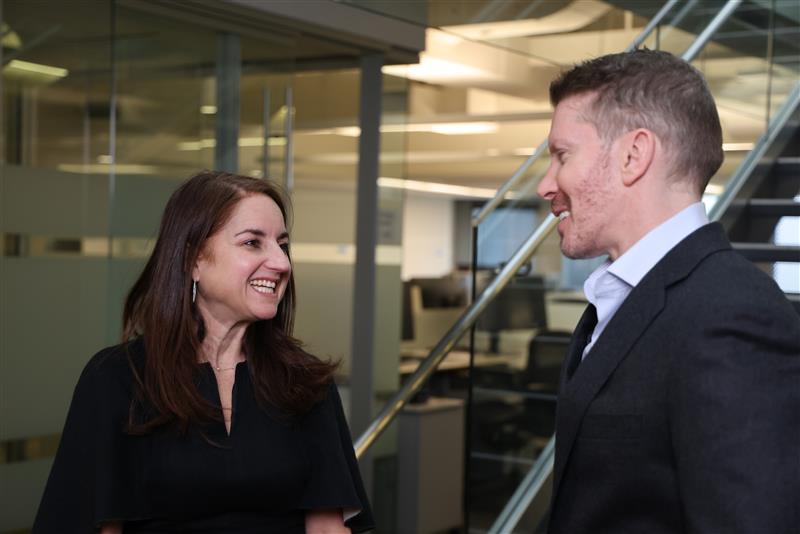
zach and kate talking

Without boundaries podcast

The podcast episodes on this page are intended for informational purposes only.

The content provided within each podcast episode should not be construed as investment advice, research or recommendation, solicitation or offer for any specific Russell investment or other products, strategy, security or service.

The information does not take into account the investment objectives or circumstances of any particular investor and may not be appropriate for all investors. Any past performance results should not be seen as a guide to future.

All opinions presented are as of the date of recording and subject to change without notice. Information contained within the podcast is obtained from sources believed to be reliable but not guaranteed. Reliance upon the information provided in the podcast is at the sole discretion of the listener. The general information contained in this publication should not be acted upon without obtaining investment advice from a licensed professional. This podcast may involve discussions with non Russell Investments personnel.

The views and opinions expressed by non affiliated personnel in this podcast for those of the speaker and do not reflect the policy or position of Russell Investments or any of its affiliates. This content should not be construed as recommendation or endorsements of any third party manager featured on the podcast.

Some of the portfolio managers or firms featured in the podcast may manage funds or accounts that are offered by Russell Investments, and they may be business relationships with Russell Investments or its affiliates.

Neither Russell Investments nor any of its staff accepts any responsibility for or liability with respect to the information or opinions contained in this publication. In EMEA, this content is suitable for professional clients only. Capital at risk.