

Customisation depends on the model. Open architecture approaches are typically ideally positioned to build portfolios around a scheme’s specific funding goals, risk tolerance, and existing assets, without being constrained to proprietary solutions. This allows for more tailored portfolio construction and helps ensure decisions are aligned with client outcomes rather than product availability.
Key takeaways
- As more defined benefit (DB) pension schemes choose to run-on, it is increasing the demand for OCIO models that support longer time horizons, growth and diversification.
- Greater allocation to private markets and specialist mandates increases the importance of open architecture models, underpinned by deep manager research.
- Open architecture allows schemes to build around existing holdings, avoiding unnecessary change while retaining flexibility to evolve portfolios over time.
As DB schemes move beyond traditional endgame strategies, those pursuing run-on need broader and more flexible investment capabilities than those targeting buyout.
The question for trustees is no longer simply about scale or execution capability, but how effectively they can access the full breadth of investment opportunities, particularly as portfolios expand into private markets and specialist mandates.
The growth of OCIO in the UK reflects this shift, as schemes look for support in accessing and managing more complex portfolios. Open architecture builds on this by enabling access to a broader range of managers and strategies.
The backdrop for this change is a set of structural shifts that are becoming increasingly relevant for schemes pursuing run-on strategies.
What is ‘open architecture’?
An OCIO model that focuses on the selection of high-quality third-party managers across asset classes without constraint and reliance on any single provider. This allows for flexibility and better management of conflicts.
Longer time horizons
More UK pension schemes are considering alternatives to buyout in the near term. In our 2025 research report which covered 104 schemes and £250 billion of assets, 32% of respondents preferred low dependency run-on or run-off, up from 27% last year, although buyout remains the most common endgame target.
The growing popularity of alternatives to buyout suggests that more pension schemes will operate over longer time horizons and retain exposure to growth assets to improve funding outcomes. With these goals, active management, diversification, and access to differentiated sources of return – all which open architecture OCIO helps facilitate – become increasingly important.
These trends were also reflected in our research, where 57% of respondents cited depth of expertise as a key reason for using an outsourced OCIO provider, while 43% pointed to the quality of manager selection.
Operating over longer time horizons places greater pressure on governance, particularly as portfolios become more complex and require ongoing oversight. Approaches that rely on “internal management” — whether in-house or proprietary strategies — can narrow the opportunity set, increase the burden on oversight, and introduce potential conflicts. While trustee governance provides important safeguards, open architecture reduces reliance on in-house solutions and supports closer alignment with client outcomes.
Broader access, more strategies
Schemes that run-on are increasing their use of private markets, flexible growth strategies, and specialist mandates to enhance yield and diversification. Our research last year showed 17% of schemes planned to increase their allocations to private credit over the following six months, up from only 7% intending to do so the previous year.
Beyond traditional allocations
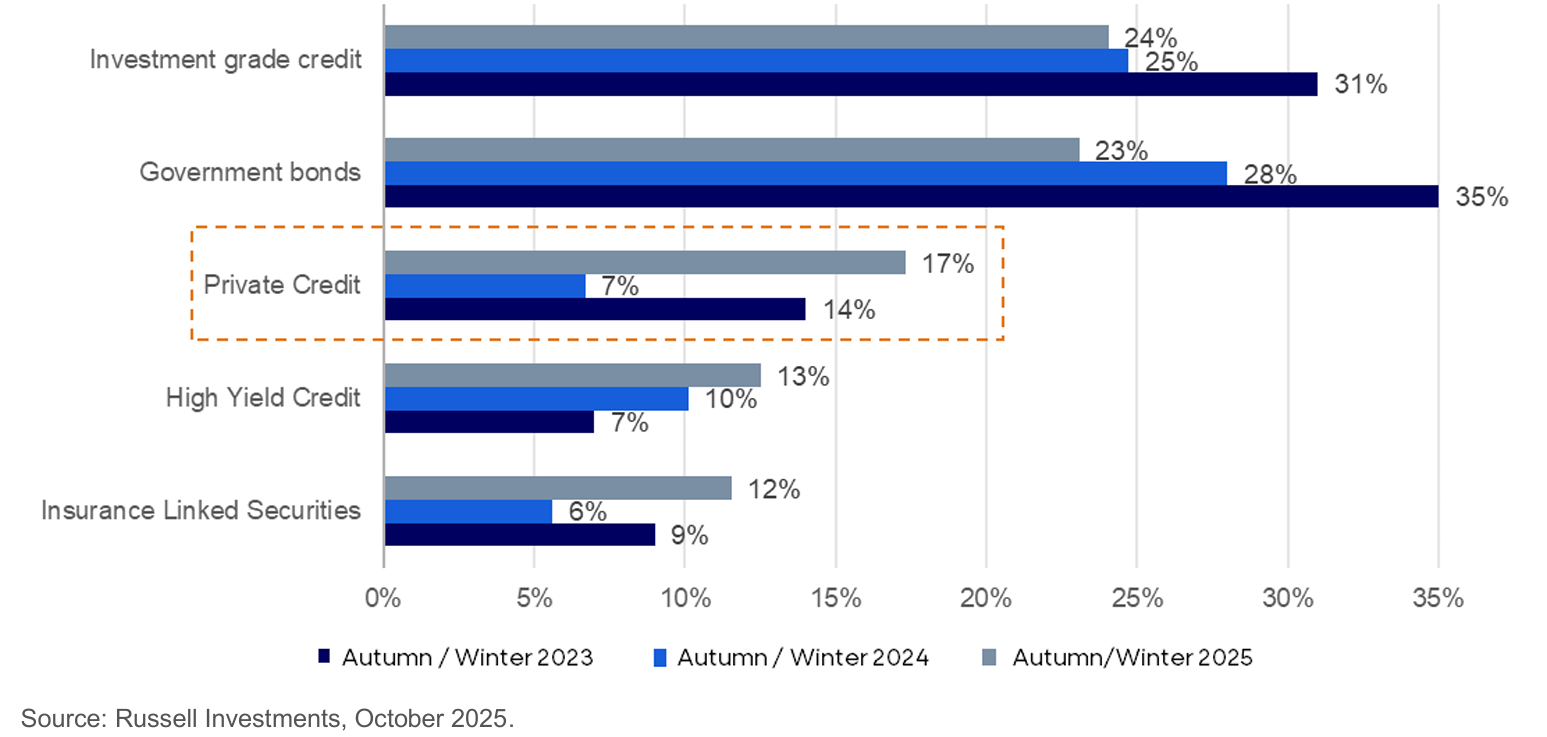
For schemes that are looking to access private markets, an open architecture model can offer clear advantages. Smaller schemes, in particular, often face constraints around manager selection and available strategies. An OCIO approach can help address these limitations by enabling broader diversification across vintages, sectors, regions, and strategies.
Importantly, no single organisation can cover the full range of investment strategies available. Open architecture allows portfolios to draw on multiple managers rather than relying on a single provider.
Access to a broader investment universe is particularly important when accommodating legacy holdings. A wide range of strategies allows portfolios to be constructed around existing exposures and to adapt over time without unnecessary disruption.
Optionality also matters when it comes to fees. In areas such as LDI, even modest reductions in manager fees, achieved by drawing from a broad universe of options, can have a meaningful impact on overall costs.
Internally managed vs externally managed Liability Driven Investment (LDI)
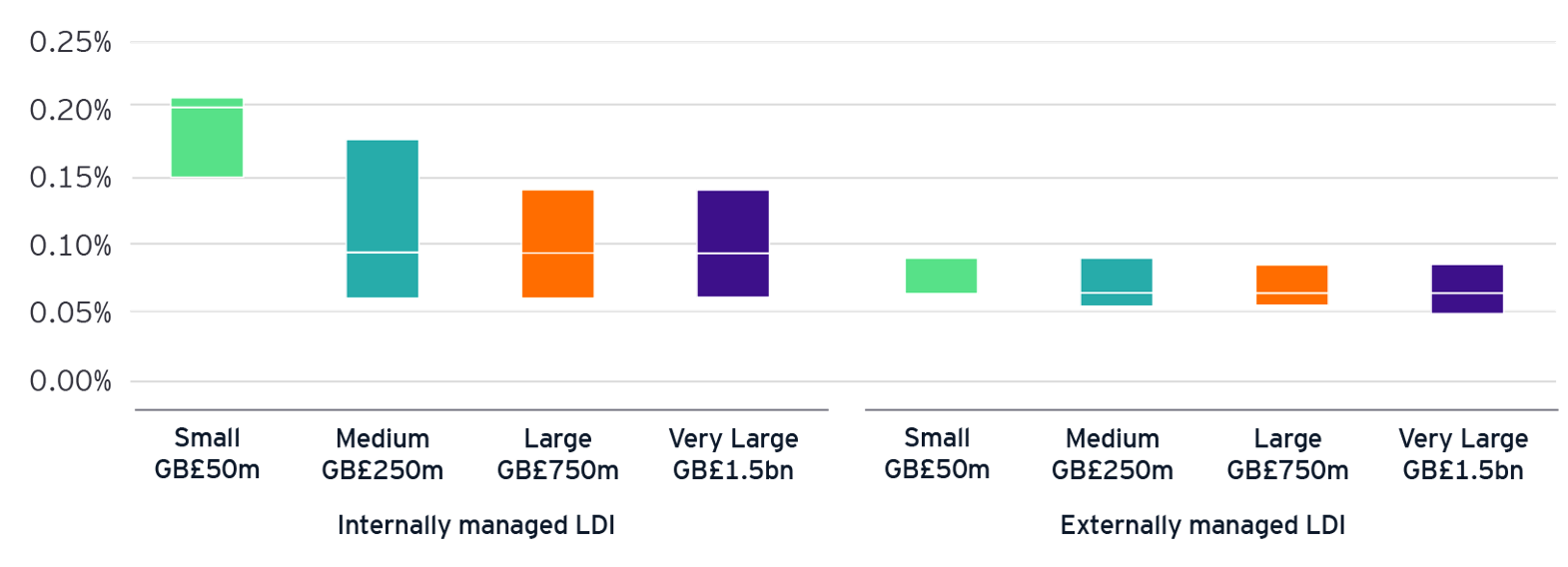
Source: EY, Fiduciary management fee survey, December 2025.
Open architecture improves integration
As portfolios become more diversified and draw on multiple managers, the challenge shifts from access to integration. Delivering on funding, liquidity, and risk objectives requires a genuinely integrated approach, where all components of the portfolio are managed collectively rather than in silos. Open architecture supports this by enabling different managers and strategies to be combined and overseen as a single, coherent portfolio.
Advances in technology and data have raised expectations around portfolio oversight, with trustees expecting real-time visibility of risks, exposures, and performance across increasingly complex portfolios. The key differentiator among OCIO providers is how effectively that integrated view informs investment decisions.
Investor implications
The demands on pension schemes which choose to run-on are significant. Longer time horizons, broader opportunity sets and higher expectations for integration and outcomes are reshaping what trustees require from their OCIO providers.
For trustees focused on long-term objectives, the key question is how effectively a provider can access, integrate and manage an increasingly diverse range of investment capabilities. Open architecture OCIO models are well aligned with these changing needs. By enabling access to a broad universe of managers and supporting flexible portfolio construction, it offers a framework built from the ground up to adapt alongside schemes.
Select client questions
Trustees should assess whether OCIO is a core focus of the provider and how resilient the model is under stress. In proprietary models, changes in performance or business priorities may require unwinding allocations. Open architecture structures can offer greater flexibility, transparency, and continuity, which are key considerations for long-term governance and oversight.
As pension schemes expand into private markets and more complex strategies, accessing specialist expertise across asset classes becomes increasingly important. An OCIO model that can source and integrate high-quality managers globally helps schemes capture a broader range of opportunities, enhance diversification, and support better long-term outcomes.
Any opinion expressed is that of Russell Investments, is not a statement of fact, is subject to change and does not constitute investment advice.