Recovery Often Comes Hard on Heels of Market Pullbacks
Understanding volatility
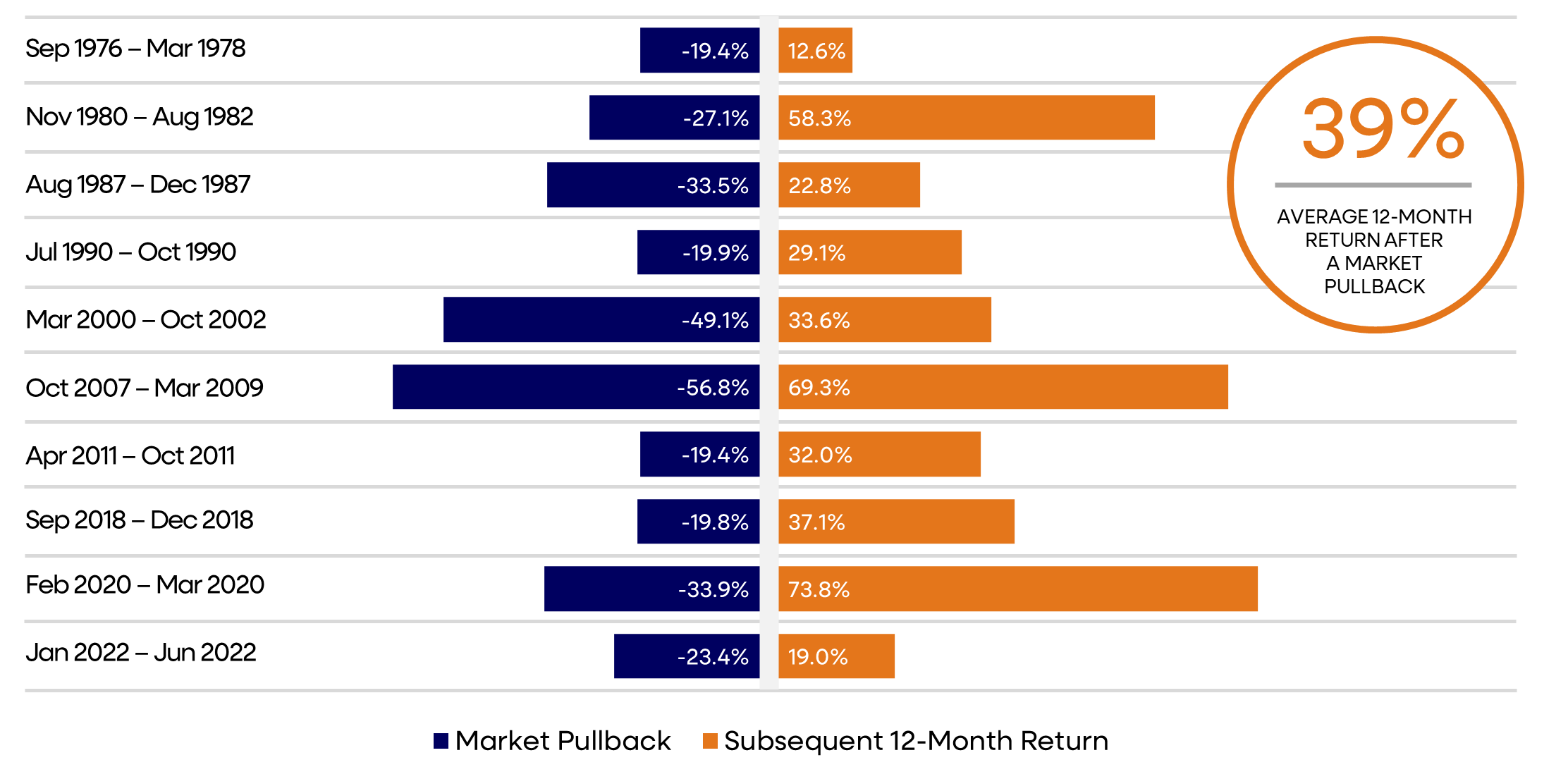
Historically, significant stock drawdowns have been followed by stock rebounds. Over the past 50 years, every market pullback of at least 15% has seen a subsequent snapback in the following year. Indeed, the average 12-month return of 39% is greater than the average pullback of 30.2%.
Rebound Town
Rebound Town
Stock market pullbacks typically see near-term recovery
12-month S&P 500 returns after pullbacks of at least 15%, 1975-present
Source: S&P 500 Index. Index returns represent past performance, are not a guarantee of future performance, and are not indicative of any specific investment. Indexes are unmanaged and cannot be invested in directly.
The Upshot
Short-Term Volatility Shouldn’t Spook Long-Term Investors
Volatility can be uncomfortable, and market swings are unavoidable for long-term investors. The key is to not let these periods of unusually weak—or unusually strong—returns drive decision-making. Avoid emotional reactions to market movements and stay the course for the long term.