

An implementation partnership is a strategic relationship that helps investors execute and manage their total portfolio more efficiently. Services can include trading, transition management, portfolio overlays, liquidity management, and portfolio completion, allowing investors to improve coordination, reduce operational complexity, and stay aligned with long-term investment objectives.
Key takeaways
- Investors are reassessing fragmented implementation models as portfolio complexity, liquidity demands, and market risks grow.
- A total-portfolio mindset is driving greater use of overlays, completion strategies, and integrated implementation frameworks to improve efficiency and portfolio coordination.
- Customization, cost management, and scalable execution are becoming important across both institutional and wealth channels.
Investment teams have long grappled with portfolio complexity, but the way they are addressing it is evolving.
Historically, investors have worked with numerous managers to execute on their total portfolio strategy. These sub-advised relationships span active and passive managers, but also include specialists that support overlays, transition management, trading, and portfolio completion strategies. While that fragmented approach may have been sufficient in a simpler market environment, it now creates operational inefficiencies and increased costs that are harder to accommodate.
Liquidity pressures, customization demands, and rising market complexity are pressuring investment teams to evaluate whether a more integrated implementation approach can improve their processes, and ultimately, benefit clients.
Liquidity pressure rises
Liquidity management has become more important as private market distribution rates have slowed in recent years. Investors still need to meet benefit payments, capital calls, and other portfolio obligations while remaining aligned with long-term strategic asset allocation targets.
Distributions downtrend
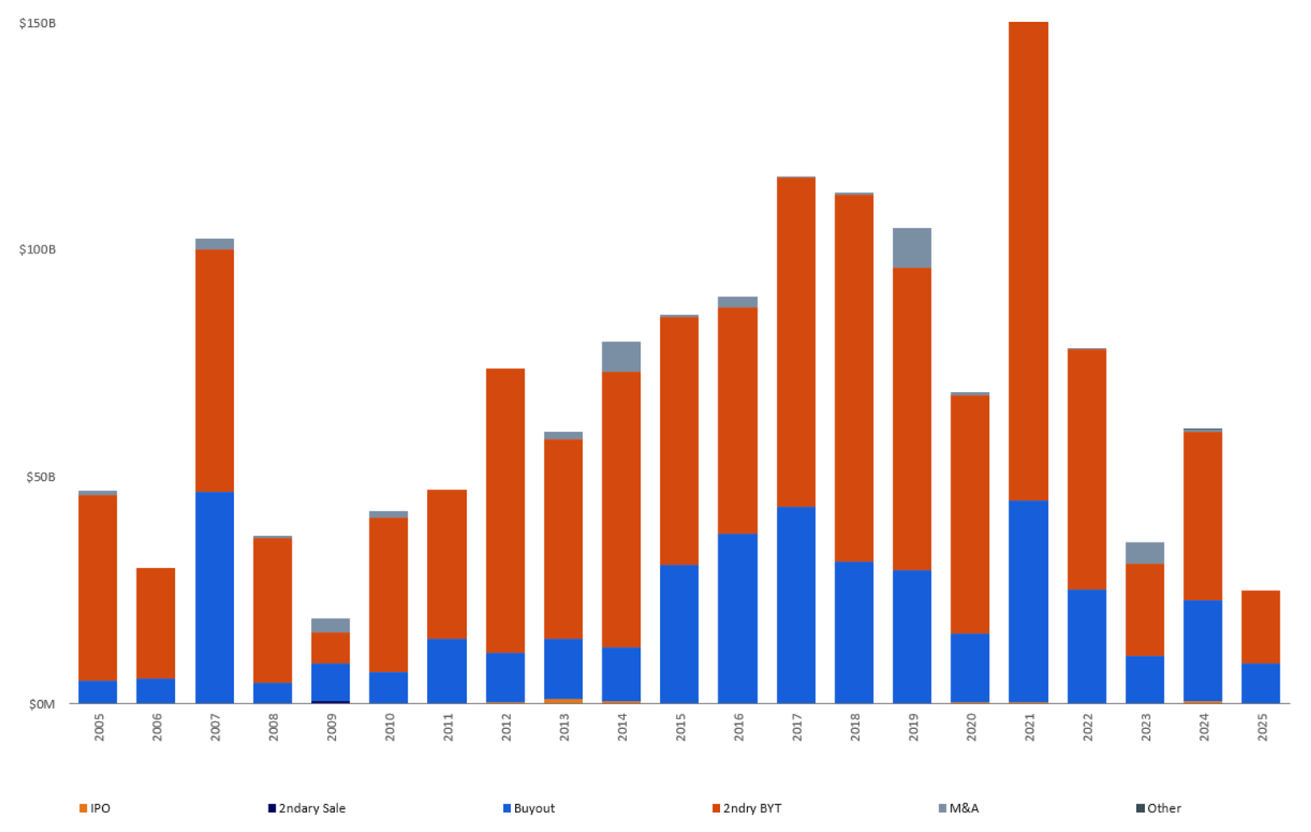
Source: Preqin 'Private Equity in 2026'
This creates a balancing act. Investors need to maintain liquidity without unnecessarily disrupting public market exposures or drifting away from desired portfolio positioning. As a result, they are increasingly taking a total-portfolio approach to implementation. Overlays, completion strategies, and systematic rebalancing tools are being used more actively to help maintain exposures, manage liquidity needs, and improve portfolio flexibility during periods of market change.
Concentration risks are testing diversification
Risk management is also becoming more complex. Market concentration has increased significantly, particularly within large-cap U.S. equities. Broad asset allocation alone may no longer provide the same level of diversification it once did, especially as risks become concentrated within a smaller group of companies and sectors.
The result is investors are increasingly seeking more precise portfolio completion and overlay tools to manage concentrated exposures and unintended risks across the total portfolio. This is driving greater demand for implementation approaches that can coordinate exposures dynamically across portfolios, aided by portfolio analytics tools that measure risk across a total portfolio. Investors are also exploring a wider range of implementation tools, including active currency hedging, portable alpha strategies, ETF-based implementation models, and more sophisticated completion frameworks designed to improve portfolio precision while preserving flexibility.
Customization reshapes implementation models
Customization demands are growing across both institutional and wealth channels, prompting organizations to reassess their existing partnership models.
Some investors are seeking greater flexibility to accommodate evolving client needs and adjust factor, sector, or regional exposures dynamically. Others are implementing exclusions, or mission-aligned investment requirements.
Tax Management is not just for the Wealth market anymore. Institutional investors are taking more control of their realized gains and losses to better manage other liabilities. Some endowment & foundations, Veba plans, corporate and insurance pools have a broader need to managed realized gains and income from their investment programs.
These growing customization demands increase operational complexity across portfolios and are driving greater interest in implementation partnerships that can support more tailored and scalable investment solutions.
At the same time, financial institutions continue to face increasing competition for distribution and shelf space. Firms are under pressure to reduce costs, drive scale, and increase differentiation in product offerings across increasingly complex platforms. Technology is accelerating this shift. Model-based implementation frameworks, long established in wealth management, are becoming more common in institutional portfolios as customization becomes easier to scale. Advances in trading and implementation technology are supporting the growth of custom SMAs, tax-aware strategies, and more tailored portfolio solutions.
Investor implications
The investment operating environment is becoming increasingly complex. Many investors already have implementation providers and tools in place. The challenge is coordinating those capabilities efficiently across the total portfolio.
As liquidity pressures, customization demands, and portfolio complexity continue to rise, investors may place greater value on implementation models that improve integration, scalability, and risk management across the investment process.
The direction of travel is clear: investment partnerships will need to adapt to deliver greater integration, scale, and flexibility.
Common client questions
Many investors are reassessing fragmented implementation models as portfolio complexity, liquidity pressures, and customization demands increase. A more integrated implementation approach can improve portfolio coordination, streamline execution, reduce costs, and provide greater flexibility to manage changing market conditions and investment priorities.
Implementation partnerships help investors manage liquidity without unnecessarily disrupting strategic asset allocation. By using overlays, completion strategies, systematic rebalancing, and portfolio analytics, investors can maintain target exposures, respond to cash flow needs, and manage concentration risks across the total portfolio more effectively.
Growing demand for customized portfolios is driving greater adoption of technology-enabled implementation solutions. Advances in trading, portfolio analytics, and automation make it easier to scale tax-aware strategies, custom SMAs, model portfolios, and tailored investment solutions while improving operational efficiency and risk management.
Any opinion expressed is that of Russell Investments, is not a statement of fact, is subject to change and does not constitute investment advice.