

Key takeaways
- Real asset middle market investments are often better positioned to capture growth from secular themes than large, mature assets.
- Opportunities are expanding beyond traditional core assets, supported by trends relating to digital infrastructure, energy security, and regional priorities.
- Active, multi-fund management is becoming critical, with single strategies struggling to adapt as quickly to market changes.
Today, the backdrop for real assets has reset. Growth is returning, but in different parts of the market than many investors remember. While in the post-pandemic period performance was defined by scale, now it is the result of adaptability and having access to a broad array of organization sizes and business plans.
The result is that portfolios need to be positioned for a different set of opportunities than those that defined the past few years.
The rise of middle market investments
To understand where opportunities in real assets are emerging today, it helps to understand how the market has evolved.
In the years following COVID, larger assets were better able to withstand higher interest rates. Scale enabled better financing terms and more resilient capital structures, reinforcing the dominance of established infrastructure platforms.
That dynamic is now changing. As the market has reset in a higher but more stable rate environment and growth re-emerges, smaller and middle market investments are becoming more competitive. In many cases, they are better positioned to capture the next phase of market opportunities.
Lower cost to entry in mid-market infrastructure
Enterprise value to EBITDA (x)
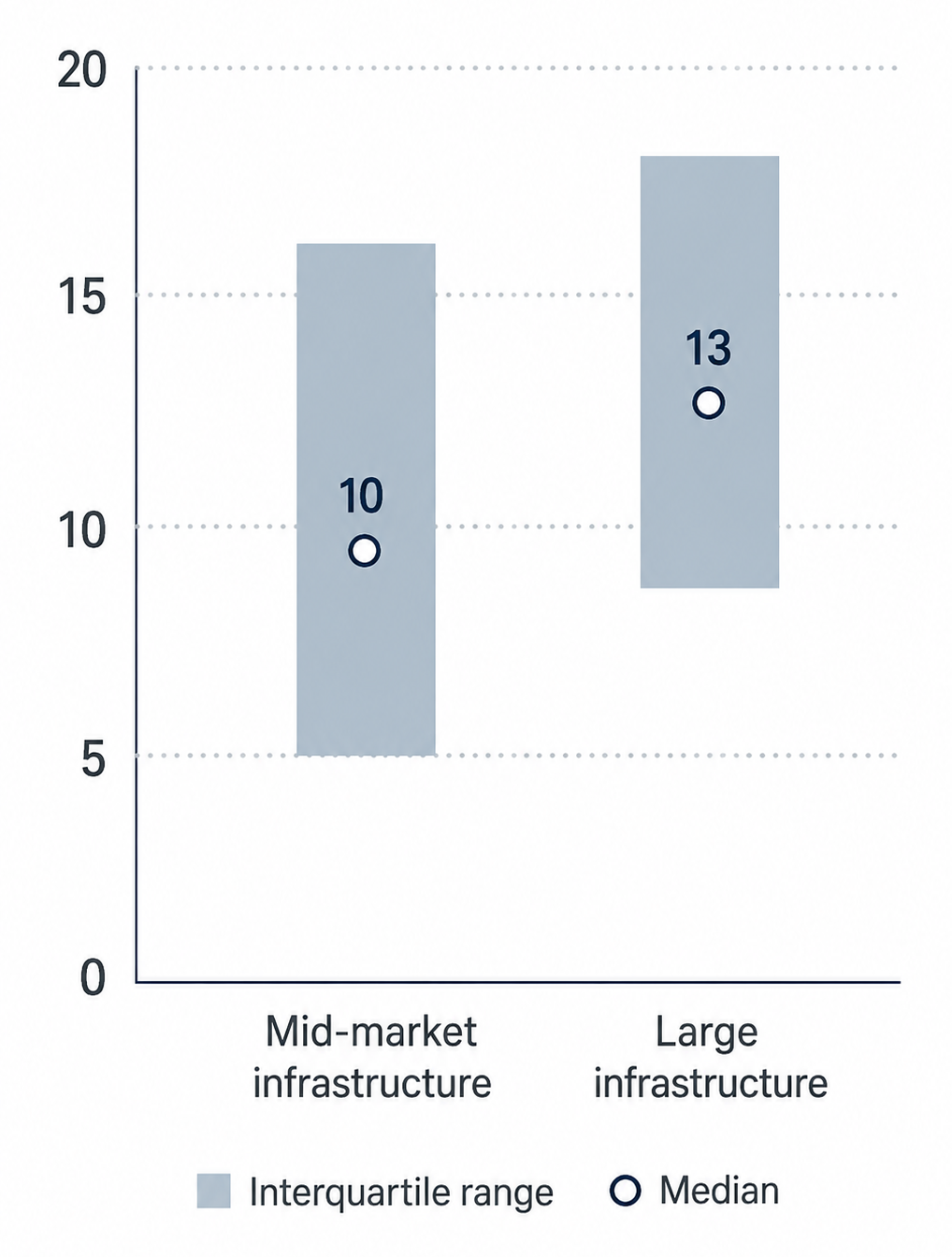
Source: EDHEC Valuation metrics for mid-market assets (between $100 million and $1 billion) and large assets (above $1 billion) as of May 30, 2025. Entry-level enterprise value to EBITDA is imputed based on recent transactions and a risk factor model.
The reason for the dynamic shift is structural. Large infrastructure assets tend to be mature and their focus is often on managing existing cash flows, optimizing operations, and delivering growth projects that, while large in absolute size, are more muted on returns.
By contrast, middle market investments are inherently more dynamic. They are earlier in their life cycle, more operationally flexible, and more exposed to both organic and inorganic growth opportunities. In practice, this means they can improve operations, expand commercial capabilities, and pursue acquisitions in ways that meaningfully accelerate growth. These characteristics also make them well suited to areas such as digital infrastructure and energy systems, where demand is evolving rapidly and new business models are emerging.
Diversified portfolio construction is not about replacing large assets but complementing them. A portfolio that includes multiple dimensions of size and business models is better positioned to capture a wider range of outcomes and to adapt as market leadership shifts.
Strong mid-market returns
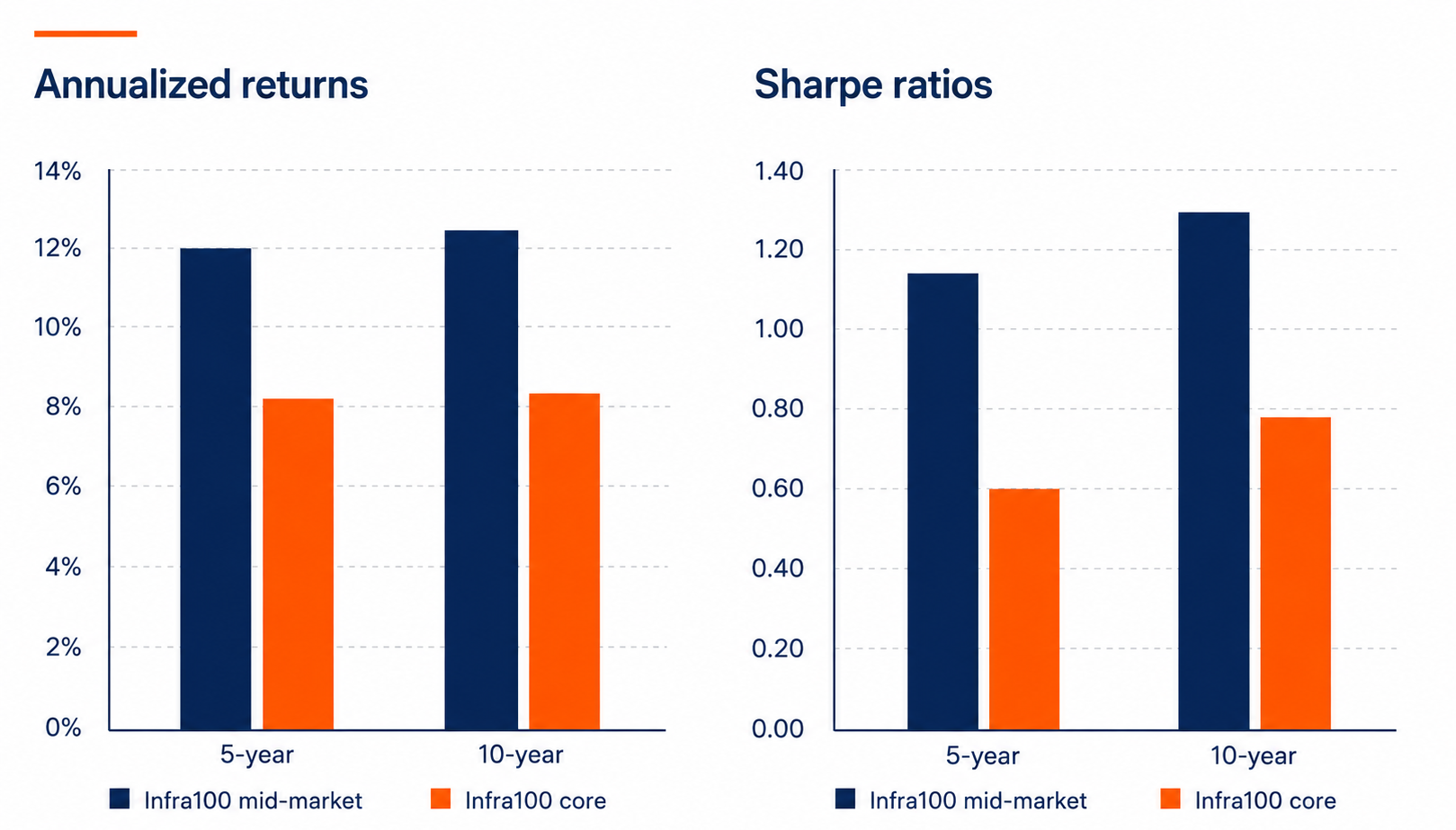
Source: EDHECinfra 100 Mid-market, market capitalization $28 billion and EDHECinfra 100 Core, market capitalization $238 billion. As of May 30, 2025, gross of fees, equally weighted, in local currency.
Why active, multi-fund
As opportunity expands, the way portfolios are constructed becomes more important. Infrastructure evolves as economies change, with every decade bringing new policy priorities, new technologies, and new risks. What feels different today is the breadth of changes occurring simultaneously and at high velocity.
For instance, digital infrastructure continues to grow, but the opportunity within it is becoming more nuanced, with downside risks growing for some business models. Energy markets are also being reshaped, with the focus having shifted from pure decarbonization toward security, resilience, and national priorities. At the same time, some traditional sectors are being redefined, while others face more persistent headwinds.
In this environment, static allocations can quickly become misaligned. Single funds, by design, have limited flexibility. They typically hold a concentrated set of illiquid assets and require time to reposition. Adjusting exposure across sectors, regions, or themes can take years as managers seek to sell assets and reinvest elsewhere.
Moreover, only investing in listed or unlisted infrastructure assets limits the spectrum of opportunities investors have access to. Combining public and private portfolios allows for access to a more diverse range of underlying asset types.
Listed and unlisted infrastructure sector exposures
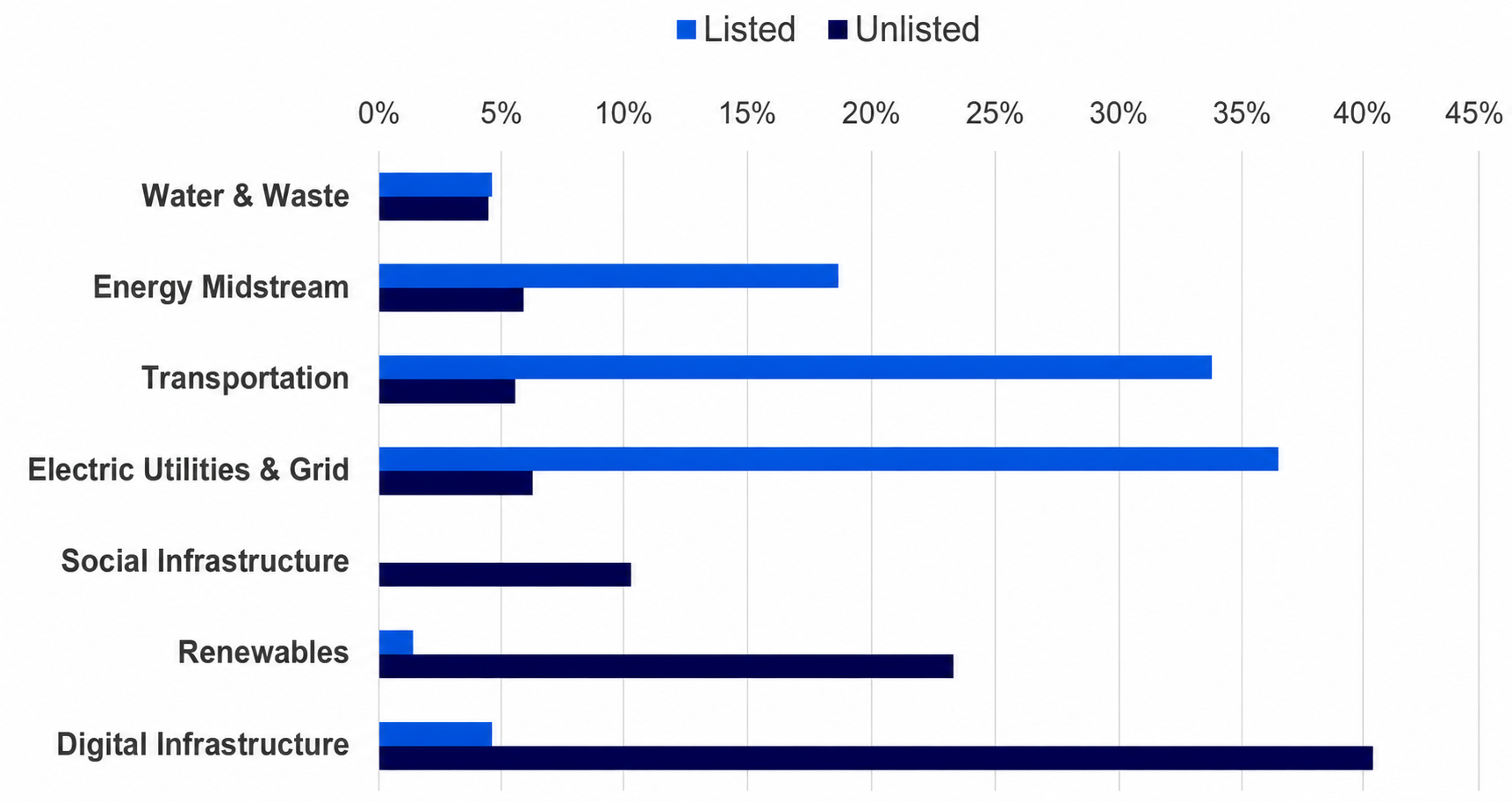
Source: As of 31 December 2025. Listed infrastructure represented by Russell Investments OpenWorld Global Listed Infrastructure Fund and Unlisted infrastructure represented by Russell Investments Global Unlisted Infrastructure Fund.
A multi-fund, actively managed approach allows for a different level of responsiveness. It enables capital to be reallocated as themes evolve, exposures to be adjusted as risks emerge, and new opportunities to be accessed as they develop. It also provides a clearer view of underlying exposures, helping to manage concentrations that may not be obvious at the surface.
The past few years have reinforced this point. The rise of single-sector strategies, particularly in renewables and emerging clean energy technologies like hydrogen, reflected a period when one theme appeared dominant. However, as the landscape has shifted, those concentrated exposures have been harder to reposition, highlighting the need for portfolios to evolve with markets.
Single-sector strategies can drop off
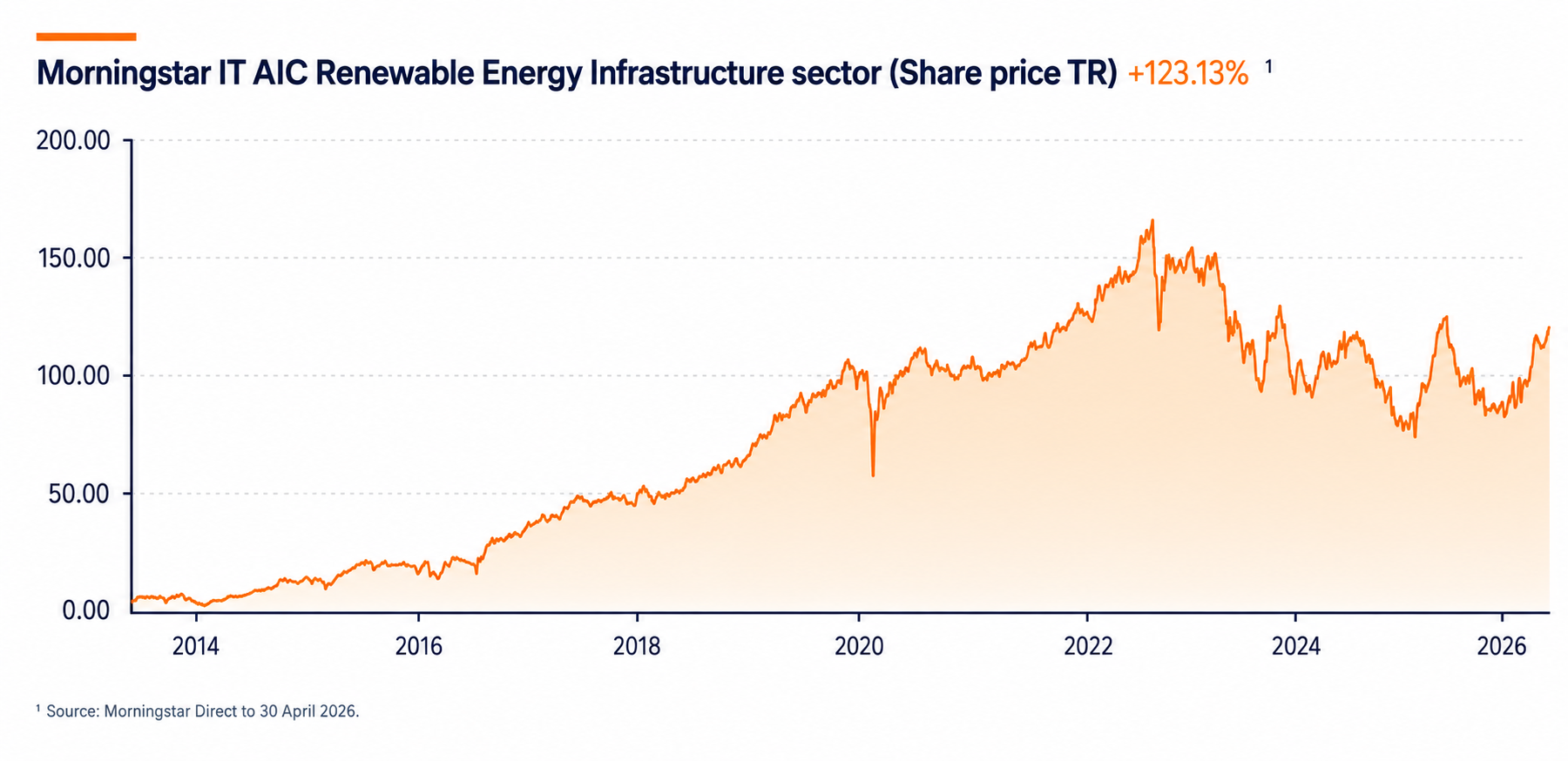
Source: The Association of Investment Companies, Morningstar IT AIC Renewable Energy Infrastructure sector.
Why act now
The real assets market has always been changing alongside the needs of the world and that remains the case today. Secular growth themes, particularly in digital infrastructure and energy, are driving strong underlying demand.
At the same time, many portfolios have not fully adjusted. Some remain concentrated in large, mature assets. Others are exposed to narrow themes that no longer reflect the current landscape. In both cases, there is a risk of being positioned for the market that was, rather than the one that is emerging.
The past cycle rewarded scale and stability. The next cycle is likely to reward flexibility, breadth, and active positioning. A real assets allocation built across the full opportunity set, and managed with the ability to adapt, can help investors capture today’s returns while remaining resilient as markets continue to evolve.