Without Boundaries™
Welcome to the Russell Investments podcast with Jon Eggins, where we take you behind portfolios to talk to the investors and thinkers who shape how markets move in the real world.
SubscribeListen to the latest: Episode 13

You have certain cookies disabled on the Russell Investment site. In order to watch this video, you must agree to the use of cookies provided by YouTube.
to permit these cookies and watch the video.All episodes
Episode 13
How I invest in credit through the AI boom| Bruce Richards
You have certain cookies disabled on the Russell Investment site. In order to watch this video, you must agree to the use of cookies provided by YouTube.
to permit these cookies and watch the video.Artificial intelligence is reshaping the global economy, but how should investors adapt their credit portfolios? In this episode of Without Boundaries, Jon Eggins, Managing Director and Co-Head of Portfolio Management at Russell Investments, speaks with Bruce Richards, CEO and founder of Marathon Asset Management and now Managing Partner and Head of CVC Marathon, about investing through one of the biggest structural shifts facing investors today. From power generation and data centers to infrastructure and global supply chains, the AI revolution is creating unprecedented demand for capital across public and private credit markets. At the same time, it is disrupting traditional business models, particularly in software, creating greater dispersion between potential winners and losers. Bruce explains why a multi-asset approach to credit investing is important in this new environment. As opportunities emerge across different sectors, regions and credit markets, investors may benefit from looking beyond traditional fixed income allocations and building diversified exposures, supported by active manager selection and disciplined portfolio construction. In this episode, you'll learn:
- Why AI is driving one of the largest capital investment cycles in history
- How AI is resetting credit markets and software investing
- Why diversification across public and private credit matters more than ever
- How active credit selection can help uncover opportunities in a rapidly changing market
- Why Bruce believes the next credit cycle will reward investors who can look across the full opportunity set
Marathon Asset Management is one of the specialist investment managers available through Russell Investments' open-architecture approach. Russell Investments provides eligible clients with access to Marathon's Multi-Asset Credit strategy, offering diversified exposure across public and private credit markets through a single actively managed portfolio.
Episode 12
Kirsten Bartok Touw: Investing in the future of defense and space
You have certain cookies disabled on the Russell Investment site. In order to watch this video, you must agree to the use of cookies provided by YouTube.
to permit these cookies and watch the video.Transcript
In this episode of Without Boundaries, Jon Eggins sits down with Kirsten Bartok Touw, Co-Founder and Managing Partner at New Vista Capital, to explore investing at the intersection of aerospace, defense and emerging technology.
Drawing on decades of experience spanning Silicon Valley, Washington D.C. and private markets, Kirsten shares how investors can identify transformative technologies before they become mainstream. She explains why understanding both technological development and government priorities is critical in sectors such as defense and space.
Topics include:
• How investors identify emerging opportunities in aerospace, defense and space
• The rise of "neo-primes" and the changing defense innovation ecosystem
• Why space is becoming critical infrastructure for communications and data
• How to evaluate technology readiness and avoid investing too early
• Lessons learned from backing founders building transformational businesses
Episode 11
David Foley: Investing in the next energy cycle
You have certain cookies disabled on the Russell Investment site. In order to watch this video, you must agree to the use of cookies provided by YouTube.
to permit these cookies and watch the video.Transcript
In this episode of Without Boundaries, Jon Eggins sits down with David Foley, Senior Managing Director & Global Head of Blackstone Energy Transition Partners, to explore how private capital is helping meet one of the defining challenges of our time: rising energy demand.
With three decades at Blackstone, David shares how private equity has evolved from generalist investing to deep sector specialization, and why maintaining a competitive edge is more important than ever in a crowded market.
The conversation also looks at the growing gap between electricity supply and demand, driven by data centers, reshoring of manufacturing and years of underinvestment in infrastructure. David explains how these dynamics are creating opportunities across the energy ecosystem, and how public-private partnerships are playing a critical role in delivering large-scale energy infrastructure.
Topics include:
- How private equity has evolved and why specialization is now essential
- What is driving the renewed growth in electricity demand
- Why underinvestment in the grid is creating structural opportunities
- The role of private capital and public-private partnerships in building energy infrastructure
- Real world examples of investing across the energy transition
Episode 10
Matt DeCicco: Small-cap biotech with big ideas
You have certain cookies disabled on the Russell Investment site. In order to watch this video, you must agree to the use of cookies provided by YouTube.
to permit these cookies and watch the video.Transcript
Host Jon Eggins sits down with Matt DeCicco, a leader on Lord Abbett’s equity investment team and portfolio manager on the firm’s innovation growth equity team, with a focus on biotech and healthcare innovation. With an MS in biotechnology, Matt combines deep scientific expertise with decades of equity investing experience.
Topics include:
- Why biotech investing is a repeatable process even when revenues are years away
- The small-cap opportunities in oncology and rare diseases
- How conviction, clinical evidence and price trends impact portfolio allocations
- The role of AI in speeding drug discovery and creating differentiation across companies
- Developing Russell Investments’ customized biotech strategy for high-growth healthcare
Episode 9
Evgenia Gvozdeva: Where AI Meets Judgment in Modern Investing
You have certain cookies disabled on the Russell Investment site. In order to watch this video, you must agree to the use of cookies provided by YouTube.
to permit these cookies and watch the video.Transcript
Host Jon Eggins sits down with Evgenia Gvozdeva, Global Head of Research and Development at Russell Investments. Evgenia reflects on growing up in post-perestroika Russia to building a career grounded in mathematics, quantitative research, and technology—and how that foundation shapes the way AI is applied in investment decision-making today.
She also shares how Russell Investments is advancing research and development by combining data, human judgment, and culture to support better investment outcomes without losing sight of the principles that have long defined its approach.
Topics include:
- How Russell Investments is evolving manager research for the next generation
- The balance between quantitative insight and qualitative judgment
- Applying AI and technology responsibly in investment decision-making
Episode 8
Milton Berlinski and Todd Crockett: Looking around the corner with private markets legends
You have certain cookies disabled on the Russell Investment site. In order to watch this video, you must agree to the use of cookies provided by YouTube.
to permit these cookies and watch the video.Transcript
Two private-markets leaders—Milton Berlinski (Reverence Capital Partners) and Todd Crockett (TA Associates)—break down where private markets are heading and which companies are best positioned to grow.
They share insights from decades of meeting with companies across sectors, how top investors spot industry shifts early, and what great management teams do differently. Plus, they provide an inside look at why TA and Reverence invested in Russell Investments—and where they see value across the asset-management industry today.
Key topics:
- Seeing structural shifts early across sectors
- What drives successful exits in today’s private markets
- How investors help senior teams accelerate growth
- Lessons from mentors and career-defining deals
- Where they see value in asset management today
Episode 7
Rich Clarida: Fed duets, fiscal policy, and The Fragmentation Era
You have certain cookies disabled on the Russell Investment site. In order to watch this video, you must agree to the use of cookies provided by YouTube.
to permit these cookies and watch the video.Transcript
Former Fed Vice Chair Rich Clarida unpacks the forces shaping markets – from central banks, fiscal policy and PIMCO’s recent outlook, The Fragmentation Era.
Along the way, he reflects on the Fed’s musical side and why Maynard Keynes would make an excellent dinner guest.
Key topics:
- Fiscal sustainability and entitlement risks
- The dollar’s outlook
- PIMCO’s outlook – The Fragmentation Era
- Productivity, AI, and macro trends
Episode 6
Sir Mick Davis: Why good rocks make great investments
You have certain cookies disabled on the Russell Investment site. In order to watch this video, you must agree to the use of cookies provided by YouTube.
to permit these cookies and watch the video.Transcript
Sir Mick Davis, mining legend and founder of Vision Blue Resources, reveals what decades of finding good rocks in the ground and building great companies can teach today’s investors.
This wide-ranging conversation explores:
How finding “good rocks” translates into investing in quality assets with long-term potential.
The role of critical minerals in powering the global energy transition and electrification of countries.
Why geopolitics and supply chains now define competitive advantage in the mining industry.
Sir Mick Davis — Founder and Managing Partner, Vision Blue
Episode 6: Why good rocks make great investments
You have certain cookies disabled on the Russell Investment site. In order to watch this video, you must agree to the use of cookies provided by YouTube.
to permit these cookies and watch the video.Sir Mick Davis, mining legend and founder of Vision Blue Resources, reveals what decades of finding good rocks in the ground and building great companies can teach today’s investors.
This wide-ranging conversation explores:
How finding “good rocks” translates into investing in quality assets with long-term potential.
The role of critical minerals in powering the global energy transition and electrification of countries.
Why geopolitics and supply chains now define competitive advantage in the mining industry.
Episode 5
Matt Hudson: Timing is everything. How to get growth right
You have certain cookies disabled on the Russell Investment site. In order to watch this video, you must agree to the use of cookies provided by YouTube.
to permit these cookies and watch the video.Transcript
Picking the right growth stock isn’t a matter of what but when. In our latest episode, Wellington’s Matt Hudson explains how his investment philosophy has shaped his approach to analyzing growth companies for more than 30 years. He also highlights opportunities in AI, the defense sector and financials—where he believes the party might just be getting started.
Episode 4
Rick Rieder: Unconstrained and unscripted
You have certain cookies disabled on the Russell Investment site. In order to watch this video, you must agree to the use of cookies provided by YouTube.
to permit these cookies and watch the video.Transcript
Rick Rieder, renowned investor and CIO of BlackRock's $3 trillion global fixed income business, highlights the benefits of an actively managed, unconstrained investing approach amid rising government debt and higher tariffs—and why every portfolio needs an "escape hatch" to weather unforeseen shocks. He also shares his favorite golf course and explains why, in hockey, pulling the goalie is usually a smart move.
Episode 3
Kate El-Hillow: A mix of grace and grit
You have certain cookies disabled on the Russell Investment site. In order to watch this video, you must agree to the use of cookies provided by YouTube.
to permit these cookies and watch the video.Transcript
Running portfolios in the face of extreme volatility, taking a leap of faith on a job in Tokyo and racking up miles on red-eye flights isn’t for the faint of heart. But Russell Investments CIO Kate El-Hillow makes it look easy.
Unflappable yet unassuming, Kate challenges her investment team to step out of their comfort zone to embrace new perspectives—and even take on new roles. And she's not afraid to run with the bulls in Pamplona!
Get to know Kate and hear her take on the integration of public and private markets.
Episode 2
Chris Joye: Tariff trades and shark tales (Coolabah part II)
You have certain cookies disabled on the Russell Investment site. In order to watch this video, you must agree to the use of cookies provided by YouTube.
to permit these cookies and watch the video.Transcript
Chris Joye discusses how Coolabah successfully traded the Trump administration’s rollout of reciprocal tariffs, the firm’s use of data science to exploit bond mispricings in search of alpha and how he once saved a surfer from a bull shark using a search-and-rescue drone.
Episode 1
Chris Joye: That crazy aussie shop (Coolabah part I)
You have certain cookies disabled on the Russell Investment site. In order to watch this video, you must agree to the use of cookies provided by YouTube.
to permit these cookies and watch the video.Transcript
In our first episode, Chris Joye, founder and CIO of Coolabah Capital Investments, discusses Coolabah’s contrarian approach to trading credit, how he built a $15 billion bond shop against odds and his strong ties to rugby in Australia and New Zealand.
About the show
We know that the best ideas don’t come from a single source. That's why we look far and wide—spanning markets and asset classes around the world—to find the most compelling managers and insights. These are their stories.
Follow the show:



About the host
Meet Jon
Jon Eggins is the Managing Director and Head of Portfolio Management at Russell Investments. He leads the global team responsible for managing multi-asset, fixed income, and equity portfolios. This team is accountable for all aspects of portfolio management, including performance oversight, asset allocation, manager selection, portfolio construction, continuous monitoring, and client communications. In addition to his leadership responsibilities, Jon maintains portfolio management duties for global equity portfolios.
Previously, Jon served as Head of Global Equities, overseeing the firm’s global equity funds and separate accounts. Prior to that, he was a Senior Portfolio Manager with responsibility for Russell Investments’ U.S. Small Cap funds.
Earlier in his career, Jon was a Senior Research Analyst in the firm’s Investment Practice team, where he developed investment tools, analytics, and forums that support the firm’s investment process. He was instrumental in integrating strategist inputs into portfolio management and designing proprietary risk and portfolio management systems.
Jon began his career at Russell Investments in 2003 in Sydney, Australia, before relocating to the firm’s Seattle headquarters in 2008. As a Research Analyst, he evaluated U.S. equity managers and global tactical asset allocation strategies.
Jon has a strong academic background. He taught economics and econometrics at the University of New South Wales and served as a lecturer in quantitative techniques at the Financial Services Institute of Australasia (FINSIA), where he was recognized as the Outstanding Lecturer in a Post-graduate Program in 2007. His collaborative research on stock market index construction and manager performance evaluation has been published in both practitioner and academic journals.
Russell Investments Learn more about who we are, what we do, and why we do it
About us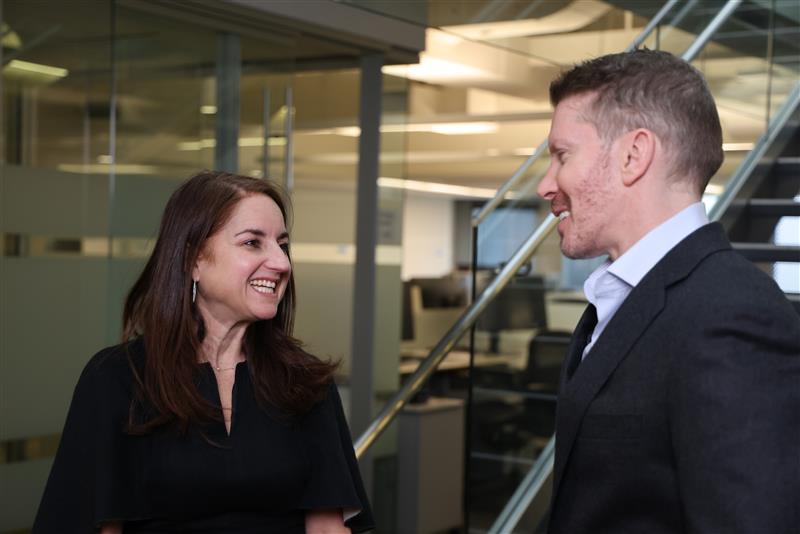
You have certain cookies disabled on the Russell Investment site. In order to watch this video, you must agree to the use of cookies provided by YouTube.
to permit these cookies and watch the video.