Without Boundaries

Welcome to the Russell Investments podcast with Jon Eggins, where we take you behind portfolios to talk to the investors and thinkers who shape how markets move in the real world.

Subscribe

Listen to the latest: Episode 12

All episodes

Episode 12

Kirsten Bartok Touw: Investing in the future of defense and space

Today we're talking with Kirsten Bartok Tau, who's the co-founder and managing partner at New Vista Capital. Kirsten is widely recognized in in these areas that are often often somewhat disparate. So, Silicon Valley to DC, Wall Street versus Main Street, and also defense innovation connecting to private markets investing. It's really interesting is it operates at the intersection of some of the most important impactful themes that are driving markets, driving geopolitics today. So, first of all, thank you Kirsten for for joining us. >> John, excited to be here with you. Looking forward to our conversation. >> How do you think about identifying companies, and maybe you could talk a little bit about the different thematic areas that you're focused on, and sort of distinguish trend recognition from seeing around the corner to what the next opportunity might be? >> Mhm. And I think you can use we always develop there's there's space, there's aerospace, and then there's defense, which is a much kind of overarching one. Space is a really interesting because it's more commercial rather than defense, and you're really understanding the tech stack, and what it needs to be built next to get to the next level. And I always like to explain where we are in space today. And in space it's about a a data communications lever. It's and it's it's it's if you're moving the terrestrial so what we have on the ground to celestial, and it has less um vulnerabilities. So, for example, you don't need to you won't be able to cut undersea cables. Um it also has uh less latency. With that, however, we're still building that tech stack. As we built that all that fiber in the early 2000s, to some extent that's what we're doing in space. So, when we gather data in space, we take it, we send it down to Earth uh through a ground station, and then over back to be processed. It's almost like akin to the dial-up era of where we are. Eventually, as we built the sensors, the technology, the satellites, the antennas, the processing capabilities in space, we're going to be taking that data that we get in space and whether it's voice communications, whether it's Earth observation connected, we're going to be processing that data immediately in space and then sending it to the user to be acted upon. We are 10 to 15 years away from having a full-scale capability to do that. So, in that sense, you're really building out that tech stack that you can see, but it takes time to build, deploy, miniaturize, and then have the capacity to get up to space at an economical matter. So, space I find vastly different. In the defense side, it's you have to stay very close to the leadership and that's both the military leadership, the the officers, as well as the political leadership because they both have significant impacts on the priorities that are set and where what is going to get funding. In the end, Congress funds everything line by line, but the people who are leading the defense mechanisms and the operators, and especially the the people who run acquisitions have the ability to prioritize, and those priorities and those things that are prioritized do change over time and with administration. So, it's an important part to stay close to both the officers, the operators, the generals we speak of who are making those decisions, but also the politicals who change with administration who come in and out and they also have a huge impact on what is prioritized and what is going to be funded for the technologies. >> Let's stay on the defense side for a little bit and I think there's there's obviously been quite a lot of a lot of change. You mentioned it wasn't obvious in 2019, but now we've got increased energy increased defense spending in in in Europe taking place. We've got changing priorities here in the US. I also think when people think of the defense sector, they think of the big listed companies, the defense primes. And so, what and why do you think it's really powerful to be sort of an earlier stage investor in this space. What What do you miss if you're just investing via the majors instead of in in the current climate? >> I think of the majors you can look at it. You can see they act like monoliths. They're slow to react and change and build. And to think as if you're an engineer in one of those is very difficult to get resources applied to something that is that you hear from your end customer in the Department of Defense that is needed. These startups have been incredible. We think of them as neo primes. So next generation primes. And we do expect them to be multi-capability and multi-product type of enterprises that are built up. But they are able to move quickly because they are much closer to the customer and they're able to apply let's say R&D money quickly to getting something out. And you just don't I whether you're IBM or whether you're Lockheed or Northrop, no one moves that fast to get resources applied and then have the ability to go build a prototype for the Department of period of 3 months. And that is a big reason why we're going to see the advent and the growth of these neo primes because they're able to do things build things on their are their own R&D dollars. And if they build something that is capable in what the government needs, then the government will buy it in scale and volume and fund that. And they can just move faster and quicker. So this environment is going to be rapidly changing. I you know, we hear all the time from whether it be Height & Worth investors or in towns and foundations that it's really this access this exposure to what they see as kind of the next generation of technologies that they want access to. And it's hard right now because we really don't have any public companies that offer you this, you know, the the products that are going to be rapidly evolving in the future, let's say, of intelligence, of information, but also you kind of see the warfighter and the warrior. >> Thanks, Karsten. As you're talking about the defense industrial base, um, you've talked about the primes and the the neo primes. Can you maybe clarify for the audience what we mean by that? >> Sure. There's historically been, um, a supply chain in which we've had a prime that is a prime contractor. So, the person who maybe signs the contract with the government or even in the aerospace sector, we describe it as, let's say, a Boeing, the person who assembles the plane at the end. And then the subcontractors, which is, let's say, for an example, a Honeywell or the the suppliers that tier up to it used to be a spirit. They're called the, um, the tier two to tier four supply chain. Today, we talk about So, the there's just six primes like Boeing, Northrop, uh, General Dynamics, um, L3 Harris, and and that is really consolidated from used to be a hundreds of primes in the earlier days, but it was really the peace dividend in which the Defense Department said, because it's got a last supper that we discussed where you had to consolidate to exist as the defense budget got smaller. But it is those people that are the really the the people who sign the contracts between the Defense Department. As we look at the the the neo primes, those are really next generation primes. So, they're emerging tech companies that are come and they're building up to be large enough so that they are the prime contractor between the Department of War and the company on the other end. So, as I mentioned Castellian earlier, they are a prime. They may have suppliers that work underneath them that provide them, let's say, um, propulsion or avionics or structures, uh, but they are the person doing the contracting putting everything together. And I think as the government thinks going forward, they really want more competitiveness at that prime layer and because that allows more innovation, better pricing, people are doing more R&D on their own budget. And his for the last let's say 5 10 or 15 years we've worked in a way in which the government has said, I would like you to build X and I'll give you this amount of money, and they've given it to one provider to do so. And then if that person if that that prime that company would over budget or delayed or couldn't build it, the government was just stuck with taking that. They now want more competitiveness in the situation. They want to have multiple people competing, multiple people saying I can build this. And so we're looking to build an environment in which we have many more primes competing for that business, but the neo prime is really described the next generation new technologies. You've got SpaceX, you've got Palantir, which we call a space prime, you've got Anduril, Saronic maybe in shipbuilding, and it's we hope that in the next let's say 5 to 10 years you're going to have another 10 to 15 of the neo primes out there really supporting the sectors and providing more competition and capability. >> While we're on that, I wonder if would you mind to the extent that you're you're able to share a couple of case studies or examples of the types of companies, the types of technologies that that you've invested in over the last couple of years that you're especially excited about? >> Sure. Um let me give you one which is uh Castellion, and they're working on a hypersonic missile which will allow us to um intercept something a missile that comes to us let's say from an adversary. Um historically the primes have been able to make these, but if they cost 30 to 40 million dollars per missile, and they've only been able to make let's say 12 a year. Well, if you have 12 and it makes 30, there's a budget we can't burst through it. So, this is a group Castellion was founded by three SpaceX employees, and if you look who has been most successful being able to build things at scale and volume, and also when we see do things in advanced kind of manufacturing sort of way, I encourage everyone there's a beautiful picture and if you're kind of a geek like I am that if you look at see the Raptor engine version one to Raptor two version three and it is just a glorious picture in engineering to see the advancement of how the old world used to do it with wires out there and how the new world can do it with advanced manufacturing internalized and that is what this team set up to do. So they really took a hypersonic launcher and missile and they re-engineered it down to the basics. They thought how how can we do this? What should we vertically integrate? And how do we do this so we can make it at scale and volume? And today they're about to they've broken ground on their manufacturing. They have they are far enough along with what we call the technology readiness scale that the Navy and the army have already decide have already started to integrate their capabilities into their launch platforms. So this is an example of where the US really needs to go to even keep up with our friends and allies but also our adversaries and being able to make things that cost less, that have the same capabilities but at scale and volume and really think about manufacturing in a different sort of way. So that's one. We've got another company called Chariot Defense which is really as we think about going from a world where everything operates on base to where you're going to go out in small operations and you need the access to let's say batteries, energy to recharge things, communications. This is an energy platform high density high power that allows both mining companies so again or whether it's the Department of Defense and someone to operate away from base with all their comms, with directed energy, with recharging their capabilities in a low profile low signature way. So again, inventing new ways to think about things and how do you get to market within the next three or four years in the time in which both as technology is evolving we're able to get out out and use it in the near term rather than the prior cycles, which were, let's say, 7 to 15. >> Oh, yeah, I might come back to that time horizon question in in a little bit. Uh is there an example in in space that that you that you can think of as well? Like that that that you mentioned before is one where it's definitely dual use, but maybe leaning a little bit more commercial versus defense tech. Um would love to hear any examples in that world. >> We just did We've done a couple things in space. Uh one was called Hubble Networks, which is actually using Bluetooth technology to allow things to connect two-way uh to space in a um high bandwidth, so you can actually have a lot of devices that go through. And that means that we'll be able to identify, you know, the AirTags you use? So, instead of having to connect to a cell tower, they'll be able to connect to a satellite in space. You'll be able to find either your device or your phone, and it doesn't require hardware modification. So, that's one that's actually completely, you know, consumer to some extent, but you can see the Department of Defense was like, "Oh, great, we can use this cuz we lose people and we lose things all the time." So, a great example of kind of a more of a commercial technology. Another one is lasers. You know, one of the things that we're working to do well in space is how do you transfer energy? And how do you do that in a um so that you your efficacy on the other end of the laser, you still have as much power, you don't lose it, and you don't overheat. So, we've invested in two companies recently, which both are working about the thermal problem, as well as working on next-generation uh P-cells to transfer that power. That has huge importance in terms of moving your data through space in a laser kind of optical way, instead of using radio frequency technologies, which are um uh much more kind of they're more radio frequencies versus optical, which is uh much more capable, faster, and higher bandwidth. Also, transfers energy as well, so you have the ability to recharge something. >> I love I I the idea of that next-generation AirTag. That's how we keep track of the kids when they're skiing. Um and it just doesn't It doesn't work very well at the moment. So, that would be Now, you talked a little bit about the the time horizon. So, a lot of these types of technology still do feel like they they might have quite a long payoff um path. And so, can you maybe talk about how you think about what the optimal time horizon is? How do you avoid being too early um in some of these opportunities when you're when you're evaluating whether to write the check or not? >> And then I always show my age when I I go back again. There's so many analogies you can make to the internet time. And And if you're If you were investing in the '99, 2000's like I was, you could think of Webvan or Kozmo.com. You know, grocery delivery. But at that point, we didn't have the middleware capable in the phone or the power, but you knew 20 years later as we hit COVID, everyone was doing grocery delivery at home. Now, we do DoorDash. Everything comes, right? What we do today is is very is very similar. You have to understand the tech stack and where it is in the development to know um how far off that technology is to be widely implemented. Um space is always the easiest thing, but we talk about autonomy. You know, we're still building autonomy on drones. We are still working about how you synchronize them and how you share data and then do that um without a human in the loop so it can be done autonomously. That is kind of a near term. There are other things that And space is a much easier one to look at like we don't do things like lunar mining or asteroid mining or lunar habitats. One, you have to think about the TAM as an investor. And two, you have to think about the time horizon to to to realize. And in a fund, you have a 10-year life as we know. You've got the 5 years to invest and the 5 years in the back end. So, we are really disciplined at looking for things that are going to commercialize within, let's say, 2 to 4 years so that you have a product. And then by it within years 4 to eight is really when you're scaling that technology. So we have the capability of of monetizing that investment because that is an obligation we have at the end of life. I often joke, I'll do some of the longer time horizon more crazy stuff on my own balance sheet, you know, you could do that as a family office, you could do that, but but they aren't necessarily appropriate when someone gives you 10-year money in a fund, right? So you really have to think about what is the time horizon in which they can um they can go to market and do a a minimally viable product and then how long is it going to take to commercialize it? >> Um as we were talking earlier, I actually meant to to come back and ask you about how you think about leadership teams and management teams when you're evaluating an opportunity. And this might be a good way of sort of re-referencing one of the companies you mentioned earlier, but how do you go about thinking think about evaluating and deciding whether you got the right management team in place? >> That's a great question and and I think as we go into this, we've learned over time maybe what we evaluated when we first came together would be slightly different as we've watched teams. So you had a question, is it is it pattern recognition or is it understanding kind of what the customer needs? And it really is a combination of both. I think what we realized as a firm, we are experts in defense, we're experts in government, we understand the aerospace ecosystem, we can connect people. We found that it's much easier to teach entrepreneurs about defense or about aerospace than it is to teach someone who understands defense and aerospace about how a startup works or how to scale rapidly or what you need to pitch capital. And that's was an interesting learning that I think we wouldn't have said we knew five or six years ago. Um but which is it makes sense. It's why second-time founders get higher valuations because there's so much less risk being dealt with they're doing. They've they've they've they've played the game before and they understand how to how to scale. So, I I as we look back, we often times will um back founders who may have run a company or scaled something in a different industry, but now they want to take it and apply their capabilities to defense. Or we'll find um a founder who's you know, you or you look for a management team which has the combination of capabilities. You'll be very someone who scaled, a really technical person cuz a lot of what we're doing is both hardware and software base, and then maybe has the third founder who understands how do you integrate and sell to the Department of Defense, and you bring all that together. It's rare you see that in one person, we occasionally do. Um but these teams have to have a unique understanding and a little bit longer of a time horizon, and they all have to say, "Okay, how do I scale? How do I pitch a vision? How do I make something that is big?" Because especially as venture capital has kind of become a world of much larger dollars being put to work, your most venture capital is now and to to monetize and liquiditize, you're looking for big ideas. So, do you have a founder with a large vision? And sometimes that can be building on one platform originally and then doing something like Anduril is doing, like adding on ancillary businesses or SpaceX, like buying vertical parts of the industry so that you're doing more of the value chain. But you've got to have someone who has a big vision for how to how to take over a product that is differentiated, and then someone within the organization who really understands, especially if it has the defense component, of how you how you sell to that partner and how you break in and build trust over time. Cuz it really is an organization in which you have to build that trust and credibility over time. >> Okay, well, tha- thanks Carissa. Um to close us out, we we like to do uh a little a little game that we call the risk on risk off game. So, it gives us a sense for your uh your investing and and and your personal risk appetite. And so, I have a couple of quick rapid-fire questions that I want to run by you and get your your take where you can just share you're either risk on or you're risk off on on this particular topic. The the first one is, uh, space tourism. >> I'm risk on. I can't wait to see the curvature of the earth and experience that and float in space. I mean, um, as an investor, I'm not sure it's going to be a huge TAM or way to make money, but as a tourist, I can't wait to get the opportunity to do it. >> I'm with you. I I would love to do that. Um, the second one, uh, to use the term you used earlier, terrestrially, so traveling just on the earth, um, without any detailed plans. >> I I've grown into it. You know, when we were younger you had to have everything organized, know where you're going. Now, you can book something last night, you can it it's great. You can make decisions and change things left and right. Like, I've embraced it. It's it's like part of the new world. So, I have made less plans. I don't always know when I'm returning and I often don't know where I'm staying and that's half the fun. You know you're always going to be fine. >> Risk on. All right. Uh, the new Acela next-gen train to DC from New York. >> It's good. I only wish we could go as fast as our our friends and allies in Europe and Asia. It's sad that that our tracks don't go faster, but it's a great experience and it's always nice to have the new work. So, I appreciate the Acela. >> I think it's risk risk on eventually, um, but >> Yes, we hope so, right? >> with with a bit of luck. >> We'd like to get there. >> Exactly. We didn't talk about this one earlier, but risk on or risk off, uh, data centers in space. >> I think it's it's been interesting how that has evolved over even the past months as we've been talking. I think everyone thinks that uh, the amount of power needed to generate a data center and the cost of space per kilogram is now going to balance out so that it is going to make sense to have data centers in space. Now, are are they going to do the same things? You and I discussed earlier, John, about having the capability of processing data in space. So, what I think you'll have is our data centers in space will look like a line of satellites connected with large solar arrays and they will be doing processing. Um and there's two limitations right now. It's it's not even the cost of when Starship is in place, which I think we all kind of see a path towards. The real questions now are how do you cool? Because how do you radiate the heat that comes from um generating uh the those chips? And then how do you also make them uh radiation hardened so that uh but that part is radiation hardening the chips is a more solvable problem than how do you get rid of the heat that they're emitting? But, you know, Elon was on a podcast recently where as he kind of put it, everything is solvable and achievable. So, we'll just kind of take that in a step. So, I think you're going to see a lot of people funding those opportunities going forward just because you'll want the processing capabilities in space. It It is a logical next step. >> Well, thank you, Kiersten. I really uh I really appreciate the idea of what a what makes a good investor, figuring out which problems exist and which problems are solvable. I'm going to take that one away um for for me and my team here as well. So, I thank you for your time. Really appreciate your insights. >> It's been an honor to join you at Raskob Investments. Thank you for what you're doing and and I look forward to our next conversation. Thanks for having me. >> Thank you. Well, mate, that's our show for today. Remember, in your personal life and your investing life, keep breaking barriers. This podcast is intended for informational purposes only. The content provided within the podcast should not be construed as investment advice, research, or a recommendation, solicitation, or offer for any specific Russell investment or other product, strategy, security, or service. The information does not take into account the investment objectives or circumstances of any particular investor and may not be appropriate for all investors. All investments carry a level of risk and do not typically grow at an even rate of return and could experience negative growth. Any past performance results should not be seen as a guide to future returns. All opinions presented are as of the date of the recording and subject to change without notice. Information contained within the podcast is obtained from sources believed to be reliable but not guaranteed. Reliance upon the information provided in the podcast is at the sole discretion of the listener. The general information contained in this publication should not be acted upon without obtaining investment advice from a licensed professional. This podcast may involve discussions with non-Russell Investments personnel. The views and opinions expressed by non-affiliated personnel in this podcast are those of the speakers and do not reflect the policy or positions of Russell Investments or its affiliates. This content should not be construed as recommendations of any third-party manager featured on the podcast. Some of the portfolio managers or firms featured in this podcast may manage funds or accounts that are offered by Russell Investments and they may have business relationships with Russell Investments or its affiliates. Neither Russell Investments nor any of its staff accepts any responsibility for or liability with respect to the information or opinions contained in this publication. Any use of this content is suitable for professional clients only. Capital at risk. Copyright 1995 to 2025

In this episode of Without Boundaries, Jon Eggins sits down with Kirsten Bartok Touw, Co-Founder and Managing Partner at New Vista Capital, to explore investing at the intersection of aerospace, defense and emerging technology.

Drawing on decades of experience spanning Silicon Valley, Washington D.C. and private markets, Kirsten shares how investors can identify transformative technologies before they become mainstream. She explains why understanding both technological development and government priorities is critical in sectors such as defense and space.

Topics include:
• How investors identify emerging opportunities in aerospace, defense and space
• The rise of "neo-primes" and the changing defense innovation ecosystem
• Why space is becoming critical infrastructure for communications and data
• How to evaluate technology readiness and avoid investing too early
• Lessons learned from backing founders building transformational businesses

Episode 11

David Foley: Investing in the next energy cycle

Today's guest is David Foley. He's the senior managing director at Blackstone and the global head of the Blackstone Energy Transition Partners Group. You David, you joined Blackstone in 1995 and you've really played a central role in both building the energy platform there and investments across both traditional energy and especially more recently the energy transition. So first of all, thanks for thanks for being with us. >> Great. Happy happy to be here, John. >> I'd love to hear what's changed and what's changed most in private equity over the time you've been there. >> So I think in terms of what's changed most, um when I started in '95, most people were generalists. >> Mhm. >> You know, we'd do buyouts of I think the first couple things I worked on at Blackstone worked on a toy company, then a telecom company, then a funeral home, but like all kinds of different things just as a generalist investor. And one thing that's changed significantly is it'd be very hard now to find a private equity firm that didn't have areas of of expertise, industry specialties, health care, energy, tech, consumer products. And I think in a very legitimate way, you know, you you know a lot about what's important to that industry. It's, you know, technological innovations to the extent it's impacted by regulatory stuff. You're already familiar with that. You've done a mapping, you know who all the competitors are, you have a view. So that is now table stakes. So if you don't have that and you're competing in a competitive in a auction process with somebody who does, you're going to be much slower cuz you're still trying to figure it out whereas they already know it and they can focus on the management team company. So that's one thing that's changed. Um industry specialization. I think another thing that's changed is um there's a lot more players and bigger. Like every range from like small to big and so it's getting more efficient. You know, finance is you know, everyone's looking to get excess return and and money flows, you know, like water to where they think there is a imbalance, you know, where there's a vacuum. And so, the the firms that are doing better at it maintain some degree of differentiation, right? What are you actually good at? How can you build a moat and and and through your reputation, relationships, maintain a bit of an edge. I do think that private stuff is still less efficient than the public market. Uh and because it is uh committed undrawn capital, on the occasions when the public market's dysfunctional and locks up, you know, like global financial crisis, coronavirus, you know, we can and do try to step in when the public market's freaking out. And, you know, may overvalue things on the upside, but the same's true on the downside and kind of take advantage of that. So, so I'd say those are some things that have changed. Um but in terms of things that have stayed the same, uh in terms of creating value, the importance of management teams, like and the difference between A and a B player as a CEO like night and day. Um the um importance of business quality, like is it actually a good industry? Some industries are inherently don't produce returns for shareholders. I can't believe they keep on getting funding and they kind of do. So, I think business quality remains an important thing and um I think understanding the macro tailwinds and impacts of regulatory policy are still important, maybe even more so cuz it just seems maybe after 30 years it gives you some perspective, but it seems like the pace of change is much more rapid. >> Uh all right. So, um what I want to do now is talk a talk a little bit about the the portfolios that you manage these days. So, I feel like you were quite early in building out the dedicated energy transition funds. So, I'd love to go back to to when you started to do that. What Why did you think that was important versus traditional oil sort of oil and gas um private equity portfolios? I would love to hear sort of the the genesis of that. >> So, you know, we've been doing energy deals since 1997. So, you know, from the start everything's looked at through a fiduciary lens. And and so uh in the case of current funds, you know, we're a fiduciary that actually as it turns out, because the scope has a really positive environmental impact and impact on communities and employees. And in a way that's that that really streamlines things cuz there's no misalignment at all. And and I think it can be harder sometimes for broader fund managers where uh you know, energy can be a a cost and and you know, if the first bit, like if you're going on a diet, you know, losing the first few pounds isn't that hard, but try to get to net zero, you know, it's harder and in some cases, there may not be an obvious economic return to shareholders or investors of that next notch down on if you're focused on reducing CO2 emissions. But for us, because you know, most of the companies we're investing in, whether they're you know, in on the electrification side of it or it's on the molecule side, you know, we are helping our customers with you know, making electricity more affordable, reliable, energy security, safer, and cleaner, right? Not absolutely clean, but better. And and so, um if we're successful in getting more customers who want a transmission line built, they want battery storage, they want solar on their roof, they want to run their factory, but use less energy in doing it, that's revenue for us, it's profit, and we're helping the broader economy, you know, massively decarbonize it. >> As you As you were talking there, that brings us to probably the the the the chunkiest topic I'd I'd love to talk to you about is is energy demand. Um and so with with AI, with data centers, with reshoring manufacturing, uh an aging electrical grid, I would love to hear your perspective on how in some ways how we as a country, but how in particular Blackstone Energy Partners can help play a role in sort of bridging this this gap on energy demand where we are right now. So we'd love to hear you sort of share how you're solving for that some maybe with some examples um would be would be lovely to hear. >> That's a big topic. So so this is going to take a while, but we're happy to go through it. So electricity demand is now growing after decades of not. It's not all about AI, I'd say if on average in the US the growth of the next few years is and this isn't going to sound exciting at all, you know, like 3% maybe 3 and 1/2% in some industries. That's pretty boring. But you got to unpack it. So about two points 2% of that has nothing to do with AI at all. And and some of that last percent is just cloud computing. So again, not necessarily AI, but the and and the the the 2% is, you know, onshoring nearshoring manufacturing, a bit more industrial economy, the early returns from energy efficiency having been made, you know, again like home insulation, windows, all that. So it was growing anyway. Um but it's the addition of the hyperscalers for whom the highest value of a megawatt hour in the US is absolutely, you know, for data centers and AI. They'd pay, you know, if they could get it, triple what, you know, an average, you know, residential industrial user would use. >> Um but getting back to your point, electricity demand's growing for all these reasons and because I think the industry and utilities were lulled into this false sense of, "Hey, what's What's problem? Everything's great. Demand doesn't really grow. We've got a big cushion. Everything's good. We need to pay a dividend. So, do we really need to invest all this CapEx in our transmission grid? Ah, you know, maybe next year. So, we've had 15 years or so of electricity prices, residential, commercial, industrial, growing at less than the rate of inflation. Little to no increase in electricity prices. That changed a lot. Like last 5 years, it it's it's almost double in a lot of locations, including a lot of locations by the of no data centers whatsoever. So, you know, it it it's it's due to, you know, policies, state policy, uh perhaps overly aggressive shutting down of of uh existing assets, perhaps because of, you know, CO2 related focus, net zero objectives, or just cuz they were old. Um and and not investing in the transmission grid. Cuz you should think about the transmission grid in a way as a substitute for new generation. Because it's hard when you use a national average. That 3% national average, you can't wheel the stuff around easily. So, in northern Virginia, where there's a ton of data centers, and there's economic growth, or Texas, where it's a very pro-business state, low tax rate, as it turns out, very efficient solar, lots of wind in West Texas, cheap gas, a lot of data centers going there. So, a lot of economic growth, demand growth much higher. Um So, that creates stresses individually. And if you had a very efficient grid, you could just wheel power from where there's more of it to where there's less of it, and you could avoid the need to build a new power plant. But but we don't have an efficient grid. So, at the same time, utilities are trying to play catch up from decades of underinvestment in the transmission grid, which is stressed now because there's no reserve margin. So, long story short, we've got a huge latent demand wedge, which is underbuilt. And some of that's obviously the data centers. And that is in part why uh you know, back to my upbringings and being an economics major, supply and demand always meet. It's just a question what's the price. So, with that with those price signals, there's now a lot of focus capital form being formed uh from the regulated electric utilities, from private capital, and and clearly the government is is is recognizing this is a incredibly important thing. >> I think you uh you you talked talked about the how do we expand that supply of electricity without the consumer prices going up? That's a sort of a big conundrum or or challenge. You also talked a little bit about the um the need to work across jurisdictions and alongside government. So, you you've certainly done that. I would like maybe some examples would be helpful. I know there was a big one that took maybe 10 years to come to fruition working with the New York State. That that would be maybe a good example of how how how can private capital in partnership with government sort of help bridge this gap and deliver this this additional electricity we need. >> Sure. So, permitting in the West is is is really a a challenge. Um and um and so, the example you're alluding to, Champlain Hudson Express is the name of a 1,250 MW high voltage direct current transmission line that we're building. Really, it'll come online this summer, actually. Uh from the border with Quebec into Queens. Actually, I can I can see the substation up with um and uh and so, the good news there is it's it's it's reliable. You never get reliable in renewables really, but because it's being aggregated at the border, Hydro-Québec is the one providing the power from wind and hydro. And the great thing about hydro is if you want more of it, you just like lower the sluice gates a bit, the turbine turn a little more cuz you got a reservoir. >> Yeah, yeah. >> Still probably the most cost-efficient form of electricity storage we've come up with in the last like since electricity was invented actually. Um sadly it's regionally specific, right? You can't build a hydroelectric dam just anywhere. So, uh they're an investment grade counterparty. They have a lot of excess power in Quebec uh relative to the population. So, they were looking for markets to deliver that power to. And a dozen years ago, we uh were introduced to an entrepreneur from another developer that we were working with on on conventional power generation uh who had this idea that was uh the reason why it ultimately got built and the reason why a lot of other transmission lines to bring power from Canada into New England or New York have failed. And and that's kind of because uh when people think of the not in my backyard phrase, the thing that prompted that high voltage transmission lines. You know, they're visually you can't hide it. It's very visually obvious and you know, all sequel people like uh put it in the other guy's backyard. >> Yeah. >> Which doesn't really serve the greater good for the greater number for the country. And so, the brilliant idea that that the entrepreneur had was, "Okay, great. It'll cost more, but if if we bury the line and we go uh down Lake Champlain and the Hudson River we can get it almost all the way to New York City with you know, it not being in anybody's backyard. It's it's it's fewer individual permits cuz the challenge with a right of way is if you're missing one segment you don't have a transmission line or you don't have a pipeline, right? So, any one landowner or county, you know, can essentially block it. And so, that part worked great and Hydro-Québec's been great to work with. But the reason it worked, which gets back to the answer to your question, was is very much a public-private partnership. Uh very closely working with with with the mayor's office in in the local utilities, uh New York State, reaching across the border to our friends in Canada. It's not just Canada, but you know, Quebec, a little bit different than Canada. And um and the trades, we had all, you know, electricians, the IBEW loved it, a lot of work, skilled skilled labor. Um and getting it done. So so it's worked out great. >> Could you share a couple of examples, some projects that exemplify, you know, what you're trying to accomplish? >> Sure. And and and since, you know, the the strategy I think's pretty consistent, but but how we apply it, it's not narrow, you know, it doesn't fit tightly in a traditional asset allocation bucket. So we'll both develop, supervise construction, own and operate critical energy infrastructure assets. And that might normally be done maybe in more of like a value-added infra fund. Uh value-added infra not just buying it, right? We're taking risk to build it. But we also do buyouts. And and we we like growth companies and equipment manufacturers as well as service providers. So I'll try to give you, you know, example of each. And the first one is actually investment, our first fund. Although we invested in energy before the first dedicated energy transition fund. That came about uh in 2011, so about 15 years ago. Um And that was a hard asset that we developed. So Cheniere, which existed at the time as a importer of natural gas. And uh in in 2011, I was approached by the CEO at the time, who we previously turned down on the on the regas import natural gas. And uh sometimes adversity is the catalyst for creative. When you don't have any options, you know, you get really creative. >> Creative, yeah. >> So Sharif didn't didn't have any money and and and the since he didn't fully contract the regas facility, you know, the credit, you know, position wasn't so great. What we did have was a phenomenal site at Sabine Pass, where they'd spent billions to you know, have a pipeline come in. They had a deep water dock. They had gas storage. And he realized that one of the reasons why the re-gas wasn't working so well was gas prices which people thought were going to be really high cuz we were running out of natural gas in the US. Like you asked anybody, consultants in 2008, 2007, we were running out. We'd have to import more. And then shale happened, right? It turned Well, no, we've actually got an infinite amount of the stuff and it's cheap. So, he probably, you know, was was like distraught for a while, but but then, you know, said, "Well, I've got this site. It'd save me like a few billion dollars if I turned it into what would otherwise be a greenfield liquefaction facility cuz I've already got the pipeline, I got the dock, I got the storage. I just need a lot of, you know, compression just to kind of chill gas, freeze it basically, and send it out." >> Yeah. >> So, we committed $2 billion back in 2011 and 2012, which then helped them raise $6 billion of debt and give them credibility with off-takers, you know, big major oil companies who want to make sure, you know, who is standing behind the project. It's Blackstone. So, it's that worked out. And we got Bechtel to build it for us lump sum turnkey, and that came on online the first trains of of LNG 5 years later. So, Cheniere's now the largest exporter of natural gas. Yes, $50 billion they've invested in it. Um the industry produces over 40 billion a year of revenue for the United States, helps minimize balance of trade. Uh several hundred thousand jobs. Um I'm really proud of that. So, we created something that didn't exist, and now it's a huge huge industry. And when you think about what that does for us as a country, half of the exports from the US went to Europe in in 2024 to keep our allies safe and and, you know, uh from uh because of the war with Russia. And uh it's a great way to monetize a resource we have a lot of, which is natural gas, and decarbonize areas that would otherwise be using coal. A second one, and I'll try to get So, that was my hard asset example. Um a second one, which was in fund three, uh Legence, is a engineering business. We bought that in 2020. So, I knew the CEO from uh he was COO of a prior business, liked him a lot. They design, engineer, and maintain high specification HVAC systems. So, heating, cooling, ventilation, mechanicals, plumbing for built space. Not like just regular office buildings, right? But if you consume a lot of energy, so it's a big part of your cost structure, investing in the latest equipment and design to use less of it, like be more energy efficient, big returns, right? So, as it turns out, data centers have been a great customer base for them. Also, pharmaceutical manufacturing, where you can't have the temperature vary too much, semiconductors, where you don't want any dust in the air. So, we bought the company, and since then we've quadrupled the EBITDA. We did 24 add-on acquisitions. So, think about that, you know, in 5 years, like 24 add-on acquisitions. And we didn't do that because the company wasn't growing. Their organic growth rate was like 16%. It was on top of that. They were accretive. We changed the brand. It was originally called Thermo. We called it Legence. We uh hired five new executives who are now part of the of the of the of the senior management team. Uh it's been great. And we took it public last September. And then from an equipment standpoint, one of the first deals in fund four is a company and we are we do invest globally. I mean, fact is, most of it's in the US, North America, but this was one headquartered in France called Sediver. They make uh glass insulators for the electric grid. It's the transmission grid. And if you've ever been when down the highway, you see the big, you know, transmission structures. It's stuff that looks like little glass discs hanging in a row. That's what they make. And so, they have lots of patents. It's the premier product. If you're in a country that has much lower labor costs or you're not worried about fires or safety, you can use porcelain or ceramics, but if you're concerned about these things, use glass. It's a premium quality product. They've got a high relative market share. We bought it um in in the fall of '24. And so, we saw the demand for the product and and we moved quickly and we bought it. The EBITDA went up by 50% in 1 year. We knew they were going to run out of capacity, so we've already put in place we're looking for uh opportunity to expand capacity in the United States. We uh bought a second uh glass furnace in the Czech Republic to complement the facility in Italy. We've added a line in China. And and importantly, too, since it's like the Chinese facility produces product for China and Southeast Asia, the European facilities produce product for Europe and and export a bit of unfinished product to the US, which we assemble here and provide to US customers. So, you know, sensible supply chains and um we saw the tremendous need for safer transmission. We've had some fires in the US in certain areas. Um And and you know, you you need modern equipment. And and if you can't get a new right of way for a new transmission line, it sometimes helps to safely upgrade the the voltage on existing right of way and you need new equipment for that. >> So, um I was wondering if uh as as you were talking there, are there any maybe over the last 10 years or so deals that got away? Um ones that you know, the sort of when you think about A lot of people talk about like to talk about their best deals, but any that you think are sort of mi- mi- misses you're like, ah, we wish we did something different. >> Sure, you know, there's always a few that got away. One uh was Westinghouse. Which we actually bid on twice to be fair. Over a dozen years ago when it was first for sale, we we were partner with GE. GE had boiling water nuclear reactor technology. Westinghouse was pressurized water. And between the two of them, it's every single reactor in the US. So, it was actually good good idea. And we liked it wasn't then like, oh, US is going to build a lot of new nuclear reactors. It was that if you had an existing reactor, you really didn't have much of a choice in terms of replacement fuel rods, who is going to repair, maintain, >> Yeah. >> spare parts kind of thing. So, it was really that part of the business quite good. But Toshiba, the Japanese conglomerate, bought it, paid a price that was more than we and GE thought it was worth. And then sadly for Toshiba, they they like building stuff. So, they decided they wanted to build nuclear power plants using Westinghouse technology, which was very good technology since still is. But the US permitting process and and construction being what it is that they made a mistake of of of guaranteeing a price like lump sum turnkey for those reactors. And um you know, the US and in fact in the west, the history of building nuclear reactors isn't really an on time on budget kind of thing. So, the the asset went bankrupt. And then the the one that got away, so that one maybe didn't get away, but the one that got away was then when it was being sold by Toshiba out of bankruptcy, we we thought, okay, we're not going to try to build anything. It's going to be a good business and and we can buy it. And they hadn't really run it that efficiently. So, we thought there'd be cost savings. And um we thought we had it. Um you know, it was down to the final bid and and kind of out of nowhere. And really, I don't even think they were in the initial round. This is now like six maybe seven years ago, paid what we thought was a pretty full price. Like, ah, you know, and and and and sometimes explaining nuclear and risk, you know, to LPs it's not it's not the most straightforward thing. Although we have owned and operated a nuclear power plant before, worked out great. >> Yep. >> Um but in this one, so we lost that and then subsequently who knew, you know, now uh nuclear renaissance and uh they got a lot of cost out of it and and now the current administration wants to really try to catch up with uh with Asia, particularly China's building I think 38 nuclear reactors now we're building none. >> Yeah. >> And uh I really do think it does play it that that technology does play a legit and an important role in energy transition, zero carbon emissions and when you turn it on it's it's on and that's part of the Achilles heel really for renewables. >> Thanks. Thanks, David. Um we'd like to finish these off with just uh a little bit of sense of yeah, we've learned about your risk-taking in the investment space. Um we want to learn a little bit about your broader perspective on risk-taking. So we've got a couple of quick hits here and I'd love you to share whether you are risk on or risk off uh the the these uh these topics if that's all right. So we'll start with are you risk on or risk off on owning an electric car? >> Uh yes, with a hat with an asterisk. I own a Volvo XC90, so it's a hybrid. >> Oh, hybrid. >> And uh truth be told I also own an Aston Martin which is fully uh you know, uh hydrocarbon powered. >> That is not an electric car, no. >> [laughter] >> But I got I got all my risk averse I guess I got both bases covered. I got electric and and and non-electric. >> Would you second one, would you uh would you put solar panels on your on your house? >> Yes. >> Yes. You would or you have? >> Uh tried. So we have a a a home outside New York City, you know, >> Yeah. >> primary like don't have a roof really, so no not option. But uh we have a own a home that that's outside the city and uh we were putting panel panels on the roofs not flat but we're going to put panels on the property and had it all done and the people coming out to do it and then we're told we didn't have a sufficient setback so the local regulatory ruling precluded us from putting panels in the property because it's too close to the property line. >> But personally you're risk on. Just another permitting thing. Permitting's the the key thing. The next one I wanted to ask was you're from Chicago so would you swim in the Chicago River today? >> No, far too cold. It's You might They might be covered with ice. >> What about in the summertime? >> Still wouldn't do it. >> Still wouldn't do it. Okay, risk risk off. >> Yeah. >> So we're both we're both golfers by the sound of it. What do you think about putting windmills on the golf course? >> Well, one of my favorite golf courses to play, I'm not a member but I have a friends who are is National Golf Links of America in Southampton and they have a windmill on the golf course. I I should mention it's probably been there for you know a hundred plus years. It's wooden and it's inoperable but it is a windmill. >> So risk neutral maybe. >> Risk neutral. >> We talked about a bit of a renaissance in nuclear energy. You also mentioned the not in my backyard so how do we feel about a small modular reactor landing in your own hometown? >> In New York City, yes. >> Thanks David. This was fantastic. Like I said we've called this podcast without boundaries but we didn't just go outside of the boundaries. A lot of it was about looking around corners, trying to figure out what the next opportunity might be and how we solve for some of the biggest challenges in in in the country right now, supplying the energy that we need, the electricity we need. So thank you so much for your time and we really appreciate it. >> Thank you Johnny. Appreciate the opportunity to have a conversation with you today and the partnership with with Russell and your investors. >> Well mate, that's our show for today. Remember, in your personal life and your investing life, keep breaking boundaries. This podcast is intended for informational purposes only. The content provided within the podcast should not be construed as investment advice, research, or a recommendation, solicitation, or offer for any specific Russell investment or other product, strategy, security, or service. The information does not take into account the investment objectives or circumstances of any particular investor and may not be appropriate for all investors. All investments carry a level of risk and do not typically grow at an even rate of return and can experience negative growth. Any past performance results should not be seen as a guide to future returns. All opinions presented are as of the date of the recording and subject to change without notice. Information contained within the podcast is obtained from sources believed to be reliable but not guaranteed. Reliance upon the information provided in the podcast is at the sole discretion of the listener. The general information contained in this publication should not be acted upon without obtaining investment advice from a licensed professional. This podcast may involve discussions with non-Russell Investments personnel. The views and opinions expressed by non-affiliated personnel in this podcast are those of the speakers and do not reflect the policy or positions of Russell Investments or its affiliates. This content should not be construed as a recommendation or endorsement of any third-party manager featured on the podcast. Some of the portfolio managers or firms featured in this podcast may manage funds or accounts that are offered by Russell Investments and they may have business relationships with Russell Investments or its affiliates. Neither Russell Investments nor any of its staff accepts any responsibility for or liability with respect to the information or opinions contained in this publication. In EMEA, this content is suitable for professional clients only. Capital at risk.

In this episode of Without Boundaries, Jon Eggins sits down with David Foley, Senior Managing Director & Global Head of Blackstone Energy Transition Partners, to explore how private capital is helping meet one of the defining challenges of our time: rising energy demand.

With three decades at Blackstone, David shares how private equity has evolved from generalist investing to deep sector specialization, and why maintaining a competitive edge is more important than ever in a crowded market.

The conversation also looks at the growing gap between electricity supply and demand, driven by data centers, reshoring of manufacturing and years of underinvestment in infrastructure. David explains how these dynamics are creating opportunities across the energy ecosystem, and how public-private partnerships are playing a critical role in delivering large-scale energy infrastructure.

Topics include:

  • How private equity has evolved and why specialization is now essential
  • What is driving the renewed growth in electricity demand
  • Why underinvestment in the grid is creating structural opportunities
  • The role of private capital and public-private partnerships in building energy infrastructure
  • Real world examples of investing across the energy transition

Episode 10

Matt DeCicco: Small-cap biotech with big ideas 

We have Matt joining us from Lord Abbott today and uh and you actually were just in seeing our small cap team. Uh so thank you for for visiting us and and thanks for joining us on the podcast. >> Thank you very much for having me. >> Yeah. And um you've also joined us uh on a very exciting day here in Seattle. So I moved here in 2008. I got to see the first time the Seahawks won the Super Bowl. I'm Australian, so they're officially my team. Um I moved and then they won not long after. Uh you are you're not a Seahawks fan, so um but what do you think of the noise out there? Uh, it sounds great. I as a uh a longsuffering Jets fan. Okay. The team I don't think has won a Super Bowl since well, not in my lifetime. >> So, you're very fortunate to have seen two Super Bowls. Indeed. Just in since you've been here. >> Yeah. Yeah. Absolutely. Uh, and but at least you had uh had at least one player you were rooting for on the side, right? >> Yes. Yeah. We're all Sam Darnold fans, so >> Oh, nice. >> I was definitely rooting for him. Plus, the Patriots have won plenty, so >> I think easy easy team to root against, too. I agree with that. Um my wife is from Boston so she doesn't so we had a split household going on there. Well um well though thank you thank you so much for joining us. Um there's a whole host of things we're going to talk about today. Predominantly the bio cap strategy um that you've built uh sort of in concert with us here at Russell Investments. But if it's okay I wanted to go back a little bit and maybe just share a little bit about your background. I think both of us have lived in the small cap space and also been at the same company most of our careers. So tell us a little bit about your background at Lord Abbott and before and how you got to where you are today. >> Yeah. Uh so I have been at Lord Abbott my entire career. That's 25 years. Uh nearly all of it with the same growth team. Uh I was lucky enough uh to cover a number of of sectors before landing on healthcare. Uh so I I covered consumer briefly, I covered financials briefly thankfully before uh the financial crisis. >> Yeah. um and then have spent most of my career as a healthcare analyst before becoming a portfolio manager. The great thing about covering a number of different sectors is I had good uh teachers to learn how to uh understand the fundamentals for each of those different sectors. Uh but then I also had a very good mentor who uh taught me about um the importance of paying attention to price trends. And I uh loved psychology and I love history. And um paying attention to price trends, looking at long-term price trends of stocks is like the psychology and uh historians of the market. Uh and I I love growth investing and I love small cap stocks. >> Yeah. And it's so funny. I'm right around 25 years at Russell Investments and joined as an intern here as well. So same firm, same that's actually kind of rare for our generation. What what was special about Lord Abbott that you think's made that possible? >> Uh great people first and foremost. Um uh great mentors, great people. Uh it's a place where uh it's very collegial. You learn a lot from other people. But I think it's also a place where uh the culture is one of being very supportive. It also has a wonderful tradition. Uh it's a a firm believer in active management, a firm believer in fundamental research. >> For our audience as well, the the crowd is getting pretty loud back here. So if if you hear that on the podcast, it's pretty exciting. The Seahawks might be just about to pass us on Fourth Avenue. Yeah. >> Either that or they really enjoy talking about tech stocks. So one or the other. Um so um so we we don't just share that history of being at the same company for a long time but until about 10 years ago I ran our small cap funds as as well. Um so as head of portfolio management I'm allow not allowed to have favorites but let's just say I'm excited to be talking about small cap investing with you. Is there anything else growing up in small cap land that um that helped you sort of think think about growth, think about innovation and how you pick stocks today? >> Yeah um a few things. first off is that innovation and disruption is a key theme in our investment process. And so, uh, early on in my career, I was taught to focus on the truly disruptive companies, get as much weight in them as you can and hold on to them as they're going through their dynamic growth phase. Uh, the second thing I'd say is when you go from uh, working on small cap stocks to large cap stocks like I did. So, you know, we've been managing micro cap since 2003, small cap since 2006, large caps since 2011. Uh, when you go from micro uh and small up to large, you have a different threshold for volatility, >> which I think is a good thing. Uh, because I think, you know, risk is correlated with return. >> Uh, and so I have a a high comfort level uh for something that might have an intraday move that's five or 10%. Right? And um I'm not easily shaken out by something uh that has more volatility if I believe in the long term. And so moving from small cap stocks to large cap stocks uh was very I think easier uh very easier easier than somebody going the other way. Moving from large cap stocks to small cap stocks where the volatility is much greater. >> So if it's okay let's go dive in a little bit to the biotech strategy that you that you run for for our clients here as well. Um I remember running the small cap funds and this was a systematically underweighted area. Most active managers avoid that segment of the market. Um they they think it's binary. Um they think it's hard to analyze using traditional financial analysis. So So a couple of questions. What why is that something that um that you've been focused on? What kind of skill set do you think makes it possible to to pick stocks in an area? and and maybe if you want to throw some shade on your competitors um you know what are they missing um when there when there's a what is a big chunk of the index that they're not investing in. >> Sure. So there's there's a lot there. Um you know first off I'd say is that investing in biotech is not different than investing in any other sector. You have to have a repeatable investment process and you have to have specific things you're looking for. Uh and then you have to make projections about what you think the revenue and earnings will be in the future. Uh, and I think to be successful, those revenue and earnings projections, you have to have conviction that they're above where consensus is, so that you can take advantage of the power of compounding. >> That if something's going to grow 30 or 40% over the next 3 to 5 years, and consensus thinks it's only going to grow 10 or 20% at the end of those five years, you have a much higher revenue and earnings growth than where consensus is. Um the difference is often times you're investing in these companies and projecting their revenue and earnings growth before they even have any revenues or earnings, right? You're analyzing clinical trials. >> But I just want to reiterate the foundation of what you're doing is the same. It's just that you don't have current revenue and earnings. Um and so the interesting thing is that there's a lot of data to analyze. Uh and there's a number of ways that you can uh increase your odds of success. So let me try to give some specific examples. Uh if you have a phase 2 trial where the clinical data uh is very clear um that increases your odds of success that the phase 3 is going to be successful. Often times uh a competitor as you referenced the competitor would say well that's binary. >> Yeah. >> Well it may not be binary. It might not be a coin flip. It might be that if you have a well-controlled clinical trial the biology is very well understood. you have a well-designed drug and something works in phase two, it might be 75 or 80% or even 90% likely it's going to work in phase three. And if the market is pricing it as binary or a coin flip and you perceive the odds to be much higher than that, well then there's some alpha that you can exploit from that. >> Uh so um why competitors don't do it uh is I think it's because it's complicated. >> Uh you need specialized expertise, you need to study it. I'm fortunate enough to have uh spent a lot of time studying the area and I have a great team that is dedicated to this. As you were talking there as well, you talked a little bit about the extra expertise required and so as well as being an investment thinker and and have an investment background. I think you have an MS in biotechnology as well from John Hopkins. So maybe you could talk about your own education and maybe the education of the team, what's different in how you've built the team out to be able to be successful investing in the space where it is different and complex? >> Yes. So um first off uh you are correct on my education and I think that helps but that started from me picking up the sector and and going through the same process that I did when I covered consumer >> or when I did financials um uh I as as a kid I've always loved to read and uh I think that is a advantage in this this line of work >> and so when I started covering healthare care uh uh and this is back in 2006 now. Uh I started by reading everything I could uh about the sector and I started with things that were not as technically challenging. So a great book I started with was um this book about Vert.ex Pharmaceuticals that was from the '9s called a billion-dollar molecule. And I was fascinated by it because it married the business elements of of starting a biotech company. Vert.ex is now a multi-billion dollar company now but also with the u scientific and technical challenges of starting a biotechnology company and then as the years went on uh I was reading more and more technical work and by you know 2013 or 2014 I was reading extremely technical journals or or books about biotechnology which ultimately led me to say well why don't I go to school for this? >> Yeah. So this came in the middle of your career, you decided to dive deep into the area. Okay. So that's relatively rare and um if it's okay, let's talk about the building of strategy now if that's okay. Um so uh again having previously worked on these small cap funds that gap in the biotech sector we had tried to plug it in a number of different ways with quant strategies asked um sort of partnered with you all. So I'd love to hear your side of that story. What was it like to partner with Russell to sort of build a dedicated bio biotech specific uh portfolio? It's been great. Uh, working with the team has been wonderful and um, they've been very, you know, supportive of our investment philosophy and investment process. We talked earlier about a repeatable in investment process and um, while this is true for all sectors, uh, uh, I think it's especially true in biotech and we really marry both qualitative and quantitative elements to what we do. Um, the qualitative elements are things like okay, what is the business model like? Um, if it's a new medicine, uh, is it, uh, something that will be taken one time or is it, uh, recurring? Um, we also spend a lot of time with the management team. Um, have they done it before? Maybe we've invested with them before at a prior company. Um, the management team's credibility is crucial because they're the ones who are going to be designing the clinical trials that need to be successful. They're going to be interacting with the agencies to get the drugs approved and ultimately they're going to be setting the strategic course to get the drug to get the drug launched. Well, uh we have to look at what the sustainable competitive advantage is in in in biotechnology. Intellectual property is critical. How long does that go out? Uh competitive advantage can come in other forms too. Okay, they might have a drug that they've launched now, but is there an R&D pipeline so that there's other drugs behind that? So the R&D pipeline can serve as a as a uh a form of competitive advantage. And then the last thing I'd say, and this is the last element of the qualitative, is what are the industry conditions? Um, so there are parts of the FDA that are more accommodative than others that are more likely to approve a drug on an earlier stage trial than other parts of the FDA. There are um there are also therapeutic categories where um you are more likely to have the reimbursement you're looking for than others either because there's less competition or for other reasons. So all of this is goes into um you know how big can this company and this drug be once it gets approved. Then though we want to see okay well how well is uh the company executing and so if you have a commercial stage company then of course you're looking at revenues and earnings just like you would were any other for any other company in any other sector. When you're looking at a pre-commercial company you're then evaluating the clinical trials. um you know how is the how are the clinical trial results doing compared to uh consensus expectations? How are they doing to compared to uh the competitors uh that that might be out there both on the market or in uh or in development? Uh so this is all very quantitative. Um if you're looking at a a a a cancer drug, you're focused on the response rate uh uh which is very quantifiable or the survival rate which is very quantifiable. Uh, so all of these things are um things that you can measure and that's why I say they're they're quantifiable. And then last but not least is I referenced before paying attention to price trends. We look for price trends to see if there's signals uh uh that uh perhaps tell us if we're too early on a stock or uh or if something is changing negatively. So if you have the the potential uh that I described these qualitative elements that we're looking for and then it is being confirmed by good clinical trial results or good launch metrics and revenue and earnings uh and then you're seeing the the market recognize that with good um absolute price trends or relative price trends you know those are the types of stocks that we want to own uh and the portfolio we manage uh with Russell is is around 50 stocks today >> uh and it's a a small cap universe Uh so you know most of the companies are you know under 10 billion in market cap. >> Great. No we we really enjoy that we're able to bring this specialized sector to our clients. Uh so I wanted to talk a little bit about the opportunity set within the biotech segment right now. So what are some of the themes the sectors um you know you see you see advances in oncology are very exciting advances from the use of GLP1s is is is very topical. >> Maybe I'll hit GLP1s first. Uh we think Lily and Novo have an incredible advantage there. Uh that said, there are some small companies uh that might have a a dosing advantage uh or might be going after a slightly different mechanism of action for weight loss that we think are worth uh investigating. However, um even if those are successful through clinical trials, the challenge will be the uh significant scale up in manufacturing. Uh and so uh weight loss and obesity is an area that is very attractive, but for a small and medium-sized company might be a little bit harder because of the established competition. I would contrast that with something like oncology or rare diseases where you don't need a very large salesforce. often uh there isn't a huge manufacturing scale up. These tend to be more niche indications uh and so uh the likelihood that you can have a high probability of success if you find a a good medicine that it can be launched by the company uh is is higher. So uh those are two areas where we we we do spend a lot of our time oncology and rare diseases that is uh there's been a a lot of breakthroughs in oncology over the last uh you know 25 years. Um and you know that's uh you know there's areas like though like pancreatic cancer where uh 5year survival rates are still very low but we are you know we're finding companies that are are are working and have shown some promising clinical results in pancreatic cancer. Uh there's other areas like um uh liquid tumors like myyoma where there has been a lot of progress over the last 20 years where the the uh 5year survival rates have improved meaningfully. But there's but even in situations like that where you've had an improvement over the last 20 plus years there's still an opportunity for a differentiated u a differentiated company to come in with with with uh something new a new mechanism of action which can be additive to the progress that's been made over the last uh 20 years. Um I would say in in rare diseases the the um >> you know I think the example that a lot of people talk to about a meaningful impact is is Vert.Ex the company we were talking about before. Of course, I read the book about Vert.ex when they were, you know, uh, still a just a a tiny little company. Now, Vert. Ex is a um, you know, has has, you know, transformed the cystic the field of cystic fibrosis um, in which, you know, kids were born with cystic fibrosis 25 years ago, had a a lifespan of 30 years and and that's now well over 60 years. >> So, dramatic improvement. Um and there's other rare diseases where um you know that level of progress is is is is has not been seen. Uh but in things like spinal muscular at atrophy, SMA uh in other areas like uh uh uh uh duchaane musculardrophe uh so there's there's uh and there's other rare diseases that um uh where where a lot of progress is being made. Um I think the appeal of both oncology and rare diseases they're often have very clear genetic drivers. So uh the biology is well understood and so the design of a medicine that works in those areas you can trace very clearly from you know early clinical trials to late clinical trials. It's a really exciting sort of innovative time to be investing in this space. Can you talk about a couple of the key catalysts? Biotech started out perform a little bit last year. What might be the catalyst for that to continue? Great question. Um, and I get asked this a lot and sometimes I get asked it a little bit of a different way, which is biotech's outperformed over the last four or five months. Is that it? >> Yeah. Yeah. >> And I think that this is the beginning of a new bull market in biotech. Or set another way, I think we're emerging from a four and a half year long bare market. I'd like to remind people that during the 10ens, uh, biotech dramatically outperformed the S&P. Yes. >> Uh the XBI was up sixfold uh through the end of 2020 and the S&P was up threefold. Um and eight out of those 10 years, biotech, the XBI is the index for biotech I'm using roughly uh outperformed the S&P 500. The driver behind that, one of the drivers behind that was innovation. >> Uh and I don't think that has changed. I think the innovation story has continued. However, in the last four years, you had to a few different things going on. First off, you probably had a um you know, bubble-like conditions after COVID uh that the market had to work off. So, you had a blowoff top in the bull market in late 2020 that the biotech market had to work off. What happens uh late stage in a bull market? A lot of IPOs come to market, things get overvalued and so you have conditions that lead to a bare market beginning. Um you also had rates go from a low level to a high level. rates um have been stable now around four and a quarter percent for three years. Uh I think stable rates uh are a good backdrop for biotech. The last thing is the administration when it first came in I think there was some uh concern uncertainty around you know regulatory uh that could be related to price but it also could be related to the FDA. uh and I think what the market has seen uh over the last six to 12 months is that the FDA is operating for the most part consistently and as expected. Uh uh Dr. McCari leading the FDA uh seems very committed to getting new medicines approved uh quickly much like his predecessor was. Uh and so that has been fine. And then some of the pricing concerns that were raised early in the administration um have turned out to be uh not nearly as draconian as feared and that really resolved in the summer time period, summer fall time frame, which is when you saw uh biotech begin to outperform. That certainty on on the regulatory front, I think, as well as rates being stable, also allowed these large biotech and pharmaceutical companies, which have large patent cliffs to then begin to re-engage in M&A. >> And so Q4, another driver of the performance in the second half of last year is you did see an uptick in M&A, which I think paused for a while uh as some of that uncertainty was clouding the sector. as you were talking a little bit about the the timeline of sort of a drug uh a drug going through the FDA pipeline, how how real is the impact of artificial intelligence and the the way that that can impact the timeline and the efficacy of a drug coming through the pipeline? How much does that change things? >> I would start this with we have to appreciate that biotech and new medic new medicine discovery operates on a different time scale than technology. somebody creates an app with AI as we're learning. Yeah. In in the market, uh it could be available in days. >> Um that doesn't exist, of course, in biotechnology. You still have to go through clinical trials. You have to go through the FDA. However, I'm extremely excited about artificial intelligence in the same way I was extremely excited about genomics in the early 2000s and the breakthroughs from genomics by companies like Aluminina that really unlocked greater understanding of biology combined with you know better clinical trials uh improved uh uh design of of of medicines and so I think what you'll see is that um those dramatic improvements we were talking about before whether it be in oncology or in cystic fibrosis you know those played out over 20 25 years and I think what we'll see over the next 20 25 years is you'll see more breakthroughs like that uh enabled by better faster uh new medicine uh development uh and approval enabled by artificial intelligence. The other exciting thing is these benefits will not acrue equally across the sector. In the same way that um the benefits from genomics did not acrue equally across the sector, there are companies that use these new tools, exploit these new tools and have a better return on R&D than others. And the same will happen with generative AI. >> And you talked about having about 50 or so stocks in the portfolio. that is that do you feel like that level diversification is important because even with an information edge there's still there's still sort of an asymmetry of payoffs. Um is it fair to say the the winners can be big winners but the you can't get them all right? >> Yeah. Uh we operate in stocks that can go up uh you know several fold in in a year and stocks that can go down go down 60 or 80%. Uh so you have to manage your position sizes for that. That's true across every sector but to a different degree. Um you know in >> biotech exa exactly in technology a good year maybe stock goes up 100 or 125%. And a bad year it goes down 50. Uh the the the range of outcomes in biotech are are higher which what did we talk about the beginning like my level of comfort with that risk? >> Yeah. >> Uh has always been high. >> Um so when I hear that I don't think risk I think that's alpha opportunity. If you have huge >> explosion >> Exactly. If you have huge dispersion of returns, that creates opportunity. >> You talked a little about the broader small cap sector as well. So, we've talked mostly about the biotech portfolio, which as you can tell, I'm really excited about. It's it plays a wonderful role in in our small cap funds, but at the same time, you you do manage broader small cap growth portfolios as well. So, I was hoping you could share a little bit of your your thoughts, your outlook on both the alpha and the beta um profile for small cap going forward. It's been a couple of years, many years of small cap lagging large. Yeah, >> the active management environment has been a little bit challenging. So, how do you think about the the small cap opportunity set more broadly? >> Sure. Um, I do think that a number of people have been um predicting that small cap or midcap would start to outperform based upon a relative valuation disparity versus large cap. That's been true for the last four years. Um, that is still true today. And so you have a very good starting off point for small cap stocks or midcap stocks. What's different now though and the catalyst now though that I think is positive is that the earnings growth of small cap is finally no longer at a huge disadvantage to the Magnificent 7. So in 2024 Magnificent 7 earnings were 38%. Russell 2000 earnings were negative and somewhere in between were midcap and other large cap stocks. You look out to 2026, I think the earnings growth for small cap stocks is going to be 15 or 20%. I think that the mag 7 is still going to be very healthy, but it's coming down from that 38% level. Maybe it's 25 or 26%. Uh so that's maybe the the beta. >> Yes. Yeah. >> The alpha is and I don't know if I would I wouldn't differentiate this from the large cap strategies I manage either. I think there's a lot of alpha opportunities because of the disruption that's happening from we could start with generative AI but it can be from a whole host of things and that is to say uh companies that are deploying these tools are going to see benefits and companies that don't successfully deploy these tools are going to underperform. So uh I think that we are in a period where the dispersion in the market the alpha opportunities in the market not just by sector but within sector within industry uh it could be in the trucking industry where you have companies that are outperforming and companies are underperforming uh in the banking industry outperforming and underperforming. So I think it's going to be a period where as an active manager there are going to be a lot of opportunities because of that. >> And uh we wanted to finish off today with a um series of questions. I just want to ask you um and the there's a sort of a oneline answer. Just tell me whether you're risk on or risk off the following following categories. Okay. So the first one uh is >> has it been 10 years or so? Will the Russell 2000 finally outperform the large cap index next year? >> Risk on. >> Risk on. All right. Um biotech outperforming the Russell 2000 this year. >> Risk on. >> Risk on as well. Okay. Um, how about betting on a new stock idea um before it's been widely accepted by the market? >> That's a good one. I'll say risk off. >> Risk off. Okay. Is that back to your price trend or we want to see some price action first? >> Yes. Although by answering that question as risk off, >> I feel like that's an actually a risk on answer because it is different than what others would say, but I'll still say risk off. But you're right. I I I think that uh I I believe in the wisdom of crowds. >> Yeah. >> And so I would uh prefer to miss the first 20% move, get some more conviction so that I could be there for the next 50 to 80% move. >> Yeah. Oddly, I think by thinking about momentum that makes you a contrarian in >> Exactly. Yeah. That's totally agree. >> Um and then finally, this is a personal one because I did it the other day. I have a broken foot. >> Yes. >> Uh using chat GPT as uh for personal medical advice. Uh, risk on >> with caveats. Okay. >> Talk to a doctor, too. >> Okay. [laughter] Thank you. Well, hey, thank you so much, Matt, for for joining us. Um, like I said, you're playing a really valuable role in the Russell portfolios and in a really exciting and innovative innovative sector. So, thanks for joining us and good luck getting through the traffic out there. >> Thanks so much for having me. >> Thank you. >> Lord Abbott provides subadvisory services to Russell Investments funds and clients and receives fees for those services. Lord Abbott was not paid to participate in this podcast because it has an ongoing business relationship with Russell Investments and receives compensation. It is financial interest in that relationship which creates an incentive to make favorable statements about Russell Investments. This podcast is intended for formational purposes only. The content provided within the podcast should not be construed as investment advice, research, or a recommendation, solicitation, or offer for any specific Russell investment or other product, strategy, security, or service. The information does not take into account the investment objectives or circumstances of any particular investor and may not be appropriate for all investors. All investments carry a level of risk and do not typically grow at an even rate of return and could experience negative growth. Any past performance results should not be seen as a guide to future returns. All opinions presented are as of the date of the recording and subject to change without notice. Information contained within the podcast is obtained from sources believed to be reliable but not guaranteed. Reliance upon the information provided in the podcast is at the sole discretion of the listener. The general information contained in this publication should not be acted upon without obtaining investment advice from a licensed professional. This podcast may involve discussions with non- Russell Investments personnel. The views and opinions expressed by non-affiliated personnel in this podcast are those of the speakers and do not reflect the policy or position of Russell Investments or its affiliates. This content should not be construed as recommendation or endorsements of any thirdparty manager featured on the podcast. Some of the portfolio managers or firms featured in this podcast may manage funds or accounts that are offered by Russell Investments and they may have business relationships with Russell Investments or its affiliates. Neither Russell Investments nor any of its staff accepts any responsibility for or liability with respect to the information or opinions contained in this publication. Anemia this content is suitable for professional clients only.

Host Jon Eggins sits down with Matt DeCicco, a leader on Lord Abbett’s equity investment team and portfolio manager on the firm’s innovation growth equity team, with a focus on biotech and healthcare innovation. With an MS in biotechnology, Matt combines deep scientific expertise with decades of equity investing experience.

Topics include:

  • Why biotech investing is a repeatable process even when revenues are years away 
  • The small-cap opportunities in oncology and rare diseases  
  • How conviction, clinical evidence and price trends impact portfolio allocations 
  • The role of AI in speeding drug discovery and creating differentiation across companies
  • Developing Russell Investments’ customized biotech strategy for high-growth healthcare

Episode 9

Evgenia Gvozdeva: Where AI Meets Judgment in Modern Investing

My name is John Edgens. I'm the head of portfolio management here and a 23-y year Russell Russell Lifer. Uh began as an intern. Um our goal in these podcasts is to talk with some of the world's best investment talent, the money managers we use in our portfolios and the investment uh experts in in inside of the house at Russell Investments to to show how we work tirelessly every day to to build financial security for people. So um today I want to introduce uh Ya. I never say your last name out loud. You >> Gavina. Thank you. >> I've gone almost 20 years without um without having to say that out loud. Uh and Yena is our global head of research um and is the absolute perfect person to have as our first uh as our first podcast guest. Um first of all, you and I have spent almost half our lives at Russell. Um we've both grown up here. Um, and so I I I want to talk through some of the world stories of things we've worked on over the years together. Um, but um, but also probably more importantly, our goal in this series of podcast is we're going to be talking to our internal investment experts, but also really focusing on our external money managers. Um, and um, and you head up research. Um, so Yva is our global head of research. She she runs R&D, manager research, quantitative research. So, thanks for joining us. >> Thank you, Joe. >> Yeah. One thing I wanted to start with is uh the podcast series is called Without Boundaries and uh I guess you and I both uh have burst through a few boundaries or borders in our life as well. So when when people read your resume, you you started your life in Russia. So I I want to start there like what was your childhood like and um and how did that sort of eventually land land you in the US? We'll come to Russell later. >> That's a good question to start with. Um I'm a child of pedestrika. Uh so obviously I lived a little bit under the iron curtain um shadow but I think what pistorical was for me is not necessarily a political shift. Uh it was more around thinking beyond the boundaries and reimagining things and understanding that it's possible to live and learn and behave in completely different way. So to me it was that uh of course all the materials were outdated um and I'm a mathematician by training but I was considering becoming an economist right and uh I had early access to the professors at the department of economics and I asked them so should I join the department now and they're like no like all the textbooks will be rewritten so it's not a good time go and apply to the department of mathematics it will serve you for life and they were right >> because that wasn't changing >> no that wasn't changing uh and my dad graduated from the department of mathematics as well so that made a lot ofense uh for me to to go there and then I think the other aspect of is of it is uh I grew up in the family of engineers right with a strong belief that the education can be a passport to a better life and um I'm so grateful that my parents uh kind of instilled that in me and it really turned out to be the right choice for me. >> Okay. So let's come back to that uh in a little bit. Um we kind of jumped there though. So studied mathematics. How did you land in the US? Yeah, that's that's a good story too. So, uh when I was uh at the department of mathematics, my focus was believe it or not AI. Okay. And at the time, uh it wasn't popular. It was very boring theoretical models. And um I got discouraged uh because there was no computational power to actually apply the algorithm. We had the algorithm. We didn't have the horsepower. Yeah. To uh make it live. So I decided to start shifting to finance. And um the two last years of my studying there uh I was modeling like I was doing economic modeling essentially and then I joined uh the department there in the research department uh and I was doing fundamental research you know like building the discounted cash flow models uh for a couple of bank uh stocks out there in the Russian market but then uh my husband decided that it's time uh to go and u do PhD so I joined him uh we came to Texas together uh to pursue our PhDs And um you know I think it was a great investment of time like I really appreciate that I had time to focus on the concepts but my heart was always in the industry. >> Yeah. >> Especially given that earlier u experience that I have in Russia and I wanted to come back to the industry and that's what I did with Russell. So you um you came straight to Russell after the PhD program >> pretty much and it's an interesting story as well because I I was um uh trying to find a job at the time of the global financial crisis right that's when I graduated and uh I was trying to connect with some of the people here in the industry but like most of the companies were not really hiring at the time so uh another path for me was academia uh so I started the interview process with the Pacific Lutheran University here in the state And as the dean of the department was taking me uh to the dinner, >> he showed me Russell Investments. And to be honest, I haven't been considering Russell because it wasn't in Seattle. My husband and I live closer to Seattle. It was in Tacoma. Well, that made me look on the website and find an opportunity for myself and I interviewed and uh I was hired as the forecasting portfolio strategist thanks to my math background mostly at the time. >> Okay. And um and that was in 2009. >> Yes. >> So yeah. So you and I landed here not too differently. Yeah. I was right in the middle of the financial crisis in 2008 from the Sydney office and you had just arrived. Um uh there's quite a connection with PLU and Russell Investments as well. Was it any anyone anyone people will know uh anyone famous? >> No, I mean but all the stories that I heard when I was going through the interview process like how helpful Russell was and how come and spend time with the students and teach and uh that was that was great. >> Yeah. Yeah. I know there's a there's a lot of past luminaries we'll talk about in a moment um who who've come through that program. Um before we move on, I wanted to uh talk a little bit about your journey at Russell to your current role. So you and I have spent time on some of these big initiatives that Russell's done over the years, EPI, some of the internal strategies we have in our portfolios. They weren't there in 2009. um what are some of the um some of the most fun but also some of the most challenging projects you've led in the in the in the times leading up to your current role? >> Yeah, I mean I as I said like I joined as the forecasting portfolio strategist. I still believe this is the most complicated modeling that we are doing here at Russell. So uh it was challenging to uh work like like to stand up the models and uh work with the team so that we have you know kind of robust way to calibrate to make sure that it can go into our estocation studies and as liability studies. So I I still consider it to be the most difficult job here at Russell. Uh I >> and this is sorry this is the asset allocation work that like the forecasting work that drives our strategic asset allocation. >> Yeah the capital market assumption type of work. uh just like there are stoastic models behind it and you know you really need to understand the m and how it all works together to uh to make it uh reasonable and uh useful uh but uh I always wanted to be closer to money so that's why I shifted from the capital markets work more to the quant right traditional quant work and um that was an exciting time building the factor strategist here in house and uh uh standing on the databases that we can use and we still use right at this point in time Um so that was an exciting part because of the you know kind of a little bit limitless um research like building something that has never existed before like dynamic positioning models included. So I always kind of feel good about that time. Um but um I think that the role that I am in right now is pretty much the culmination of this whole research work. Uh and we can talk about like what manager research means uh for this company. Uh but I'm like I'm really enjoying what I'm doing right now as well. >> So if you think about Russell Investments, uh the crown jewel, the thing that people know us know know about us. How we how we really started with George Russell running around researching money managers is it's our manager research heritage. Some of the most sort of impactful people at the organization have led this operation, the manager research operation. Um I think we still make people read Duncan Smith's tome when they join the manager research organization. I think we can ask you about that. So uh the first thing I wanted to share or get your perspective on is what does it mean to you to be the the leader now of what is really our most famous franchise manager research. >> Yeah. Like it's a lot of pressure. Uh but at the same time like I I always remember like when I joined Russell and then when I was on the quan side and the capital markets research side like manage research was always there like a northstar you know you kind of you observe it and you respect it and like it was always interesting for me to see how it is and as you start working your own investment work from the strategist perspect perspective you're just fascinated by all the minds that are behind the money here in the industry and this is the best job that you can have at Russell because you have access to this people you can challenge yourself you can challenge them from time to time as well and um like it really satisfies your intellectual curiosity um so like from the scope perspective and the the interest perspective I think it's the most interesting job but um as I said like there is a lot of pressure because um there was a colleague and she she worked for Russell for a very long time and when I took the role she said it's a very important and like special position and you really need to leave a mark So I I took it very seriously you know like close to my heart and like I I I tried to think like what can I bring to the table right like because it's a well tested process I Russell basically pioneered manager research so it's very well respected in the industry so for me it was more of this quant approach and the passion about technology that I have where I'm spending the most time and the goal here is not to change the DNA of the manager research at Russell but more like evolve and amplify it, amplify all the insights that we gained over the years. >> It's a good leadin to like what do you focus on today? Because yeah, you didn't have a traditional manager research background, but the the focus you've brought to the team has been has been different and uh and and linked to your quantitative background and to the the technology side of things that you brought to the team. So, I'd love to hear so keeping the heritage of our manager research expertise is so important. What are you doing? what are you focused on to sort of bring that into the future while also not losing who we are um on that? Uh it's it's super important because if if I like with a data background of course like many of the decisions that I'm making are datadriven right like that's my bias. Um and I really need to understand and that's what I spend a lot of time at the beginning is like what do we bring in from the qualitative perspective what does the data not show you know and the things are like culture obviously the team dynamics uh asking a question in such a way that um you know it makes manager research sorry makes our managers pivot you know and like kind of respond especially in the times when there is market volatility or shifts like how they adopt how they behave like some of these things it's not possible to do with the data. So trying to find this right balance between qualitative and quantitative almost like your right and left brain and how your brain works together is super important to me because I don't want to um you know to overdo but I'm so excited about technology because like I'm a Gen X. Are you a Gen X? >> So it depends when you draw the line. Uh I was born in 1981. >> Okay. Sorry. >> But uh the way I think about it is like we are the generation that live without the internet. >> Yeah. >> And uh like we are old enough to know that but we're also young enough to see where it can take us. Yeah. >> And I'm very excited about the new technology and what it brings to the table. Um almost like a kid in a candy store with a credit card. And um there are obviously the pitfall oh sorry pitfalls and the things that we need to consider to do it like carefully and ethically but at the same time uh it can enhance what the research is doing right now from multiple different perspectives. Think about you know extraction and summarization of the of the insights. Think about coding really fast replicating the papers. Uh and then finally I'd say um it's it's around like knowledge sharing and making it very easy to interact uh within the teams right so all of that is is super important and it can be done right now it can enhance our processes quite substantially >> your your point about the Gen X millennial thing really really hits me because you also said earlier that you had studied AI but we weren't ready yet. Let's dive on some specific examples of things you've implemented on the team. Um I'm thinking of we love our acronyms here. So the first one I'm thinking of is the MRP tool. Uh I know I have an accent MR&P. Um what is that and um what what's it meant to do? How does it how does it sort of take advantage of the technology while while keeping our heritage on manager research? >> Yeah. So the MRP is our manager research portal and uh that is the way we deliver the research content to our clients. Um the work that we did on the equity side last year allowed us to give even more insight to our clients and uh we developed a set of reports that are supporting every single step of the manager research process from discovery to monitoring and as the part of that exercise AI was integrated in a few places there as well. So uh what the clients will be consuming uh once the technology is ready to distribute it is the new way of new reports essentially with a lot more information uh with some of the AI embedded into that. And um the other piece is uh as we collect the manager uh reports right like through emails or through um other channels that they uh distribute the reports with us uh through we uh can actually analyze it in real time and we can share some of that information with uh clients who are using those managers as well. So it's not only bringing together the quantitative analysis and then bringing in our qualitative insight through the meeting notes or through the you know assessments that our manager research analysts put together. It's also trying to learn from the huge community of the managers that we have synthesize that insight and deliver to the clients as well. So MRP will have all of that available and and clients will be will be able to see some of things as they log into the portal. >> Okay. And then inside of Russell for the research team, one of the things that was exciting for for me to see over the last year or so is we have this long history of manager research notes and the research channel is meeting the managers, writing those up, dividing their views into what we call disagregated ranks, the different components. Um, and I think you and the team built um a series of screening tools to help um to help identify manager we might be might be missing to help look for early warning signs with managers. Can you maybe talk about uh what the goal was there and how that sort of is is has enhanced the manager research process um both in I think equities and now soon to be fixed income right >> yeah like it's it's meant to be the u helping tool for discovery right there are so many strategies out there and like on the equity side we have access to around 10,000 um managers at their data points so we started with the qual quantitative aspects and like creating that quant manager screen that allows you to like almost forecast like what could be the outcome for this particular manager. We don't want to oversell it because it's just the like for like just the basic first step for the uh for the analysts. But uh as I said like right now it's mostly quantitative data and the characteristics that we are calculating. Uh my goal is to go and use all the notes as well and extract the signal from the unstructured data that we have um like we have history like for decades right of the notes written. So I think like I can find something there that we can use in that screen as well as we do the evaluation of the manager right like maybe using their uh pitch books or using some of other materials that we're getting from them at the initial stage. We haven't done the history yet but we are already successful with doing cross-sectional work where uh every quarter we are receiving the reports from our um managers how they are positioned you know what they're worried about concerns like any other opportunities they seeing in the market and for uh through our active manager report we can actually synthesize all of that and share with the audiences to not just focusing on a set of managers that we prefer and like the having the full universe of managers covered I think it's pretty powerful It helps us uh with the grounding and like our understanding of the shifts in the market as well. >> Yeah. Yeah. On the portfolio management side, this has been really valuable for us. Um it helps how we structure the portfolios. Um it helps with the the bench of managers that are out there if we need to make a manager switch. Um I think it's also helping with a a lot of clients who are working with us in a way where they're using pieces of our technology for portfolio construction for example and some of these manager research insights um as well. So um so yeah know that's been really a really exciting body of work for for for me to see from the sidelines. Um I I think um the other thing I wanted to get your take on is over the next year or so what are the big initiatives that you're trying to drive for the research team? Yeah, the way I'm thinking about it is um on the equity side uh I finished the automation work, right? And honestly there it's more about enhancements uh the work that we are doing right now to disentangle the skill set of the managers right understanding a little bit more about portfolio construction versus security selection and enhance our quantitative findings and then the quantitative manager screen as well. So those this is on the equity side. On the fixed income side we are uh automating right now like obviously on the fixed income side that there is a lot more challenge with the data. So that's a bigger piece um of what we are trying to achieve there through collection uh of the data characteristics and holdings from from our managers and then building out the same type of process like with the reports underneath it all the way from discovery to monitoring. uh and next year I'll be focusing on hedge funds and working with the privacy team as well to create a consistent output that our clients can uh get access to you know no matter what asset class they're looking at. >> Um I have been wondering you you have a family you have a team of 60 or more people that you're managing um but you've also been kind of the standard bearer not just for the investment division but for the whole company on how to integrate AI into our processes. So, first, how do you do all of that? And don't say coding till midnight unless that's the real answer. [laughter] >> Um, like I mean being a mom and as being a dad like makes us very um like makes us think about time. >> Yeah. >> Really think about time and uh like for me the efficiency is number one priority because I want to spend quality time with my kids. I want to have one-on- ones with my team. Uh so uh part of my career is trying to cut the corners in a very uh thoughtful way. Yeah. Right. And like I almost tell um my team to do the same. So like sometimes you know people who join the industry they want to do everything in a perfect way and they feel uh like that's the that's the standard right? But in reality like as you gain experience you can always find tools and ways to do it more efficiently. So just taking that into consideration every step of the way. And the other one from AI perspective, it's important to be uh to to make it a part of the workflow and not have it in ad hoc standalone tool because like people have habits right and they have biases and like it's very hard to introduce that um change. >> Yeah. >> Um like especially for the grown-ups. So uh making it easy for them to to use the tools is a very important part of the integration of the AI solutions as well. >> You've mentioned your family a lot but how do you personally decon decompress and relieve stress? I breathe like and like when there is intense state where for sure I'll take a pause and I'll try to breathe. Um I like to watch shows, you know, like any Netflix shows, Max shows, um things like that. Um I like to take walks with my kids, hiking on the weekend. Um do a little bit of the gardening work and um you'll find it surprising, but cleaning the house can be pretty therapeutic so as well. So sometimes I enjoy that. >> You did tell me that was all Sunday. >> Yeah, exactly. you know like it's somehow you switch and uh it makes you feel relaxed. >> Uh and then uh on the other side it was like not on the other side but um in addition to that um is like holiday time right like I try to travel with my family as much as possible or like enjoy simple things as well like you know making a puzzle or something like that. >> I know we both like skiing. Um is that one of the big fun activities your family likes to do? Yes, we love to ski as a family. Like being here in the Pacific Northwest is the perfect place for us. Like we travel to Canada, we travel to the local resorts and um you know it's the best way to distract your teenager from from the iPad or from the iPhone as well. Uh so I'm really I really cherish uh this time of >> um the other thing I wanted to uh wanted to make sure I got to was um talk about watching shows, but what about reading? Um is it just academic journals? No. Um like I mean I I try to read as much as I can honestly more of the audio books this these days but um I think the last book that I was reading was about kids. It's like it's called the most important book for parents. Uh and um I'm interested because my kids are so different and I'm trying to raise them the same way. So like we changed my husband and I we got older obviously and it's bit more busy maybe. Uh but I'm trying to understand still what I can do like to communicate better with them especially with the teenage son now you know trying to crack the code a little bit and uh I'm trying to be to have the conversations um with them like as an adult and like as as a adults as well but sometimes I'm challenging myself and trying to figure out whether it's the best approach or not. So that's a good a good book of paring. >> Was it before or after that when you went to your first rap concert? >> That's a good question. Um yeah, I'm like in general it was interesting. I I was never into rap. So I like rock. I like um 90s dance hits. Uh I like indie. Uh but my son really started enjoying listening to rap music. So I had to go to the first rap concert with him and like that connected us quite nicely. I really like got me vis some visibility into his world. >> And you've thank you so much for today. Um I think you've broken through more boundaries than any of us. Um we started in Cold War Russia. We went through Paris Stroker. Um, and you end up at a rap concert. Um, and so and in the meantime, you continue to to to lead into the future the the team that that that drives the heart and soul of Russell, which is our manager research operations. So, thank you so much for your time. This is all about finding and identifying the world's best money managers to use in our portfolios. And I hope everyone got to get a sense for how what it takes to get through the gauntlet of of our manager research program and how we're bringing that program into the future to make sure that the the best money managers combined in the best possible ways make their way into our client portfolios. So thank you very much. That's it for today. Um for more great investing ideas please and please go to our our website russleinvestments.com for additional content. Subscribe to our YouTube channel and also keep in touch with us all on LinkedIn. Um, and remember everyone, um, I'm gonna call you all remember mates. Um, both investing, personal lives, keep stretching, breaking your limits, um, and breaking through boundaries. Well, mate, that's our show for today. Remember, in your personal life and your investing life, keep breaking boundaries. This podcast is intended for formational purposes only. The content provided within the podcast should not be construed as investment advice, research, or a recommendation, solicitation, or offer for any specific Russell investment or other product, strategy, security, or service. The information does not take into account the investment objectives or circumstances of any particular investor and may not be appropriate for all investors. All investments carry a level of risk and do not typically grow at an even rate of return and could experience negative growth. Any past performance results should not be seen as a guide to future returns. All opinions presented are as of the date of the recording and subject to change without notice. Information contained within the podcast is obtained from sources believed to be reliable but not guaranteed. Reliance upon the information provided in the podcast is at the sole discretion of the listener. The general information contained in this publication should not be acted upon without obtaining investment advice from a licensed professional. This podcast may involve discussions with non- Russell Investments personnel. The views and opinions expressed by non-affiliated personnel in this podcast are those of the speakers and do not reflect the policy or position of Russell Investments or its affiliates. This content should not be construed as recommendation or endorsements of any thirdparty manager featured on the podcast. Some of the portfolio managers or firms featured in this podcast may manage funds or accounts that are offered by Russell Investments and they may have business relationships with Russell Investments or its affiliates. Neither Russell Investments nor any of its staff accepts any responsibility for or liability with respect to the information or opinions contained in this publication. Anemia, this content is suitable for professional clients only.

Host Jon Eggins sits down with Evgenia Gvozdeva, Global Head of Research and Development at Russell Investments. Evgenia reflects on growing up in post-perestroika Russia to building a career grounded in mathematics, quantitative research, and technology—and how that foundation shapes the way AI is applied in investment decision-making today.

She also shares how Russell Investments is advancing research and development by combining data, human judgment, and culture to support better investment outcomes without losing sight of the principles that have long defined its approach.

Topics include:

  • How Russell Investments is evolving manager research for the next generation
  • The balance between quantitative insight and qualitative judgment
  • Applying AI and technology responsibly in investment decision-making

Episode 8 

Milton Berlinski and Todd Crockett: Looking around the corner with private markets legends 

Today is a is a really special one because we have two legends in the private markets business who also happen to be our capital partners, the owners of Russell Investments. Uh we have Milton Bolinsky who's uh who's the founder at Reverend Capital Partners and Todd Crockett who who's with TA uh TA Associates. We're going to have a fantastic sort of sprawling conversation. A real key theme that they highlight is looking around the corner for the next opportunity and how they use that foresight to try to find the best companies to invest in. So listen in and looking forward to it. Welcome to Without Boundaries, a podcast from Russell Investments. We're here to talk with the people behind the portfolios, the active managers from all asset classes who shape how markets move in the real world and who help us improve financial security for investors around the globe. I'm your host, John Edgens, head of portfolio management here and a Russell Investments lifer of 23 years. We know that the best ideas don't just come from a single source. That's why we look far and wide, spanning markets and asset classes around the globe to find the most compelling managers and insights. Todd and Milton, thank you and welcome to Without Boundaries, a podcast from Russell Investments. Uh, this one's extra special uh and maybe a little bit intimidating um because as well as being our our um uh our capital partners and owners of Russell Investments, you're also uh leaders in the in the private markets business. And today, what I wanted to do was sort of go back a little bit. Todd, I remember you presenting at our Glo Global Council. My reflection on that was, "Oh, we've got real investors owning Russell Investments now. Uh, but to begin with, I wanted to do a little bit of a icebreaker, if that's okay, just to get to know you." And >> interesting. >> Yeah. Uh, and uh, and and Todd, you have uh, a little bit of a history. We're here. We've just come out our board meeting where you were grilling me on performance, so I'm glad I get to return the favor. >> Yeah. [laughter] It was so quiet. We're here in Yeah. >> You knew what was coming. >> Exactly. [laughter] >> And uh and so uh so it's Yeah. Now it's my turn. And we're here in Seattle and I think you have personal connection to Seattle, right? Um you grew up here or you >> just a small one. >> Okay. Tell us. >> No, I was born here and my act my dad's office I I actually peaked at it. It was out the window there when [snorts] I when I walked around the corner which is kind of cool. It's a lot smaller than this one, but um >> yeah. So I um I grew up in Seattle. my um I've known Russell for my entire life. Yeah. You know, and I've got an interesting story that is kind of fun. Um when I was in college and I went to school on the east coast, I was looking for a job in finance and there were >> two companies in the Northwest. There was Washington Mutual and there was Russell. Oh yeah. >> And Russell was the best one. And I >> I reached out there was this guy Hal Strong who was the CFO who some of you might remember. I reached out to Hal. He rejected me. I sent letters to um Mike um >> Mike Phillips >> Mike Phillips the CEO he rejected me. Everybody everybody rejected me and I always thought boy you know like if I ever want to come back to Seattle that'd be a great place to work. And then >> in 1995 I started at I started at TA and my job >> in the early days was to basically cold call asset management firms and try to get meetings with these high growth asset management firms. And I'm like I'm going to call Russell. >> Yeah. And so I called, I called, I called. I finally got a meeting from my partner Andy Mlan in 1995. And literally for the next 20 years, every year I went to Tacoma, then to Seattle to meet with the different generations of CEOs here, meet met the entire management team. Kind of knew knew what this company was capable of because I had seen it go through these incredible periods of growth and like entrepreneurial spirit. And um >> I just knew what it was capable of. And when the opportunity finally came up to buy this company, it was always kind of a dream. Come home to Seattle, buy, you know, if I could ever buy Russell, I would. And and it happened. And so for me, like putting that deal together with Milton and and all the strategy and time and iterations that that went through was was really kind of um was really a huge moment like in my career and incredibly satisfying to come back and do something in this city. So you've been after us for quite some time then. >> Yeah. I mean it was a it was a 20 plus year you know approach where every year I would come here and I would meet with people and and it was just sometimes multiple times a year. >> Let's go back in the way back machine 9 years ago. What was the original thesis for the investment in Russell Investments? Well, for me, I felt like um I had seen what this company was capable of when it was independent and when it was owned by, you know, kind of when it was owned by management and owned by by by by the family. And >> I had seen what the right incentives and the right culture could create in terms of growth and other things. And I felt like um through all that, the the customers were always first, the relationships were always first. And as we did diligence on this company, that came out because I had seen like when you gave people incentives and you gave people focus over time, what this business had had become and the growth that it could create. And so I kind of I saw that opportunity and and the stickiness of the customers and and the global platform and the brand were >> all things that really kind of I think stuck out to both of us. And it was an amazing transformation of the business that they did at a time when no other consultant had achieved that success. >> And so once Northwestern owned the business, you know, as I looked at it and and that's the discussions that we had, this was there was an attractive market and the OCIO business with a leader that had a global brand like Todd. Um, we were quite excited about the opportunity that lied ahead for us. One of the things that's I think been a feature uh for for you Milton is is since you formed Reverence Capital Partners doing deals in partnership and so I was wondering if you could talk a little bit about how h how and who you like to work with both the firms but also the other other investment firms that that make good deals make good partnerships. >> Yeah, look I you know first cultural fit and and like-mindedness is really important. That doesn't mean that we have to agree on everything, but the approach that we take to both, you know, where where where the business is going, what the strategy is, um what's required for long-term success, and frankly, a partnership where which I think um TA and reverence have have enjoyed being together um is where we can exchange our views on the specific market in which we're operating. we can have different experiences from the portfolio companies that we own, right? And then bring that all together to to maximize for the constituents, both the the the clients, the customers, right? the employees and then the owners u the opportunity set and and frankly I have the good fortune because I ran the the sponsor business globally for Goldman um for over a decade that I got to know virtually all the sponsors right and and you knew which sponsors when they told you the sky was blue you didn't have to open the window to just take a a verification and which sponsors that maybe it could be cloudy but they're saying the sky is blue. Um, and then you also knew which sponsors when when the going got rough because look, every transaction it's like your heartbeat. It's up and down. Um, but directionally you want to go in the right direction. You need a partner that when you get to when when you hit those choppy waters that is thinking through with you how to make it better as opposed to trying to figure out who to blame. Right. And that's how we like to think about it. >> Okay. Are there any deals that you look back on and you're [snorts] especially proud of? >> I mean, I've been now at TA for 30 years, so it's been a it's been a, you know, it's been a long it's been a long march. And there are um probably the one that I'm I'm most um that I'm probably most proud of is is a company called Zoom Info that actually is another Washingtonbased company. It's based down in Vancouver. And this was a data and analytics business that we we invested in. It was $25 million of revenues and $15 million of ibbita and it had this super creative energetic um CEO who was like this active learner >> and we kind of partnered in this thing with him and helped build this into what's now a public company and um >> it's doing about a billion three of revenues and we did that through organic growth and and some M&A. It was a great investment for TA. I think it was our one of our best if not our best investment we made. But it was the process of working with this founder that I that I I really loved because >> I'm kind of a move the goalpost person. You've seen this John where it's like you do great and unless an organization is evolving and growing and changing, you know, so you have to move, you have to move the goalpost and it was just being really fun. It was a really fun time. The CEO was 30 years old when I backed him and >> working with him to kind of move the goalposts in that company and challenge people and give people opportunity and the ability for to grow and we didn't always see eye to eye. In fact, we disagreed. Some of the best decisions were were times where we fundamentally disagreed on things and we were able to come together, hash it out and make better decisions because of it. and and I I just like that experience um you know I I try to replicate and um was just a huge growth experience for me and and um you know also ended up being a good outcome. >> So what does it take to land on the wall of fame then? >> You know [laughter] that's a that's a good question. I mean, it's it's it's evolving and, you know, one of my partners said, you know, we're always climbing the ladder. And so, we've got a um we've got an incredible firm of partners, you know, at TA, it's broad, it's broad-based performance and everybody's trying to climb that ladder and get on the Hall of Fame. So, it's constantly the bar the bar is constantly getting higher and the standards are constantly moving up. So, what what it was 5 years ago, that bar has moved higher and it's great and it pushes us all to succeed and we cheer for each other in that process. So it's not a it's not a set number. It's yeah >> there's always somebody >> you know pushing the top. >> How about you Milton? Any especially memorable ones for you or you could also talk about ones that maybe ones that got away because you saw a lot on the banking side. >> Yeah look there's probably two that stand out for me. one is you know in the function when I ran um pomeman the uh strategy and corporate development function um right before we went public um one of the focuses was what do we do with the asset management business and at the time Goldman's business was 175 billion of which 150 billion was money markets so basically they weren't in the business >> and the question was okay how do we how do we position ourselves and so we went out and we identified three or for organic smaller acquisitions. So one was we bought this company called Liberty Investments. >> Yeah. >> From Raymond James was a $4.5 billion GAP manager. >> We bought from Orex Corp Commodities Corp that became the fund of funds platform. We entered into a transaction with the British Coal Scheme um with a runoff DB book and built that around that the portfolio management. We opened a Geneva Bank. Um, and then we bought Ako uh from American Express that basically was the accounting firm to high netw worth uh investors. And fast forward using Goldman's um uh organic skills, their global reach, we were able to take, you know, what was basically 175 billion nonasset management business and today they have a $3. 5 trillion business built off of those those platforms. So that that's always stuck with me that identifying the right platforms, putting the right pieces together and then execution and alignment was very important. The the second one that stands out um which was the first transaction that we did at Reverend was we made an investment um in in Victory Capital. >> Oh yeah. >> Uh to acquire Munder and the thesis was pretty straightforward. It was look, if we could build a a good distribution platform, we could attract and roll up smaller managers um and then brought to bear really good margins in the business. And so today, Victory is a public company. Uh what was a aggregate $250 million investment today is a almost $5 billion market cap. >> As you were talking there, it kind of reminds me, so I'm as you probably know, I'm Australian and we >> we sometimes call people by the accent. >> Yeah, exactly. Well, you know, after 20 years, I sound American to my family back home, believe it or not. Uh, but we use the word legend almost like colloally like, oh, that guy's a legend. But I remember being in a room with with a client once and that was how they described you in in that investment banking world. So, you know, as taking that experience as as a sort of a legend in that industry, you talked about the experience of Russell Investments. What were the key components of being on the banking side that you that basically made you want to form reverence in the way you are today? So look um you know we spent a lot of time first let's let's segment the the clients into different segments. So there were the the sponsors right and and I had the the good fortune of seeing the things that sponsors did that were very good >> and the things that didn't work and why they didn't work. Okay so the lessons from that were very important. The second lesson was as you advise lots of companies across the sector, right, you get the benefit of the strategies that they were each trying to implement and the success and failures and why that happened. And and it became pretty clear, at least to me and to my two founding partners, that we could help a lot of these mid-market companies and mid-market managers anticipate what was around the corner. and more importantly or equally as importantly avoid some of the mistakes that we saw others make along the way. >> You talked about looking around the corner. Uh I might go to you Todd now as well. So the Zoom info example was was I think a a really good case study from from afar. That's been something that I've sort of noticed. One of your key I guess competitive edges is how do you find structural shifts that are taking place in the marketplace that others might not see yet. Yeah. So, I was wondering if you could talk a little bit more about that, how that influences how you try to find the the right companies to purchase. >> I mean, we um and you know, I really credit TA's been around since 1968 and so we've evolved, but I really really credit partners who preceded me with creating this environment of um being really thematic around industries and then going out and meeting with and getting to know every company in that industry. And so I think we benefit a lot from the fact that we're meeting we talk we do probably outbound to 30,000 companies a year across kind of our four our four industries. Financial services probably a quarter of that. And so as a firm we're meeting with we take that 30,000 companies we meet with probably 6,000 companies a year. We bring about 60 to investment committee and we make 15 to 20 new investments. But those five to six thousand companies that we meet with, we're collecting information. We're talking to the CEOs. We're getting competitive information. We're we're were I mean, Russell was a 25, you know, 20 year a 20 year, you know, we we we we followed it for 20 years before we finally invested. And we've got hundreds of thousands of companies in our in our in our database like that. And so from that you're able to um develop a lot of pattern recognition from what people are saying that you can apply to other investments. And then we don't make one investment in an industry. So one you know Russell was the byproduct of having made probably 15 previous asset managements in investments in the industry. We're doing wealth management. We're doing insurance distribution. We're doing wealth tech. um we're doing we're investing in alternatives firms and so each one of these investments colors the next one and I think makes us be able to kind of see around these corners and see these trends and um and we've got a big team of people you know chasing all of these trends by the way I I mentioned you know one of the things when you asked me the question about partnering right you look for good fits between partners right and what what Todd just described is very similar we We just focus only on financial services, right? Um we do the same thematic. At any moment in time, we have five or six themes that we're pursuing. As as we pursue these themes, we do many things very similar uh to what Todd and them have been doing for a long time, which is we develop our thesis around the space. We market map who we think are the best players that we can execute that thesis on. >> Let's talk about today and the outlook going forward, if that's okay. What are some of the things about the asset management industry and and Russell Investments in particular that make you excited right now? Maybe start with you. >> Yeah. Yeah. I'll I'll take this one. I mean, I think the industry has just evolved so much over the over the last decade and it's evolving really quickly. I mean, it didn't used to be that, and this is one of the things actually that I I love about Russell because Russell is so diversified and has so many different parts of his business model that if we can and I can see Zach and the team starting to put these pieces together where they're saying, geez, the industry is evolving, things are changing, there's fee pressures around partners of ours in the ecosystem. How can we come in and be creative and use, you know, Russell intellectual property to help solve problems in our channels and for our channel partners that just never existed before? Because you think about this industry when when I started investing in it 30 years ago, it was long only equity managers. They had really high fees. They'd had years and years of, you know, inflows. That whole paradigm has shifted and you've got to be creative. you've got to be aggressive. You got to be forwardlooking and and that has created enormous like wealth creation opportunities in in the industry. And that's what I get excited about because it's, you know, with our model of meeting with literally hundreds of these businesses a year, you can kind of you can kind of see it happening. Businesses like that are are popping up and and to me that's that's really exciting about kind of having a platform where, you know, we get to see a lot of these. And I'm sure you you feel the same way. >> Absolutely. Absolutely. Look, distribution, right, is is continues to be critical, right, in the business. And and Russell, for example, has built a terrific distribution capability and a diversified capability. And then scale, right, scale continues to be an important because of the investment in technology and product. And um you know I think uh they're well positioned to long-term succeed that and and you know we've seen what this management team has been doing and it's all you know driven on looking forward on how to continue to evolve and do what first what the clients want right um and what the advisers want in the in across both the traditional space and the and the alternative space. So, in this in this podcast series, actually, one of the common themes we've had working with investors is just how important the people uh running the companies are that they're invested in. And so, as you talked about the Zoom CEO a little bit earlier, are there people that you've worked with at these companies that have kind of influenced and molded how how you think about investing? So look, one of one of the things that we do when we're um exploring the themes and getting to know the management teams, right, is we're trying to make the same assessment that our investors, whether it's TA or whether it's reverence, are making when they're deciding to allocate capital to us is we're trying to pick the best teams, right? And so that the attributes that that we look at are you know the experience level, their thoughtfulness on the go forward of the industry, um how we can be helpful to them and can we add value or not. Um and the best outcomes for us has been when the the management team, the employees and the investors are aligned right in terms of the strategy and the execution because then everybody wins and and and the one takeaway that we always you know spend a lot of time thinking about is how do we avoid losing our investors money right that that is a critical part for us as Warren Buffett you know the the two golden rules that Warren Buffett has first don't lose your investors money and the Second one is don't forget rule number one. Don't lose your investors money. And so we're very focused on on doing that. And so as we as we meet with management teams and we start to evaluate them, we keep in mind many of these things and make sure that we've we've picked the best talent. You don't always get it 100% right. >> And how about you Todd? Any leaders that you've taken lessons from over the years? You know, I kind of I think when when people ask me this question, I think a lot about actually our own firm and I and I think about how fortunate I was to have not one mentor but multiple mentors who who taught me different things. Um, and the person I think about the most was is actually Kevin Landry who I think Milton Milton knew um called on for many years. But um Kevin was our rant TA from 1970 until he passed away a couple of years ago. But um he did a couple things exceptionally well. One, he um he set exceptionally high standards. And so one of the things that I look for in in all the CEOs that I work with is I don't want any politics. I just want somebody who sets the bar really really high. And and Kevin lived that example every day for me. The other thing that he did um he created a total meritocracy and so his name wasn't on our door. It could have been on our door but he you know he called it TA and and our meritocracy was such that nobody own control of our firm. The ownership is hugely diversified across the partner base and it's all tied to what their contributions are that we have a system for tracking that everybody buys into. I really want to ask one more uh [laughter] the the um the outlook for private markets right now. So it's been a couple of years of where it's been more challenging on exits and more challenging on uh on distributions. How how have both of your firms kind of worked your way through that that most recent time period? >> Yeah, I mean it's it's um it's a really salient question. I mean I I think our industry benefited from I call it the Goldilocks period. you know, there was a great runup from 2015 to 2021 um where just immense, you know, returns were made across the industry. And we've always had this view that um we have to we have to um we have to basically generate DPI for our investors. And so every year we come into the year and we've been really disciplined about this saying that each year we have to distribute 20 to 30% of what our beginning partners' capital was. And that keeps you really disciplined because we're always buying and we're always we're always buying and that that forces the discipline of always selling even in you know kind of even in tougher markets >> and it generates um you know it generates the types of returns that kind of keep us top cortile in our industry and so you know this year our you know I think our our underwriting criteria they've tightened up. We're we're generally paying slightly lower prices for higher growth rates which is a good thing. over time. Um, but we're we're comfortable with the fact that the pace has has slowed a little bit. >> So, not unlike TA, we've been very focused on liquidity. And just to put it in perspective, so in our we're now on fund four for our private equity business. In uh our first fund, we returned 63% of the invested capital in the first three years while investing. In our second fund, we started returning capital in 18 months. in our third fund. We started returning capital in six months after closing the fund. But thank you for the good wishes. >> Goldilocks for the gold. [laughter] But but but there's a there's a big focus, not unlike a TA who's been doing this a lot longer, on de-risisking and returning capital. And the best way to do that is to return capital as quickly as you can. Right. I would say um the the other thing is be be careful about how you mark your companies because there's there's a lot of um ability to sell companies. The problem is that um some of our our brethren have assets on on that are marked at levels that would be hard to achieve in this environment or might the companies may not have performed as well in these last years as they had previously and therefore they're sort of stuck with that issue. Um, I think if you're careful about how you market your companies, really good companies will always command premium prices in my view. But there's a lot of companies that come to market these days, and we see lots of them um in in among our firms where where the price expectations versus the quality of the underlying business, there's no correlation. >> There's a bifurcated market right I mean it's it's um [snorts] companies that are growing and have really high quality business models with recurring revenues and you know businesses like Russell trade at premiums. Businesses that aren't have very very low growth and you know kind of less sticky business models don't trade >> and so it's very it's very bifurcated. So you see industry pricing going, you know, going way up. >> And part of that part of that is is I think a flight to quality. Um, and you don't see like all the deals that aren't happening out there because they don't necessarily have those characteristics. Our strategy is to try to be in the mix for all those really high growth, highquality companies across our, you know, kind of four industry groups. And by the way, it it's very helpful to look at as many of these companies as you can. Not because you plan to buy them. You're trying to get the best company, but what what informs what's the best company aside from the the the management teams, the culture, the organizational strengths, um is also to be able to compare how they um how they basically execute relative to others in the space and whether they're the the leaders in the space. And you can only do that by by meeting with as many of the players in your respective subsector or sectors continuously. >> So great conversation on exits. Um the elephant in the room is what's up with the boot, Todd. >> Oh, that's the elephant in the room. That's pretty boring. Um I kicked Milton and he's got he's got a steel leg, so it really he got the better part of me. [laughter] >> Well, you can see what happened to him, right? He'll never do it again. >> Yeah. No, no. What happened was I was running and I and I and I'm an old man now and I and I turned my I kind of >> missed the sidewalk in the dark that was ending and and and the curb got the best of me. >> Oh, really? >> Yeah. So, >> it's impacting your workout routine >> very much so. Yeah. Yeah. I can't keep up with him in the gym anymore. >> But by the way, you wouldn't know it. He he walked home from we went to the hockey game last night. He walked home a mile and a half with that on his foot. >> Yes. Yeah. In that case. Plus, it was a nice walk. It's really nice down there this time of year. >> It is. So, I was at the game. I saw you um that old Seattle heritage was coming through. You were really really >> I was proud. I'm you know, proud Kraken fan. So, it was good good to see it. Seahawks fan, Husky fan, get the Sonics back. >> Yeah. >> Well, thank you both. Yeah. >> Well, thank you for having us and best of luck with your next podcast. >> Oh, yeah. No, I appreciate it. >> Yeah. Thanks, John. >> Thank you both. Yeah. >> Thanks, Milton. >> Well, mate, that's our show for today. Remember, in your personal life and your investing life, keep breaking boundaries. This podcast is intended forformational purposes only. The content provided within the podcast should not be construed as investment advice, research, or a recommendation, solicitation, or offer for any specific Russell investment or other product, strategy, security, or service. The information does not take into account the investment objectives or circumstances of any particular investor and may not be appropriate for all investors. All investments carry a level of risk and do not typically grow at an even rate of return and could experience negative growth. Any past performance results should not be seen as a guide to future returns. All opinions presented are as of the date of the recording and subject to change without notice. Information contained within the podcast is obtained from sources believed to be reliable but not guaranteed. Reliance upon the information provided in the podcast is at the sole discretion of the listener. The general information contained in this publication should not be acted upon without obtaining investment advice from a licensed professional. This podcast may involve discussions with non- Russell Investments personnel. The views and opinions expressed by non-affiliated personnel in this podcast are those of the speakers and do not reflect the policy or position of Russell Investments or its affiliates. This content should not be construed as recommendation or endorsements of any thirdparty manager featured on the podcast. Some of the portfolio managers or firms featured in this podcast may manage funds or accounts that are offered by Russell Investments and they may have business relationships with Russell Investments or its affiliates. Neither Russell Investments nor any of its staff accepts any responsibility for or liability with respect to the information or opinions contained in this publication. Anemia.

Two private-markets leaders—Milton Berlinski (Reverence Capital Partners) and Todd Crockett (TA Associates)—break down where private markets are heading and which companies are best positioned to grow.

They share insights from decades of meeting with companies across sectors, how top investors spot industry shifts early, and what great management teams do differently. Plus, they provide an inside look at why TA and Reverence invested in Russell Investments—and where they see value across the asset-management industry today.

Key topics:

  • Seeing structural shifts early across sectors
  • What drives successful exits in today’s private markets
  • How investors help senior teams accelerate growth
  • Lessons from mentors and career-defining deals
  • Where they see value in asset management today

Episode 7

 Rich Clarida: Fed duets, fiscal policy, and The Fragmentation Era 

Welcome to Without Boundaries, a podcast from Russell Investments. We're here to talk with the people behind the portfolios, the active managers from all asset classes who shape how markets move in the real world and who help us improve financial security for investors around the globe. I'm your host, John, head of portfolio management here at a Russell Investments Library of 23 years. We know that the best ideas don't just come from a single source. That's why we look far and wide, spanning markets and asset classes around the globe to find the most compelling managers and insights. Today, we're joined by Rich Clarida, who's the global economic adviser at PIMCO, but he's also a former vice chair of the Federal Reserve and a and a fun fact, he's a musician and a singer himself. Rich calls our current economic moment the fragmentation era. And I'm thrilled that we're going to learn from Rich today where we're going to explore what all this means for monetary policy and for investing. Hey, Rich. Clarid, thank you so much for joining us and and if it's okay, I wanted to start a little bit with your your time at the Fed. We heard a story from one of our colleagues that during co you and Jerome Pow were were doing a duet at the holiday party. Is that is that true? We did a duet at the holiday party every year I was there. Uh 2018, 1920 and 2021, I believe in and in and well certainly one of them was done remotely by video, but but preic we we performed uh in person at the at the at the Fed holiday party. That's right. >> Oh wow. And so so you're not just an economist, you're you're a musician. Do you have a favorite singer or artist that you want to share? >> Oh, sure. Well, you know, of my of my generation, you know, people either were Beatles fans or should have been. So, uh yeah, everything everything starts with the Fab 4 and then you sort of work down the list from there. >> Okay. And as you work down that list, would you feel comfortable rating how good is Jerome Pal as a guitar player on a scale of 1 to 10? >> And he's he's better than me. Uh he's good. Yeah, >> he's good. >> He's good. Okay. He has a classic Martin uh uh guitar. Vintage Martin guitar. Yeah. >> While we're talking about Fed chairs, uh a question I was really keen to ask you is if you go back through time, do you have a favorite Fed chair that you look back on, either past or present? Well, I've known personally every Fed chair since Paul Vulkar and I had a chance to work with Paul uh after his time at the Fed and with with Chair Greenspan when I was assistant Treasury Secretary and and and have known Ben Bernani for >> for decades and obviously benefited enormously from being able to interact with Ben and Janet and of course work closely uh with Jay. I I do think that, you know, on the Mount Rushmore Fed shares is clearly Paul Vulkar. Uh uh so if I had to pick one, it would be uh it would be Vulkar. >> Yeah, sorry. I'm kind of like asking you to pick your favorite child or your favorite dog or something there. So sorry, sorry about that. Uh but good to think about the Mount Rushmore analogy. And the other thing it's as I think of past Fed chairs and how the market views um uh me members of the Fed board as well, we the market tends to describe everyone as like you're either hawkish or you're doubbish. You have a version of how you like to selfidentify yourself. Uh or do you like to assue those those definitions? Um, I think most Fed officials, and I was certainly in this category, um, didn't think so much as an inclination to be hawkish or doubbish as it was really a reflection of their take on not only the data, but also on the on the uh outlook. You know, for example, I I tended to be during my time uh probably more of a productivity optimist than maybe uh others. And that's important because that shapes your view for example on economy's potential growth and the inflation uh uh outlook. Now whether or not that may be doubbish or or or or hawkish uh not sure. uh you know the other thing of course is an important uh the the vice chair along with the president of the New York Fed uh you know as part of this informal group referred to as the as the troa and and certainly in my case and I think in the case of of uh Stan Fischer when he was vice chair and Janet when she was vice chair Roger Ferguson Alan Blinder and Don I mean you know empirically vice chairs support the chair on the final decision and So in terms of the way I voted, I've always voted enthusiastically and in line uh with uh with chair pow. >> So Rich uh at a recent secular forum from Pinko, you you described the current environment as the fragmentation era. Can you talk about what that means to you? >> Yeah. Uh it was the theme of this year's secular forum. Uh we published an essay uh in June. I co-authored with Andrew Balls and our CIO Dan Iverson. uh and what we what we highlighted is that we really see the world in the process now of fragmenting along several dimensions. We're fra the world's fragmenting into regional security alliances uh regional trading blocks uh and and currency zones. You know, we're no longer in a world in which economics drives politics that we're very much in a world in which politics and geopolitics drive um uh economics. We entered the fragmentation era both in the US and in many countries with a huge stock of sovereign debt that limits fiscal uh space. We think that the process of fragmentation itself is going to be a driver of macroeconomic volatility and global business cycles. We think it's going to create winners and losers at both the industry level, the sector level, the company level, and maybe even the country uh level. We're not going to really have a playbook to follow. Um we think that the fragmentation process has been underway for some time in particular in the fragmentation into regional trading blocks uh and potentially also security alliances but we clearly acknowledge it's been accelerating in Trump uh 2 uh 0. And then finally, we think there will be a lot of investment opportunities um in a fragmenting uh world so long as we understand the nature of that of that process. Your last outlook, you uh you flagged a little bit just the rising government debt and how that's impacting the flexibility of the of of the fiscal situation. And one of the things that that I was especially curious about is how much do you really think that's reflected in the term premium? >> Sure. So, not just in the US, but in most advanced economies outside of Germany and maybe uh Switzerland, actually Australia, too. But the most of the big ones have very very elevated levels of sovereign debt. The the US because the dollar continues to be the global reserve currency, dominant currency, and treasuries remain the global uh reserve uh collateral asset. Um, you know, the the US is and has been on an unsustainable fiscal trajectory, but the the US because it it benefits from this exorbitant privilege of being the provider of the reserve currency, the the US will probably and we expect likely will continue on this unsustainable path for for some time perhaps into the next decade. The the late uh US economist Herb Stein once said, quote, "Something that cannot go on forever will stop." Um and so eventually that unsustainable fiscal path will be made sustainable presumably through some combination of uh tax increases and spending uh cuts. So the question is is this very bad fiscal news um in the price and we think it largely is. I mean the market knows what we know. I've also written on pimco.com and in other forums that it's important when you're thinking about the term premium not to get too married or handcuffed to any particular model because the term premium is unobserved and so in order to model the term premium you have to measure it. So we look at four different measures of the term premium uh and they all show that it has increased substantially in the last five or six years probably by 100 to 150 basis points. So whatever the term premium was in 2019 is probably uh one% to a percent and a half higher than it was uh uh then in terms of the absolute level of the term uh premium. The models that I prefer showed that it's running somewhere no north of a percentage uh point which basically indicates that investors are expecting to earn 1% more per year by buying a 10-year Treasury than they would earn if they just rolled over one-year uh treasuries. And and that makes sense to me. >> I think uh you said something like something that can't go on forever won't. Um, is it even worth trying to think about what a catalyst might be or what the tipping point or threshold might be before it finally starts to matter even more? The one that would come to mind as as being, you know, outside of financial market reflexivity is under current law, uh, both both the social security and and Medicare have have a trust fund model where for decades they've been collecting more in taxes than they've been spending on benefits. And so there's an accumulated trust fund balance that is now being whittleled down because now entitlement programs are spending more than it's being collected in in payroll taxes. But by law, once that trust fund balance is exhausted, benefits have to be cut immediately and will be cut immediately in the absence of congressional action. And those cuts are going to be significant, 20 or 30 uh percent. And so one plausible argument is the US keeps kicking that fiscal can down the road um until sometime in the next decade um when um the prospect of imminent benefit cuts motivates Congress to get its act together and to put the US on a sustainable path. >> That's that's uh that's quite insightful and helpful to to think about what to look for. I I should have said earlier as well, mate, uh it was very kind of you to to give a positive message to the fiscal discipline in Australia, my home country. So, thank you for thank you for that. Um I I wanted to ask a quick one. You talked about the term premium earlier, but embedded in your answer was a comment about this reserve status of the US dollar. So, um from what I can gather, you think that's going to mostly stay intact. You kind of sh you've shared that in your outlook. Um, what's the more medium-term outlook for the direction of the dollar though in your view? >> Well, we continue to think that that the most likely path for the next several years is a is a gradual uh downdraft in the dollar's uh value. You know, for a couple reasons. One, um, the dollar entered 2025, entered, you know, Trump 2.0 presidency with a historically very lofty valuation. uh there are different models of currency valuation but they were all pointing at the dollar being quite expensive coming into the uh year really at levels that we had not seen since the 1980s and so just on valuation considerations alone uh we came into the year expecting some weakening of the of the dollar now of course that was frontloaded we got a lot of weakening in the dollar in March April May and and June you know during and right after the liberation day developments. Uh but I did a piece which appeared up on LinkedIn recently with just a graph actually which which illustrates that the the most uh widely followed index of the dollar's value the DXY index has basically been treading water since it bottomed out uh in in April. Now that's not to say that we think the dollar has bottomed down. In fact, we continue to think the dollar will drift lower. But but it also is is we think consistent with our view that the dollar is not in or going to go into any sort of a freef fall. Um you know if for no other reason then there really is no viable alternative to the dollar at least as compared with other uh reserve currency um uh candidates. Um and so typically at PIMCO when we look ahead we we limit ourselves to trying to look ahead five years. And so, but we think at least for the next 5 years, the dollar will continue to to be that dominant currency. And so, while on a valuation basis, the dollar may drift lower, we we don't see a collapse in confidence in the in the dollar. >> Let's keep that fiveyear horizon if that's okay. And you described yourself as a productivity optimist earlier. I I I really would love to hear your take on how real is the sort of the impact of artificial intelligence or AI on things like the labor market on things like inflation as you look look ahead >> here I think it's important to distinguish between different time dimensions and so at present and certainly into next year and probably the year thereafter although AI may not be showing up in the productivity data it's definitely showing up in the macro data it's been an important driver and have been an important source of resiliency in the US economy uh this year. Um you know by certain measures first half growth came at at just under 2% right around trend level and perhaps a third of of that maybe even somewhat little is directly attributable to the tech capex boom. Now it's not just data centers but it's also investment in plants and equipment more broadly and in in software. And if anything, uh, we'd expect those trends to, uh, continue into, uh, into next, uh, year. The harder question, John, is at what point do we see AI showing up in the productivity data? And then perhaps even more importantly, once it does show up, is it showing up in such a way that is augmenting uh, labor or is it substituting for labor? The good news is that across history over long stretches of time, technology in the long run does tend to be labor augmenting. We're a much more productive economy than we were 30 or 40 years ago and we have tens of millions of more people employed than we did. And so the good news is at least on average productivity growth does not come at the expense of employment. But as you sort of peel back and you look at individual sectors or occupations, there obviously are potentially huge effects on employment. You know, the best example is the share of the US labor force that works in agriculture, which is now one or two% and 100 years ago it was 50 or something or >> Yeah. the number of people it takes to produce uh cars in a modern automobile uh factory is a fraction of what it was uh 30 or 40 uh years ago. So so there will be we're confident that over time there will be first order sectoral implications of AI. It's going to create winners and losers at the sectoral level and probably in certain occupations. Um but if history is any guide for the economy as a whole on balance it it's on neck going to be augmenting uh labor not not substituting in the aggregate for labor you know when you're look and I now maybe perhaps focus on the US but I think it's relevant to other countries you know the reality is because of demographics and you we're getting older uh and uh you know the number of births per woman is below replacement uh rate in the US and in many countries. countries and depending upon where we end up as a country in terms of of immigration uh law, then the big macro problem of the next couple of decades could be not enough workers. And so it could be the situation that yes, new technology is substituting for workers, but it's substituting for workers that we don't have. In which case, we can have both more productivity and uh no rise in unemployment simply because we're substituting for workers that may not be here in the first place. Also, outside of some of the official statistics and some of the high frequency data, um some economists have um have informal indicators they look at that give them a sense for what's going in the economy. The classic the famous Greenspan example was was it like spending on dry cleaning and men's underwear or something like that? So, is there a uh is there a rich indicator um that you like to look at that you you wouldn't put in your models but you're still interested in? Well, I mean I think one that is useful and is I think a version of is publicly available is at one point it was called the the billion prices project something done out of in Cambridge I think out of Harvard Business School maybe and they have a publicly available version of where they're scraping the web every day and they basically come up with a with a price index which at least historically is correlated with the CPI. So you can certainly get some high frequency reads on on uh inflation. You know, oftentimes when companies are reporting their their results, they give information, you know, FedEx will give information on shipments or UPS on on on their uh business. And so there is there is probably available uh data that that you can uh use. >> I'm going to stay a little bit light-hearted for a moment if that's okay as well. And maybe this is well known. I didn't know it that at at the Fed there's a barber um in in how does the sign really say your growth rate affects my money monetary supply and are the haircuts any good? >> Well, a little bit of history. So >> yeah, >> I arrived at the Fed in September of 2018 2018 and at that point there was still there there still was a room that was the barber shop and I think there was still a sign that said barber but by my time the gentleman was not coming in. I'm not sure what that was about. Um the Fed relocated across the street to a renovated building. Um, and that occurred after I had my term had concluded and I returned to Colombia. So, I'm not sure if there's still a barber in the um in the new building, but but I believe the Fed officials um perhaps even either Ben Bernanki or Greenspan wrote about the Fed barber in their in their memoirs, but >> yeah. Yeah. >> Got I never got a haircut at at the that I would have been happy to, but I never got a haircut. >> It sound sounds convenient to me. And and then um there's one final question that um that we wanted to get to as well, and that's just related to your your favorite um Fed chair in history. Is there an academic or an economist from history you'd love to meet that you haven't? >> Oh my. Um well I guess if you're a macroeconomist you want to say John Maynard Kanes uh who by all accounts in addition to being brilliant and incredibly influential was also an incredibly uh fantastic dinner uh guest >> uh maybe after a brand or two. So, uh, uh, I did, but the the question was that I that I'd not ever met. I did meet Milton Freeman twice, but briefly at a lunchon hosted by John Taylor out at Stamford, um, in the, I believe, 1999 or 2000. And that was a real treat because so much of my professional career as an academic macroeconomist had been influenced by Freriedman. So, it was really neat to meet him and to be able to tell him that uh, uh, uh, in person. I'll put you down as canes for the tech the technical version of the question but both both uh quite quite something to have met him as well um on Freeman. Hey, thank you again though. This has been very both both insightful but fun fun to hear your um both the history and current take on markets. So um to to finish us off Rich, we we like to play a a little game where I'm gonna get to sense your your level of risk aversion. Uh, and so, um, what I'd like to do is I'm going to ask just a couple of quick questions and I'd like you to give one of two answers if that's okay. It's either you're going to take a chance or play it safe. The first one we already talked about a little bit. Uh, singing in front of your colleagues. Take a chance or play it safe. >> Take a chance. It's not a chance. I'm I'm a showoff. Easy. Yes. >> For me, that would be a bigger risk than for you perhaps. Um, yeah. Yeah. extending a an already very long policy meeting. >> Oh yeah, take a take a chance. Yeah, >> string that meeting out. Betting on AI being truly disinflationary >> eventually. Take a chance. >> Eventually. >> Could >> eventually. Um, commenting publicly about central bank independence. >> I do it all the time. Commenting carefully on central bank independence. Yes, >> commenting carefully. Well, thank you again. I like I said, not just the time that you spend with us in July, um, but being willing to sort of prepare and and be with us here today. But really, really appreciate, mate. >> Well, mate, that's our show for today. Remember, in your personal life and your investing life, keep breaking boundaries. This podcast is intended forformational purposes only. The content provided within the podcast should not be construed as investment advice, research, or a recommendation. solicitation or offer for any specific Russell investment or other product, strategy, security, or service. The information does not take into account the investment objectives or circumstances of any particular investor and may not be appropriate for all investors. All investments carry a level of risk and do not typically grow at an even rate of return and could experience negative growth. Any past performance results should not be seen as a guide to future returns. All opinions presented are as of the date of the recording and subject to change without notice. Information contained within the podcast is obtained from sources believed to be reliable but not guaranteed. Reliance upon the information provided in the podcast is at the sole discretion of the listener. The general information contained in this publication should not be acted upon without obtaining investment advice from a licensed professional. This podcast may involve discussions with non- Russell Investments personnel. The views and opinions expressed by non-affiliated personnel in this podcast are those of the speakers and do not reflect the policy or position of Russell Investments or its affiliates. This content should not be construed as recommendation or endorsements of any thirdparty manager featured on the podcast. Some of the portfolio managers or firms featured in this podcast may manage funds or accounts that are offered by Russell Investments and they may have business relationships with Russell Investments or its affiliates. Neither Russell Investments nor any of its staff accepts any responsibility for or liability with respect to the information or opinions contained in this publication. Anemia, this content is suitable for professional clients only.

Former Fed Vice Chair Rich Clarida unpacks the forces shaping markets – from central banks, fiscal policy and PIMCO’s recent outlook, The Fragmentation Era.

Along the way, he reflects on the Fed’s musical side and why Maynard Keynes would make an excellent dinner guest. 

Key topics:

  • Fiscal sustainability and entitlement risks 
  • The dollar’s outlook 
  • PIMCO’s outlook – The Fragmentation Era  
  • Productivity, AI, and macro trends 

Episode 6

Sir Mick Davis: Why good rocks make great investments

Welcome to Without Boundaries, a podcast from Russell Investments. We're here to talk with the people behind the portfolios, the active managers from all asset classes who shape how markets move in the real world and who help us improve financial security for investors around the globe. I'm your host, John, head of portfolio management here and a Russell Investments lifer of 23 years. We know that the best ideas don't just come from a single source. That's why we look far and wide spanning markets and asset classes around the globe to find the most compelling managers and insights. Welcome to Without Boundaries, a podcast by Russell Investments. Today I'm joined by Simick Davis, founder and CEO of Vision Blue Resources. Over a storyried career in the mining industry, he's built and scaled some of the world's most iconic companies, including Strrada and Bilitin, and it has a reputation as one of the sector's most influential leaders and thinkers. uh your expertise. It spans global energy, commodity markets as well as the intersection of business and politics. So, so Mick, thank you. Thank you so much for joining us today. >> It's good to be here. Thank you. >> Yeah. Um the way we uh the way we'd like to start, if it's okay with you, is a couple of ice breakers and uh I learned that in your free time, I'm not sure if you still do it, you had been a cricket umpire in the past. Is that was years ago? I was. Yeah. >> Oh. So, so I'm an Australian who lives in the US and I never get to talk about cricket, so I won't belabor it and you can give me a hard time about the recent results between South Africa and Australia. >> I would never do that. >> You [laughter] want to tell for our American friends in the audience what what's happened lately? Yeah. >> Well, um, Australia and and South Africa had a a one day cricket series where Australia got annihilated. [laughter] >> It's a nice way of putting it. And yeah, South Africa team has now come from the UK. They just annihilated England. So I know they seem to be on a roll. >> And you won the test match series >> and we uh yeah and we crowned as champions of the world and you can see I still use we in relation to South Africa when it comes to cricket. >> Okay. Is that is it only on cricket where you >> Well, I have strong obviously very strong affinity with South Africa but when it comes to the sports teams and my my natural inclinations to be backing South Africa. >> Okay. it I've struggled to stay fully in contact but um cricket was a big part of our life growing up in Australia as well. So um so as part of the um the icebreers do you have a favorite cricket player of all time? >> Yeah I have to say that I do but you know because I was a very young person when I started umpiring as as a teenager >> and I was privileged to be umpiring with grand pollock who was >> Yeah. Oh wow. left Kane Batson's playing cricket >> and uh and umpire matches when he played. >> Oh wow. >> And he was obviously one of the outstanding batsmen not only this generation. >> Yeah. >> But of all time. >> All time. Yeah. >> And uh so if I had to choose a a favorite cricketer I'm going to choose a >> Can I ask a personal or selfish question? Do you have an a favorite Australian cricketer? [laughter] >> Do you like any of them? >> I Yeah. In terms of favorite, the the one who I thought was, you know, and and and because I watched him from the start of his career, like he played his first test >> uh when I first watched him to his retirement was Game of Wrath. I thought he was the most extraordinary. >> Yeah. Extraordinary baller, you know. >> Yeah. >> So metronomic in his accuracy. >> Uh back maybe back to more your professional life. Um you started your career as an accountant and so how did you go from that to ending up in the mining industry? Well, I guess my career is a career of uh of unrequited ambition. Um, so I uh I started as an accountant. I became a manager in what is Pete Mark, now KPMG. >> Yeah. >> And I thought I should become a partner and they said I was too young to become a partner and so I actually left and I joined um as the head of internal audit um at quite still quite a young age. I was in my 20ies of Eskim which was a very large is a very large utility in South Africa electricity utility in South Africa. >> Right. Right. >> And um 18 months after I got there the then chief financial officer uh left the country, immigrated and for some crazy reason they gave me the job. >> And how old were you? I was 29. >> Oh wow. And um I knew nothing about being a financial director. certainly knew nothing about international capital markets or or or the financing of exceptionally large projects or anything like that. Um but I got the job and uh in that job I I I was very exposed clearly to the mining industry because the mining industry is such an enormous user of of of electricity and therefore it's a natural nexus biggest customers. >> Um and uh and so the next step of unrequited ambition was I thought I should be chief executive of Escuit and the board didn't agree with that. And so I decided to leave and I was then offered the job by Brian Gilbertson who is the uh then the chief executive of general mining. >> Got it. >> Um and uh and that's how I got into the mining mining industry. >> Wow. Okay. So after such a I guess story career in mining both personally but also professionally what was it that made you want to instead of just sitting back and relaxing what made you want to start um a private equity firm Vision Blue Resources? I I I guess first for two reasons. Well, one is yeah I I remain intellectually curious and and and when you're intellectually curious the concept of actually stepping back and doing nothing or or doing things which don't satisfy the intellectual curiosity is just not in my framework. I had a conviction around uh two important elements when uh when it was came to visionary resources. One is that the the the drive to reduce global greenhouse gas emissions and the the change in the way that people were living in terms of moving from internal combustion engines to electrical cars for for for transport and the uh inclusive how buildings were were were sort of heated and all that stuff that that would require a massive amount of new um focused production of what people for critical minerals >> and that that would drive in a new imbalance in supply and demand and that secondly that the supply chain um was dominated by China. China spent the last 25 years securing supply and from the priable materials to the production of end products and that the west was in a strategic disadvantage to China and that that would be something which would have to be corrected at some point in time and the politicians wake up to that. So those two convictions >> you created a possibility for me to be engaged with that and then you know I people came to me with opportunities I liked them I was joined by a incredibly talented bunch of people um who work with me and so that's new resources um on the table >> so you kind of alluded to it there but um it'd be great if you could elaborate on what what are some of those prior sort of prior elements from your your your initial career that have informed how you think about investing in portfolio companies. What do you kind of look for when you're when you're when you're examining a potential opportunity? >> I I think this is what I want to say is is obviously relevant to the resource sector in the mining industry which has a unique set of risks associated. >> Yeah. >> With it. Um so you start off you you can't have a good project unless you've got good rocks in the ground. So you start off looking at portfolio companies who have good rocks in the ground. If they don't have good rocks in the ground, it's a waste of time. Yeah. >> Principally, I look for that. Secondly, I in the context of what we do now, >> I was looking for opportunities where there would not have to be uh significant um sort of expenditure on enabling infrastructure. Yeah, one of the key things that bedevils mining opportunities when you when you actually start building projects is the fact that you sometimes have a lot of sort of tertiary expenditures you need to do and on the side. So building logistics chains if you need to build a power facility and things like that. So the smaller the footprint initially and the ability to scale up over time once you're up and running was the thing that I was looking for which meant that we had to be investing in areas where there was an existing logistics system. and the power solutions were easily able to be found. Um so that drove that thinking and that therefore followed on to we were investing in uh um sort of low volume high value commodities rather than high volume low value commodities to to to oblate that. Um and then the final proposition which is was template in the thesis was that while we were looking for the initial impetus being the um the upstream solution which is essentially the minerals that we were digging out of the ground. We wanted to ensure that we could actually transform the projects into being engaged with the midstream downstream processing as well because if you didn't do that you one single element of the value chain and because as I said earlier China controls the value chain in many of these commodities they could then start fiddling around with different elements of the value chain disadvantage you while you know gaining the advantage back in other elements of the value chain. So it was it's those it was those three principal considerations um that yeah we we think about when we when we look at the investments in your portfolio companies >> and we I think we'll continue talking about this but you talked about this sort of intersection between the mining industry and the energy transition is a is a big theme uh with that in mind and you shared a little bit of like what you're looking for in a company are there spec specific market segments specific metals and minerals that are especially interesting attractive important in your mind right now. So, so we I mean we focus in on what was going to be relevant for the biggest component of of of this dramatic change which is >> one is >> um at the the issue of energy generation because >> what was essentially what's happening is that we were having this dramatic change to the the primary energy mix into into any electricity systems where previously it had been fossil fuel and to a certain extent nuclear it was now going to become essentially dominated by the renewables. >> As renewables came in um they were creating instability within the system because you know the sand doesn't shine all the time. The wind doesn't glow all the time either and so you have an inherent instability in the system which can only be resolved by having a base load type power behind that. Now that base of power could either come from a fossil fuel, coal generated power station, oil, but that sort of defeats the objective. You could have nuclear >> um but nuclear still today does not have um a political mandate um to proceed with it. And so we looked at the fact that you maybe would need very large scale battery storage. >> Yeah. >> So that was one thing. And the other thing was that recognizing that the major change was going to be um electric vehicles either hybrid or pure electric vehicles and that would require a significant amount of uh input to commodities which in the past had had other industrial type solutions but we're now having a very focused solution. So copper for instance you know there's four times more copper in an electric car than there is in a in the standard internal combustion engine powered car. um yeah um cobalt, nickel, um lithium um for the um the the the cathode of the battery, graphite for the anode. So we looked for for those sorts of commodities um and uh and and projects in those commodities where we could actually make make an impact. >> You talked a little about I guess a strategic shortage in many of these um in these these yeah critical minerals and metals. H how do you sort of scope and scale what the size of that opportunity or the size of that shortage really is? >> Well, you you you do it based on projections. I mean you you you make a set of assumptions. First of all, there's an inherent industrial usage of many of these things. I mean >> um so that you factor into and that would be >> determined by your your your assessment of economic growth rates. Um are there any um discontinuities that going to take place like the industrialization of a major uh populates uh country >> in the making? Um you look at that you look at the whole question of um different sets of assumptions about you know what is the level of electrification is going to take place. what is the level of renewable energy and how what do you need to happen to meet global greenhouse gas emissions and that drives a demand um a demand profile um and we know exactly what projects are out there so you can actually see the structural shortages materialize >> um over time but the other thing which I I need to mention is that we're very focusing on what I mentioned earlier being the strategic deficit to China because Um it's one thing being able to you know um find projects around the world. You have to get mining companies to want to exploit them and they will only exploit them if they are viable and provide a proper risk based return. If uh if if we are in an environment where they're competing against China who which companies have um a different view on the cost of capital. >> Yes. to most to most yeah international mining companies it's very difficult to capture those. >> So um our thinking was is to that not only was there a profound demand requirement through through the to meet this you know the implications of greenhouse gas emission reduction but there was a strategic requirement which was going to be have to be met as well. Um and that drove us again into the types of commodities we decided to go into. Yeah. So going into re was a strategic decision. Going into graphite was a strategic decision because of these components. >> As I understand it, you're you're you're quite active in the companies that you end up investing in as well. Do you want to talk a little bit about how um how how you engage with those companies? You to you gave a good example. You can't change the rocks, you can change the management team. So what type of active activity do you do with the companies that you end up putting in the portfolio? Um, so I I have to say to you that, you know, I I I've been used to running a company and have people directly reporting to me and although I'm I I I am a very I'm very orientated to distributor management in terms of I really do >> um have a delegation. >> Yeah. >> Um but I was still in charge and I could say you clicked my fingers and I said we're not going to do that. We're going to do this. When you invest as a shareholder as a portfolio investor that's you have an entirely different dynamic. First of all you have a management team which is very eager to protect their own status of independence >> at the same time benefiting from having you as a shareholder >> and secondly you are not as engaged operationally as you would be when you you running an integrated minor company. So it took us time to learn how we could actually influence and impact values companies were. So we our first year was to make sure that the management teams had the skill sets that were needed to actually perform. So a lot of our interventions were making sure that the people who run the companies basically could do the job as they were doing. Um we couldn't helicopter people in but we could actually you know strongly influence that. Um we also took positions on their board so we could actually you know be be engaged with them from from a board level. uh and then with with all our companies we set up on I call them technical committees where we sit down with them and they engage with us in terms of the journey that they're traveling and so we can actually input into that and and demonstrate that we are there to actually add value to their propositions and if they can see that we have quality people who have had years of experience whether it's managerial experience, financial experience, technical experience, >> you know they basically over time because everybody's rational will come to you. Do you want to tap into that level of expertise and that's essentially how how we basically how we do it. Um but it's it's a learned for me it's been a learned skill >> right that this was a new a new thing you felt Yeah. Yeah. >> because you have to approach it in in a different way. >> Yeah. Okay. That's great. I I I definitely wanted to get to that um how you think about adding value to companies. But jumping back, if it's okay to the regulatory framework, you talked about how things were gradually getting better. I was wondering if you could talk about what are some of the specific policy or regulatory things you feel like western governments needed to do and how far are we from getting where we need to get need to be um to sort of ratchet down that then um the the burden of regulation which has been imposed in the industry over many years um brings brings about with it it's very very significant cost um and it's a regulation which spans way beyond, you know, um environmental issues and regulatory issues in relation to how you get your your mining licenses, things like that. And so the the extent of what mining companies need to do today to maintain their license to operate is huge. and the the the disproportionate cost is not able to be recovered because you can't simply pass that cost onto the consumer because your price is determined by market mechanism. So you you don't have the capacity to do that. So the the economics of therefore investing in challenging projects is uh has been has been um under demand. And then the the other thing that we now need to bring back which is now the investors that the people who've remained invested in the mining industry because of the nature of cyclicality and because they have other options that they want to exploit is they have turned the mining industry into cash cows cash producers. So they have disincentivized boards and management teams from enhancing the NPV of the companies to actually producing cash. So they have disincentivized them from going out and doing um you further um you know research as to where they can find decent projects. They've disincentivizing from building new projects. They're disincentivizing from extending the lives of the existing operations. And so the amount of capital expenditure that the mining industry invests today in in in in new expansion is down very very significantly. Um and so that reduction in capital expenditure means that mary companies basically don't have the wherewithal to exploit significant new opportunities around the world. Now that all has to change. Yes. And that can only change through I think today um government incentivization. So if governments want mining companies to exploit projects which deliver materials and resources which they need then to do something about lowering the cost of capital. They can do that by government agencies providing long-term lower cost facilities which is very significant. they themselves could make investments that they could actually provide tax incentives to institutions to invest in in in resource companies. Um but something has to happen because the market itself is not going to selfcorrect >> vast enough I guess that what makes you think now is a good time to be an investor in the types of minerals metals that you're focused on? Well, because I I come back to my my conviction around electrification and the strategic deficit that the demand for for these commodities in the west is going to burgeon and there are few players who can actually access that at the moment. the major players in the mining industry because of the the reasons I've given are not capable of doing it and also because the nature of these projects although the markets are potentially huge the initial projects are relatively small >> and so for them to actually invest in them doesn't really impact their bottom 100%. So that that there's there's >> so there's there's an opportunity and inefficiency there. >> Exactly. For me for me and others like me to exploit and I have this conviction that although it's been challenging the last couple of years that that thesis remains whole and that has now been supplemented by the direction of travel taken in particular by the United States. >> Got it. um and in and in in and seeing that is in their strategic interest to secure um across the the the the chain um you know sources of supply of raw materials of of downstream processing and and stuff like that. So they are now putting themselves in a position where they're providing funding and financing opportunities which are lowering our cost of capital and allowing us to access these these opportunities and uh and so I think that for me because I'm an investor you know I invest in my own fund. >> Yes. >> I think this is a great opportunity to create value because I think what investing is is fundamentally valuable and that ultimately the market is going to recognize that. >> So we're still trying this out mate. So it be but it's been fun actually with some of the other uh folks. So we're going to do a thing that we call the the risk game where I'll lay out a series of scenarios and there's two answers. One answer is take a chance and the other answer is play it safe and we'll just go through one by one. And so the first one which I had to explain to some of my colleagues here what this meant is when it's late in the day do you approve of using a night watchman in cricket? >> Play it safe. >> Play it safe. Does that actually mean to use one? >> Yes. >> Yes. >> Is there we go. Uh play it safe. Um if you're not a cricket one um would you ever do a reverse sweep? >> Take shots. >> Take a chance. I'm I'm not going to ask you to explain what that is. I think I'm going to ask people to look Google like Ricky Ponting doing that or something like that. Um the next one, uh read a biography from someone with a vastly different worldview. Take chance. Take chance. Um investing in an upstart copper mine in Peru. >> Play it safe. >> Play it safe. Does it depend on whether the rocks are any good? >> It depends on the rocks. Lux bins in the country at the moment right now. Investing in brew is >> play it safe. Yeah, got it. Um, hiring a public utilities professional to join a mining company. Take a chance. And then finally, enjoying a brine with no barbecue sauce. Take shots. Take shots. Well, thanks again, Mick. Uh we talked in the beginning about we want legendary investors joining us. We want interesting asset classes that people don't know that much about or potentially underallocated to and we want to make sure people get a chance to see what um what what investment opportunities they get access to when they work through us with Russell Investments. So you thank you so much for joining us and for hitting all three of those marks and um appreciate your time. >> It was good to be here. It was fun. Thank you. Well mate, that's our show for today. Remember, in your personal life and your investing life, keep breaking boundaries. This podcast is intended forformational purposes only. The content provided within the podcast should not be construed as investment advice, research, or a recommendation, solicitation, or offer for any specific Russell investment or other product, strategy, security, or service. The information does not take into account the investment objectives or circumstances of any particular investor and may not be appropriate for all investors. All investments carry a level of risk and do not typically grow at an even rate of return and could experience negative growth. Any past performance results should not be seen as a guide to future returns. All opinions presented are as of the date of the recording and subject to change without notice. Information contained within the podcast is obtained from sources believed to be reliable but not guaranteed. Reliance upon the information provided in the podcast is at the sole discretion of the listener. The general information contained in this publication should not be acted upon without obtaining investment advice from a licensed professional. This podcast may involve discussions with non- Russell Investments personnel. The views and opinions expressed by non-affiliated personnel in this podcast are those of the speakers and do not reflect the policy or position of Russell Investments or its affiliates. This content should not be construed as recommendation or endorsements of any thirdparty manager featured on the podcast. Some of the portfolio managers or firms featured in this podcast may manage funds or accounts that are offered by Russell Investments and they may have business relationships with Russell Investments or its affiliates. Neither Russell Investments nor any of its staff accepts any responsibility for or liability with respect to the information or opinions contained in this publication. Anemia, this content is suitable for professional clients only. Capital at risk. Copyright 1995 to 2025 Russell Investments Group LLC. All rights reserved.

Sir Mick Davis, mining legend and founder of Vision Blue Resources, reveals what decades of finding good rocks in the ground and building great companies can teach today’s investors.

This wide-ranging conversation explores:

  • How finding “good rocks” translates into investing in quality assets with long-term potential.

  • The role of critical minerals in powering the global energy transition and electrification of countries. 

  • Why geopolitics and supply chains now define competitive advantage in the mining industry.

Sir Mick Davis — Founder and Managing Partner, Vision Blue

Episode 6: Why good rocks make great investments

Sir Mick Davis, mining legend and founder of Vision Blue Resources, reveals what decades of finding good rocks in the ground and building great companies can teach today’s investors.

This wide-ranging conversation explores:

  • How finding “good rocks” translates into investing in quality assets with long-term potential.

  • The role of critical minerals in powering the global energy transition and electrification of countries. 

  • Why geopolitics and supply chains now define competitive advantage in the mining industry.

Episode 5

Matt Hudson: Timing is everything. How to get growth right

Welcome to Without Boundaries, a podcast from Russell Investments. We're here to talk with the people behind the portfolios, the active managers from all asset classes who shape how markets move in the real world and who help us improve financial security for investors around the globe. I'm your host, John, head of portfolio management here and a Russell Investments lifer of 23 years. We know that the best ideas don't just come from a single source. That's why we look far and wide spanning markets and asset classes around the globe to find the most compelling managers and insights. Welcome to Without Boundaries, where we where we meet with some of the world's best investors. Um, and today I'm actually really lucky because I'm reaching outside of Russell Investments Boundary to meet with Matt Hudson here in a really sunny, beautiful Boston day at the Wellington headquarters. And so, thank you. Thank you, Matt, for for joining us. Oh, it's great to be here. Yeah. And um this one's kind of special for me cuz I for years I ran our global equity funds and so we've partnered together for well over 10 years. I think you now run about $2.5 billion across your global and your international strategies for us. And correct me if I'm wrong, we we se we helped seed or lead lead off one of those strategies for you, didn't we? You did actually. So I started running global equities for you guys first. Yeah. And then a little over 10 years ago, you said, you know what, we love the style you're around the money, but can't really find anyone that does it internationally quite the same way. would you ever consider doing it? I said, I'd love to. It'd be easy enough. It's kind of a subset somewhat of doing global and uh we did an incubation product, got it underway. The performance looked good and there's been no looking back ever since. Great. Yeah, it is just a subset. So, no, so like I said, special to to be here. Thanks foro hosting us and thank you for the partnership and helping uh helping our portfolios on the global international side over the years. Um we're going to talk a little bit about uh your portfolios, how you run them um as we get through, but to start with wanted the audience, we've known each other a long time, but I wanted to get the audience to know you a little bit. So maybe we'll start with how did you get into the industry picking stocks? So I've always been fascinated by the markets. Um when I came out of undergraduate in ' 91, it was actually the recession. Tried to get into banking, mutual funds, couldn't find a job, was losing jobs to MBAs because they were willing to take the same salary. So I took a financial analyst position and went back to graduate school and then coming out of graduate school in the job search answered a physical ad in the Wall Street Journal looking for securities analysts at Pioneer Management here in Boston and I was one of I think they told me a couple thousand applicants and three of us got hired out of that process. Wow. A physical ad. Physical ad. I bet you have analysts who don't even know what that is now. Some of them don't know what a newspaper is let a physical ad. Nice. Um, either there or elsewhere, were there any really important early early influences or mentors on how what shaped you as a stock picker? So, my first manager there, a guy named Mark Madden who ran their international fund, later went on to build a big emerging market product um at Oppenheimer Group was really kind of one of the first mentors that I had. And two reasons he was interesting. one when I talked with him in the interview process. His first question was, ""So, what are you invested in?"" And I told him I, you know, some stocks, some mutual funds personally. Yeah. And it wasn't much. I was, you know, coming out of graduate school. And he's like, ""Okay, that sounds good. "" He goes, ""You told me you had nothing personally invested that the interview would have been over because as an investor, you need to have your own skin in the game and know what it's like to win and lose, what it's like to take risk."" and it was just an important part of the process for him as far as picking investors that he wanted to work with from a professional standpoint once I had the job there. Um, the interesting thing with emerging markets was he was on the growth side and because in emerging markets it tends to be basic industries like finance, commodities. Yeah. Yeah. a lot of banks, a lot of industrials that he's really one of the first people who taught me to kind of look in different places for growth because there wasn't a lot of tech, there wasn't a lot of healthcare, consumer, the things you typically think of as growth stocks. There was less of them available in emerging markets. So, it just gave me a good background and kind of thinking of what a def a different definition of growth really is. Staying on the on the personal front, what do you like to do in your free time when you're not reading reading the Wall Street Journal for job adverts? So, uh, a few things. I'm an avid golfer. Okay. I wish my handicap was better, but I do love to play. I just don't get to play enough. Um, rabid Boston sports fan. I grew up here, so you name the team. I'm engaged. Uh, and then on the lighter side, if I'm trying to relax, it's actually cooking and and drinking red wine. And I like to experiment with, you know, wines from all over the world, but especially um, you know, wines from the West Coast and California. Oh, nice. Um, okay. And then, um, for on a big feature of how you um, run money, you go and meet meet companies. So, you've traveled all over the world. What's your favorite country to visit for work? So, I think Japan, which I've actually been going to the longest, is one of my favorite countries to go for. Okay. Most Michelin star restaurants of any country in the world in Japan. Okay. Oh, and you just reminded me um you mentioned West Coast wine. You have a connection to um to a winery in Seattle in in the Washington State area as well. Russell is a Washington company. So, is there a favorite from Washington State area? So, there is it actually melds two things. So, Drew Bledo, who used to be the quarterback of the Patriots, Yeah. started a winery out there. Um his most famous wine is called Doubleback, which is great. I think it's highly rated. And I actually had uh dinner with one of your colleagues, Jordi McCall, one of the times I was in Seattle and he brought a bottle of Bledso's wine uh a different one to the winery and then after the dinner I ended up ordering a case when I got back to Boston. Okay. So that really blends the the love of sport and the love of love of wine. Perfect mix. Perfect mix. I love it. If it's okay, I want to go back to back to investing. So you talked about your mentor and you know finding growth in unusual places perhaps. Can you maybe talk a little bit about the investment philosophy approach you've developed here at Wellington? So, how do you how do you think about picking stocks, building portfolios? Yep, sure. So, and it and it's interesting and I've been doing this process even really before I got to Wellington. I was also at American Century and then Pioneer before that which I already mentioned. So my my big overarching theme or definition is not what is a growth stock but when is a growth stock and what I mean by that is all through different periods of time there's different industries different sectors stocks that lead markets because not everything is growing at the same time. So obviously you know in the last couple of years AI has been really the big theme. Um, but in the past it's been health care, it's been commodities, it's been energy, it's been industrials. And really at at a base level, what we're doing in our in our bottom-up research is we're looking for stocks where the growth is inflecting and accelerating. And so we're focusing on that second derivative of growth where you could be growing 5% then 10, then 15, or you could even be minus 15 going to zero to plus 10. And the reason I love the philosophy so much is it lets you invest across sectors, industries, countries. You know, while we will have a tilt towards your typical growth segments, technology, healthcare, consumer, it does get us involved in banks, industrials, commodities from time to time because at any point in time, those are indeed growth stocks when their earnings are accelerating. The average active manager has really struggled the last couple of years and a big part of that has been the extreme market concentration and many managers have struggled through through their own process to own the the big magnificent seven names and that's something that um that's uh that's not impacted you quite so much. So your performance has been really quite strong the last couple of years. Um and you do have a portfolio that does feature some of those names as well. So from a from a process from an acceleration perspective and even from valuation how have you been able to get comfortable with some of those names when when many other investors have not? Yep. So the one interesting thing and one philosophy I've always lived by is you know when you find a good growth stock the one thing that people parentally tend to underestimate is duration. Okay. And so, and I don't I can't speak to how other people run money, but I could imagine, you know, there's a few people say, ""Oh, the stock has doubled. I've made my money. I'm going to sell."" Or, ""Okay, the earnings are $2. I think it's worth 40 times earnings. It hit my target price. I'm going to sell."" You know, a couple of things we do differently. We don't set hard target prices because earnings are a moving target depending on the fundamentals of the company. And also, the other big thing for us is valuation is secondary. So as long as earnings are growing strongly, accelerating, they're not that the multiple is not too disperate with the actual growth, we're fine holding that stock. So you know, we don't pay much attention to absolute multiple. Yeah, it's really multiples relative to, you know, what the growth rates are. The other thing I would say is every industry is slightly different in how you analyze it. So, you know, for example, semiconductor equipment, it's more backlog, right? By the time it shows up in revenues, it's usually too late. So, you're looking for the acceleration and the backlog, maybe not necessarily in revenue. If you're looking at retail, you know, same store sales are usually a good tell of where earnings are going to go. Um, you know, we'll look at M&A, we'll look at management changes. You know, the anything that's fundamental that will lead to an acceleration in earnings keeps us interested and engaged. And then once we own the stock, it's parentally meeting the management teams, upgrading our earning estimates, and it's really building that comfort. So when you get moments in time, so for example, this year the deepseek, yeah, uh in February or President Trump's liberation day in April, that if you get these sellowns, you have the conviction in your numbers and your thesis that you're actually able to add on those dips as opposed to sell, which is what I think, you know, some weaker hands that may be right thematically owning these stocks but don't really know the fundamentals all that well and so they get, you know, shaken out when the exact wrong time when they should actually be adding. If it's okay, let's talk a little bit more like stay on the AI theme for just a for just a little. So, you have pretty good exposure across the AI supply chain. Nvidia is one of your largest holdings and so I was wondering if you could talk about how and why you've retained conviction in that name, but then maybe talk more broadly where are there sort of opportunities and threats across the the broader landscape. So, the biggest opportunities so far have been more on the semiconductor side, right? So, Nvidia, AMD, Avago, TSMC, like all the AI starts with the compute. Y so you can't obviously do the AI with the compute and that starts with the chips. And the one super interesting thing about AI is it's it's one it's going to permeate everything. This will be and I know other people have said this, this will be the largest probably technological change since the cell phone or the personal computer. like it's going to be that impactful both from a business standpoint and in consumers everyday lives. But there's an entire food chain and you've seen it. Everything from utilities have outperformed an AI, right? Because you need power. That's been one of the bottlenecks. obviously semiconductor then there's the hardware there's all the servers there's the data centers there's the construction companies that build the data centers then of course there's the cloud companies where the compute's going into and then of course you know there's software and then the end users so there's really an endto-end supply chain that AI permeates through and we're trying to find the best positioned companies within that is where we've made our investments so like I for now that's mostly been in the semiconductor arena. Yeah, we do own other names like uh Schneider in France which does a lot of the electrical components that go into the data centers and that's obviously benefited from this AI boom. Interestingly enough, one of the things that's starting not to benefit is software. So, especially in the last couple of months, there's been this narrative out there. Well, AI is going to be able to do everything and software is going to lose. And so, maybe companies will stop spending money on software built in house or built in house and or third party. Okay. And they'll basically do everything through, you know, open AI or one of these AIS. Yeah. Um, search is another thing, right? So Google under constant pressure is are you going to open chat GPT as opposed to opening Google to find the answers to questions. Now we've talked to Google about this. They say you know and their search growth actually accelerated last quarter. They don't see it. Obviously Google when you open the search page now they have an AI answer that's there. So time will tell whether that proves to be a false narrative or not. But for now they actually seem to be doing okay. So, it's a fastm moving arena. There's definitely going to be winners and losers. And a lot of the time we're spending is, you know, where is that money going versus not going, but we're still in the first and second inning of this. Like, we're still in the buildout phase till we get to the usage, right? So, the early usage is going to be more on the expense side, right? So, using AI agents, right? So you don't have to have as much call center staff. Um coding within companies so you need less less programmers. So right now AI is more of a cost opportunity than a revenue opportunity. But that revenue opportunity will come. It's just a matter of time before it gets here. I think I I feel like we could talk about this topic for for hours. We could um especially with you. Uh but you you said something important earlier. You said it's not just what is a growth stock. Am I getting the quote right? But it's when as a growth stock and so there are other areas where you see opportunities at the moment as well. So I was wondering if you could talk about other sectors, other regions where you see some opportunities. We've talked about Europe and defense stocks in our calls before. So so yeah, we'd love to hear other areas that that are seeing some of that acceleration. Sure. So besides AI and tech, which obviously we own a lot of, um, aerospace and defense has been a big sector for us. So, you know, there's a few reasons. Obviously, Ukraine and Russia, which has been going on for a while now, increased conflict in the Middle East, but the other big thing was um and this goes back to macro and political was Europe agreeing to move to 5% of GDP on defense spend, right? And so that will benefit all the European defense primes and some of the US ones, but the goal is to spend Europe first. And then the other piece on aerospace is just as you know when we came out of COVID it became more about experiences than goods right so people couldn't travel they were locked down it's imagine you know we're talking about co six years later and so but the manufacturers so Boeing and Airbus and we own Airbus uh Boeing's had a lot of issues although it seems like they're slowly getting their act together they made so many layoffs during co because the business basically shut down and air travel shut down or was greatly diminished that it's taken three to four years after the fact for their supply chains to get back up and running. And now you're finally starting to see deliveries accelerate because they're actually slowly getting back to full manufacturing capacity. And so you'll see, you know, Airbus, I believe their order book is more than 10 years. Um so you're going to continue to see as they continue to ramp production you know really strong earnings growth and then you know from Airbus you have names like Saffron which do you know engines and parts you have GE uh in the US and then there's a bunch of other names kind of in the food chain so that's an example where nothing to do with AI it's basic huge demand big supply chain problems from COVID and now you know demand is back and they're still trying to catch up with that demand over the next few years. So, the party's just getting started. Um, I want to just try a little game here that gives a sense for your your willingness to take risk, if that's okay. Um, and that reminds me of your your job interview all those years ago. You got to have risk on the table, right? So, um, a couple of, uh, a couple of questions for you and I just want you to say one or two things. Either play it safe or or take a chance. So, we're going to go through them. Um, the first one, would you take a polar plunge in the Charles River during the winter? I would take a chance. Take a chance. 100%. Nice. I did the duck tour recently. Apparently, it used to be one of the dirtiest rivers in the country, and now it's one of the cleanest is one of the facts. Uh, it's still clean. I don't know how clean, but it's clean enough. Put it that way. Um, would you make a Tik Tok with your kids? So, I have done that somewhat half unknowingly. So, the answer would be yes. Take a chance. Take a chance inadvertently. Got it. Um, would you ride in a driverless car through through the Boston streets? So, having grown up in Boston and knowing just how bad Boston drivers are, it can't be any worse. So, I would do it. Take a chance. Take a chance. Um, would you go swimming in Cape Cod after a recent shark attack? Alert. As long as there wasn't a seal nearby, 100%. Take a chance. Take a chance. Um, you said you play golf. If you're stuck in the trees, do you chip out or do you go go for it through the trees? So, most people would chip out. I would go for it through the trees. And that goes back to that riskreward of you might get it right six times out of 10, five times out of 10, 50%. But it feels awfully good when you get it right. You haven't played it safe once, mate. Um, and so the final one, uh, you've been to Japan a lot. So, have you ever eaten a blowfish from a restaurant there? I have eaten blowfish. Uh, as you know, you need a license to actually cut it in Japan because it's poisonous and if you cut it the wrong way, you can actually kill someone. But it's delicious. It's delicious. So, eat a blowfish, take a chance, play it safe. I've already done it, so take a chance. Thank you, Matt, and and thanks Wellington for for hosting us here today. Uh, it's been a really long productive partnership. that's really been to the benefit of all our shared clients. Thank you again. It's been great. I'd do it anytime. Thank you. Well, mate, that's our show for today. Remember, in your personal life and your investing life, keep breaking boundaries. This podcast is intended forformational purposes only. The content provided within the podcast should not be construed as investment advice, research, or a recommendation, solicitation, or offer for any specific Russell investment or other product, strategy, security, or service. The information does not take into account the investment objectives or circumstances of any particular investor and may not be appropriate for all investors. All investments carry a level of risk and do not typically grow at an even rate of return and could experience negative growth. Any past performance result should not be seen as a guide to future returns. All opinions presented are as of the date of the recording and subject to change without notice. Information contained within the podcast is obtained from sources believed to be reliable but not guaranteed. Reliance upon the information provided in the podcast is at the sole discretion of the listener. The general information contained in this publication should not be acted upon without obtaining investment advice from a licensed professional. This podcast may involve discussions with non- Russell Investments personnel. the views and opinions expressed by non-affffiliated personnel in this podcast are those of the speakers and do not reflect the policy or position of Russell Investments or its affiliates. This content should not be construed as recommendation or endorsements of any thirdparty manager featured on the podcast. Some of the portfolio managers or firms featured in this podcast may manage funds or accounts that are offered by Russell Investments and they may have business relationships with Russell Investments or its affiliates. Neither Russell Investments nor any of its staff accepts any responsibility for or liability with respect to the information or opinions contained in this publication. Anemia.

Picking the right growth stock isn’t a matter of what but when. In our latest episode, Wellington’s Matt Hudson explains how his investment philosophy has shaped his approach to analyzing growth companies for more than 30 years. He also highlights opportunities in AI, the defense sector and financials—where he believes the party might just be getting started. 

Episode 4

Rick Rieder: Unconstrained and unscripted

Welcome to Without Boundaries, a podcast from Russell Investments. We're here to talk with the people behind the portfolios, the active managers from all asset classes who shape how markets move in the real world and who help us improve financial security for investors around the globe. I'm your host, John, head of portfolio management here and a Russell Investments lifer of 23 years. We know that the best ideas don't just come from a single source. That's why we look far and wide, spanning markets and asset classes around the globe to find the most compelling managers and insights. Welcome to Without Boundaries. Uh this is the podcast from Russell Investments. Uh today we've got Rick Reer who's the chief investment uh officer for fixed income as well as the head of the global allocation business at Black Rockck. It was it was fun for me to prepare for this actually Rick because there's quite a few people around Russell who who know you have worked with you over the years. So I wanted to ask a couple of questions so that the so the audience and also candidly myself we've never met before right um so um so we could get to know a little bit more about you. The first is it is a small word I think two of our colleagues um one on our trading desk and one on yours I think are are golfing buddies. What's your favorite golf course? >> Wow. Actually it's uh [clears throat] they didn't plan it that way. It's right over my shoulder. >> Oh that's it. Um I can't quite picture it. What is it? >> Uh yeah it's in Ireland. It's a It's a course called Oldhead. >> Okay. >> On a it's on a peninsula in Ireland that originally wasn't supposed to they said you could never make a golf course out of that land and it is um it's it was rugged and it was I guess it was 30 years ago they developed it and it's all along cliffs and it's just it's just on a foggy day you got to watch your step. In fact, they closing [laughter] because people can go over the side. But it's uh it's so cool and and the you know, you're 100 meters above the sea in almost the entire round. It's very cool. >> Wow. I didn't expect that at all. That was not in not an intended um intended answer with the artwork right behind you. Is it true that you're one of the first people to drive a Tesla off the lot? >> I I am. I uh >> Okay. How did that happen? >> I I am a uh I'm a big believer in like trying out things. I'm a technology geek. >> Okay. >> And I live by a mall. And ironically, they opened an Apple store in 20 years ago and I went in the store. I'm like, this is incredible. It's a different technology. And then and about seven or eight years later, they opened a Tesla store. I'm like, this is this is pretty unusual. So, I anyway, I test drove it. >> I thought it was awesome. My whole investment technique clearly is just going to the mall. [laughter] Uh but anyway, you know, I'm a big believer you try stuff out. The Tesla, I'll never forget it. I drove it. I thought it's smooth, it's quiet, it's incredibly fast. And and I and I started to think about like why, you know, why would somebody get this versus another vehicle? And I thought, gosh, people generally point to point. And um, you know, it it does everything you need it to do. I still drive one. I still think it's >> You still do? Yeah. >> I think it's a pretty neat car. Uh I wanted to ask how um how many charts is too many on a given slide? >> There is there is no limit. It's >> there is the 10 pack the eight pack. >> I I have uh I think my reputation of doing and I remember early on people told me actually when I first came to Black Rockck uh one of the senior people said let me tell you something about presenting and uh and like you can't have that many charts. I don't know. I for some reason I've been doing it forever. I like getting a theme on one page. >> Yeah. Yeah. >> To talk through it and and show how there's some some cohesive nature to how these all fit together. And I so I try and keep them on one page, but I I it's definitely not taught in school as the most efficient presentation methodology. >> What I want to do now is talk drive a little bit into investment approach, right? Um, so, uh, you've been doing this for a really long time. As both a fixed income and a multi-asset investor, I guess an allocator, what's changed and what stayed the same in your philosophy over the years? >> Wow, it's a great question. So, without boring people and talking too long, I'd say there are a few things that have that, you know, what I've learned. You know, the bond market and the and the equity market are really different. I believe in the bond market, you know, at the end of the day, you bonds mature at par or they go down. So meaning I just try and diversify and create as much return I call make a little bit of money a lot of times [clears throat] >> diversify diversify generate return do you know you know make little 01s I call them all the time do it over and over again not one big bet not two big bets equities I think are completely different they go up >> and [clears throat] and so I tend to concentrate my equities diversify my bonds and then you know one thing I've learn so many different things but one thing I've learned like investing in equities the people that run that company like I came from a fixed income background. I always like what's a cash flow, how do they generate IBA, etc. And I've learned those are still critically important. Who runs that company? Because companies pivot, they turn, they change and like the people that run that company are pretty are pretty darn important. So, you know, it's a bunch of things, you know, and like separating the news from the noise, like important, not important. Like that to me has been like figuring that out. So there they're like you pick up things along the way that have been you know really helped. >> Yeah. You talked a little bit about um diversify on the bond side and and be willing to be concentrated on the equity side. One of the from your your recent chart pack I guess one of the slides with lots of charts um that I really enjoyed um was um you had one that talked about the drivers of growth and transformation in the economy. how we're in your view early days of a of of a truly truly big um tech revolution and um I was wondering if you could maybe talk a little bit about what you drew out in that set of exhibits um and how that sort of influences your macro outlook things like inflation um as well as your positioning in in equities and fixed. So I mean I think if you go back to the industrial re you go back to rail railroad telefan uh electricity I think AI and the transformation of productivity and technology and by the way I'll put space in there the way we way we move data I think we're going through something that is truly historic and I you know it can like the internet >> change the world GPS technologies change the world the adoption rate to those technologies was over an extended period of time. We'd rather go back to like air conditioning, rail or these other but the adoption rate took years, decades. The adoption rate to this technology is almost instantaneous and the way it's being implemented is so powerful. >> I just think it's going to change the world really quickly. So then you think about you know what it by the way it's a it's a great balance to the economy today because the amount of money that's being spent on infrastructure power GPU technology anyway the investment opportunity alongside of it and by the way it doesn't mean you're right all the time things along the way that aren't going to work but >> I think the investing alongside of it's huge >> and then listen I think we have some near-term there's a little bit of inflation pressure coming from tariff there's a little bit of inflation pressure alongside that deglobalization And then the spend on infrastructure what we talked about that creates a little bit of pricing pressure. I think we're going to go some other that picture remind me. I think we're going to go to a to literally to the other side of productivity technology. I think it's unclear to me how labor will change. You know we traditionally we had technology evolve. You had people move to more value ad responsibilities. Today this technology is designed to replicate the human mind that is and to replicate what human function can execute independently like that. I'm not sure I'm certain I'm pretty confident inflation will see this dynamic that you know you talk about what wage pressure is etc. >> Yeah. Yeah. >> And your ability to produce things at a fraction of the cost. the labor dynamics and the social assistance dynamics in the country I think are tricky and I you know those I think are hard to hard to envision today. >> What are many equity market investors missing um with I'm thinking of the the classic magnificent seven names here and um and how does that sort of maybe more constructive view in your um in your outlook impact your portfolios? >> The the scale they're operating at is not like anything we've ever seen before. And what's happened is these companies have built a moat around their business um which is because they the utilization of data and the efficiency of utilizing data that is pretty extraordinary to the point where you know I don't love the multiples I' thought about a bunch like the multiples are high >> last year that group of six companies grew off earnings growth of 54%. And in this year, I think they're running about 40% at scale. I mean, this is like at massive scale. And that's different than the internet bubble. And people compare the internet bubble. Those companies had no free cash flow, cash flow, free cash flow. These companies are throwing off massive amounts of free cash flow that allows them to buy back their stock. So, so you think about equity valuation. If you can grow your top line, you convert it to return on equity. So let's say that return on equity for these companies is 35 30 35% growth. You build your book value and then you buy back your stocks. You shrink the denominator. Wow. Like that like we've never [clears throat] seen that in investment in investment history. So you know does technology change these companies become more mature? Does the growth rate slow down 100%. But many of these companies the multiple you know can people compare like the S&P to the 60s7s 80s these companies are are are throwing off massive free cash flow by the way the companies that used to grow in the 60s7s 80s borrowed a lot of money >> these companies don't borrow any money they don't need money so they're so think about what creates volatility is leverage and these companies don't have any leverage to to speak of so anyway I think these I would love the multiples to be a bit lower, but we work our way into that multiple so darn fast. You know, if you hold these equities for a couple of years and or a year, it's not to say you can't have a bad month and the technicals can get squishy and you can get overzealousness, but like I'm not sure, you know, think about, you know, traditionally you thought about long bonds. So long bonds are long long durated assets, long cash flow streams. Equities are long cash flow streams. Well, if one is growing at 35% ROE and the other [laughter] is growing at four and a, you know, five. >> Yeah. Yeah. >> With inflation, like which would you buy? >> Based on what we just heard on the equity market, how do you think about being unconstrained? How do you think about income investing today? >> I mean, I think fixed income has become like the best thing to invest in is income that's not fixed. And the uh and you know, I really believe that. So, you know, like why do I you know, not to there are parts of the long end of the of the maturity spectrum. You know, I think some of the longdated munis are attractive. You know, they given where basis is. I think longdated investment grade credit. There's some companies that issued during COVID that trade a very low dollar prices because their coupons are low. Those I think are really interesting. Other than that, like I just find you can invest out to five years, build a lot of income, and you don't have to stretch your credit quality, you know, because the risk-free rate, you know, the way we always look at bonds is the risk-free rate plus the risky spread you put on top of it. Well, the risk-free rate today is giving you so much yield because >> central bank believes that inflation is too high and keeping that rate there. So, boy, if I put if you assume the two-year note is at in and around 4%. You, you know, you figure out and then you go out to five years, you put some spread on it, you can create portfolios and including using Europe. And so, I'm doing a ton in Europe today because really >> currency you could swap back to dollars and you get an extra two two and a half%. You can build portfolios a six and six and a quarter six and a half percent well into investment grade you know in fact one of my portfolios running almost you know into low single a threeyear in interest rate exposure average interest rate exposure like wow like you can clip six so you think about go back to the equities and you say equities are going to be volatile I've got upside and then if I can marry a six and a quarter six and a half to it you know how do I hedge well my income works as valid list and then my you know hopefully the growth the growth is a hedge and then you know you build in some hard assets etc. >> The comment you made about investing in Europe and how the currency helps with some yield. Can you maybe explain the mechanics of that just a little bit and how that's an attractive opportunity? It's really interesting. >> So the so you know we could debate the flip side of you know is is you know how do you think about the treasury market? market they have the debt in the United States you know there are a number of people who have looked to hedge you know want to buy US assets whether it's equities because there's not a lot of invidas and other other growth companies so they but they want to hedge their currency and you know the view is the debt in the country is large and so the currency you get paid to hedge to hedge you know if you're a dollar investor by the way it's a flip side in Europe like why are European investors buying less treasuries but if you're sitting in the in the US your ability to buy European investment grade credit securitize assets, high yield, you get paid because you're on the other side of that hedge, >> right? >> Get paid an extra two two and a half%. So, you know, so in Europe there was negative, remember negative interest rates, the craziest philosophy in the history of financial markets for nine years, 2014, 2022, nine years of negative interest rates. I told my kids like I'm paying companies to take my money. God, that sounds stupid. But anyway the um the uh but now >> Peter co you know you have same you have rates relative not as much US relatively elevated in Europe. So take you know the risk-free rate then I get then I build on the the you know investor credit securitized I get you know let's let's say you get four and a half to five four and a half high yield you get get a bit more than that then I put two and a half% for the currency hedge on it like oh my god I used to lend these companies money and pay them and now I'm getting it at you know 5 and a half to seven and a half 8% and you know Europe's growing just slow enough to be pretty good from a debt side. [laughter] >> They're not they're not overheating. They don't need to borrow too much. >> And so anyway, I love Europe as an as a bond investor. I'm I'm a huge fan of Europe today. >> Since you mentioned it there, actually, I was hoping to ask a little bit about uh your perspective on on on the US government debt levels. And so a big challenge there is um one scoping the size of any potential issue but two what what if anything would catalyze an actual true problem there that markets would really react to. >> Um so by the way you know one thing I would go back to like when you say unconstrained you know one of the things I think unconstrained means is I can take my less risk it's pretty wild because I can find like where is it where is my risk reward optimized >> so that I don't have to take as much as much risk to get the to get the same yield. part of why I think being active and flexible is is hugely powerful. >> Listen, I think that I think I think we're placing too much debt in the uh the government level. Now, there's there's one thing I will say. I've gone through a lot of debt crises over my over my career. You know, it starts there. It can start it doesn't have to start. It can start in financial debt. It can start in corporate debt. It can start in consumer debt. The best place to have it is at the government level. Today in the US consumers not debt not levered really other than you know some low income dynamics. Corporates financials have turned out they're debts too big. We're rolling you know almost 600 billion a week. A week that I mean that that number is staggering. And you know people say well actually that's gross but net it's not that big. I've learned that all that matters is gross because if people stop buying we have a problem. And I'm hoping that never happens. I actually think the US economy will grow fast enough that will outrun the debt. >> Okay? >> But if you said to me, you know, weird stuff happens. And if you said to me, gosh, what's the tail risk of the system today? That debt's big. And um you know what? So what could happen? You know, we got to keep rolling auctions every week. >> You know, we have and by the way, some days we have two auctions of a huge size. >> I just hope people show up all the time. and uh and as long as they they don't go on holiday and keep doing it, then we're uh we're all good. But, you know, at the same time, like we talked about earlier, >> you know, international investors are buying their, you know, have to, you know, it's more expensive to buy US debt because of the hedge. B they got there's a lot of things to fund domestically. You think about the countries used to fund their debt, China, Japan, you know, they're spending domestically. They're trying to prop up their economies or grow their economies. So, it's it is a it's a finer line to run than I've been I've seen in my career. My guesses will be okay because the government can tax, but you can you can get shocked movements. Like I say, it's a I don't I don't mean to suggest that's the base case, but I do think it's a tail risk. >> So, so Rick, we talked about debt. Can you maybe talk a little bit more about the long-term impacts of tariffs? >> Yeah, I mean, you know, I'll say a couple things. First of all, you know, they it's it's not certainly it's hard to anticipate where we're going to go with it. I'd say a couple of themes that are and I think you can anticipate one because our debt is so big, we actually need the money and so whether we agree with them or disagree with them, there's there is a lot of money that comes in on the back side of it. So those revenues will help defay the cost of the debt. So I'm sympathetic to that. you know, I think there are some industries that will tr will move uh over, you know, the you've seen some of that in pharmaceuticals, chip development. I think other areas there's probably some elevated price of things that will not make sense. You know, I think about apparel um that the cost of labor is too high in the US and and and by the way, some of it that will transition back to the US, we talked about productivity. You know, I think you'll see some automation. You know, one of the things that I don't think people talk about with regard to tariffs, when you raise the cost of production, it encourages companies to say, "Okay, I've got to try and produce it either domestically or differently because I want to keep my I enjoy these margins. I want to keep these margins where they are." I think it'll accelerate the dynamic around automation, innovation, including if you move a plant back to the US, I don't think those those plants are run by a lot of people. I think you'll see a dynamic where you where you'll see automation, technology, robotics, software that will uh that will be a big part of this and I think what'll happen is it'll accelerate some of that some of that movement. You know, I think they, you know, the one that is also unclear is is global relationships will evolve and how they evolve and how people think about their trading partners. But that also gets into how do they think about who their partners are in all forms of trade or defense or other other parts of your of [snorts] your global relationship, I think, are going to evolve as well. Good, you know, good and and bad. But the um you know I think I think there's a whole series of interplay that we're going to learn a lot about the next few years. >> As you think about where we are today and all of the experience you've had through different you know different market cycles. What are some of the big lessons you're trying to impart on on the on the people in your team today? >> You know I you know I've been through a lot of you know shocked events and you don't really get a lot of you know the reason why they're shocked is you don't get a lot of warning. And there are a few things that that give you signals like debt is is dangerous is incredibly effective and you and with great utility but then it's dangerous if overutilized. So where you know pockets of where there's debt or too much debt or too much reliance on the future cash flow like that that is by the way that's governments corporate etc. So anyway that's a big one. The other is regulation tends to regulate yesterday's problem. So you know whatever's been already what's already happened probably not going to probably not going to repeat itself and then I'm just I'm a big believer like in everything we do it's all about regime and identifying what is the regime what are and I always think about whenever we invest what is the escape hatch because we do all our work and we say you know we think we're on the right path but then like weird stuff happens what's my escape hatch what are the tools that I'm going to draw on why do I own gold why do I Why do I know this? How much put options do I have against when I'm long? >> So, I mean, I, you know, weird stuff. You know, you go through the I think one of the things people don't realize, complacency tends to build. The further you're from the hurricane, complacency builds. People don't buy insurance until right after the hurricane. And, you know, part of what I do when when things are docel is buy insurance. And it serves you well over over longer periods. outside of portfolios, markets, your family, what what else motivates you in in in life and in work? >> So, I have I I have a crazy simple life. I mean, I I have a I have a motto that is I have it all over my house called work hard, play hard, get back, reboot. That's my whole life. Like, I don't you know, people say, you know, I get I quite frankly I get anxious when we get into a conversation. Somebody say, "You see this Netflix special?" And I'm like, "No, because I I I mean I you know, as much as I appreciate them, I just work hard, play hard, give back, reboot. " And so that you know obviously managing money and is takes an incredible amount of time including weekend. I'm a huge sports person and then you know hanging out with friends and family it's like a that's you know that's basically what I do and then get back you know what motivates me you know I've been chairman of the board of schools in Newark New Jersey have a big program in Atlanta called graduation generation like to me balance in your life and you know I get more I get more out of I think contributing to society than uh than I think the people we contribute to. So anyway that that to me is a big deal. >> Okay. Well hey thanks Rick. We'll finish with with some fun stuff if that's okay. So we we've Rick we've been calling this the risk game which is not the board game risk um which is its own thing. Um and so I'm going to give a couple of different scenarios and just ask you to either say take a chance or or play it safe. First one is uh take it's a golf theme one back to the beginning and behind you there. Um so play it safe or take a chance. Are you laying up or going for it on the 18th hole wing foot? >> Uh not going for it. The Yeah, if you miss that green or you're on the wrong, you can you can make a mess at the end of your round. That not going for that one. >> Okay. Play it safe. Have some ballast in your portfolio. >> Um are you pulling the goalie when you're down by one with five minutes to play? >> Yes. Yeah. >> Take a chance. >> Yeah. I by the way, I don't even understand in hockey when you're down two like and then they put the goalie back in. >> Yeah. [laughter] >> You've lost the game. Like put the go take the goalie out. Like what are you doing by 12? Who cares? >> Yeah. Yeah. No, I think you gota I think you got to take that risk because the odds are you're not going to come back. >> Um, are you attend Would you attend a concert without knowing the artisan events? >> No chance. The the uh [laughter] No way. There's weird stuff out there. And uh I I'm I'm in I'm in on expanding the genre of things you'll listen to, but not on not on not on uh throw caution to the wind. >> Play it safe. I love it. Um [laughter] um uh how about pulling it all night at a prep for an investment meeting? >> Definitely. You know, I find like if I prep for something two weeks in advance, I tend to [clears throat] not remember. It's not as vibrant and what have you. >> Yeah. >> No, I I you know, I tend to prep for things soon beforehand, you know, with enough time, but I feel like it's much more vibrant and much more tuned in to what what you need to be re what needs to be relevant. So, yeah, I'm I'm all in there. Love it. Yeah. And so better better that the information be fresh than you are, I guess. Um Yeah. And and then it's sort of related. Would you run an investor call from an airport lounge if you had to? >> A hundred times. Maybe more than that. >> You've done it. >> I I've had investment calls from basement or restaurants, uh stadiums, and they like they Yeah. No, I've done them. I've I've had some awkward situations [laughter] where, you know, somebody comes in in, you know, a restaurant or what have you and what? But yeah, no, I'm I'm all I'm, you know, as long as as long as you're attentive and as long as you're prepared. You know, I'm a big believer in being prepared for your delivery, but >> the location like if you're trying to do whatever travel or what have you, sometimes it can be in awkward locations, >> just make it work. All right. Hey, thank you so much, Rick, for joining us. This was uh like I said, you're our second external guest and really appreciated hearing your hearing your insights and it's been very fun watching that photo of of what was the name of the course again behind you. >> Old head. Old head. >> Old head. Yes. I've loved enjoying I've loved looking at that in the background. Thank you. >> Thanks for having me. >> Well mate, that's our show for today. Remember in your personal life and your investing life, keep breaking boundaries. This podcast is intended forformational purposes only. The content provided within the podcast should not be construed as investment advice, research, or a recommendation, solicitation, or offer for any specific Russell investment or other product, strategy, security, or service. The information does not take into account the investment objectives or circumstances of any particular investor and may not be appropriate for all investors. All investments carry a level of risk and do not typically grow at an even rate of return and could experience negative growth. Any past performance results should not be seen as a guide to future returns. All opinions presented are as of the date of the recording and subject to change without notice. Information contained within the podcast is obtained from sources believed to be reliable but not guaranteed. Reliance upon the information provided in the podcast is at the sole discretion of the listener. The general information contained in this publication should not be acted upon without obtaining investment advice from a licensed professional. This podcast may involve discussions with non- Russell Investments personnel. The views and opinions expressed by non-affiliated personnel in this podcast are those of the speakers and do not reflect the policy or position of Russell Investments or its affiliates. This content should not be construed as recommendation or endorsements of any thirdparty manager featured on the podcast. Some of the portfolio managers or firms featured in this podcast may manage funds or accounts that are offered by Russell Investments and they may have business relationships with Russell Investments or its affiliates. Neither Russell Investments nor any of its staff accepts any responsibility for or liability with respect to the information or opinions contained in this publication. Inemia, this content is suitable for professional clients only.

Rick Rieder, renowned investor and CIO of BlackRock's $3 trillion global fixed income business, highlights the benefits of an actively managed, unconstrained investing approach amid rising government debt and higher tariffs—and why every portfolio needs an "escape hatch" to weather unforeseen shocks. He also shares his favorite golf course and explains why, in hockey, pulling the goalie is usually a smart move.

Episode 3

Kate El-Hillow: A mix of grace and grit

Welcome to Without Boundaries, a podcast from Russell Investments. We're here to talk with the people behind the portfolios, the active managers from all asset classes who shape how markets move in the real world and who help us improve financial security for investors around the globe. I'm your host, John Edgens, head of portfolio management here and a Russell Investments lifer of 23 years. We know that the best ideas don't just come from a single source. That's why we look far and wide, spanning markets and asset classes around the globe to find the most compelling managers and insights. My guest today is Kate Hillow, who's the president and CIO here at Russell Investments. This one's actually personal for me because, well, first, she's my boss. Um, but second, uh, she's someone that I really admire, both as an investor, but also for how she builds the team, how she spots talent, and that's really what's shaped how how I lead and how we work together to deliver. uh to deliver investment outcomes for our clients. We get into her views on public and private markets and how they're integrating. Uh we'll talk about AI and we'll also talk about the importance of challenging assumptions as well as some reflections on how we manage the portfolios through that that really volatile period in April with the liberation day tariff announcements. It's also a chance really for all of you to see what I get to see every day, just how sharp, how thoughtful, but also how human Kate really is. So, I really hope you enjoy this one. Welcome to Without Boundaries. Uh today, uh we're talking with Kate Elhillo, who's uh who's our president and CIO, and um and we actually we got a lot to cover. Um we're going to talk through Kate's uh journey to Russell Investments, uh talk through your um your approach to leadership, uh private markets, converging with public markets, a little bit of market update, and I'm going to try to have a little bit of fun because it's not very often you get to interview your own boss. And so, thank you, Kate, for for joining us. >> It's great to be here. >> Yeah, thanks so much. And so, um, what I wanted to do, um, was start with, uh, we're here in New York City. Uh, our first episode was actually my hometown in Sydney with one of our money managers there. And, uh, you also have a sort of a personal Australia connection, right? So, >> I do. I feel like there's Aussies everywhere in my life. Yes. My husband's from Bundberg, which is a small town that I think nobody have ever heard of, but apparently it's a big backpacking stopover in Australia. When you need to make a little bit more money to keep your trip going, people go to Bundberg to do a bit of farming. Yeah. Yeah. But, uh, yes, I've been there a bunch. amazing part of the world. >> Yeah. Well, he he had the same life journey as me. Married an American and now he's here, I guess. >> Stock or fever? Like, yeah. >> Nice. Nice. Um, do you have any Vegemite or Tim Tams in the fridge? >> Always. >> Yeah. >> Yes. And if every once I throw in a Marmite, I get they get >> Oh, big trouble. Yeah. Yeah. Yeah. That's not the same. Funnily enough, we don't. I tried to get my kids to eat Vegemite and I failed. >> Yeah. Dylan definitely doesn't eat veite. >> You have to start young and persevere. I I wanted to go a little bit back to the beginning of your career, if that's okay. Um, was there anything early in your career that sort of set you on the path of of how you landed where you are today? >> Yeah. Well, um, first I'd say, um, I wanted to be an interior architect and my dad kind of counseledled me, you know, into something more practical and so I, you know, did business and accounting and, you know, was lucky in kind of the early part of my career. I had the benefit of working a little bit more on risk and on the sell side. Um, but in London, Tokyo and New York and you so that got me really, I think, engaged and excited about the markets and finance. I was in Japan during the Asian credit crisis. What a time to learn about the markets and the and some of the challenges that you can you endeavor. But um that first bit was amazing because you know you're close to the markets. You you kind of see you know how the capital markets are you're driving the economy but it was very transactional and a little bit um you know shorter term focused. And so it wasn't until I moved over to the asset management side you of the industry that I really figured out that I wanted to do this you know for a career. And I was lucky in that by the time like five, six, seven years in, I made my way over, you know, into asset management. Um, it's where I end up staying for, you know, the rest of my career. I like the, you know, the long-term focus like really working on solutions with clients, you know, developing portfolio strategy. And so, you know, it it's what kind of set me on this path. >> Yeah. And you were, you're in London during the financial the 2008 crisis, right? >> I was. I was. I feel like there was an element of I went to Japan during the Asian credit crisis. I ended up in London during the GFC. I don't know if like the crisis followed me or if it was just happen stance, but like every time I kind of lived kind of outside of New York, it seemed like it was always during a pretty dynamic time in the market. And so, you know, justosition of like you're turning your life upside down, the market's turned upside down, and I just learned so much about myself and and the markets during those this distance away. >> Yeah. I I think you once told me that you you were in the right place at the wrong time. Yeah. >> And so, in some ways, in a way that turned out well. Um and so that might be a good uh a good link to how how did you land at Russell? Why was that the right place at the right time? >> Yeah. Yeah, you're right. Right place at the right time. Yeah. And um a lot like my whole like career pretty much for like the past like 20 plus years I have focused on multiasset and solutions and the great thing about Russell is that's the core of the business. So I love where I was before Russell, but what Russell does was actually what I had been doing for most of my career. And so the idea of, you know, being at a a firm that was so focused on solutions and solving client problems and doing it through open architecture, yeah, where you have so much flexibility as a CIO to be able to you really go out to clients and say, I can structure pretty much anything that you need me to do to help solve this problem and do it in a really objective way. And so you you add that with all of the implementation capabilities that we have with Russell, you know, as well. It just is it was almost like a culmination of what I've been trying to build for most of my career now, you know, in a shop that was dedicated to it. >> Yeah. Oh, no, that makes sense. And I think um you we talked about the Asian credit crisis, the the global financial crisis. Um it's funny. I I moved to the US two days after Leman collapse as well. So I felt that that resonates with me being away from home um trying to trying to get a green card when you should really be focused on work. Um but um but this year has also been tumultuous and so I was wondering um if if it would uh be okay to share a little bit about how do you think about leading the team through periods like early April where we had all that tariff noise. What do we do as a as a team taking advantage of both the open architecture but also the implementation capabilities? >> Yeah. Yeah. And and maybe I'll flip back like I you when I first joined Russell like you you get to know your team, you know, in the best way you can in the market environment you have, but it's not until you see a real market event and how people react to it that you really figure out what you have to work with. And so flash forward to, you know, the start of this year, you know, you know, people were excited about, you know, where the market could go pro growth. It seemed like there might be some positive, you know, tailwinds and then we start to, you know, hit some rocky roads. And so you April and some of the tariff reaction that the market had you know being able to react quickly you know to that and really think through you know it's sometimes hard to step in to these moments where you don't know kind of the next possible you know market move but being able to react you know quickly at least to get portfolios rebalanced you know back you know towards their strategic positioning and think about the credit markets at you know you know being really tight in spreads and also blowing out a little bit nothing crazy >> being able to lean into that you know really just mobilizing the team to kind of do that across the globe, across you all the portfolios was, you know, kind of our initial reaction. But the other thing you have to balance is like all of the noise and the volatility that we're seeing, you know, in the markets, you know, in any given day, you know, with, you know, what is the medium and longer term expectations that we have. And so you're in this period where we're kind of mid to late cycle. And it's a little bit different, you know, than maybe prior cycles in that we now have to think about inflation structurally in a way that maybe we haven't, you know, in prior periods. Uh the stock bond correlation also hasn't been behaving in the way that we've gotten used to, you know, over decades. And then maybe even a bit of a desynchronization in, you know, different markets across the globe. It's really having us step back and say like how do I position the portfolio kind of going into this mid to late cycle you know period and things that would be the normal playbook you might not be you know as effective and so what's been really fun again this goes back to the open architecture and our ability to have a lot of flexibility in terms of how we express views and implement that we you can say like if if long bonds might not be you know the best place to be right now for fiscal reasons for you know the various you know reasons around potential inflation and you know what are some other types of you know strategies or asset classes that I can you know put into the portfolio to maybe give me some of that ballast and so strategies that you know in normal times might be a small role or a small player within the portfolio thinking about if you need to lean into maybe floating rate debt or inflation sensitive fixed income you know certainly you know thinking through other volatility strategies that might be useful to have in the portfolio so while we're reacting to the market pricing the tariffs and that big draw down and then you saw the big rally that happened you know coast in record time. You also have to think about okay but what else you know is going to happen as a result of some of these policy shifts and how might I you know need to adjust the portfolio. >> Yeah I I think as you were talking there it reminded me that one of the one of the things you have I guess I'll politely say encouraged maybe forced um the investment team to think about since you joined is to look at the total portfolio. So you mentioned being open architecture being an advantage. you've talked a lot about how public and private markets are converging more and you just talked about how there are different pieces of the portfolio that you might want to add in. So I was wondering if you talk about why is that such a big thing or what so important to you total solutions and public private convergence. >> Yeah. Um well I'd say first just based on you know research that we've done and as we look out into the market you most investors are underallocated due to private markets and you add on top of that that the market's just gotten deeper you know over the last decade in terms of the types of private strategies you can allocate to and because of technology and just you know evolution of the industry we're starting to get more transparency different types of packaging that allows it to be a little bit easier to access these types of strategies. So when you know we think about developing total solutions for clients, you want to have the broadest set of strategies to allocate to and then think through whether it's kind of growth focus, income focus, capital preservation, which are the best strategies to be allocating to and to have a um fake, you know, line in the sand in terms of alternatives versus public markets. It's kind of arbitrary. And so to really think about, you know, why am I allocating to these strategies? you how do I achieve that ultimate outcome that the client's trying to you know you um reach like where do alternatives play a role and in most cases they're not playing a big enough role you know within portfolios and so you as we you know think about you know that convergence you know it's not just looking at risk and return you know trade-offs and liquidity it's really kind of going into the actual strategies that we're allocating to and like what types of companies are we getting access to like if you want to play an AI trend do you want to buy the hyperscalers or do you want to go to that VC manager that might be you finding some you know you company that's going to find the software application that's going to be able to unlock AI for all of healthcare and really thinking through like where is the best way to access a certain type of characteristic or a certain type of theme and that could be in the public or private markets and to start to look at those in a more integrated way again with the ultimate goal of developing that total solution for a client we just think is more effective and you it's more realistic to do as we see that market get deeper And we also see it's more convergence between public and private markets, you know, developing. >> Yeah. So for for investors thinking about it in a fully integrated way rather than just this is my alts bucket and this is my public market bucket. Um a lot of the industry thinks like that still. So this feels like a really important way for investors to to look at their total portfolio. >> Yeah. And thankfully that's how we're set up more often than not and that we have the benefit of the full ecosystem that we can allocate to. And so us coming up with the trade-off between one strategy versus the other, we're just very objective about it. Yeah, what what makes sense relative to the client allocation and you know alternatives you know have a lot of different allow you to pull a lot of different levers within the portfolio that if you didn't allocate to them you just you know be constrained. So you need to have portfolio managers thinking about that now. I don't want to wait until that gets developed. I want that portfolio managers now to be thinking about those trade-offs and as the market develops, you know, start to dip their toe into some of the asset classes that previously maybe they were limiting exposure to for like reasons like liquidity. >> Right. I think you mentioned a little bit there about having investors at least be aware of both. Um, one one thing I wanted to lead into now is how you think about managing and and leading the team of investors. I know we've had examples of you've actually taken people from the public side to the private side as one example. Yeah. Um, so you've sort of inherited a team, but now you've sort of built and grown a team. There's a lot of people in new roles. Um, and so maybe you could talk about, yeah, how do you think about, you know, now put your CIO hat on, running and leading and and growing your team? >> Yeah, I would say probably the most important thing that I think I do every day is getting the right team in place, identifying the talent, motivating them, and kind of getting them into the right seats. And I think probably one of the reasons I, you know, focus on it so much is because it does, it it excites me. Like I love to see you know talented investors continuing to grow themselves and challenge themselves and sometimes to do that they need to move you know into a different seat or maybe take a slightly different perspective. Now that you have this like conundrum where you know consistency and continuity is important from an investment process perspective but at the same time you always want to be challenging yourself and then making sure that you're growing as an investor. And so really thinking through as I look across the team about people that we could, you know, move from, you know, maybe private, you know, public credit over to private credit side or take somebody that might be very narrowly focused. Do we have a good example of somebody that was focused very narrowly on Canadian equity and now is helping us develop some of our multiasset portfolio solutions and Yeah. and really starting to push people into seats that maybe they hadn't envisioned for themselves, but kind of coach them and kind of get them there and really starting to see the team, you develop in a way that both aligns with where the market and clients are going, but also probably where, you know, they might want their career to go you at some stage. But, you know, talent management and really thinking through how to both optimize it, but then also keep people motivated, you know, is probably one of my most important jobs. Yeah, I um I can tell um I think not long after we started working together, we had an intern who was thinking of changing companies and you were calling her on the weekend. Um and so I I that just seemed rare for a CIO to like care about the talent profile all the way up and down the organization. >> The other one that um I I I wanted to learn a little bit more from your perspective is our head of research. Um and maybe you can talk a little bit about her and and how >> that is a big new opportunity for her but also like driving what is now a sort of the next generation of technology and how we do manager research and quant research. >> Yeah, I I think that's such a big piece of it. So you um you was running our R&D, our research and development team. All of our quant research was happening and and amazing managing team and people, but we saw the need for us to maybe reimagine how we were doing work and and we we're going to talk probably a lot about technology and AI and some of the benefits of it. like she repeatedly was the person that I was going to or she was coming to the investment leadership team to talk about different things that we could be considering in terms of you know how we're thinking about identifying opportunities or or being more efficient even just in how we're we're you know managing the portfolios and in her case you know developing the research and you know it's it's one of those things where I think from the outside people probably were surprised when I elevated her to head of research you know globally not because they didn't think she was amazing and actually love working with her that was all true but it was just a lot of more fundamentally driven and and and processes around manager research that we've done for decades. I would say in a certain way, obviously always evolving it. Like she was starting to ask questions about and starting to think about are there different ways for us to use this immense amount of data that we have and the the way that we actually think about analyzing it, but the human is always going to be part of that >> and the judgment that our, you know, senior research analysts have developed over years, but is there a way for us to make them smarter and getting um integrated in so much of what we do? It's transforming our team faster than I could have imagined when I came in four years ago. And I think it's a combination of both. It's getting somebody new into a seat that had a different perspective but knew enough about how we actually manage money. And I really think it's going to start to transform like the next, you know, you know, decades to come of how we think about selecting strategies. >> Yeah. No, I I love that example. Um because AI is a sort of a buzz word everyone's talking about, but is is that the primary area where you're seeing benefit to the investment process and the investment team? Are there other ways that we we're trying to use that to sort of benefit our clients? >> Yeah. Well, I say the thing I've learned, so there was a lot of hype around it for sure and I think everyone had like their little sandboxes that they were operating to test out different types of projects. I think what I've learned the most about the way that we've been, you know, trying to integrate it into our process is pick an area where you've got domain expertise and and preferably a lot of data, right, to start with. So, it's something you know a lot about and you know, so it's easier things to the manager research database. Exactly. Exactly. Right. And you know, if you add that with picking people throughout the organization that are also quite interested and passionate about it and then people that are willing to change and wanting to change, like when we get those two things together within the organization, that's where we're really starting to see some, you know, evolution and, you know, um I guess, you know, rethinking, you know, of how we maybe make decisions or kind of get things done. But I do think while AI and machine learning, you know, different things, but they're both helpful in different ways depending on the problem you're trying to solve, is the tool to do it, it really is getting the culture and the right people kind of actually trying to, you know, address some of these opportunities that is the thing that's making the difference. And I think initially it's going to be much more efficiency focused and and we're probably in that, you know, state right now. Like I give you an example, we've talked about this before in terms of what we did during that April, you know, time period during kind of the tariff spike. We used the um Genai you tools that we had to basically consolidate and synthesize all the different information we're getting for all the managers that we work with you across the globe to get an idea of kind of how they were reacting to it. How was it changing maybe their views near-term and long term? And we were able to do that in like 24 hours. Honestly, we're able to do it in a couple hours just to give again a little bit of time. Next time someone asks you to do it, I'm going to say it took a day. and and synthesizing that across the group. That was a that was super powerful. I agree. It was good for decision- making and for how we talk to clients. >> Yeah. And then you add to that what they were saying versus what they do were doing in the portfolios because often, you know, we all feel inclined forced to like to make sure we're kind of giving, you know, our clients perspective on how we're interpreting the market action. But, you know, when does the conviction level get high enough? They're actually changing it in the portfolios. And being able to take what people are saying and what they're doing and try to match them up is also good information. Yes. >> Like, yo, did they feel strongly enough about that what they were saying that they actually were changing the portfolio positioning? Not a ton. >> Especially in the equity portfolios. Yeah. Not at all. Yeah. Or not not that much, which was partly why >> we were able to rebalance portfolios, I think, but we weren't saying, "Hey, this is a table thumping risk on opportunity as well. Is there anything that's really stuck with you throughout your career? Something that's sort of memorable in either a good or a bad way that that maybe the audience doesn't know about yet?" >> Yeah. Um well I say it's hard not to go through the GFC without having that be something that really changes maybe you as an investor or you maybe even as a person. I mean being in finance during that time where we were at the epicenter of the issue. We were getting a lot of criticism you know from you know you know from >> an industrywide perspective. We had client portfolios that were really um in different forms of stress that we needed to be kind of you thinking through like do we do something like how do I do I adjust for this? And the thing that I picked up the most and I think this comes through like now in my CEO at Russell is you know it's in those moments of you know stress and um you know quick markets and volatility that again you learn like the team that you're working with you also learn kind of like how you handle and react to the situations. And so what I would say like my husband has said this before that uh I wish I could be more like you and not care. I I think I think what he means when he says that I think what he means when he says that is that you let things kind of you you roll with it. Yeah. >> And you kind of think through like all right how do I figure this out? How do I solve the problem? I don't like get like stressed out and like all anxiety driven. I've been like okay let's figure out how we're going to do this. And so I think it's in moments like that and I was probably like you know 10 12 years into my career that that helped me you know and seeing people around me. I was working at Goldman at the time and like everybody coming together to try to address like this you know massive market issue that you're going through you know really seeing how you reacted to it how others reacted to it. It really has changed I think how I operate and I feel like now markets are just getting more and more volatile more and more um everyone has to kind of balance between being reactive but also being patient and thoughtful and I feel like that's something that from that period I was able to take that and and learn from it and grow from there. >> Oh no that's a lovely lesson for for everyone. It's >> Yeah. And I do care. >> And you do, but you >> I do care. Careful. >> Care, but not overreacting. Yeah, it's maybe a good way of saying it. Okay. Well, hey, thanks so much, Kate. Um, this has been fun. Hope you don't take it out on me later. Um, so, uh, before we wrap up, we want to play a little bit of a rapid fire game where I'm just going to ask you bunch of questions. It's almost investment focused because it's risk management. Um, I want you to either share to that you would play it safe or take a chance. So, we'll start with uh with an easy one we already discussed. Should you say yes to an overseas assignment? >> Take the risk all day long. >> Got it. Um, going to a Broadway show with no reviews. >> Take the risk. >> Okay. Uh, running with the balls and pamplet. >> Take the risk. There's a theme going on here. Okay. I'm I'm pushing 50 now and so I probably should be thoughtful about what I can handle or not, but definitely take the risk. >> Okay. Um, I'm not sure I would on that one. Uh, would you catch foul ball at a baseball game without a glove? >> Play it safe. Yeah, my capabilities, yeah, in terms of both throwing and catching are not awesome. >> I'm take a risk on that one personally. Um, >> sub question, Mets or Yankees? >> Red Socks. >> Oh, >> all day long. >> Great answer. And finally, take a red eye or a leisurely flight the following day. >> Take the red eye. Take the risk. It's more efficient. >> That's That's Kate. Um, I I I do enjoy being in Seattle and our headquarters and seeing you uh chair the IC, the our investment strategy committee meeting the following day. I think I think you're in New York and then later on you'll tell me you went to your kids school performance in between. So, I guess it's the red eye for the win. >> There you go. Yeah, red eye for the win. There's time to sleep later. >> Thanks, Kate. Really appreciate it. >> Thanks so much, Tom. Well, mate, that's our show for today. Remember, in your personal life and your investing life, keep breaking boundaries. This podcast is intended forformational purposes only. The content provided within the podcast should not be construed as investment advice, research, or a recommendation, solicitation, or offer for any specific Russell investment or other product, strategy, security, or service. The information does not take into account the investment objectives or circumstances of any particular investor and may not be appropriate for all investors. All investments carry a level of risk and do not typically grow at an even rate of return and could experience negative growth. Any past performance results should not be seen as a guide to future returns. All opinions presented are as of the date of the recording and subject to change without notice. Information contained within the podcast is obtained from sources believed to be reliable but not guaranteed. Reliance upon the information provided in the podcast is at the sole discretion of the listener. The general information contained in this publication should not be acted upon without obtaining investment advice from a licensed professional. This podcast may involve discussions with non- Russell Investments personnel. The views and opinions expressed by non-affiliated personnel in this podcast are those of the speakers and do not reflect the policy or position of Russell Investments or its affiliates. This content should not be construed as recommendation or endorsements of any third party manager featured on the podcast. Some of the portfolio managers or firms featured in this podcast may manage funds or accounts that are offered by Russell Investments and they may have business relationships with Russell Investments or its affiliates. Neither Russell Investments nor any of its staff accepts any responsibility for or liability with respect to the information or opinions contained in this publication. Anemia this content is suitable for professional clients only. Capital at risk

Running portfolios in the face of extreme volatility, taking a leap of faith on a job in Tokyo and racking up miles on red-eye flights isn’t for the faint of heart. But Russell Investments CIO Kate El-Hillow makes it look easy.

Unflappable yet unassuming, Kate challenges her investment team to step out of their comfort zone to embrace new perspectives—and even take on new roles. And she's not afraid to run with the bulls in Pamplona!

Get to know Kate and hear her take on the integration of public and private markets. 


Episode 2

Chris Joye: Tariff trades and shark tales (Coolabah part II)

Welcome to Without Boundaries, a podcast from Russell Investments. We're here to talk with the people behind the portfolios, the active managers from all asset classes who shape how markets move in the real world and who help us improve financial security for investors around the globe. I'm your host, John, head of portfolio management here and a Russell Investments lifer of 23 years. We know that the best ideas don't just come from a single source. That's why we look far and wide spanning markets and asset classes around the globe to find the most compelling managers and insights to do what you do. You need a certain type of toolkit. You already talked about the type of people you need, right? Um and you need um the infrastructure as well. How have you gone about building that as well as data science team over the last like since started in 2011? Yeah. So we are super model driven um and uh we are really focused on exploiting pure mispricings in sovereign and credit markets. So unlike a conventional bond manager who's going to boost yield through ili liquidity uh re risk or beta through default or uh credit beater or through duration we're actually trying to minimize those beaters. We focus on the safest highest grade most liquid issuers in the world. And what we want to be the best in the world at doing is pricing bonds so we can find the mispricings. Um and uh inherent in that process is we want to find issuers that will mean revert. And to mean revert in a shock you need to be kind of absolutely bulletproof. So part of our process is we need to have really insanely good credit due diligence. I'm going to explain the architecture of the business in more detail. I remember you guys asking us a question once. You said you know um why have you got this exposure in this bank? and we said well we're happy with that exposure happy to take a concentrated position because we've done all this insane DD on that particular bank. The first part of our process is making sure the issuer just doesn't have default risk. So we don't want default risk and that requires worldclass credit analysts who are going to not focus on pricing bonds. So our credit researchers don't price bonds like a normal fixed income shot. All they focus on is jump to default risk. And then alpha generation in terms of thinking about um issues that may be misunderstood in the market because they are stronger than the market realizes or weaker than realizes. Then we need a price bots and for that we need worldclass tech. Uh and so we have a data science team um and our data scientists are all software engineers and quad. So often in firms you'll find a programming team and a quant team. Yeah. Yeah. We always hire people that have the capability to do both. you don't need to necessarily be a world-class programmer, but you need to be a world-class quant who can evolve into a world-class programmer. Um, and so we have built our own uh technology. Uh, we pretty much use uh indigenous or internal technology for everything. Uh, even our sales CRM is inhouse and built. Oh, I see. Yeah. Software engineers. We're like a big quantitative machine. So, we pay our traders as well as our credit as well as our data scientists as well as our, you know, other key components of the business. So we we're very machine based with like 98 99% of our trading is model driven and um and that coming back to frankly sport. I know this sounds kind of corny but I was in the crusaders dressing room in Christ Church a few weeks ago. These kids are these 20some kids are putting themselves through tremendous pain. You know they're covered in blood. Their faces are ripped apart but they get up and give these incredibly articulate speeches. You can see the best of them are highly intelligent and rugby is a very complex strategic sport like huge interactions. Our business is similar the way our data scientists speak hundreds of times a day to our traders. Our traders are all quat scientists are world class quants um but they're all interfacing on code models um and trying to find and exploit these inefficiencies and our credit researchers similarly um are constantly interacting with our uh traders and data scientists. And so that that that highly dynamic high velocity interface in the team. Everything's flat in our business. Uh we have like really high transparency. So the whole firm is copied in on emails all day every day. Um and uh I think that's a different approach. But our our data scientists control all model construction um all code uh code integrity or software development. Um and they are um and there's many of them spread around the world. We have offices in London, Miami, Won City, and Melbourne. Um, and and we've actually found that like rotating human capital around the world um is tremendously powerful. So we're trying to facilitate that as much as we can in terms of cross fertilization. But our our data science team uh are trying to price assets better than anyone else in the planet uh and develop uh cutting edge models that facilitate that ambition but also uh uh have the capacity to model everything else that's uh contiguous to that process. So for example on the systematic side that you referred to what I'll say is we really believe in fusion between technology and people and we definitely run counterfactual live credit portfolios and bond portfolios against our traders um to interrogate their performance. So we we have rolled that out around the world and it's very powerful. I'm pretty sure that would have positive feedback loops in both directions. Traders learning from the models and vice versa. Yeah, it does and um it's actually super empowering. Yeah, we found that the interactivity between model portfolios and human portfolios that are seeking to implement signals um it generates uh really really interesting insights and it also has an impact on the human psychology. Yeah. um because it's giving a live P&L um that represents a slightly alternative implementation uh and a slightly um different perspective on the world and it's really good for pounding out of traders and PM's uh discretion. Um there always is uh you know if you read the biography on Jim Simons the founder of Renaissance he says that in every single shock they've always overridden their models. Yeah. Um so but we are looking for that perfect fusion and that quest is never ending because you never kind of get it right. Um but we we we definitely do that globally in all of our credit trading teams and in our southern trading teams. Yeah, I I've always felt that way researching not just fixed income managers. I actually had an equity background if anything. Um, and that right blend of confidence but not too much hubris is is difficult to find, but that's the that's kind of the sweet spot that you're looking for with a good investor. So, I can see how that would help. Yeah, I think I think it's a really interesting point. I think that I mean people often hear me speak and think, "Oh, Chris is this bombastic personality and I write a newspaper column and they I probably think I come across very high conviction in these newspaper columns," which I do, but uh but our business is intensely cerable. Like at the end of the day, we're just trying to price stuff and you're kind of either right or wrong and you're judged every second of the day. So there's actually no room at all for that ego. It's very or that emotion. It's not it's not always easy disentangling it. I think um it's it kind of reminds me of a this the SAS which is a special forces unit um that we have in uh Britain uh New Zealand and Australia and their selection processes like um JCO in the US they have dev grew and which is the seal team 6 and um uh Delta Force but their selection processes are notoriously intense and they're really focused it's all about the psychology rather physicality it's all about cognitive uh synthesis and the cognitive uh and cultural assimilation of that person within the broader unit capability and our this comes back to rugby like rugby players tend to have a very high level of humility because it's so interdependent the sport doesn't matter if you got this superstar player if the forwards aren't getting in the ball he's not going to score tries and equally um if the forwards are doing a brilliant job and the the backs aren't executing uh it's kind of like the NFL as well where there's all these um really complex uh interdependent ies and um one thing I've learned through our business experience is your point like finding that sweet spot of self-deprecating self- aacing humility um and uh kind of relentless focus on um hunting searching for u mis and then exploiting mispricings is absolutely paramount absolutely key so we we like in an earlier business the one I saw from Mcquaryy Bank. I found that when you hire these highowered quants, often they could be uh quite challenging to manage. Could be like hurting cats. Yeah. Yeah. So like our our data science team has had basically almost zero attrition in the last decade, decade and a half and they're unbelievably good at hiring people. Um and that that's a as a business manager that's really interesting like team fit. like you don't want zero attrition obviously you want to have some positive attrition because you always want the best players on the field. So we're constantly looking for the best players. So positive attrition is is good but um but finding that right symbiosis is like a big part of my job. I'm a big believer in first principles thinking. So in any problem that we're trying to solve, we always want to take a blank sheet of paper and just set aside the institution knowledge, the prejudice and and like we often bring in people who have no knowledge uh no domain expertise and say listen how would you crack this code and almost always you you get insights that are rendered that are fresh, novel, innovative. Um and I think our approach to fixed income is sort of along those lines. do everything quite differently in terms of the way we pay people, the way we organize the business, uh, and the way we think about alpha. Yeah, absolutely. Um, well, thanks for that. I wanted to talk a little bit now about current market environment, if that's okay. Um, and there's a there's a couple of areas that are interesting. So, maybe talk a little bit about um, where we where you see current IG spreads. Um, and also as part of that um, what um, what the term premier looks like right now as well. So connecting those two dots together how you think about not just your actual macro review how's how's it really affect your strategies. Yeah. So um uh in our global aggregate uh IG strategies we had been I would say generally taking profits and de-risking and reducing beat up for most of the last 12 months and we had a really contrarian view in March. We had uh the view that Trump was serious on tariffs and the markets were super poorly positioned for um a ugly trade war. Right on the 14th of March I wrote in a newspaper that we expected US equities to fall 20 to 40%. By April and S&P had fallen 22%. NASDAQ had fallen 27%. And at the end of March, we started loading up on explicit credit insurance spreads were a bit tight. Uh definitely corporate IG spread super tight. Uh high yield spread super tight. Private credit spread super tight. The only part of the market in March that we liked was senior ranking bank bonds. Everything else globally looked pretty sketchy. Uh and we like primary so new issuance. So right right the new insurance market in OTC credit is super interesting because it's so massive like it's orders and magnitude bigger than global equity new insurance and it's you know ubiquitous companies don't have to raise equity but if you JP Morgan and you've got a maturity coming up right you need to issue a new bond to repay that debt otherwise they're sold. Um so at the end of March we actually hedged up between 15 and 25% of our credit pools uh using CDS. We also uh went short aggressively. We uh uh specifically uh massively reduced our US credit risk because we were very worried about April. And then um uh we actually yeah we we uh we were kind of quite aggressively short in different bond markets globally. And then obviously the the variable hit the fan on the 2nd of April when we had so-called liberation day and that ran through to all nine April. And running those hedges was very complex just because of the extreme volatility. Yeah. Yeah. And it was you I remember one particular day um the top economist the White House came out and said, "Oh, we're thinking about a three-month reprieve. Equities jump 8%." You like, "If this happens, this is going to be risk. We're going to cut our hedges." So we started cutting our hedges. And then hours later, the White House um you know uh media uh advisor came out and basically said, "No, that's totally wrong. We're not doing that." So, we put the hedges back on. That was a head fake one. Yeah. Huge head fake. We got a we got a bit chopped up by that. Um but on the 9th of April, they implemented the tariffs and then obviously through that day, Trump spun 180 degrees. Now, by this time, we'd seen big moves in spreads. Yeah. So spreads had got in some areas to demonstraably attractive levels. US senior and sub bank spreads were coming close to 2022 wides. So we wanted to buy but we had not yet pulled the trigger because we were waiting for some sort of consolidation or some sort of signal that we thought the risk had been properly priced. And that was that spin from Trump on the 9th of April. And for us, he basically came out and said, "We get give everyone a three-month holiday. We'll reduce them down to a 10% tariff rate, but we're going to increase Chinese tariffs to 145%." And um for us that uh was really profound because we thought this was a much more nuanced approach from Trump and Bessant in terms of how they managed the markets. We thought Trump from the election through that point had been more ideological, more sort of forever, sorry, bent on a forever trade war. And the endgame is very clear to us and has always been clear. He just wants to decouple from China. We think that will happen. He wants to bring the manufacturing home. To do that, you have to have credible trade barriers. That's why we always thought there'd be a credible trade war. The forever trade war was a little bit more than uh even we were bargaining for um but was broadly kind of consistent with the draw down we expected. In short, Trump was saying to the world, I'm going to be out of the deal with every country in the world except for China. And even with China now, he's sort of trying to uh push the out of the deal paradigm. Um and so on that day, we cut all of our hedges, cut all of our shorts on the 9th and we tried to buy as much as we could. We bought about 2 billion that session and we kept on buying all the way through April. So we ended up buying about 5 billion a credit in the second half of April cuz spreads were attractive. So to answer your question, midappril spreads got real attractive. Not in every part like euro spreads weren't as attractive as US spreads. Primary deals started coming real cheap. So new issues globally were super attractive. Not always and everywhere. Um but yeah, new issue uh market was uh really really enticing. Spread levels were great and then since that time it's played out as we expected. Spreads have normalized a long way. Um you know in different markets in the US and Australia for example spreads haven't rallied back to the March or February tides. A lot of doubt. Yeah. And and there are markets around the world that we still really like. Um so I would say high-grade financials remain attractive. Uh new issuance markets remain attractive. Corporate IG not so much. High yield definitely not. Private credit not so we're going to do a little bit of a lightning round for you if that's okay. Yeah. Um for our American audience is cricket boring or is it not boring? It's boring. 100% boring. Don't don't even think about watching cricket. Okay. Next one. Um what's up with the shark drones? Oh my god. I always get asked about this. So, I was like um I sound a bit grand, eloquent, but uh I was like the first guy in Australia, possibly the world, to basically connect a live speaker to a drone and use it to help thwart a shark attack. And this is like a claim to fame. And so, I as a kid love sharks because I'm Australian and I love the water. And if anyone who uh is Australian spends a lot of time in the water, you just feel a lot of time thinking about sharks. Yeah. Uh and as a kid, I was like obsessed with in data, numbers, and facts, right? And so I became like a shark expert. And then as I got older, I mean, drones were like the mobile phone. You had never like if you surf a lot, um, you know, you might see a fin once every 10 years. Um, or once every blue moon, but it's really rare to actually see a shark. And as a kid, when I grew up at the beach, we always had shark alarms. Yeah. And they'd go off like once a week. you'd evacuate the beach and maybe glimpse a fin. So to have this like uh extraordinary kind of machine that flies at 80 kilometers an hour, can sit up there for half an hour, has a zoom angle or a zoom lens on a a video camera and you can record it. That was the first thing I did and I created quite a lot of mayhem and because I'd go up there and I'd sit above the beach watching for sharks and what everyone discovered was there were heaps of sharks and they were swimming close to swimmers and surfers. as I put these uh videos up on LinkedIn or on the internet and they kept on being covered by uh TV stations because it's like, "Oh my god, this prawns whaler like swam within 2 meters of these uh um these swimmers." And then one time there was a big bull shark uh that was swimming directly to this surfer like heading straight towards it. And I pre-recorded a an alert which was like uh shark shark evacuate the water immediately. And uh I'd never used it before. Yeah. And so I hit the the button which was to play the alert and you see the surfer look up at the sky cuz he hadn't noticed the drone. Yeah. And then swing his board around and like paddle real fast into the uh into the uh the beach. And funny enough, he was on a Malibu and the the aggressive swing of the Malibu scared the shark. So you can see the shark coming towards the surface. So if you Google Weary Beach shark drone, you'll see the video. So the the shark is swimming towards the uh the surfer and then the shark gets scared by the splash of the board and it dog legs and swims out speedily. But it was a big shark and that went global. BBC wanted to do a real life hero television show on it. I was covered by CNN. A friend of mine was in Boston. He said, "Man, I walked I was pitching some uh massive fund in Boston and I walked into the foyer and my nickname is Joy Boy." is joy boy. You're on the freaking CNN TV screen in the foyer. And as a amateur drone operator, Christopher Joy. Anyway, basically it became super popular. All the uh the surf life saving uh organizations, they contacted me and they said, "Oh, like how are you doing this?" I said, "I'm just using a search and rescue drone. It's not that complicated. " And they now do it. It's parade and I really haven't flown drones since. Well, you haven't had to do it since. So, because everyone does it and they're all available and it kind of it's kind of like finding Alpha once it becomes efficient, you don't have to be there anymore. That's right. You got like you just So, we finish each uh each of these episodes with what we call a boundary breaker. Um, and that's where I'm going to just share a little bit of what what I think I learned through this. Now, I grew grew up on the equity thing. So, I always thought fixed income is boring, Chris. And so, who says fixed income's boring, right? Um, and what I've also learned is the right manager can be anywhere, even in your own back backyard. Um, so really nice to see you. Thanks for having us. It was really fun to be we ski we skied, we debated. Um, we've disrupted the trading world. Um, and we also avoided some sharks along the way, which by the way, I try to tell everyone that there are no sharks in Australia. Everyone thinks that like it's such a big deal. Ah, it's not a big deal. So, I've got some work to do behind the scenes. But thank you, Chris, for for joining us. Thank you for having me. Appreciate it. Well mate, that's our show for today. Remember, in your personal life and your investing life, keep breaking boundaries. This podcast is intended forformational purposes only. The content provided within the podcast should not be construed as investment advice, research, or a recommendation, solicitation, or offer for any specific Russell investment or other product, strategy, security, or service. The information does not take into account the investment objectives or circumstances of any particular investor and may not be appropriate for all investors. All investments carry a level of risk and do not typically grow at an even rate of return and could experience negative growth. Any past performance results should not be seen as a guide to future returns. All opinions presented are as of the date of the recording and subject to change without notice. Information contained within the podcast is obtained from sources believed to be reliable but not guaranteed. Reliance upon the information provided in the podcast is at the sole discretion of the listener. The general information contained in this publication should not be acted upon without obtaining investment advice from a licensed professional. This podcast may involve discussions with non-Russell Investments personnel. The views and opinions expressed by non-affffiliated personnel in this podcast are those of the speakers and do not reflect the policy or position of Russell Investments or its affiliates. This content should not be construed as recommendation or endorsements of any third party manager featured on the podcast. Some of the portfolio managers or firms featured in this podcast may manage funds or accounts that are offered by Russell Investments and they may have business relationships with Russell Investments or its affiliates. Neither Russell Investments nor any of its staff accepts any responsibility for or liability with respect to the information or opinions contained in this publication. Anemia, this content is suitable for professional clients only. Capital at risk. Copyright 1995 to 2025 Russell Investments Group LLC. All rights reserved.

Chris Joye discusses how Coolabah successfully traded the Trump administration’s rollout of reciprocal tariffs, the firm’s use of data science to exploit bond mispricings in search of alpha and how he once saved a surfer from a bull shark using a search-and-rescue drone.

Episode 1

Chris Joye: That crazy aussie shop (Coolabah part I)

Welcome to Without Boundaries, a podcast from Russell Investments. We're here to talk with the people behind the portfolios, the active managers from all asset classes who shape how markets move in the real world and who help us improve financial security for investors around the globe. I'm your host, John, head of portfolio management here and a Russell Investments lifer of 23 years. We know that the best ideas don't just come from a single source. That's why we look far and wide, spanning markets and asset classes around the globe to find the most compelling managers and insights. Today we're in um we're in beautiful Sydney, my hometown. Um so we're actually really going without boundaries for for this episode. We're crossing hemispheres to bring you a story from really the other side of the world where most of you are listening from. Um you might have picked up on on my accent. Although I've been living in this US for 17 years, I do get told that it's uh it's not as pronounced as it used to be. My family and friends make fun of me. Um, still Australia is home. It's where I started my career at Russell Investments as an intern. Uh, and uh, and we've been working with clients partners here for over 40 years. We're talking with Chris Choy, the CIO from Kulibar Capital Investments. Kulibar runs around $15 billion. Can you correct me? Is it high or lower than that now? About 15 billion. About 15 billion. So Chris um, Chris and team founded the the firm in 2011. Um, and this is a a really interesting unique firm. you seek to generate security selection alpha by exploiting mispricings in in liquid high credit um strategies and sovereigns around the world. Um Puliba's approach is is really also quite different. Rather than relying on big bets on duration or on credit, uh it's all about idiosyncratic or security selection risk. So we're going to spend a lot of time focused on on that today. Um before we do though, um I wanted to let the audience get to know you a little bit better, Chris. Um so I grew up in Sydney uh in the Southern Shire. Um, where did you grow up? Uh, I grew up in Sydney in the eastern suburbs and then I spent three years at Morbrook College at school in England in Wilchshire. Then came back to Australia. Uh, and then was sent down to school in a state called Victoria. Spent my final two years there. I went to City University and then Cambridge University. Uh, first job was at Goldman Sachs in London. Funny enough, I was hired into Goldman Sachs, not to name drop, um, but by the chairman of Goldman at the time, Malcolm Turbo, who became our prime minister. Oh, yeah. Oh, a very famous name here, um, but yeah, former prime minister. Yeah. And he was chair of Goldman at the time, and he hired me into Goldman, and I started, uh, at Goldman in London in, uh, Emanate and did a little bit of work in the principal investments area as well. Um, yeah. So, but uh, basically an Aussie. By the way, I think your accent's uh more or less unperturbed. It sounds pretty robust. Well, you're being you're being very kind. I went to the University of New South Wales, so kind of a rival institution here, and played Australian rules football. Wow. So, I'm guessing I never played against you, though, because you seem to have some kind of connection with rugby. Um, so did you play and what's with the the the sponsorship of the Crusaders? And yeah, tell me more about that. Rugby was my thing at school. I was uh super passionate about it. We've actually appointed the former Australian captain Phil Karns who was a hooker. I was a hookup. I'm about 105 kilos. A bit bit pudgy and pudgy guys seem to be at the front row of a rugby scrum. And so Phil sits on our board and uh I love my rugby and I wanted to play for the walabbees but I did kind of captain my state at school boy level. Uh but I basically stopped at school boy level. The university was all about uh academics and um yeah we have a lot of connectivity with New Zealand. I love New Zealand. Yeah. I'm passionate about heli skiing and I spent a lot of time in the South Island of New Zealand and um we we uh have a global business uh a lot of increasingly global investors and we wanted to globalize the brand and I was actually thinking about sponsoring the All Blacks. Yeah. And um I had a great conversation with the All Blacks. The Kulibar name comes from the native Australian tree uh which is a very durable uh and resourceful uh specimen used by the native Australian population for lots of different medicinal and other purposes. Uh and I said to the All Blacks, Australia and New Zealand have this huge rivalry all blacks the New Zealand national and uh I said what about putting this native Australian trend where you can't do that. Well, the funny thing was they were like they were like because I said, "Listen, we are pretty much the fastest, highest velocity credit traders on the planet. We have spectacular win ratios. The All Blacks uh similar. They have like an 80% win ratio." And they said, "Yeah, no problem. We'll put it on the the front of the jersey. " And I said, "Well, how much would it cost?" And they said, "It's only 40 million a year." I was like, "Whoa, I'm just a a boutique bond manager. Uh we don't get paid much. That's not going to happen." Uh and so for a tiny tiny tiny like fraction of that sum uh there was a team that was struggling which is Crusaders. Um which were the most winning provincial rugby team in the world. They went won seven consecutive titles. U but they were really struggling. They lost all their players, lost their coach. Um and we sponsored them that I'm really glad you described where that name came from. Um it's a very special name to me because even though I live in the US, I uh I sing Walty Matilda to my girls before they go to bed. Oh wow. And uh and as you know, one of the lines is under the shade of the barbar tree. Corbar tree. So So it was very when we uh when we started working with you guys, I had to explain to everyone how to pronounce it and what the name meant. So I'm glad I finally got it. What is why did you start callar back in 2011? Yeah. I mean there's a short story, a long story. The short version would be that we identified this massively inefficient asset class, which I can explain. Um the the longer version would be something along the lines of I never expected to be a bond trader. Yeah. I was always going to be an M&A guy, principal investments guy and you know when you're at university as we were like working for Goldman Sachs um in M&A was the highest paying and best possible opportunity you could get as a graduate. Um so that's the way I saw my kind of life unfolding. Um and um the truth is I set up a fixed income uh business, a quant uh investment management business that I sold to McQuary Bank and we found it was a very intellectual property intensive business but it was very hard to scale. So we did only raise a few hundred million and I was looking for a more scalable opportunity uh that was more sustainable and we set up a callar to really exploit inefficiencies in dark opaque OTC credit markets and OTC bonds are endlessly fascinating. They sound boring. Yeah. But they're endlessly fascinating because it's like the final frontier for inefficiency and everyone overlooks it. And our um philosophy or view is that everyone gets fixed come wrong. They try and get alpha out of the efficient parts of the market. Uh listed interest rates, futures, derivatives, uh active duration management, FX, uh credit default swaps, all the hyper transparent liquid, um and often exchange intermediated parts of the market and they kind of neglect their bond books, the physical bond books. And what we felt was that with the global financial crisis in 2008, the market makers were uh shut down in terms of prop trading and principal investing, you had the the vulkar rule and DoddFrank regulations, right? And the banks couldn't take um much risk in bond trading any longer u thereafter. And so the bank market makers went from being principal traders to brokers matching buyers and sellers. The value of high-grade credit outstanding exploded from 2008 through to today. But the banks shifted their business models. They make all their money from debt advisory, from DCM, from debt capital market. Uh if you speak to banks these days, they'll always say the same thing. We really don't make much if any money from bond trading and we don't resource it because we're not allowed to um put much balance sheet capacity into that space. And then we looked at the the bond managers. Our view would be that they're hold to maturity by to maintain. the bond books are relatively static. I remember speaking to the head of portfolio management at one of the biggest fixed income firms going around. And he said, "What do you do?" And we said, I said, "Oh, we really actively trade credit. " And he goes, "Why do you do that?" I said, "Well, there's so much alpha." He said, "But there's no alpha in credit trade. That's your beta book. That's your yield. That's your carry." And I'm like, "Well, how do you guys get your alpha?" He goes, "Well, obviously from duration FX CDS." And and so I think everyone's got to ask that. I think they've got it completely wrong. Uh and we've got now uh probably you know close to half a trillion dollars worth of trades in physical bond markets to show how inefficient uh the opportunity set is and bizarrely we don't seem to have any competitors globally. I talk about it pretty openly because we we've got high conviction in the durability of our edge. That's why I set up cool. um our experience on the manager research side. Um I don't know if you've you've heard Adam, our research head talk about this as well. Um but what we hear from others in the market occasionally um they'll they'll say something like, "Oh, is that that crazy Aussie shop um that's that's out there trading bonds so efficiently?" Um so glad you said that. It's super cool. Yeah. No, that's and and I was wondering Yeah. Does that seem too much or about right? And No, no, that seems totally right. And so right so so and I think the the craziness is about the amount of turnover. So tell tell me about how and why that that level of turnover is productive and efficient. Um I guess with the with here but if you have more comments on the crazy comment uh share that too. Yeah I actually say uh to clients that it's interesting I thought Russell was super innovative or like Russell was very interesting for us to engage with because you guys got it straight away the first with Adam the first meeting they had with your manager research team uh he more or less opened up by saying we are really interested in overthec counter credit. Yeah. um for the same reasons we were. This is not traded on a a digital central exchange. It's not like shares. Credit trading is like trading shares before stock markets existed. There's really no algos. There's no wants. It's all a voice market. Like we trade with 80 banks globally. uh and he said to me in that very first meeting, we have identified this as an opportunity uh in terms of being the uh potential latent uh prospect for a future alpha generation. So you guys had independently arrived at the same conclusions which I was really refreshing. I it's I've heard that a couple of times over the last 15 years, but that would be on one hand I could count because I think it's in strike because our experience with um other asset consultants has been oh you're just a crazy Aussie shop like how can you scale globally? I remember speaking to a software wealth fund in 2016. I was running 300 million and the the deputy CIO of the software wealth fund who we have a very good relationship with today uh said to me Chris I love this but you'll never be able to run more than a billion dollars. Fast forward today, not not only do we run 15 billion, but our bomb book with leverage is actually 30 billion today. And our returns in the last few years have been better than they were in those earlier years. We are much bigger and better and more capable and more effective. The efficacy of our trading is like substantially improved from um that smaller scale back in 2016. So uh and the other thing I used to hear from asset consultants was, "Oh, you can't trade credit because it's liquid. " You would have heard this, right? Yeah. Credit markets freeze up. And this is such a myth, right? This is such BS. So it is true. So there's 7,000 investment grade bond issues globally and we currently only in our active trading allocate to 300 of them in terms of issuers, more securities. Those 300 issuers account for 54% of all IG bonds outstanding. So those 300 issuers are the mega caps. And in the equities lexicon, it would be like um could you trade Apple stock March 2020? Of course. Yeah. 22, of course. April 25, of course. In 2008, of course. But could you trade a a specky resources company or a micro cap that's a tech startup? No. And it's the same in credit, right? Could you trade tripleB corporate IG in a lot of those markets? Probably not. Could you ch trade uh subordinated ABS and NBS? No. Uh can you trade um subprime stuff? No. But the high-grade stuff is there's always a bit offer, right? Yeah. Yeah. Yeah. And if you're contrarian in your use of liquidity, it's actually interesting in those dislocated markets. So April 2025, we traded 15 billion. We turned 11 billion of credit in the month of April 2025. And we heard the same old stories. Massive V shock, multi-standard deviation shock. We saw 13.5 percentage point intraday equity swings. The biggest swings since 2008. All the credit funds were saying the same things. Oh, we got no liquidity. Ah, you can't trade. I had one client that came to me and said, I need 500 million. They desperately needed cash. Yeah. T plus2. Bang. Deminimous transaction costs. We gave it to them. Um, so yeah. So this is the myth in your mind if you're trading trading the the mega caps. But you guys got it instantaneously. like your guys the clarity of thought was super uh you know empowering and and I was happy to see but you know other researchers has taken them like decades and and they've got there but it's been we were the crazy Aussie shop and it's kind of like it's only true until it's like until you've you know you're an overnight success but really it's taken 15 years I like that saying yeah 20 years to be an overnight success. Yeah. So so I think we are a little bit idiosyncratic. There's just no doubt about that. Like you know what I think I to ventilate a few unusual features of our model. Like we're not looking for swashbuckling big personality, high hubris portfolio managers and trainers. So that's not been an issue like having such high turnover and working with the banks who know you might be just in it for sometimes a day or two, right? Um so this is also like interesting paradoxical. Um the the the traditional huristic is like bond issuers and banks prefer you know hold to insurance and holds. Yeah. Yeah. um we get statistically overallocated in new issues all the time and we get incredibly well triggered by issuers because they have a more nuanced approach to the market the way the issuers and we've wor we spent 15 years educating the issuers we spent 15 years educating the street so the you know 80 plus banks we deal with their syndicate teams their debt capital markets team so would you prefer um the hold to maturity ABC global brand manager out there that when the hits the fan in March 2020 is dumping your stock on the street. On the 9th of April, we bought two billion of credit on that day. Goldman Sachs did a survey of global inst clients a few days later that said 80% of global instit and that's what we do when I know you're there as a contrarian. I remember when UBS bought credit Swiss over that weekend um uh like UBS was a credit we traded massively. uh Cred Swiss was a credit we hated. So we put a blanket ban on credit Swiss in May 2021. And one thing to understand about our process is liquidity is a condition precedent on Sydney Quinon for everything we do. So we always need liquidity. And to always have liquidity, you really can't have much risk. Yeah. There's any jump to default risk, you're not going to be able to trade. And so we do this maniacal due diligence on understanding the credits and making sure these business models are basically too big to fail, completely bulletproof. And in May 2021, our credit research team, you guys have seen the coverage report. They're offered 60 pages long, said, "Hey, no more longs in credit Swiss." We were shorting credit Swiss in 2022. So that was in 21. We shorted them 2022. They blew up in March 23. Over that weekend, the whole world thought that FINMA and the S&B forced UBS, as they probably had, to buy Credit Swiss and it was a dud trade. It was going to be terrible. Credit Swiss was toxic. We thought Credit Swiss was a dut investment bank. We actually didn't think there was anything massively wrong, but we don't like the tower risks in investment banks. We loved UBS and um and our diligence was this was like the greatest trade in history. Like my analyst said to me over the weekend, they're buying this or on the Monday when they announced the transaction, they said they're buying this 30 billion Swiss Franks trade cheap. They said this is massively equity positive, massively credit positive. Um they're taking out their number one competitor. They're becoming even more too big to fail. They're getting a 15 billion Swiss Frank guarantee loss indemnity from the Swiss state. They're getting 150 billion in sheet loans from the SMB and this is like amazing. And yet on Monday when they announced the deal, UBS's share price fell 16%. And their senior bond spreads blew to uh from 150 over bulls to 310 over bulls. Everyone in the world was selling UBS paper. What did we do? We walked in on the Monday and Tuesday and bought 1 to two billion of UBS senior bonds. Weeks later, UBS wrote to us and they said, "We think you triggered a global short squeeze in our paper and thank you for the support because you're the only fund manager on the planet buying our bonds in this time of need." And we have done this, John, time and time again. Build some credibility for the next time and when the hits the fan, we're the first guys you call. When you can't get that deal away, you need that cornerstone bid, you call us. When markets are fragile and nobody wants to put capital to work, you call us. And so because we're so inherently contrarian, issuers love that. And the other thing that issuers love is when we like an issue, we support them all around the world in every global currency. And we support them up and down the capital stack. They're senior secured bonds, they're senior unsecured, they're subordinated bonds, potentially their 81 hybrids. So, so yeah, it's the process is very different to the rest of the world. We're not buy um but we're very strategic. Well, mate, that's our show for today. Remember in your personal life and your investing life, keep breaking boundaries. This podcast is intended forformational purposes only. The content provided within the podcast should not be construed as investment advice, research, or recommendation, solicitation, or offer for any specific Russell investment or other product, strategy, security, or service. The information does not take into account the investment objectives or circumstances of any particular investor and may not be appropriate for all investors. Any past performance results should not be seen as a guide to future return. All opinions presented are as of the date of recording and subject to change without notice. Information contained within the podcast is obtained from sources believed to be reliable but not guaranteed. Reliance upon the information provided in the podcast is at the sole discretion of the listener. The general information contained in this publication should not be acted upon without obtaining investment advice from a licensed professional. This podcast may involve discussions with non- Russell Investments personnel. The views and opinions expressed by non-affiliated personnel in this podcast are those of the speaker and do not reflect the policy or position of Russell Investments or any of its affiliates. This content should not be construed as recommendation or endorsements of any third-party manager featured on the podcast. Some of the portfolio managers or firms featured in the podcast may manage funds or accounts that are offered by Russell Investments and they may be business relationships with Russell Investments or its affiliates. Neither Russell Investments nor any of its staff accepts any responsibility for or liability with respect to the information or opinions contained in this publication. In EMIA, this content is suitable for professional clients only. Capital at risk. Copyright 1995 2025 Russell Investments Group LLC. All rights reserved

In our first episode, Chris Joye, founder and CIO of Coolabah Capital Investments, discusses Coolabah’s contrarian approach to trading credit, how he built a $15 billion bond shop against odds and his strong ties to rugby in Australia and New Zealand.

About the show

We know that the best ideas don’t come from a single source. That's why we look far and wide—spanning markets and asset classes around the world—to find the most compelling managers and insights. These are their stories.

Follow the show:

About the host

Meet Jon

Jon Eggins is the Managing Director and Head of Portfolio Management at Russell Investments. He leads the global team responsible for managing multi-asset, fixed income, and equity portfolios. This team is accountable for all aspects of portfolio management, including performance oversight, asset allocation, manager selection, portfolio construction, continuous monitoring, and client communications. In addition to his leadership responsibilities, Jon maintains portfolio management duties for global equity portfolios.

Previously, Jon served as Head of Global Equities, overseeing the firm’s global equity funds and separate accounts. Prior to that, he was a Senior Portfolio Manager with responsibility for Russell Investments’ U.S. Small Cap funds.

Earlier in his career, Jon was a Senior Research Analyst in the firm’s Investment Practice team, where he developed investment tools, analytics, and forums that support the firm’s investment process. He was instrumental in integrating strategist inputs into portfolio management and designing proprietary risk and portfolio management systems.

Jon began his career at Russell Investments in 2003 in Sydney, Australia, before relocating to the firm’s Seattle headquarters in 2008. As a Research Analyst, he evaluated U.S. equity managers and global tactical asset allocation strategies.

Jon has a strong academic background. He taught economics and econometrics at the University of New South Wales and served as a lecturer in quantitative techniques at the Financial Services Institute of Australasia (FINSIA), where he was recognized as the Outstanding Lecturer in a Post-graduate Program in 2007. His collaborative research on stock market index construction and manager performance evaluation has been published in both practitioner and academic journals.

Russell Investments Learn more about who we are, what we do, and why we do it

About us
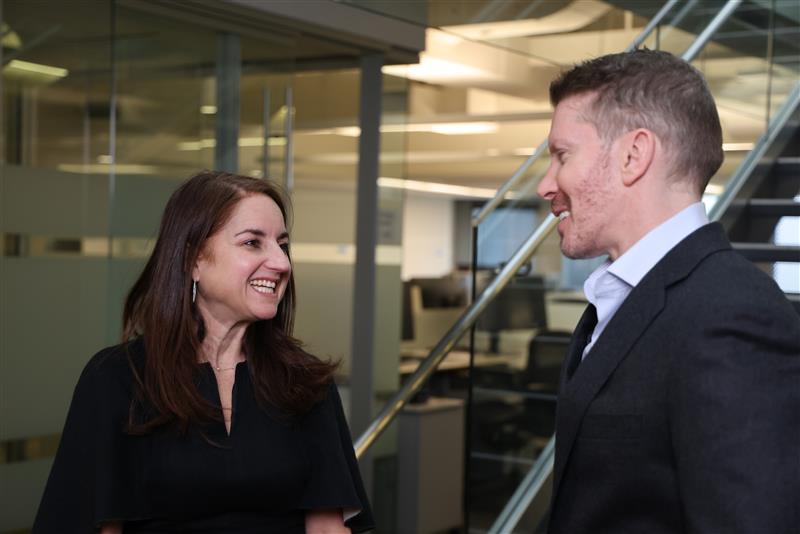
zach and kate talking

Without boundaries podcast

The podcast episodes on this page are intended for informational purposes only.

The content provided within each podcast episode should not be construed as investment advice, research or recommendation, solicitation or offer for any specific Russell investment or other products, strategy, security or service.

The information does not take into account the investment objectives or circumstances of any particular investor and may not be appropriate for all investors. Any past performance results should not be seen as a guide to future.

All opinions presented are as of the date of recording and subject to change without notice. Information contained within the podcast is obtained from sources believed to be reliable but not guaranteed. Reliance upon the information provided in the podcast is at the sole discretion of the listener. The general information contained in this publication should not be acted upon without obtaining investment advice from a licensed professional. This podcast may involve discussions with non Russell Investments personnel.

The views and opinions expressed by non affiliated personnel in this podcast for those of the speaker and do not reflect the policy or position of Russell Investments or any of its affiliates. This content should not be construed as recommendation or endorsements of any third party manager featured on the podcast.

Some of the portfolio managers or firms featured in the podcast may manage funds or accounts that are offered by Russell Investments, and they may be business relationships with Russell Investments or its affiliates.

Neither Russell Investments nor any of its staff accepts any responsibility for or liability with respect to the information or opinions contained in this publication. In EMEA, this content is suitable for professional clients only. Capital at risk.

Russell Investments' ownership is composed of a majority stake held by funds managed by TA Associates Management, L.P., with a significant minority stake held by funds managed by Reverence Capital Partners, L.P. Certain of Russell Investments' employees and Hamilton Lane Advisors, LLC also hold minority, non-controlling, ownership stakes.

© Russell Investments Group, LLC. 1995-2026. All rights reserved. This material is proprietary and may not be reproduced, transferred, or distributed in any form without prior written permission from Russell Investments. It is delivered on an "as is" basis without warranty.