
Key takeaways
- Geopolitical risk is structurally elevated, with multipolar leadership, rising defense spending, and more frequent conflict shaping the decade ahead.
- History shows most geopolitical shocks do not leave a lasting imprint on markets, arguing against retreating from risk assets due to short-term volatility.
- However, repeated and persistent disruptions can reshape supply chains, capital flows, and strategic resource dependencies.
- Oil is no longer the only transmission channel; vulnerabilities now also include semiconductors, rare earths, and critical production networks.
- Building resilient portfolios requires global diversification, inflation-aware allocations, private markets exposure, and selective alternative stores of value.
Geopolitical headlines rarely arrive quietly. The recent escalation in the Middle East is a reminder of how quickly tensions can feel destabilizing.
Markets have long navigated geopolitical shocks. What differentiates today’s environment is not simply the number of conflicts, but an emerging and sustained friction. The world appears to be shifting away from a period of integration toward one characterized by strategic competition, industrial policy, and rising defense spending.
History shows that most geopolitical shocks do not leave a lasting imprint on markets. Investors who stayed invested — and selectively added exposure during weakness — have generally been rewarded. The objective is not to react to every headline, but to distinguish between short-term volatility and structural change. Persistent geopolitical friction can raise risk premia and alter the diversification characteristics of assets – both of which can be critical considerations for investors.
Putting today’s risk in perspective
At the 2026 Munich Security Conference, policymakers focused on whether the post-war global order is over.1 Meanwhile, recent conflicts across Eastern Europe, the Middle East, and Latin America have pushed today’s current geopolitical risk environment ranking into the 90th percentile of history (red dot, chart).
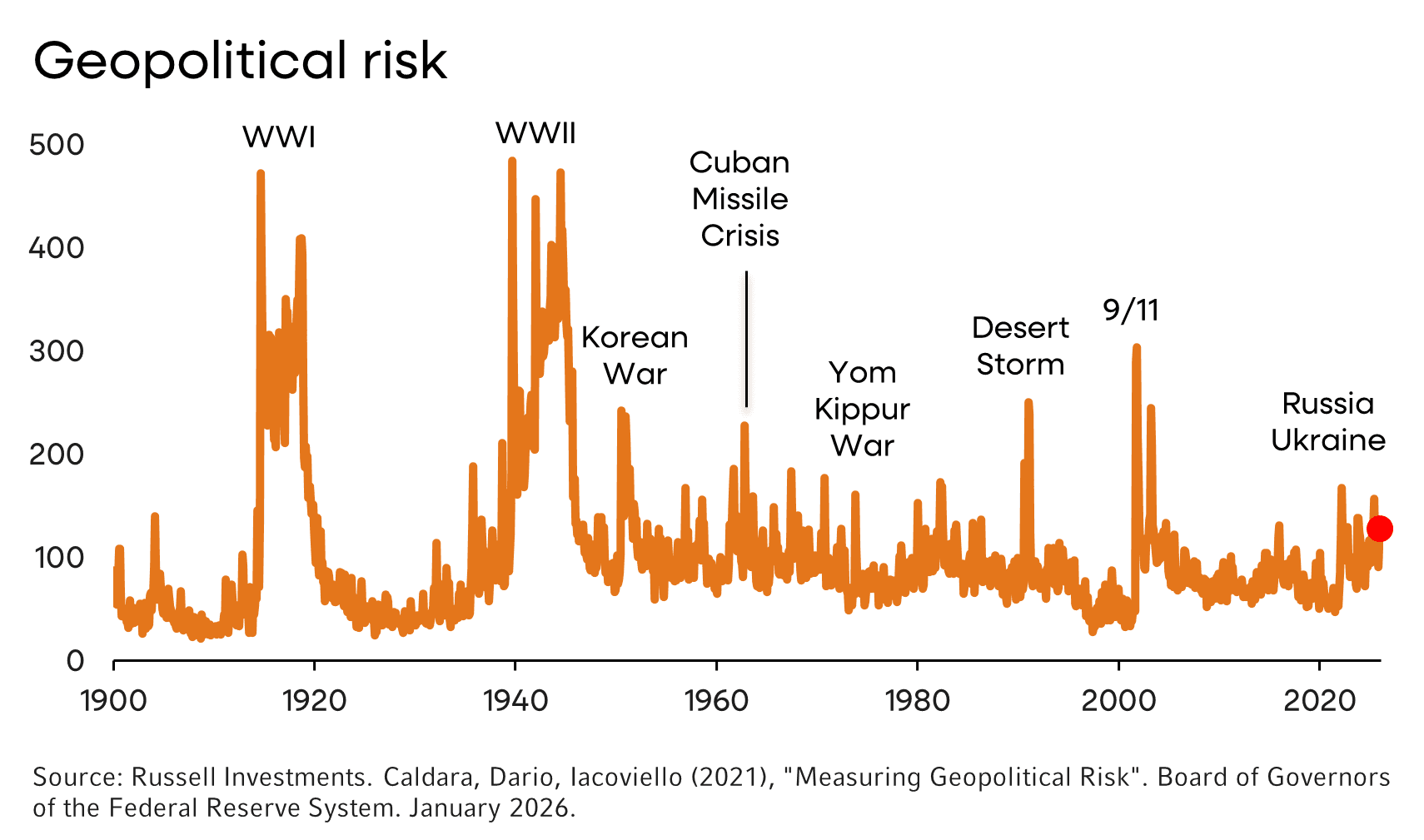
For investors, the key question is how a future that is potentially characterized by more frequent conflicts could impact asset prices. The chart below shows the response of equities and sovereign yields to some of the largest geopolitical events since World War II.
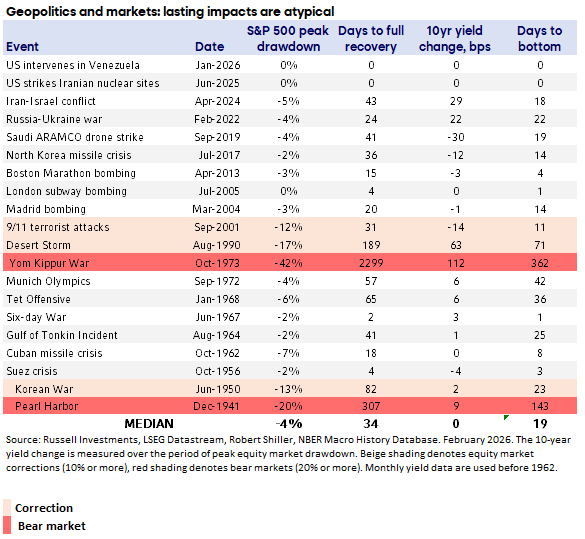
Three observations stand out:
- Extreme geopolitical events can disrupt financial markets. The most notable example is the 1973 Yom Kippur War, which lead to an oil embargo, a doubling of WTI prices, energy rationing, and a severe adverse supply shock that knocked the global economy into recession.
- Most geopolitical events, however, do not leave a lasting imprint. The median peak-trough drawdown in equity markets was only 4% over a roughly two week period, with markets often rapidly regaining their prior highs. Historically, disciplined investors who stayed invested, or selectively added on weakness, were rewarded.
- Government bonds aren’t always a reliable diversifier for geopolitical shocks. For example, the inflationary consequences of higher commodity prices can cause Treasury yields to rise while equity markets are falling.
Taken together, the historical evidence argues against retreating from risk assets in response to short-term geopolitical volatility. But the rare, large disruptions also underscore the importance of understanding how shocks move through markets and when they may carry broader economic consequences.
Shocks tend to affect asset prices through a small number of identifiable channels. Over time, repeated disruptions can reshape the broader economic landscape in ways that matter for asset allocation. We begin with the mechanisms that typically drive market reactions in real time.
Today’s transmission channels of geopolitical risk
Geopolitical events tend to affect markets through two primary pathways: a sentiment channel and an economic channel. Distinguishing between the two can help investors assess whether volatility is likely to be short-lived or more persistent.
The visual below illustrates how these channels link geopolitical events to growth, inflation, and ultimately asset prices.
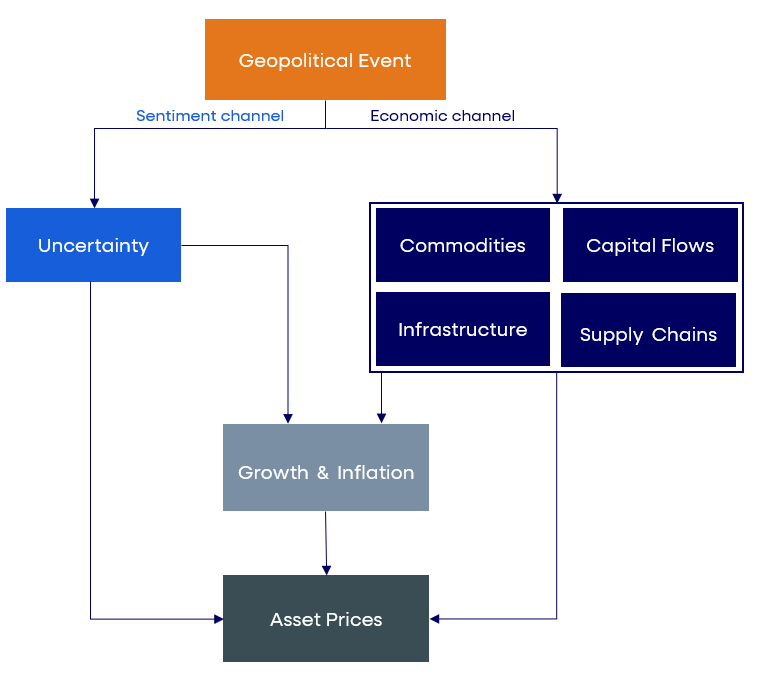
Source: Russell Investments. February 2026. Adapted from “Geopolitical Risks: Implications for Asset Prices and Financial Stability”. IMF. April 2025.
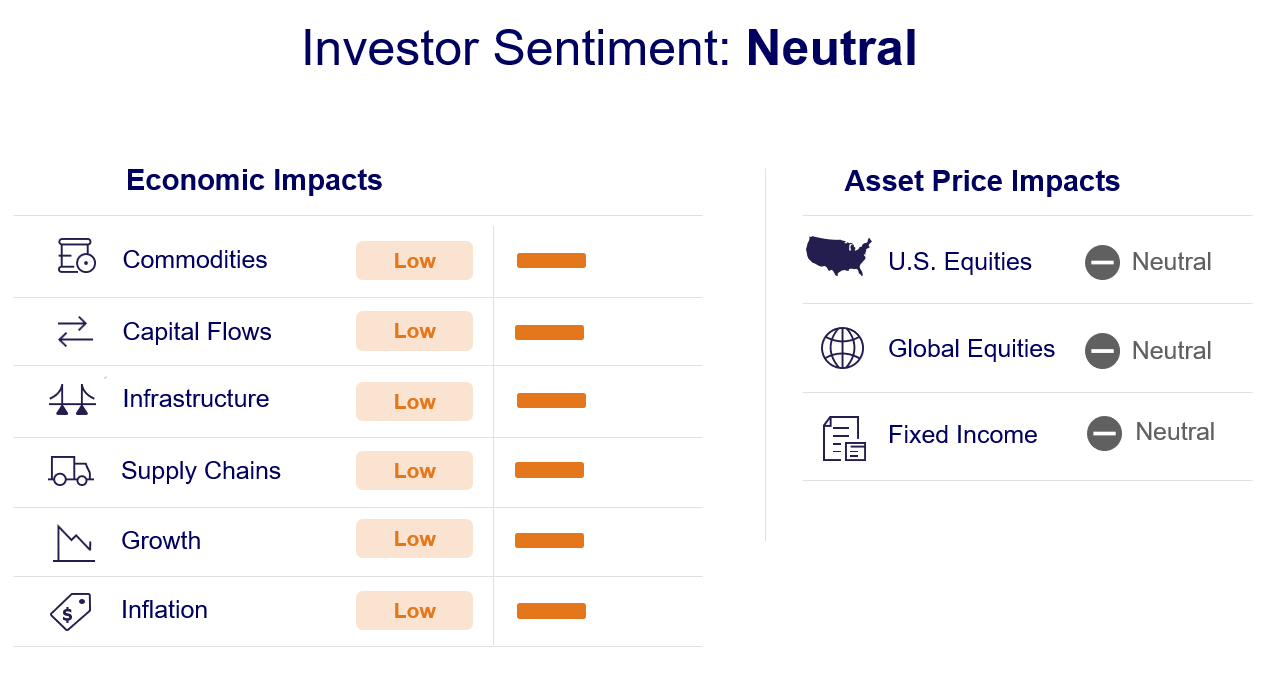
When the United States captured the leader of Venezuela in a surprise predawn raid in early January, we used this framework to assess the likely impacts to economies and markets. Our conclusion was that asset prices were unlikely to be impacted by this event—a prediction that proved true in the coming weeks.
Chart: Russell Investments’ assessment of impacts to asset prices from U.S. strikes on Venezuela, Jan. 3, 2026
Uncertainty
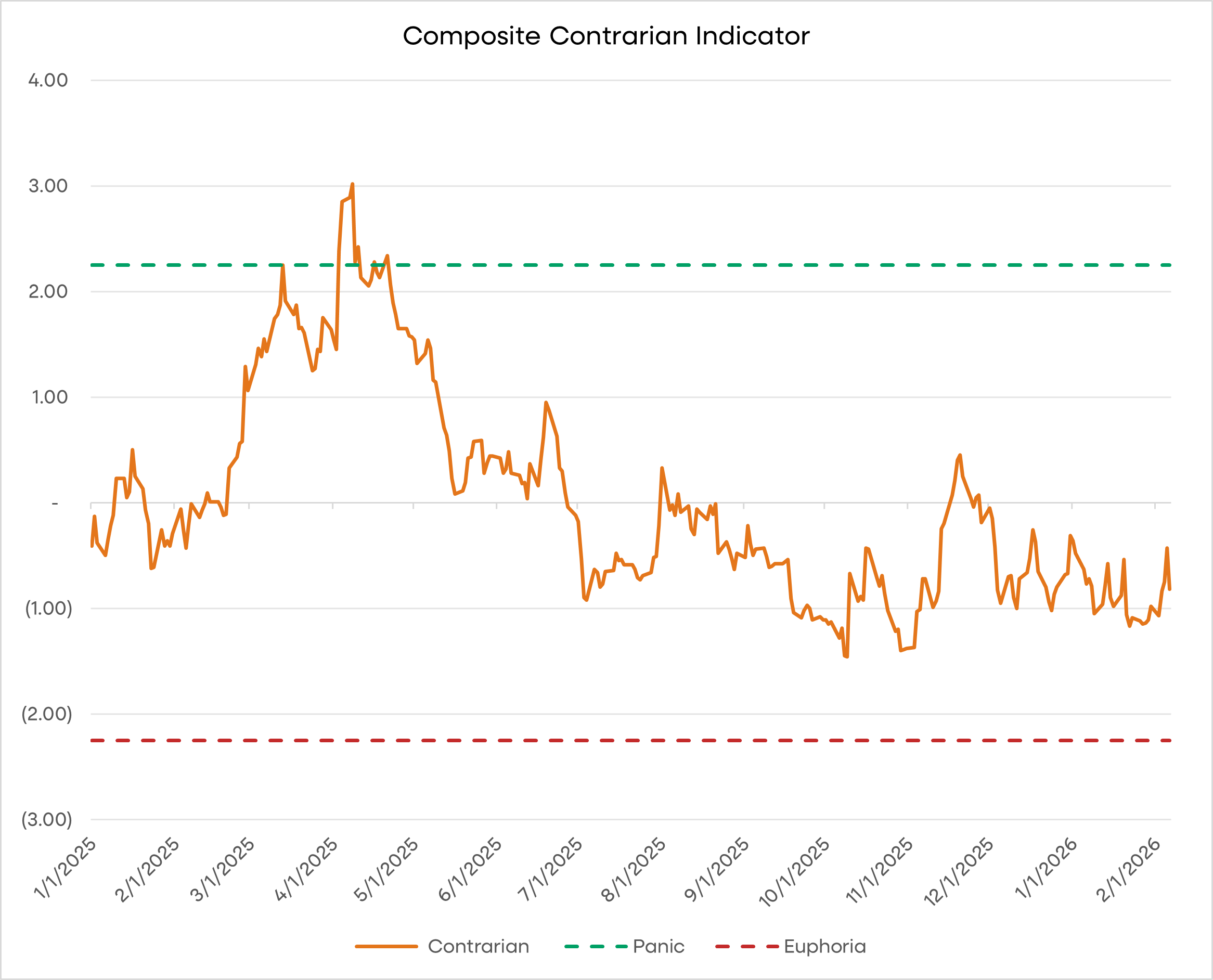
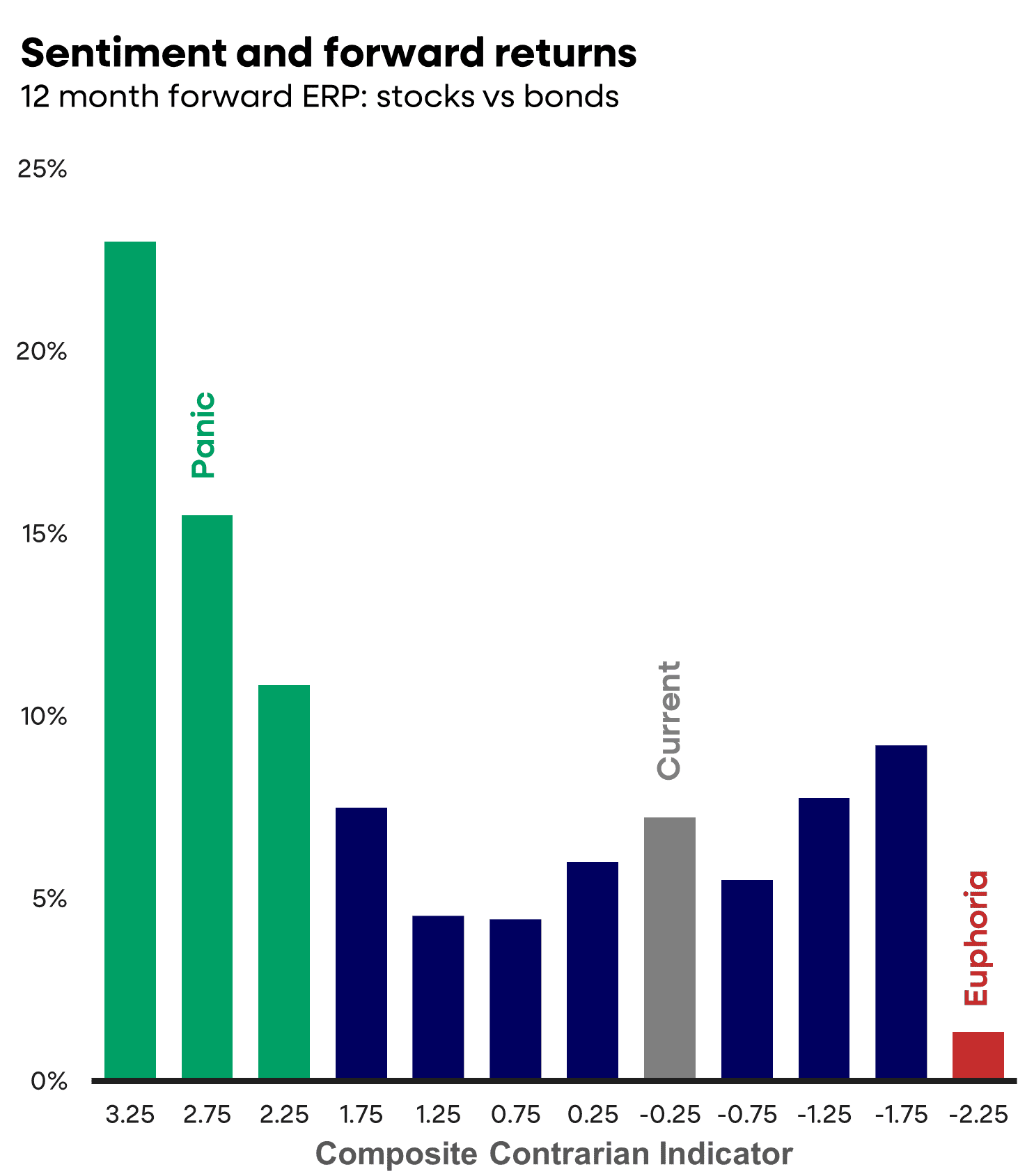
In real time, the duration and scope of a conflict are inherently uncertain. This uncertainty does two things to macro markets. First, the uncertainty weighs on fundamentals as households and businesses defer major purchases. Second, the uncertainty drives a spike in investor risk aversion, contributing to drawdowns in riskier asset classes like equities. We have macro models to quantify these growth effects (e.g., figure 9 here) and sentiment models that quantify investor psychology and risk aversion in real time – with panics often portending stronger forward returns in markets.
Commodities
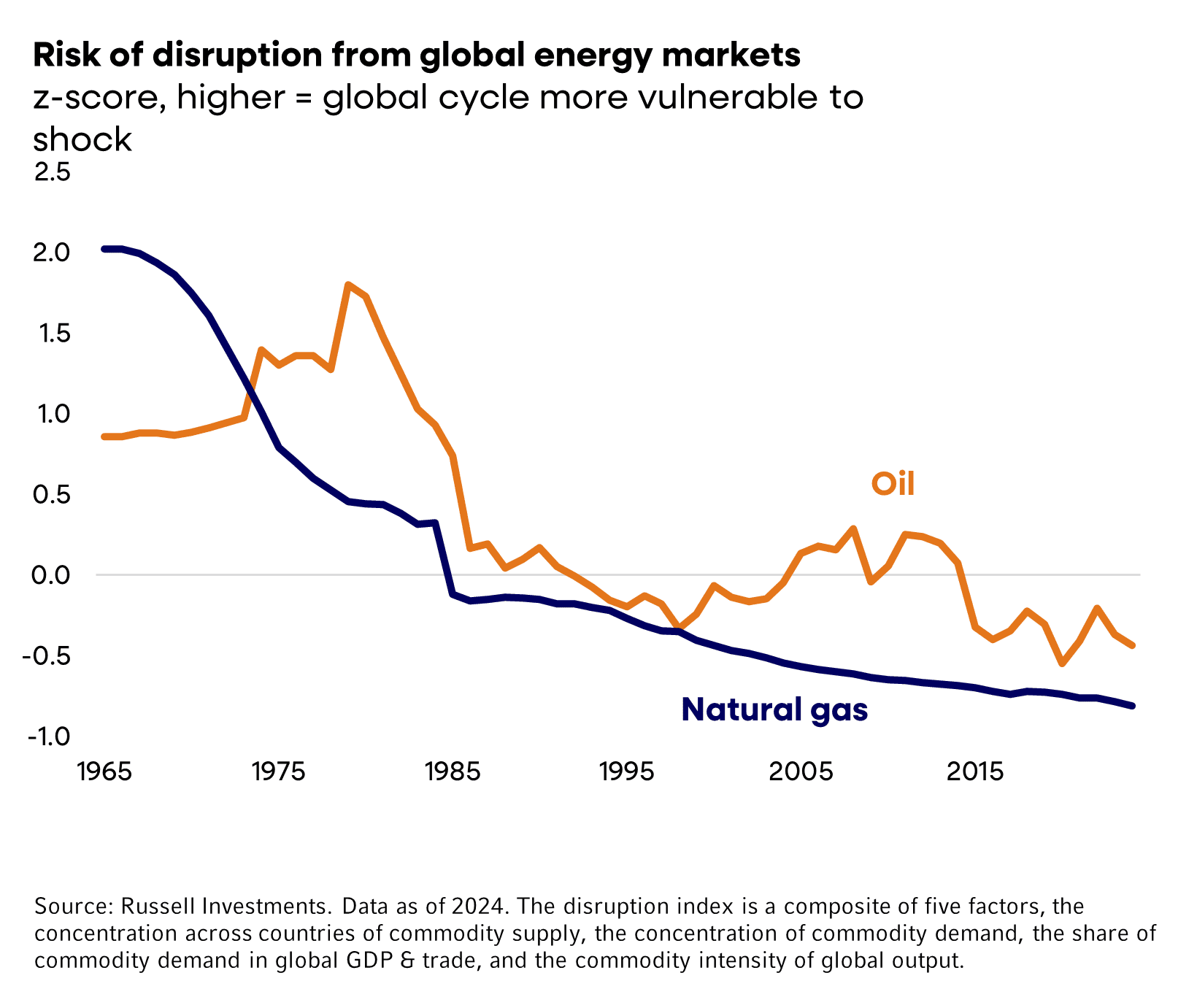
Oil supply shocks are less disruptive to developed market growth than in prior decades, reflecting greater energy independence and efficiency gains. However, commodity prices remain an important transmission channel. They can affect consumer purchasing power, infrastructure costs, emerging market export revenues, and sectors heavily reliant on raw material inputs. In today’s environment, commodity risk is broader than oil alone – encompassing metals, rare earths, and other strategic inputs tied to defense, technology, and the energy transition.
Disruption to global capital flows
Geopolitical events can disrupt cross-border payments. Countries impose sanctions and can freeze or seize foreign assets during a conflict. Meanwhile, global central banks reallocate their foreign exchange reserves as alliances shift. The Russia-Ukraine War illustrated how capital flows can be material for investors. Following the invasion, Western nations froze an estimated $300 billion in Russia’s foreign exchange reserves. Meanwhile, MSCI removed Russia from their emerging markets index and many asset managers marked the value of their Russian securities to zero for a period. And while there has not been a large scale move away from the U.S. dollar as the global reserve’s currency, evidence shows some countries that are less aligned with the United States may be proactively reducing the dollar share of their reserves portfolio2– a trend that could continue in a more fragmented world. In short, geopolitical distance is likely to become a more important determinant of where global capital is allocated.
Disruption to global supply chains
Trade flows are an incomplete description of the risks from a conflict onto the global cycle. For example, semiconductors represent less than 1% of goods trade, but embedded semiconductors are absolutely essential for many of the advanced technologies in today’s economy. We estimate 25% of U.S. goods spending is on items with embedded semiconductors. When conflicts impact critical inputs, production networks, or shipping lanes, they can punch above their weight in markets. This complexity challenges how we must think about the true risk exposure to an event – but new tools like AI augmented scenario generation, narrative factors, and inter-country input-output tables offer analysts the ability to conduct more comprehensive assessments of portfolio risk into 2026 and beyond.
Damage to physical & digital infrastructure
Geopolitical conflicts can also damage infrastructure – the plants, equipment, and networks of private sector businesses and the public utilities they rely on with potential for balance sheet and income statement impairment in severe scenarios. The future of geopolitical conflict could include more cyber warfare, affecting business and financial systems. Recent advancements in geospatial technologies and data allow investors to improve the identification and management of risks to their real asset holdings.
Structural trends shaping portfolio construction
Understanding transmission channels helps investors assess how geopolitical shocks affect markets in real time. However, over longer horizons, repeated geopolitical disruptions have also altered the structure of the global economy itself. For example, the resurgence of defense spending and industrial policies mark a structural change where economic security and national security are becoming more intentional and intertwined. The fiscal outlook is one (of many) consequences of these structural shifts. Larger defense budgets in the United States, Germany, and Japan are likely to perpetuate high sovereign debt levels. These structural adjustments have implications for asset allocation that extend well beyond any single headline.
Two longer-term developments stand out:
1.) The shift from oil to broad commodities
Historically, crude oil was viewed as the dominant transmission channel from geopolitics to markets. That was the right view for many years – both given the magnitude of the oil shocks in 1973, 1980, and 1990, and the reliance of key markets like the United States on imported oil. But the world has changed.
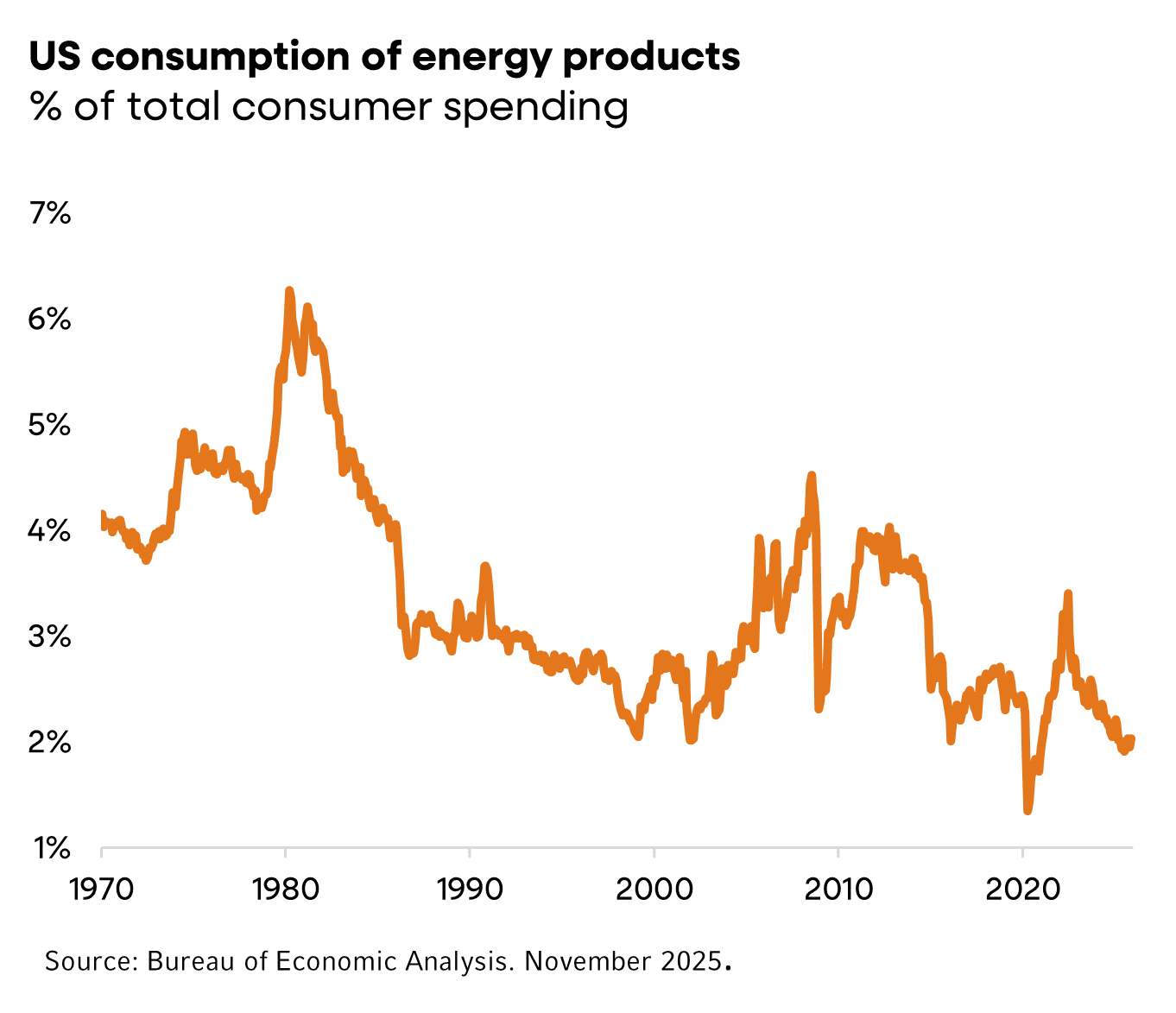
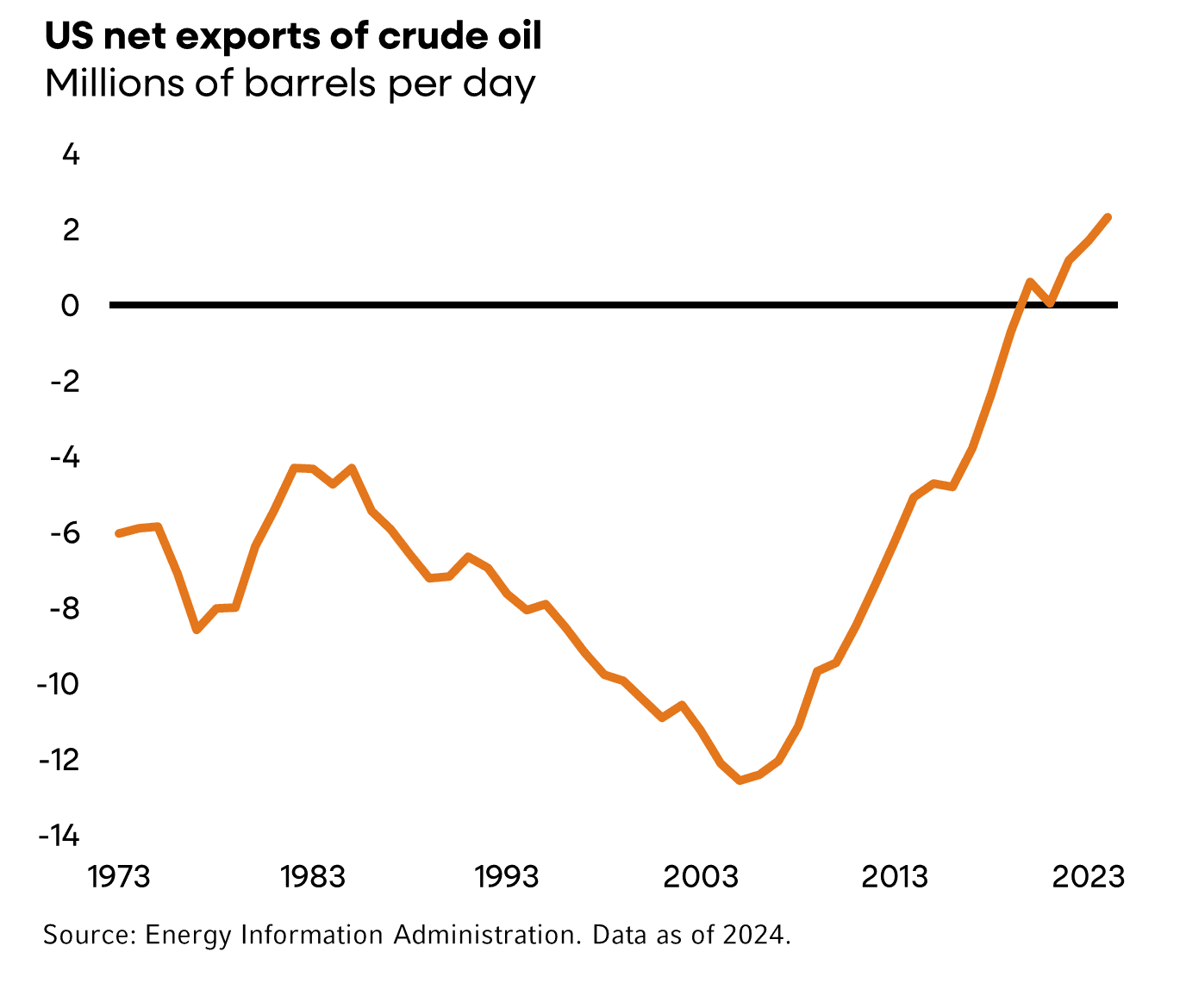
The United States is now the biggest oil and gas producer in the world and a net exporter of energy products. Furthermore, the share of U.S. consumption on energy products has declined more than 50% over the last 50 years on the back of major energy efficiency gains for vehicles, homes, and appliances (see chart). In short, the U.S. – and to a lesser extent other major developed markets – is less exposed to oil shocks than in prior decades. Consider the Russia-Ukraine War, where crude oil prices nearly doubled over the 12 months ending June 2022. This happened at the same time developed market central banks were pumping the brakes with rate hikes. And yet the U.S. and eurozone economies demonstrated resilience in the subsequent period through the temporary energy shock. Of course, an extended period of elevated energy prices would still have some negative impacts on U.S. growth. And emerging market countries still remain largely deendent on oil.
Today, metals, rare earths, and semiconductors sit at the intersection of artificial intelligence, defense, and the energy transition – making them critical strategically in a way that crude oil once was. These commodity and production networks are growing rapidly and are extremely concentrated. In 1992, former Chinese leader Deng Xiaoping said “the Middle East has oil, China has rare earths.” Indeed, today China dominates the supply of rare earth elements, with almost 50% of global reserves, 70% of global production, and 90% of global separation and refining capacity. Rare earth elements are used to make permanent magnets that are in almost every piece of high-tech equipment, including military and consumer applications. This concentration both gives China geopolitical leverage and argues for managing portfolio exposures with a focus on value chain and scarcity considerations.
2.) The shift from trade flows to production networks
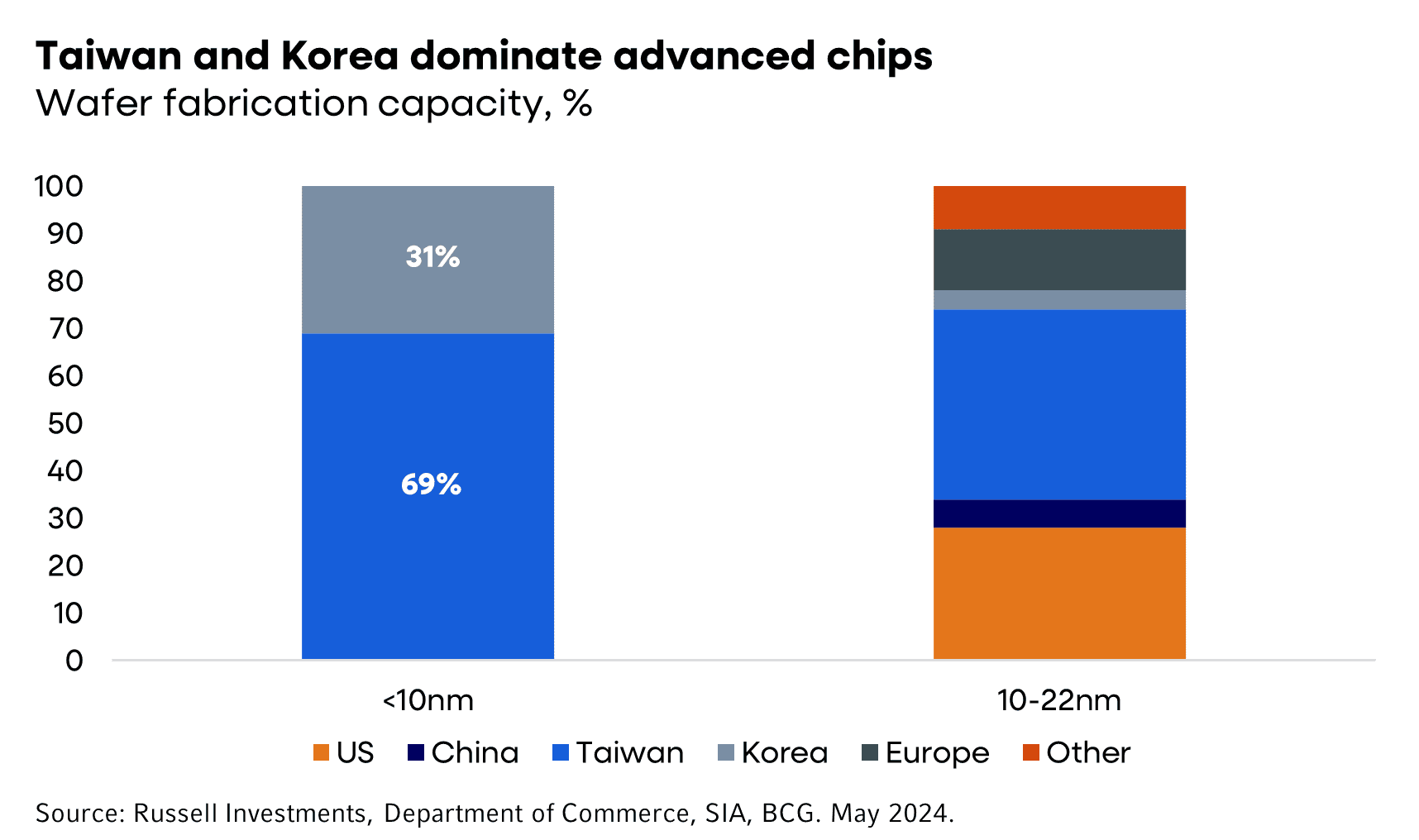
Earlier we wrote about the shortcomings of simplistic exposure metrics like trade flows, GDP shares, or index weights. Take Taiwan – the island is responsible for just 2% of global exports, 1% of global GDP, and 1-2% of the MSCI ACWI equity index. Yet it produces almost all of the world’s most advanced semiconductors (see chart) – inputs that are absolutely necessary for a range of products including smart phones, AI data centers, motor vehicles, and defense systems. The post-COVID supply chain breakdown highlighted how upstream bottlenecks can cascade through the global economy.
From headlines to portfolio impact: Investing through geopolitical risk
The bottom line
Headlines will continue to test investor sentiment, and periods of volatility will follow. While many shocks fade, some contribute to broader shifts that influence the economic and market backdrop.
The challenge for investors is not predicting the next conflict, but to ensure portfolios balance growth and resilience in an evolving geopolitical landscape. Markets are increasingly dynamic but so are the tools available for analyzing them. The access to structured and unstructured data is exploding; natural language processing allows investors to identify and track the narratives driving cross asset returns and risk exposures in real-time; and artificial intelligence can help quantify and stress test portfolios to novel events as they arise.
Portfolios built with clarity around risk exposures, diversification, and structural resilience are better equipped to navigate recurring disruption while remaining anchored to long-term objectives.
1 For example, U.S. Secretary of State, Marco Rubio, stated that “we can no longer place the so-called global order above the vital interests of our people and our nations.” And German Chancellor, Friedrich Merz, stated that “we must put it even more bluntly: this order, however imperfect it was even at its best, no longer exists in that form.”
2 See Online Appendix A here for a country-level discussion.
Any opinion expressed is that of Russell Investments, is not a statement of fact, is subject to change and does not constitute investment advice.