How to Stay Afloat Amid Canada's Economic Riptide
Sticking to your strategic plan may be the best way to navigate through choppy waters
A "Liberal wave" has failed to materialize in Canada. Despite the Liberal Party expanding its seat count in Parliament, CTV News is projecting that the Liberals will still form a minority government after Monday’s election. Now, the focus turns to a different set of waves—those battering the Canadian economy.
Trade turmoil
Canada's economy is struggling to stay afloat. The Canadian unemployment rate has risen at a much sharper pace compared to the U.S. unemployment rate, and trade policy uncertainty threatens to make things even more challenging.
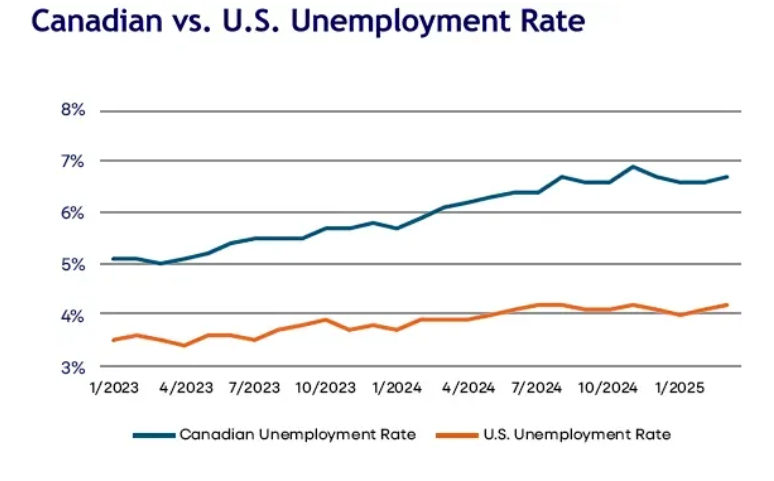
Source: LSEG Datastream, March 2025.
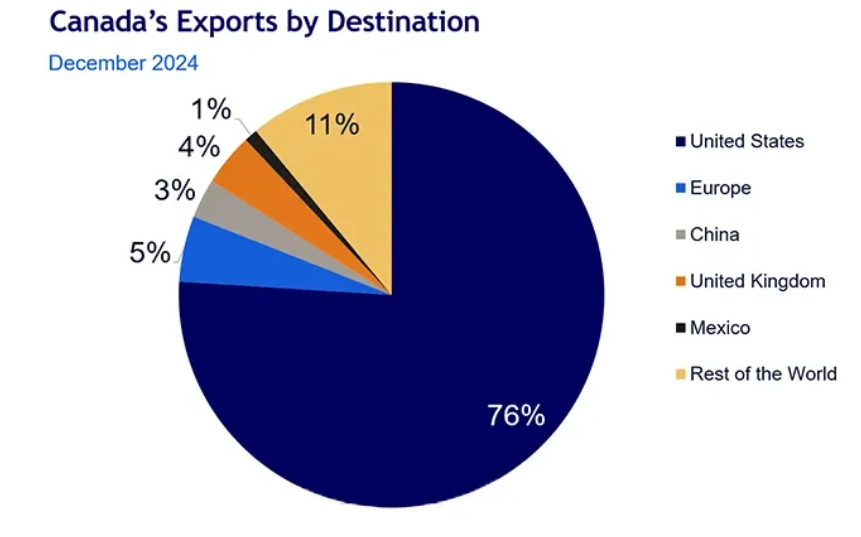
Although the U.S. has paused tariffs on imports from Canada and Mexico that comply with the Canada-United States-Mexico Agreement (CUSMA), there’s no guarantee this will last. While Prime Minister Carney has expressed a desire to diversify Canada's trading relationships, for now, roughly three-quarters of Canada’s exports are still to the United States. A protracted trade standoff with the U.S. could cause export volumes to drop and risk causing a Canadian recession.
Power tools

"While a minority Liberal government inherently means some compromises are necessary, we still believe that should a recession materialize, the different parties can rally around the flag and unleash powerful stimulus."
BeiChen Lin, CFA, CPA
Senior Investment Strategist, Head of Canadian Strategy
Another potential power tool: monetary policy. The drop-off in demand in the event of a recession would likely more than offset the potential upward price pressures caused by Canada’s retaliatory tariffs. This means the Bank of Canada can cut rates aggressively while still keeping medium-term inflation expectations well-anchored.
Don’t panic
Meanwhile, we believe Canadian government bonds continue to be a key defensive lever for investors, with the potential for capital appreciation should the Bank of Canada cut rates by more than what the markets are currently pricing in.
Ultimately, maintaining a long-term focus can be a good way for Canadian investors to weather the storm.
Any opinion expressed is that of Russell Investments, is not a statement of fact, is subject to change and does not constitute investment advice.